There are only three of them, but they command real respect. The Standing Stones of Stenness rise up to six metres into the sky. Sharp-edged and cleanly cut, they’re visible for miles across Orkney’s flat landscape.
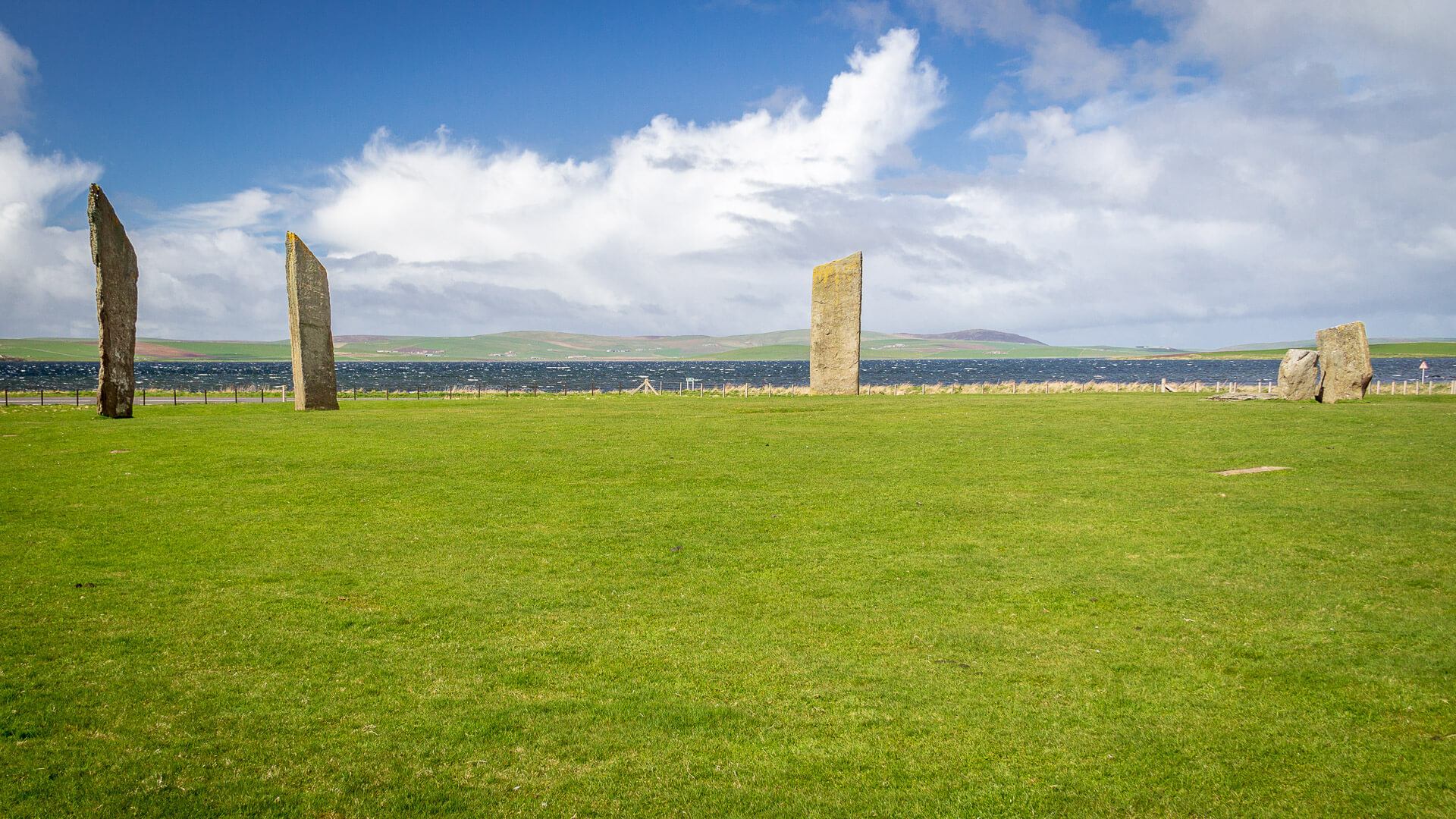
Standing before these three giants, you can close your eyes for a moment and picture it: twelve stones arranged in an ellipse, surrounded by a ditch over two metres deep with a diameter of 44 metres. At the centre, a large hearth. The stone circle could only be entered from the north, where the Stone Age settlement also stood, likely connected to the stone circle.
This is one of the most impressive ceremonial sites in the Scottish Highlands. But what was worshipped here, and what was it used for? No scholar can say for certain.
Folklore, though, has plenty to say about the stones. One legend warns against being out and about near the Standing Stones on the nights around New Year. The stones, it’s said, are petrified giants who come to life then and go wandering, down to the nearby loch to drink. Watching them do so is said to bring bad luck.
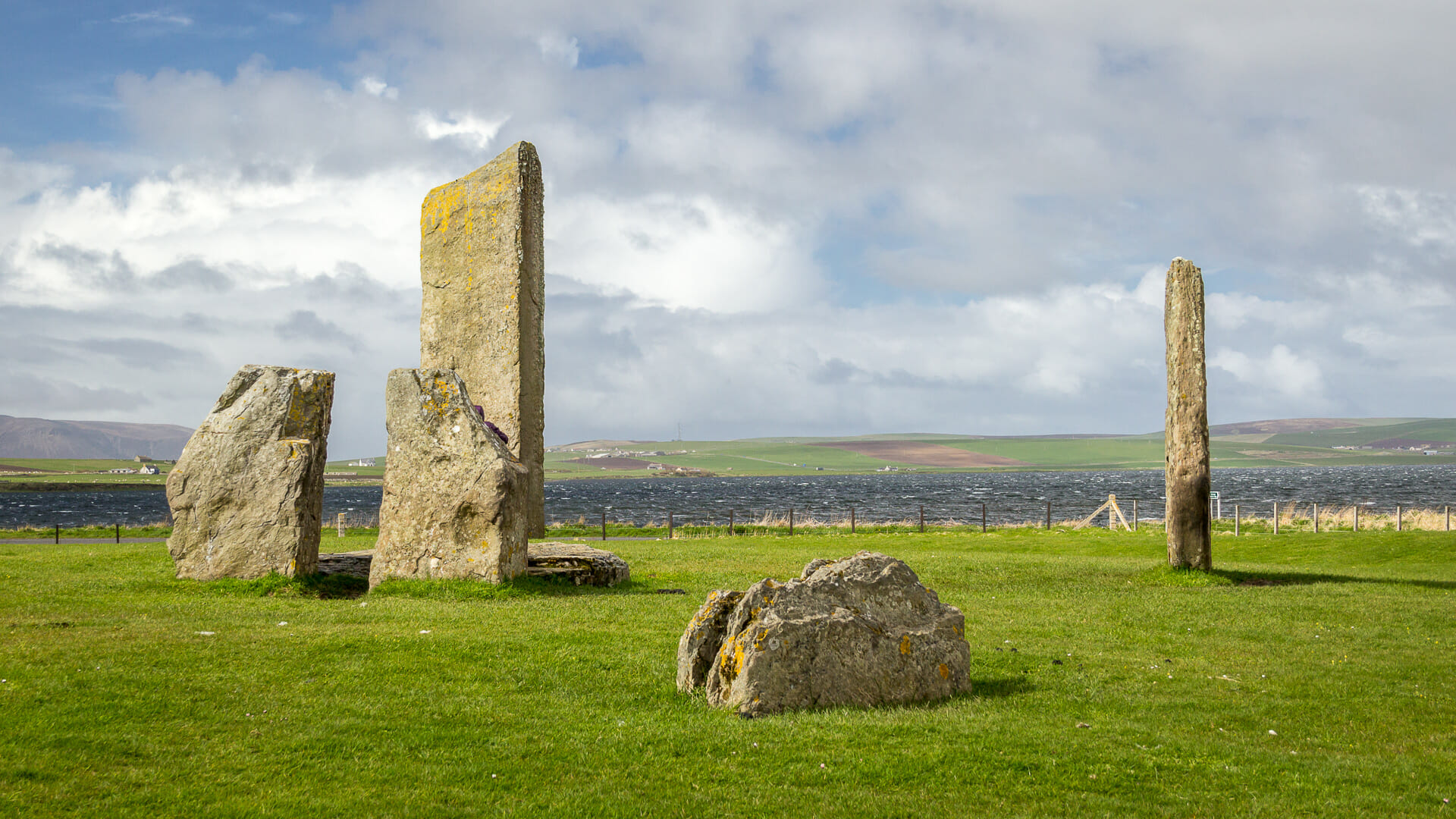
But it wasn’t giants who caused damage here – it was people. Specifically, a farmer named McKay, who grew tired of the monument’s many visitors. So he simply set about demolishing the stones himself, and partly succeeded, managing to topple two of them. This was in 1814, and McKay wasn’t even a local – he was a newcomer to the area. A court eventually put a stop to the farmer’s vandalism, and the stones were re-erected.
Only one stone did he destroy for good: the Odin Stone, which stood near the main circle – a stone with a round hole through its middle. It was later turned into a millstone. The sad end of a monument…
A short distance behind the stones lie the remains of an old settlement – named Barnhouse Village by archaeologists after its discovery in 1984. These houses, too, date from around 5,000 years ago.
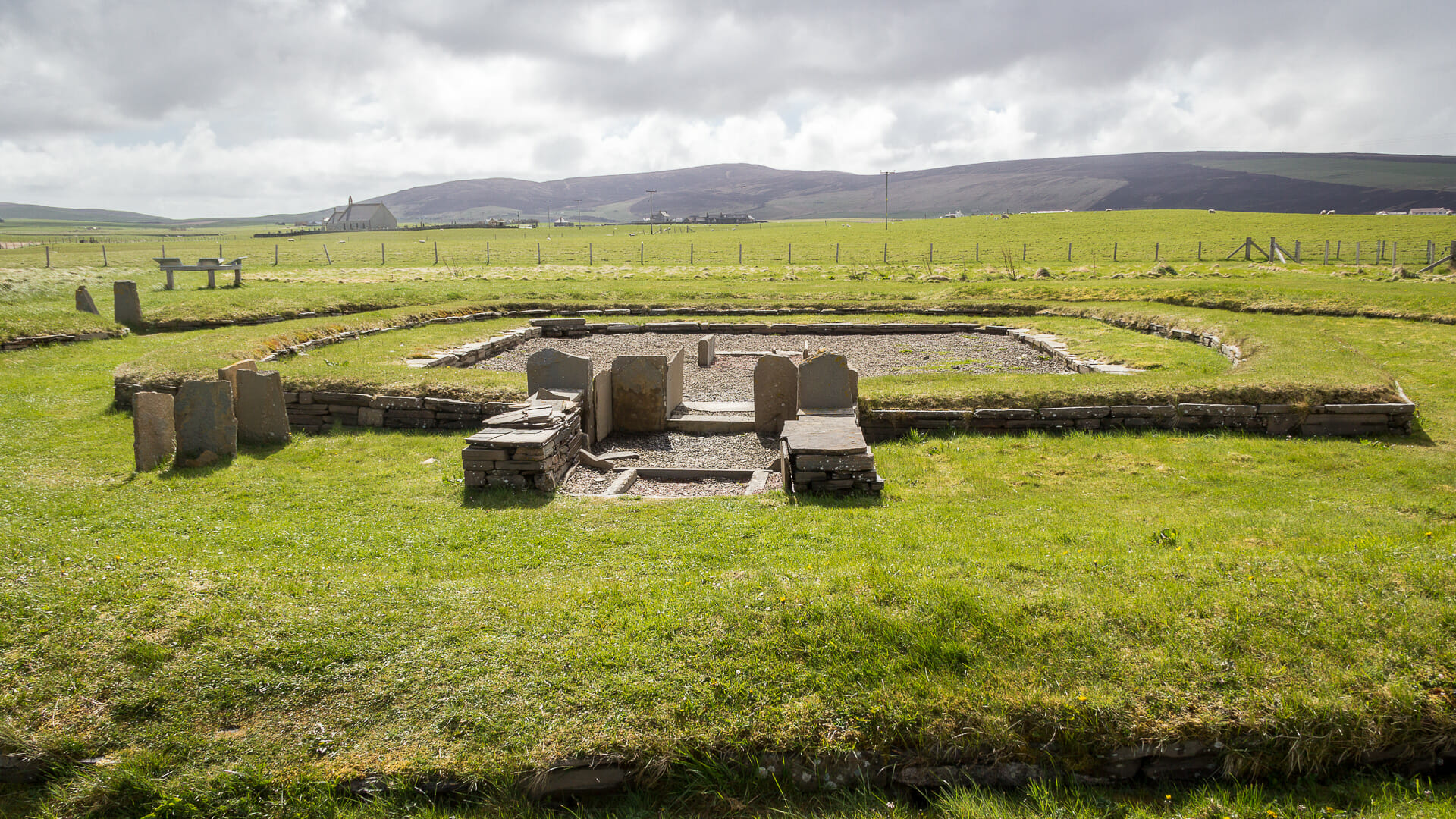
Barnhouse Village once consisted of 15 houses, at least four of which are clearly visible to visitors today. The building style follows that of Skara Brae, though this site is younger.
The proximity of the houses to the Ness of Brodgar, with its ever-expanding excavations and religious significance alongside the stone circles, suggests the houses here were also used for ceremonial purposes.
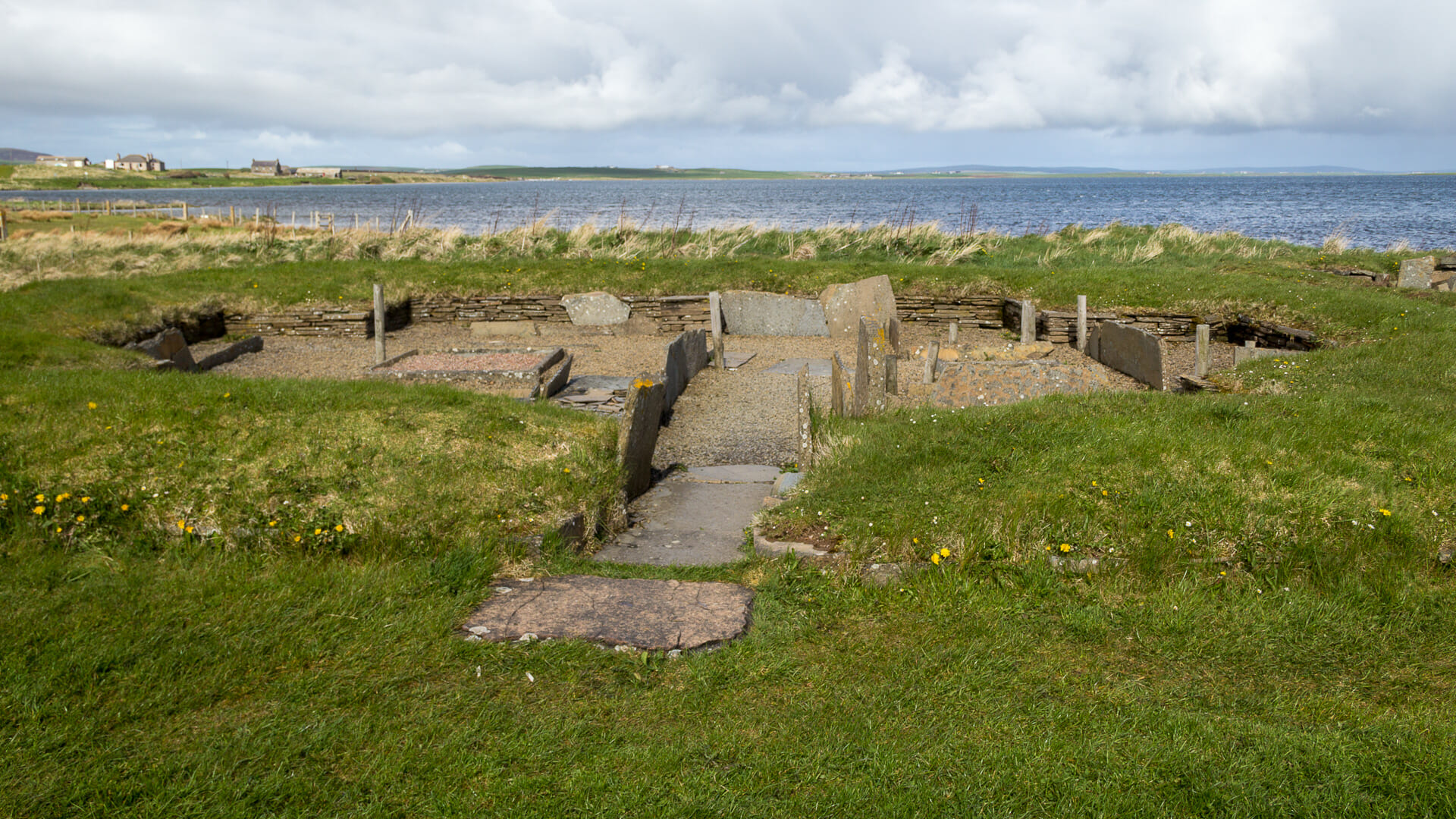
Fittingly, these houses too were demolished once the ceremonial sites around the Ness of Brodgar were abandoned – archaeologists even believe this may have happened during one final great feast. Finds of hundreds of cattle bones, left behind at the same time, point in that direction.
Personal note: awed by the scale
The sheer size of the stones was impressive enough on its own. What surprised me, though, was how thin the monoliths are relative to their height – only around 30 centimetres thick. That makes them the flattest stones I’ve seen anywhere in Scotland.
Did you know: an unfinished stone circle
The site dates from around 3100 BC, making it one of Britain’s earliest stone circles. Scholars believe the circle was, in fact, never fully completed – the builders apparently never got around to erecting at least one stone, possibly even two.
Incidentally, “Stenness” comes from the Old Norse “steinn-nes”, meaning roughly “stone headland”.
Tip: related stones nearby
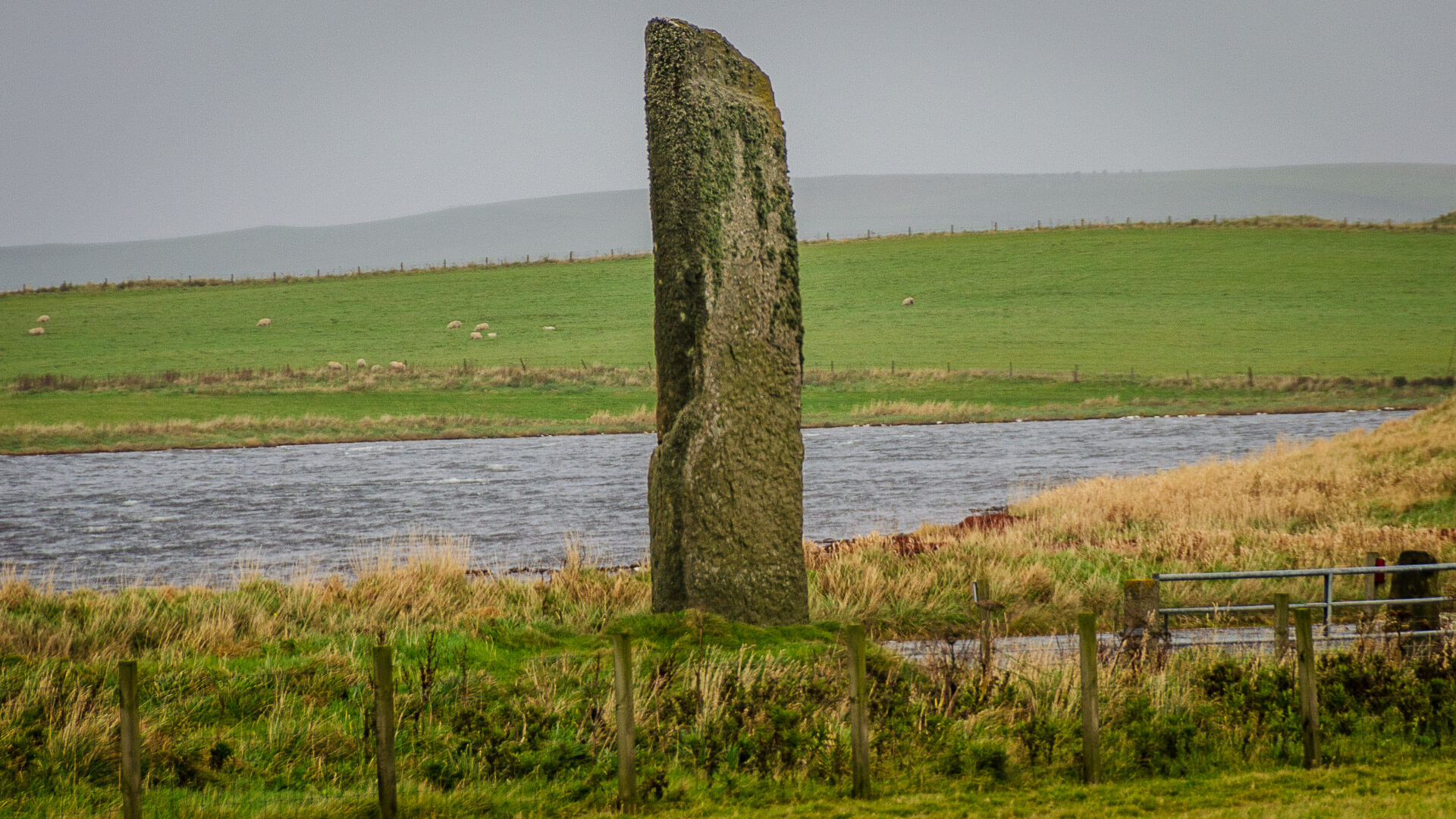
Close by, a little way up the road to the north, stands a single stone right beside the road, around five and a half metres tall. It’s called the Watch Stone. With this one, we do have some idea of its purpose: from exactly this spot, the sun can be seen rising in a striking way between the hills of the island of Hoy as the winter solstice approaches.
It’s well worth taking a look at this stone too, then driving on to the Ring of Brodgar.
Getting there:
By car: From Stromness, head towards Kirkwall, then turn left at Stenness towards the Bay of Skaill. The three great stones then appear on your right. Driving time is around 15 minutes.
Bus: There’s also a scheduled bus service to Stenness, as well as a number of tourist coach tours, which you can ask about at the tourist information office.
