Deep in the west, somewhat off the beaten tourist track, lies the community of Uig. It ranks among the most beautiful things the Isle of Lewis has to offer.
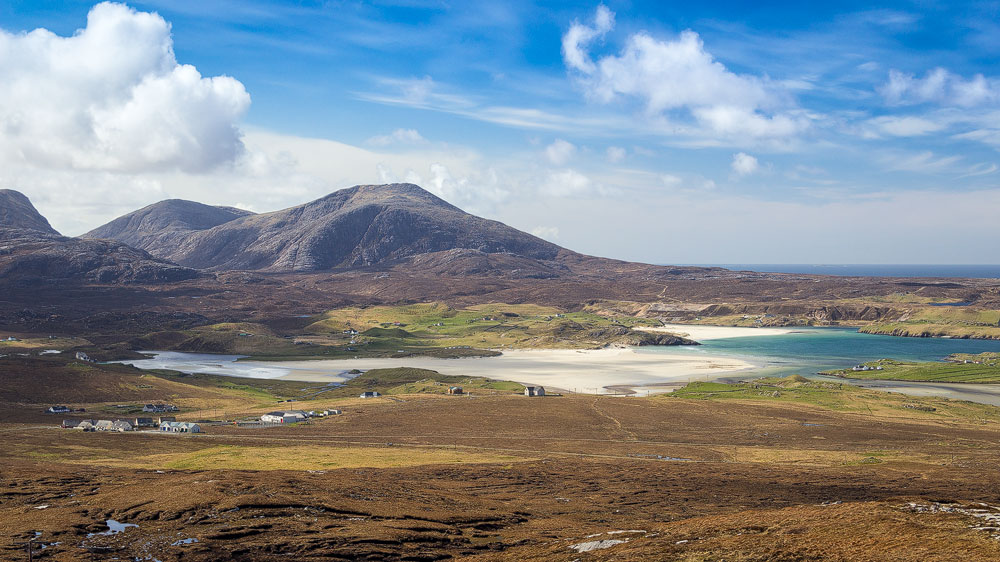
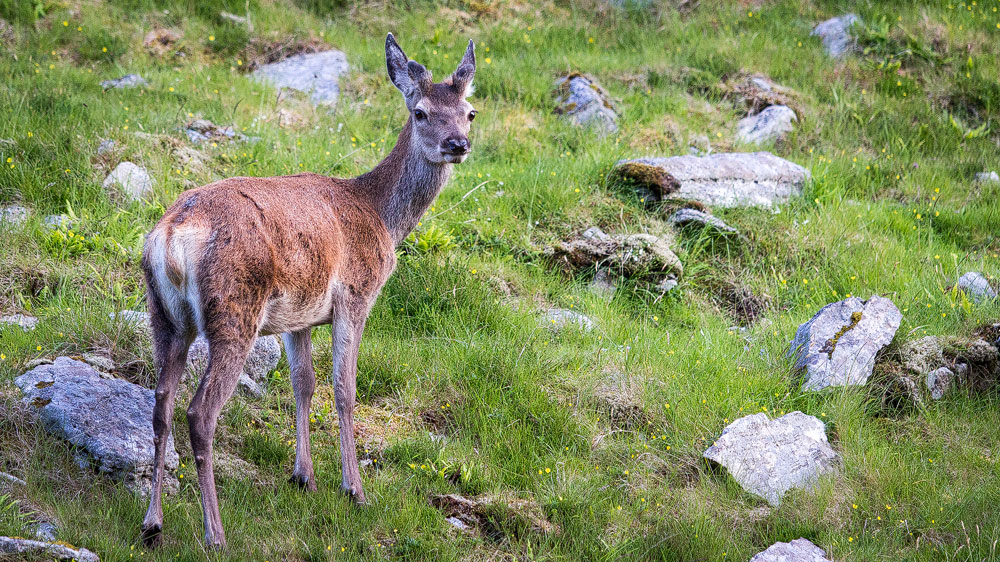
The road leads through a deep valley. On the slope to the left stands a deer, while to the right golden eagles circle above the ridgeline, hunting for prey. Then the valley opens up, and you drive towards an enormous sandy beach. Just a dream? No! We’re in Uig, the western part of the Hebridean island of Lewis.
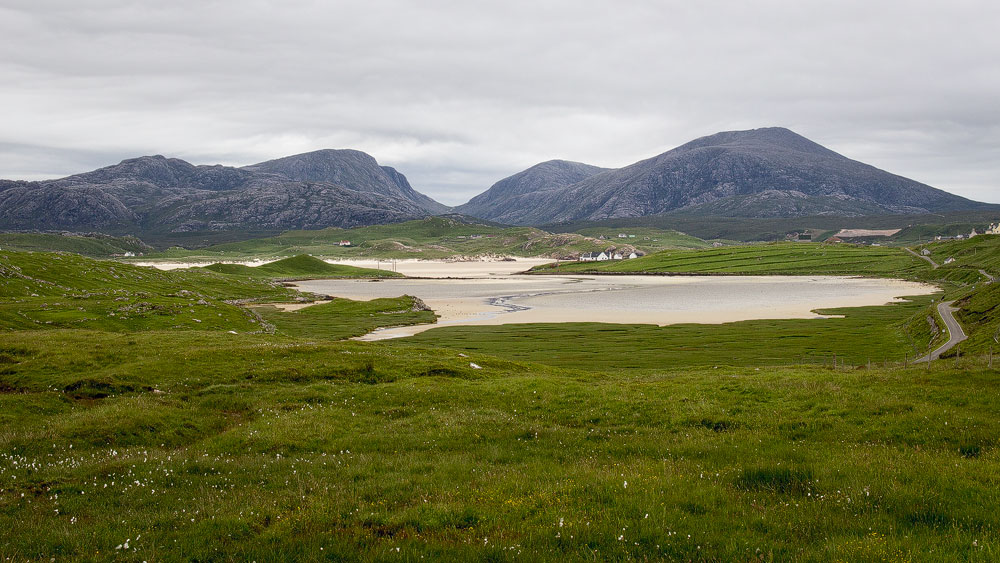
The impressive centrepiece of the area is Camas Uig – the “wide bay of Uig”. At low tide the sea withdraws here, exposing a sandy beach up to two and a half kilometres wide, “Tràigh Uige”. Around it rise mountains over 400 metres tall, their peaks often caught in cloud. In the hills between beach and mountains lie villages with Gaelic names: Cradhlastadh (Crowlista), Timsgearraidh (Timsgarry) and Eadar Dha Fhadhail (Ardroil). Gaelic, in fact, is still spoken widely here.
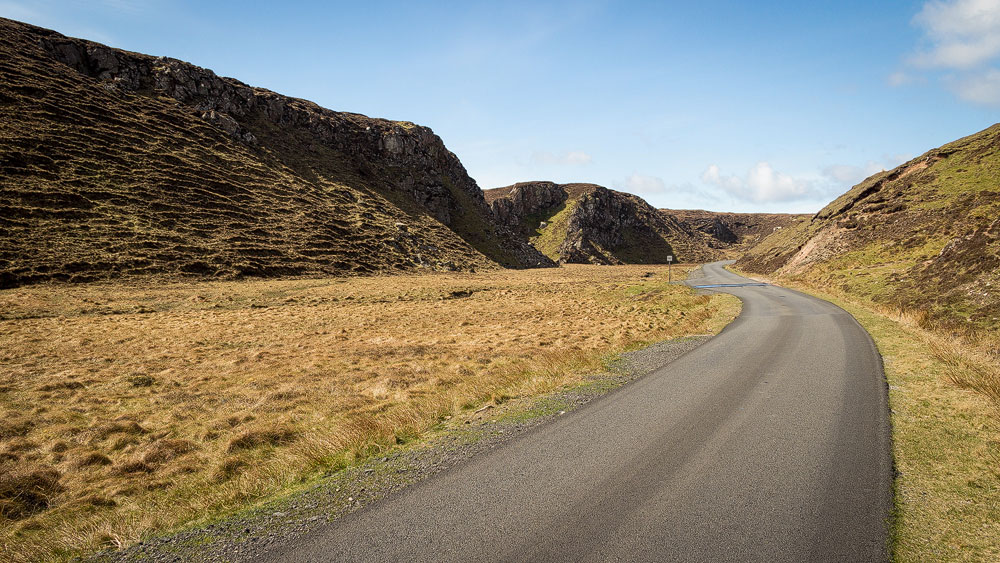
Uig doesn’t have such obvious attractions as Calanais or Dun Carloway. The area lives off its wild, beautiful landscape and its remoteness. In fact, only a single road leads here, winding through the valley of Gleann Bhaltois (Glen Valtos). The drive in is already an absolute highlight in its own right.
So nature is the real attraction here: in summer the machair blooms, golden and white-tailed eagles are a common sight, and behind the dunes at low tide lies an almost endless sandy beach that fades into azure water. If you follow the single-track coastal road all the way south, you’ll find towering cliffs with hidden sandy coves and grazing Highland cattle, before the road finally comes to an end on a meadow with a view out to the island of Eilean Mhealasta.
Good to know: 93 celebrities from Uig
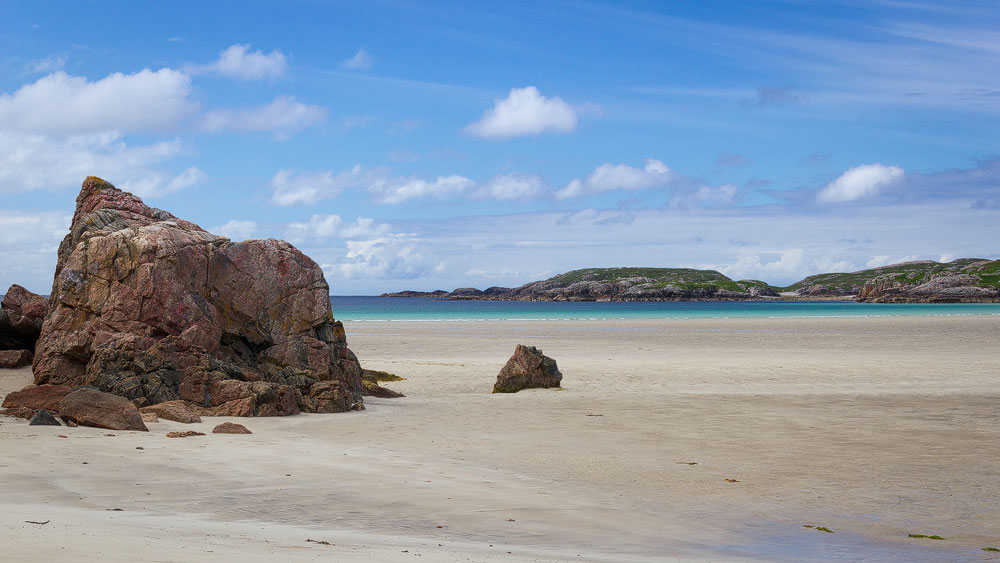
In 1831, 93 chess and tables pieces (tables being a kind of backgammon) carved from walrus ivory and whale’s tooth were discovered on the beach at Uig. These precious treasures likely date from the 12th century, a time when chess was already highly popular across Europe. It’s thought that Norwegians carved the pieces and intended to carry them across the Outer Hebrides on their way to Ireland.
At that time, the Outer Hebrides were part of the Norwegian realm, having been conquered by the Vikings. For some reason, a merchant seems to have hidden the expensive pieces on the beach at Uig. The sheer number of chess pieces – enough for more than a single game – suggests this was indeed a merchant.
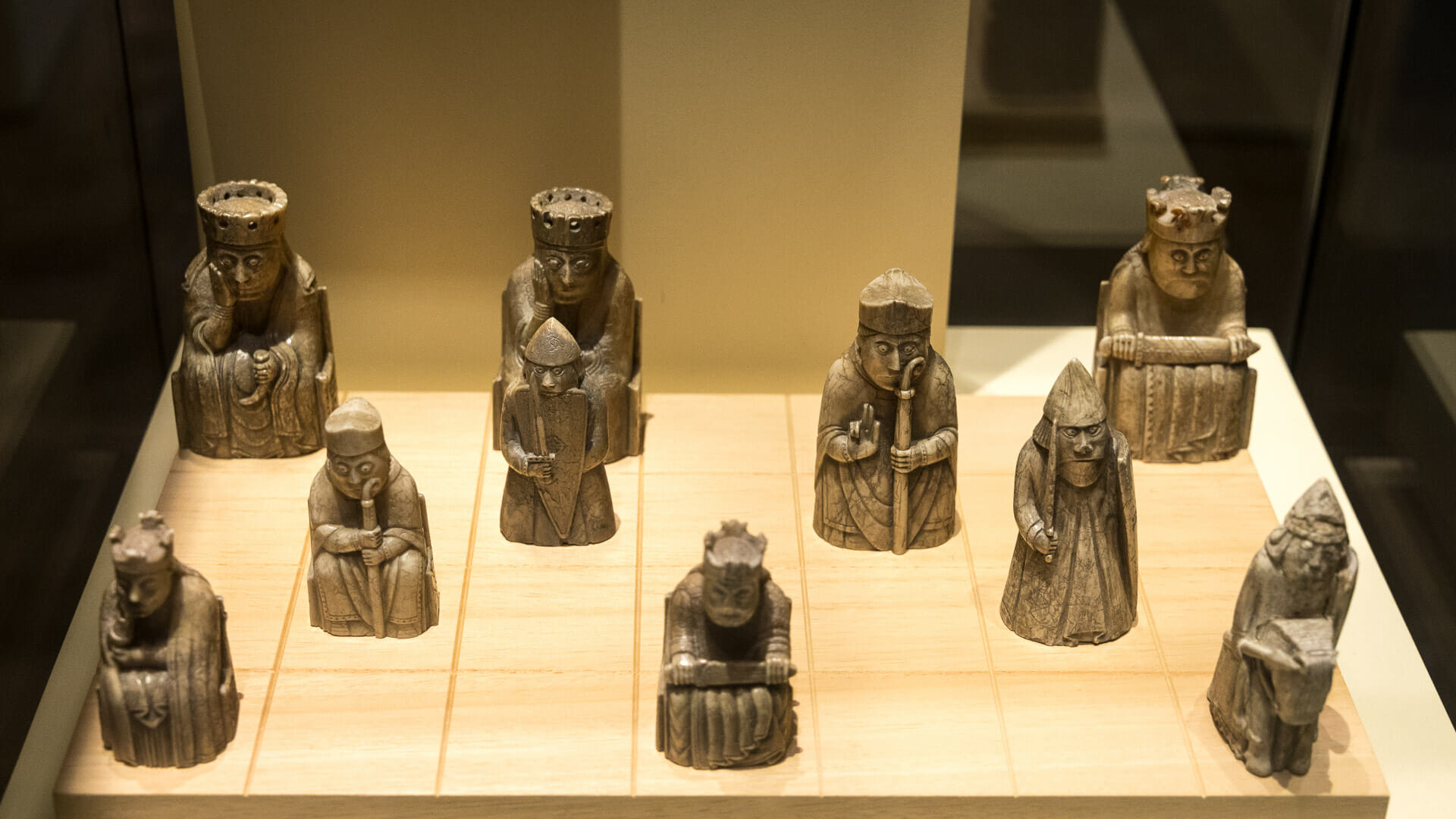
That the Lewis Chessmen originate from a Nordic realm is suggested by the pawns. They’re depicted as berserkers – raging warriors biting into their shields. Berserkers fought in a frenzy, feeling no pain, and appear throughout Norse poetry.
All of this remains speculation, though, since in the end no one even knows exactly where the Lewis Chessmen were actually found. Heated debates continue on the subject to this day.
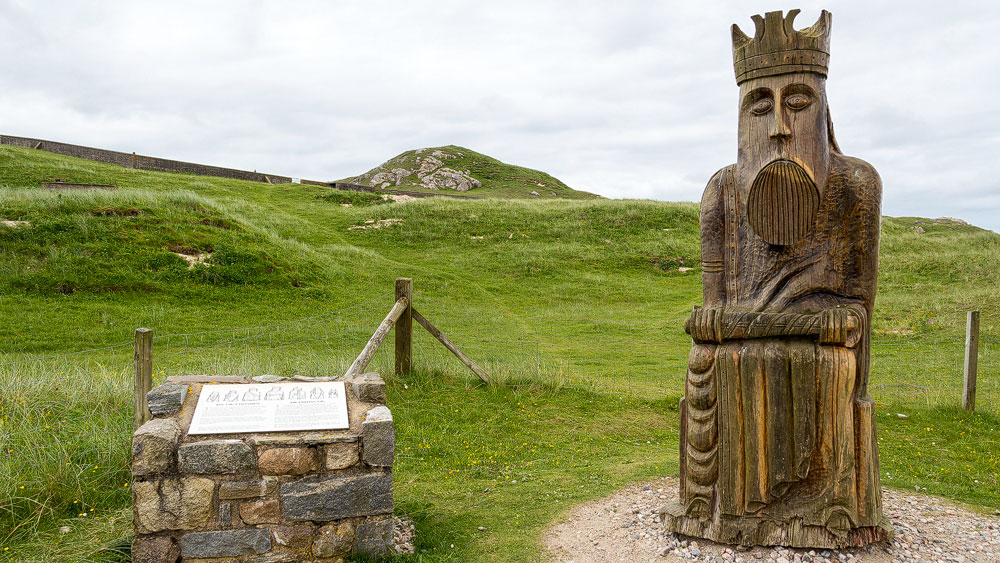
Eleven of the Chessmen are now on display in the museum in Edinburgh, the remainder in the British Museum in London. That none of these treasures remained in Uig is admittedly a pity. But the locals simply had new ones made – as larger-than-life wooden statues. A king now stands near the beach, a berserker outside the museum in Uig, and a knight by the Abhainn Dearg Distillery.
Incidentally, part of the third volume of Peter May’s well worth reading Lewis Trilogy, “The Chessmen”, is also set in Uig.
And one more celebrity: the “Scottish Nostradamus”, Coinneach Odhar, is said to have come from Uig. He became known as the Brahan Seer. Among his many astonishing prophecies, one of his grimmest actually came true:
“Oh! Drumossie, thy bleak moor shall, ere many generations have
Passed away, be stained with the best blood of the Highlands.
Glad am I that I will not see the day,
for it will be a fearful period; heads will be lopped off by the score,
and no mercy shall be shown or quarter given on either side.”
The moor at Drumossie, these lines say, would be stained with the “best blood of the Highlands”. Drumossie lies just a few hundred metres from the battlefield of Culloden, where hundreds of Highlanders lost their lives in 1746.
Brahan was rather less successful at foreseeing his own death: after he gave in to the pleas of Countess Isabella of Seaforth in 1665 and told her what her husband was doing in Paris at that very moment – kneeling before another lady – she promptly had him stuffed into a barrel of tar and burned. But before his death, the seer dictated a number of further prophecies, many of which never came true, though a few proved remarkably accurate. That said, Brahan is also something of a legendary figure – so no one knows for certain what he really said, or even when he truly lived.
Tips: visiting the Uig Museum and the view from Forsnabhal
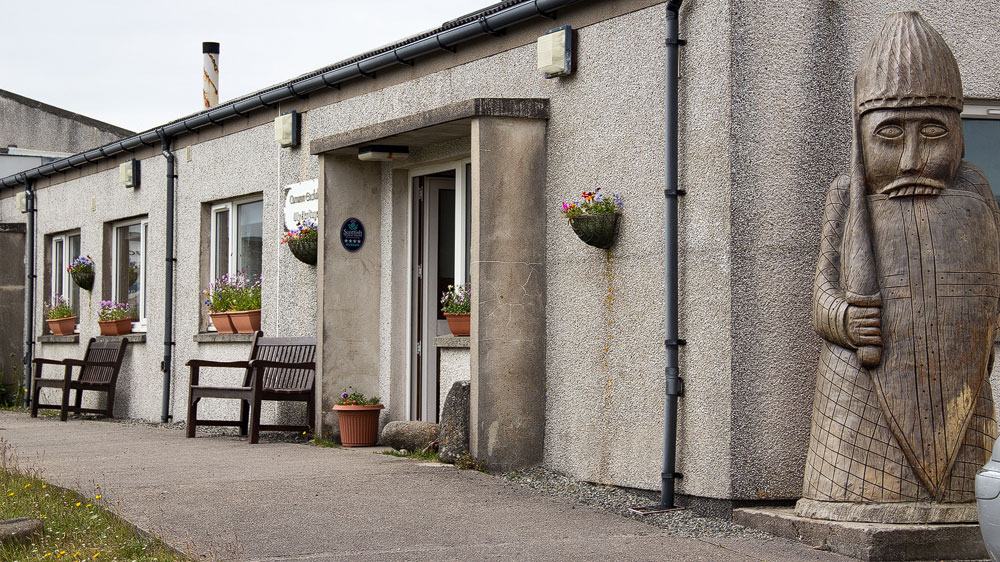
Near the school in Uig’s community centre, the small museum in Timsgearraidh introduces visitors to the history of the area. From earliest times, through the Viking era and into the last century, it shows what’s worth knowing about the way local people once lived. Exhibits and photographs let you immerse yourself in bygone – and often harsh – times. The Chessmen naturally feature too, though only replicas are on display here.
A fantastic view over Aird Uig – literally “Upper Uig” – can be had from the hill of Forsnabhal. It rises to 205 metres, with a weather station perched at the top. The best part: you can drive almost all the way up by car and only need to climb a short staircase for the rest.
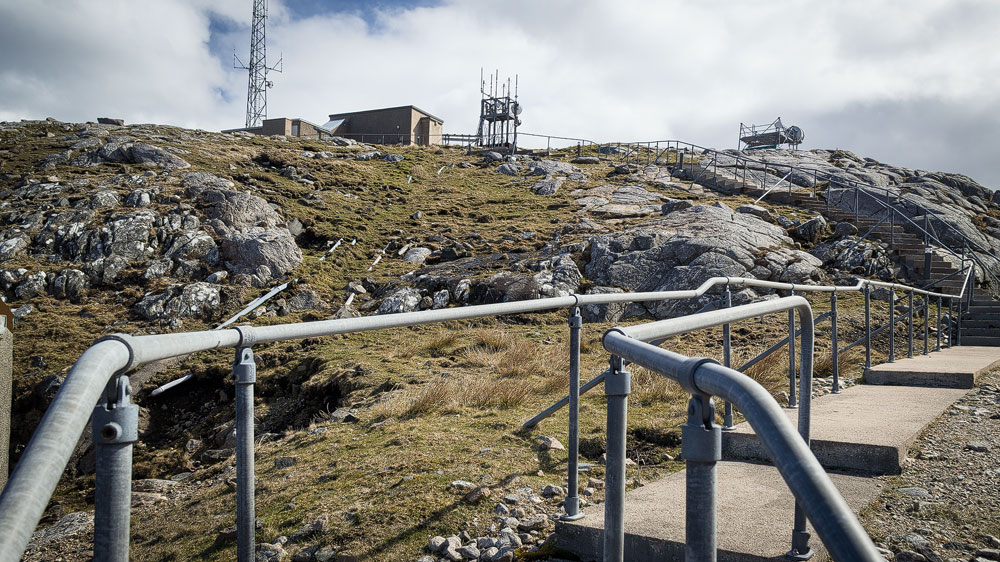
You’ll find Forsnabhal by turning right towards Aird Uig after Gleann Bhaltois and following the road until a side road branches off to the right and climbs up the hill. You’ll spot the station on the hill from quite some distance.
Personal note: a dreamlike part of the world
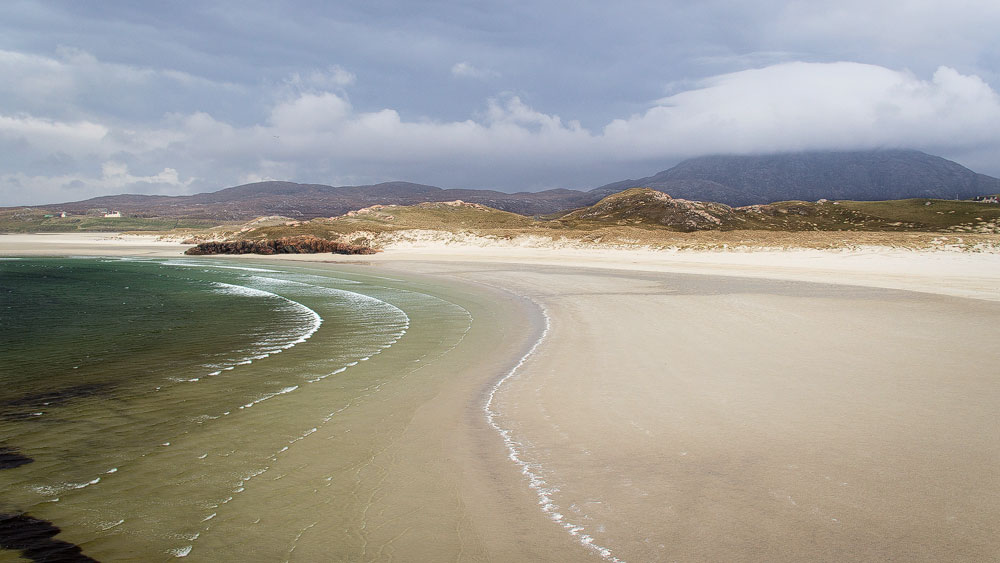
When I think of the Isle of Lewis, images of Uig and its surroundings are what come to mind. For me, this is the most exciting and wildest part of the island. There’s always something new to discover here, whether it’s a remote beach tucked into a cove, or a road that simply ends in the middle of nowhere. The peace and quiet of the area adds an extra layer of relief from everyday stress too.
As for accommodation in Uig, I can heartily recommend the Suainaval Bed & Breakfast. It’s located in Cradhlastadh and offers a fantastic view straight out over Tràigh Uige.
Getting there:
With sat nav: enter “HS2 9JE” and set off.
Without sat nav: From Stornoway, you first head towards the Uig area via the A859, but turn off almost immediately onto the A858 towards Gearraidh na h-Aibhne and continue until you reach that settlement. There, turn left onto the B8011 towards Timsgearraidh. Keep following the road onward, through the valley of Gleann Bhaltois (Glen Valtos).