The success story of the Vikings began on this island. The Viking Unst Project takes us back to the age of the Norsemen.
The island of Unst lies at the very northern tip of the Shetland Islands. And Shetland itself sits at the very north of Scotland. So it’s no surprise that the Norsemen first gained a foothold here, outside Scandinavia, before anywhere else.
Excavations have only reinforced this impression. Archaeologists have by now found the remains of around 60 longhouses on Unst that can be attributed to the Vikings (currently only available in German). That’s the highest density of Viking dwellings found anywhere in the world – including Scandinavia itself.
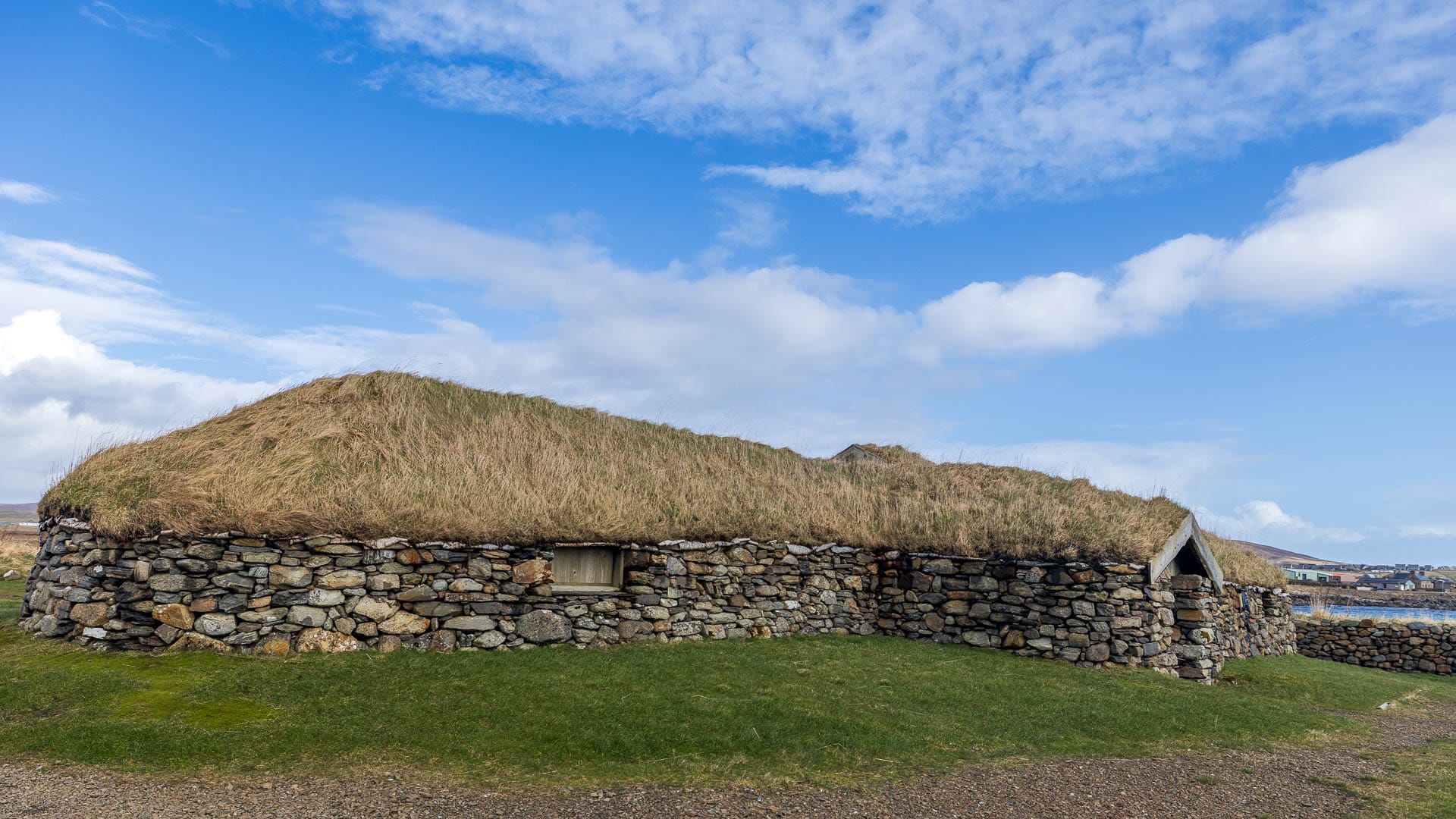
One of the best-preserved remains, the longhouse at Hamar, served as the model for the longhouse here at Haroldswick. Archaeologists spent three summers working on this replica. With great success.
When visitors open a door of the turf-roofed building today, they step straight into another era: a hall with timber posts and a central hearth.

If you’re lucky, you might stumble upon one of the events featuring re-enactors in Viking costume.
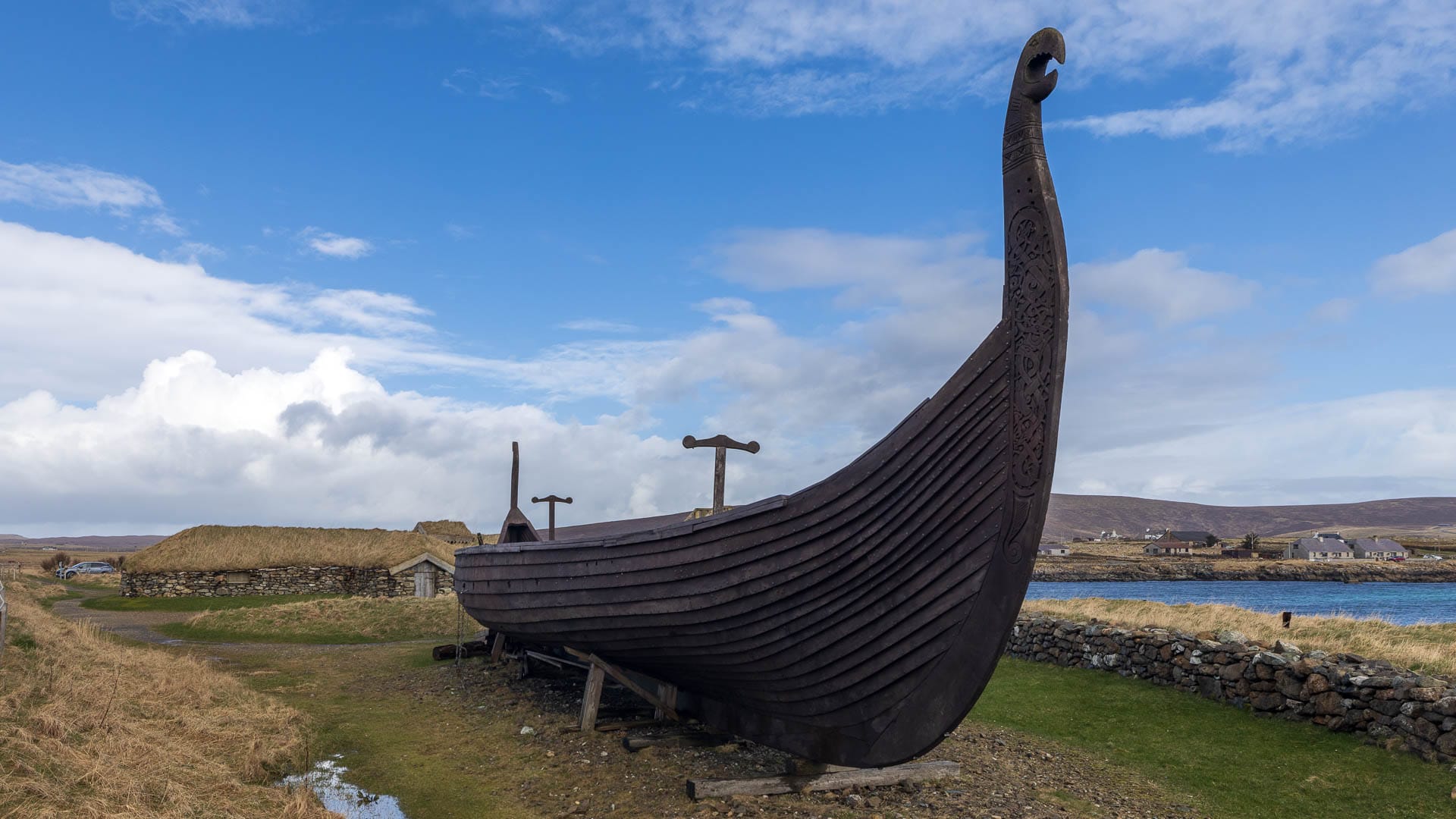
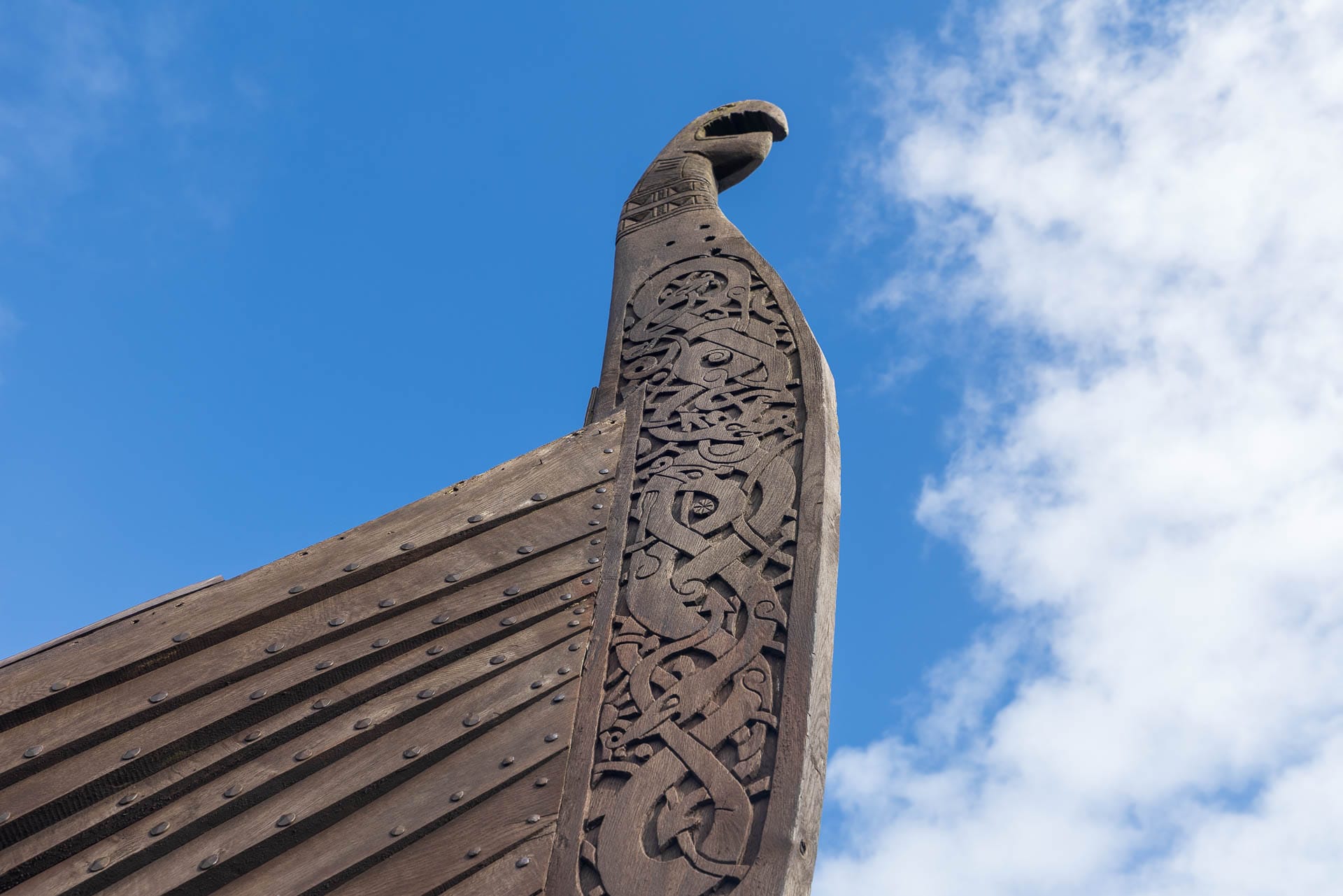
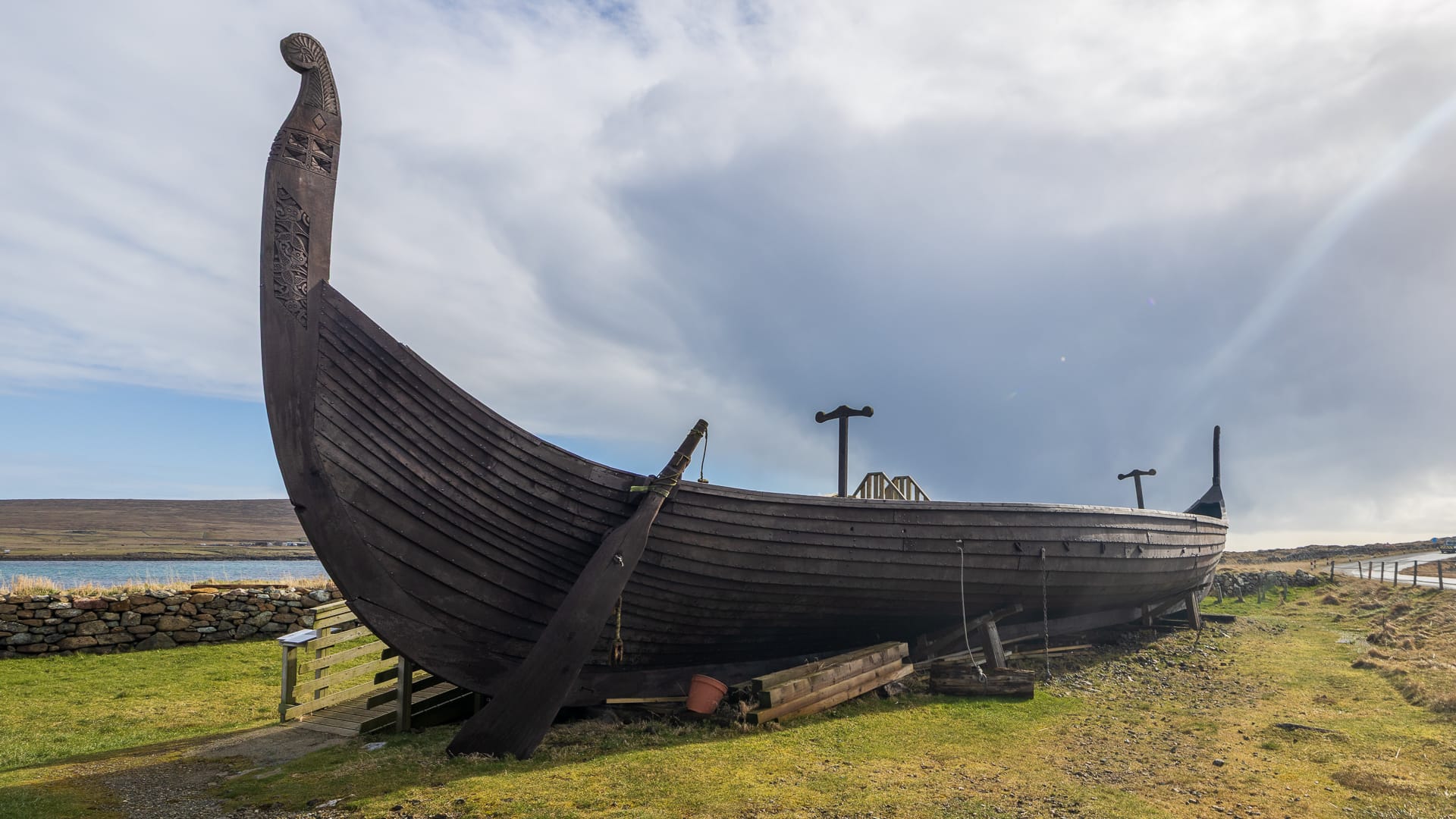
A little way in front of the longhouse, two dragon heads rear up against the sky. They’re the bow and stern of the Viking ship “Skidbladner”. The Skidbladner (masculine, in German usage) is likewise a replica – of the so-called Gokstad ship.
The remains of the Gokstad ship were discovered and excavated in the late 19th century. It dates from the 9th century, and gives us a clear picture of how the Vikings travelled across the sea.
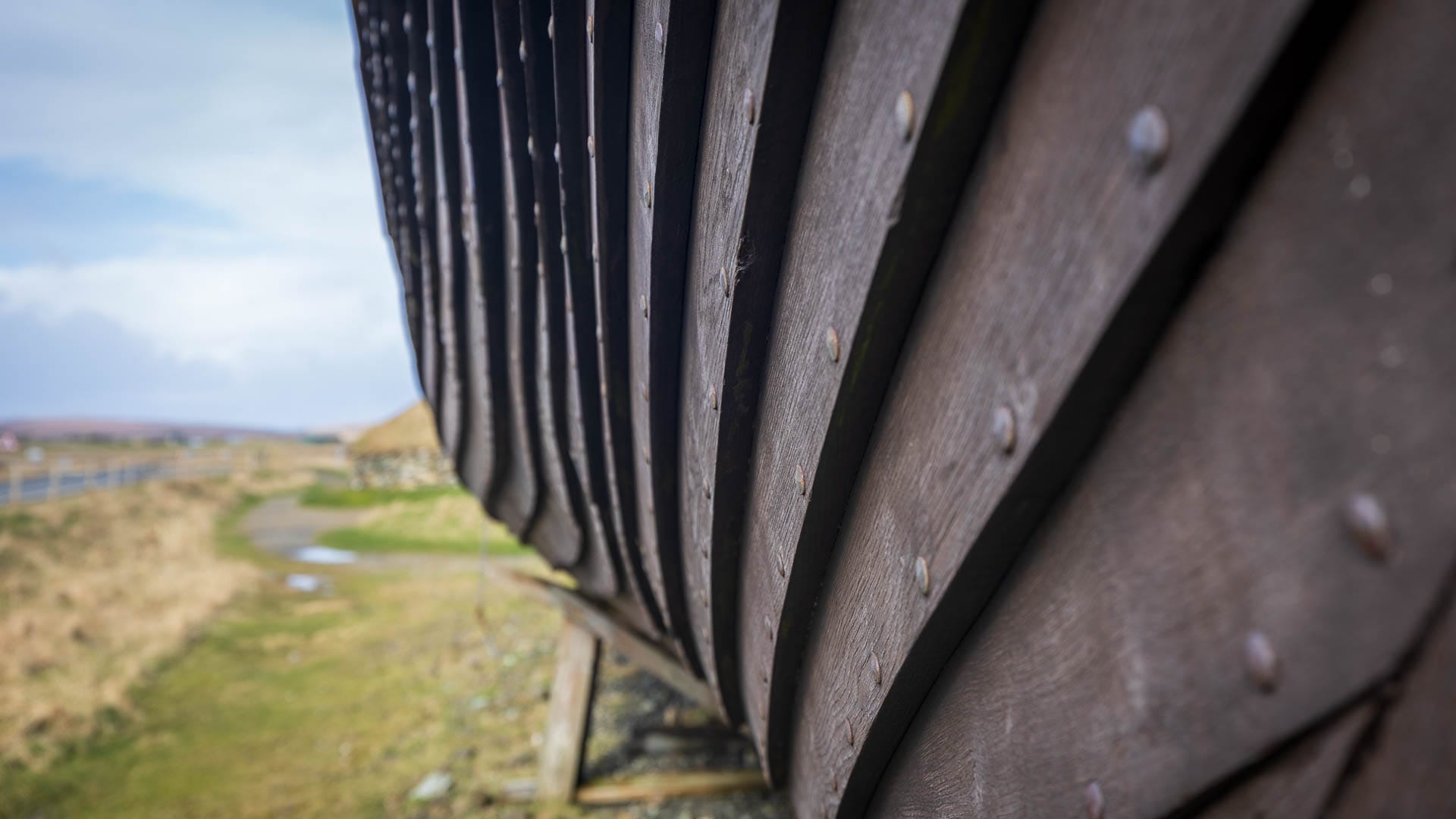
Visitors are allowed on board the 24-metre-long Skidbladner and can even take the helm themselves. From the outside, the full elegance of Viking shipbuilding becomes clear: in the clinker-built style, the wooden planks overlap tightly, forming a curved hull that hints at just how fast such ships once cut through the waves.
The Viking Unst Project, just outside Haroldswick, offers a fascinating glimpse into the world of 9th-century Vikings through these two reconstructions. It’s one of the most important attractions in Shetland. Anyone visiting Unst should definitely make a stop here.
Good to know: Skidbladner – old legends, modern mishaps
“Skidbladnir” was once the name of the ship belonging to the god Freyr, brother of Freya, in the Norse myths of the Edda. It was a magical creation: the ship could carry all the gods at once if needed, yet Freyr could also fold it up and slip it into his pocket.
Another figure had a hand in its construction by the dwarves: Loki, the god of chaos, trickery and transformation. Which might just explain why the story of today’s Skidbladner is riddled with so many problems.
The information board stays rather vague, saying only that the Viking ship was actually meant to sail to America around the year 2000, but only made it as far as Shetland, where it’s remained on Unst ever since. The people of Unst I asked didn’t know much more either.
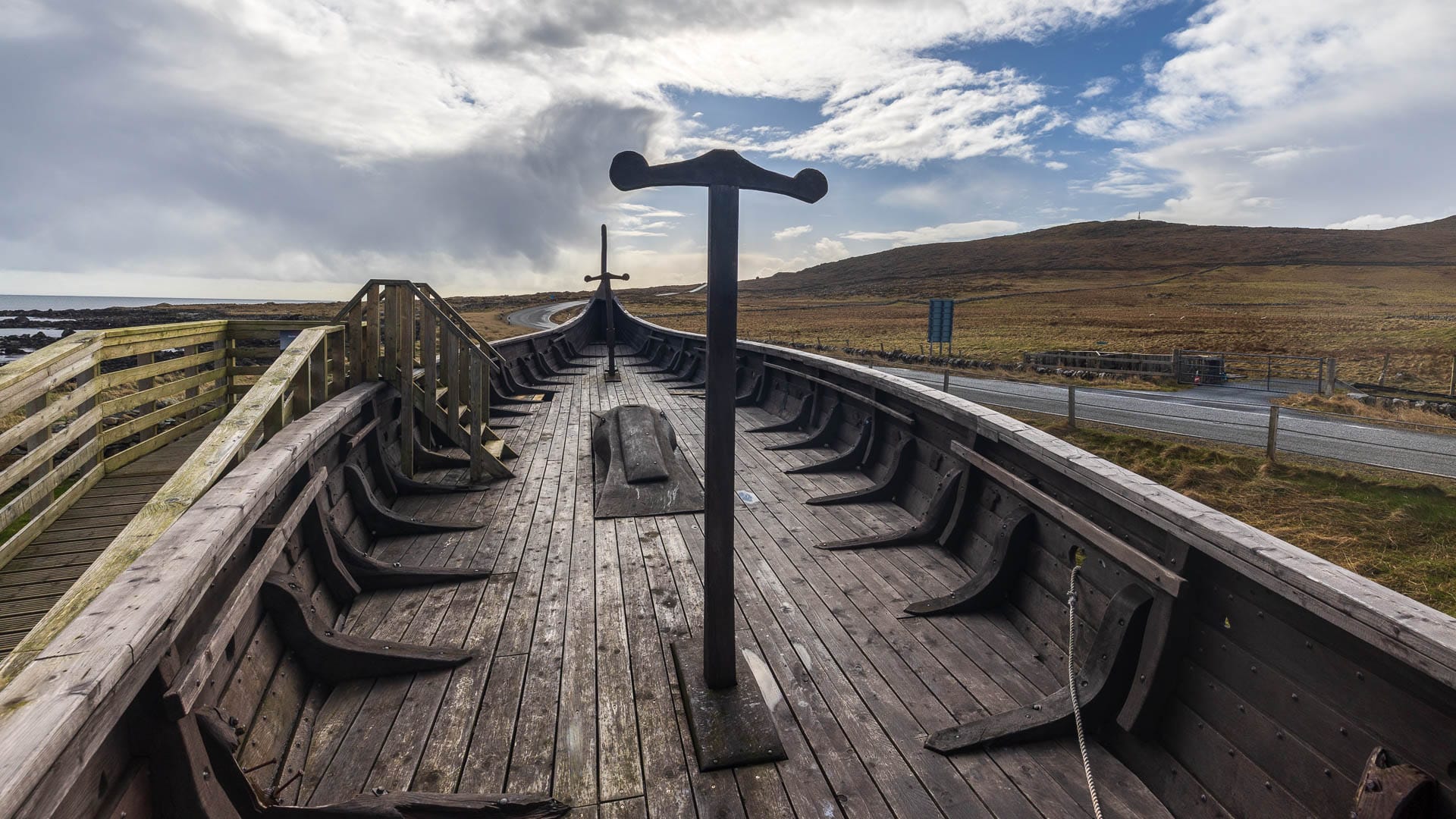
Scandinavian sources paint a clearer picture: the Skidbladner was built in Stockholm in 1999, and appears to have had a design flaw from the very start. Even so, the crew set sail and made it as far as Sumburgh. Off Jarlshof, the ship then apparently capsized.
What exactly happened after that isn’t entirely clear. Sources speak of damage caused by a crane, of a ban on continuing the voyage, of a crew divided among themselves, and of the owner finally abandoning the ship altogether.
In 2006, the Shetland Amenity Trust took over the wrecked Skidbladner. Drawing on all the expertise from the nearby Unst Boat Haven, they restored it and brought it to its current site. And although it apparently never really held up at sea, the Skidbladner has found a wonderful purpose here: showing visitors exactly how a Viking boat was built.
Getting there
With a sat nav: “ZE2 9ED” takes you to Haroldswick on Unst.
Without a sat nav: from the ferry to Unst, the main road A968 leads straight to Haroldswick. Just before the village, the Viking Unst Project appears on the right-hand side. Parking is right by the longhouse.
