Clava Cairns near Inverness bear witness to Scotland’s Bronze Age cults of the dead. The impressive site is barely visited. Yet it’s well worth the trip.
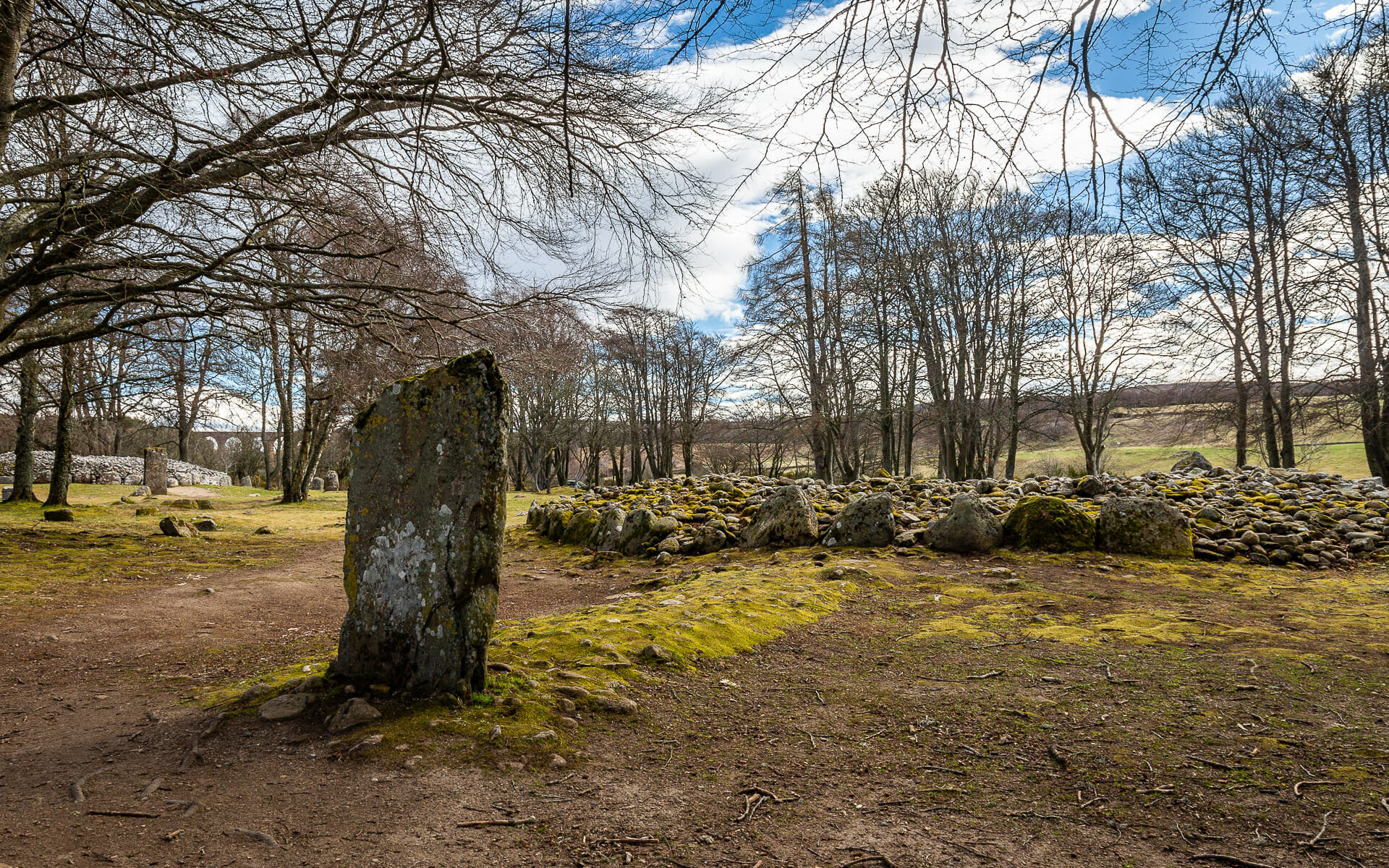
It isn’t just the 4,000-year-old history of Clava Cairns near Balnauran – it’s also the stories of those who have visited it. First there’s a lady named Diana Gabaldon, who had herself photographed here. The picture, showing her leaning casually between the paired stones, has since been recreated hundreds of times by fans of her Highland saga Outlander. It’s said Gabaldon drew inspiration from these stones for the stone circle in the book.
The proximity to Culloden Battlefield – it’s only 1.5 kilometres away – and the success of Outlander have brought a certain influx of visitors to this once rather sleepy stone circle. But it still remains fairly limited.
Perhaps a touch more important for Clava Cairns, though, was the visit of a gentleman about 150 years earlier. For when Augustus Pitt-Rivers came here in 1884, he gave the site new life and protection.
Pitt-Rivers had been the first official Inspector of Ancient Monuments since 1882, and he looked after the archaeological structures protected under the first Ancient Monuments Protection Act of 1882 – he and his later son-in-law had been instrumental in pushing that law through. Before that, landowners could do whatever they liked with such remains, and it often wasn’t the best. The stones of the cairns, for example, were popular building material for walls.
Today’s visitors have that law to thank for the fact that Calanais on Lewis, the Ring of Brodgar on Orkney, and 19 other sites across Scotland are still well preserved today. Clava Cairns among them.
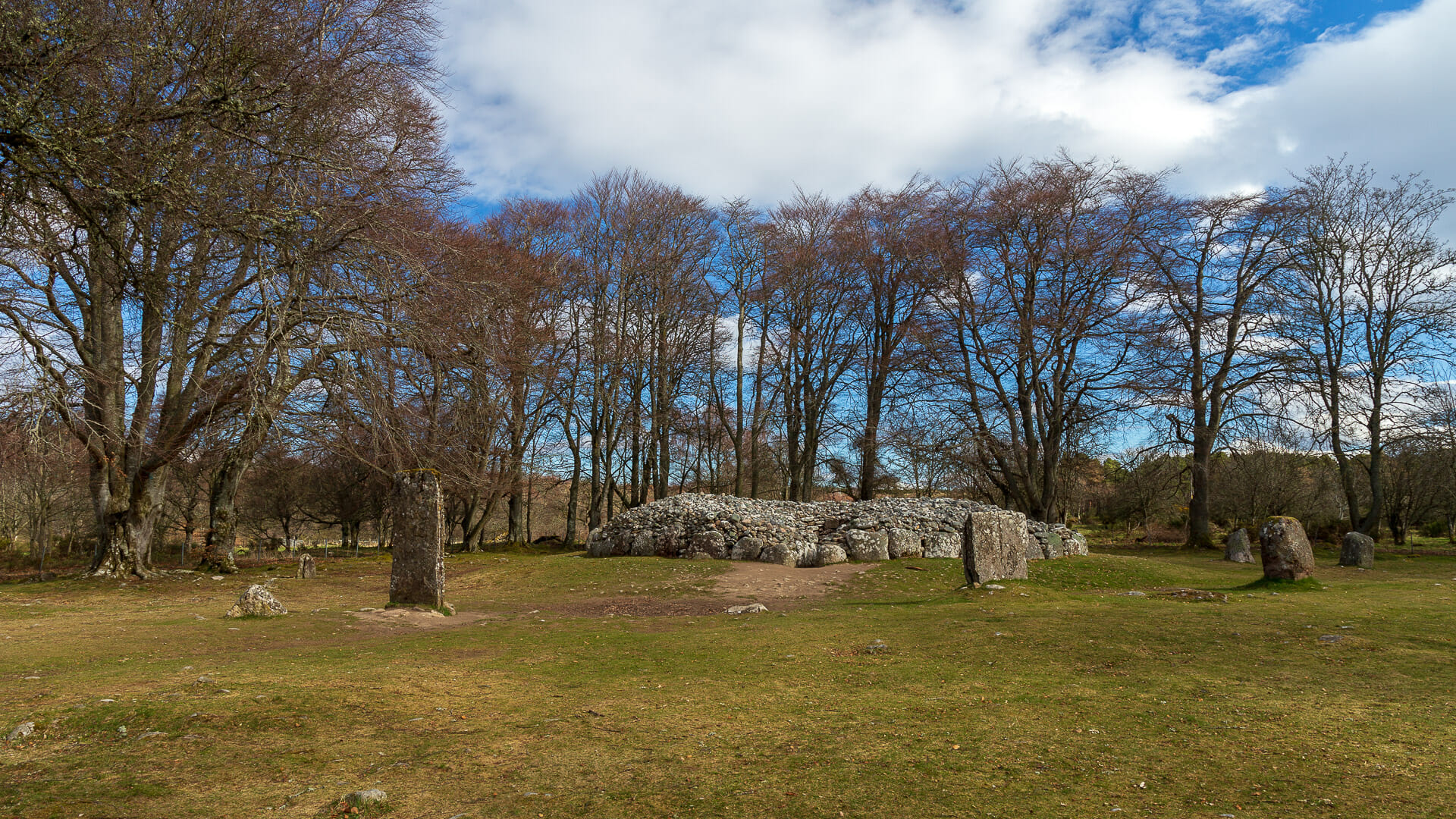
And Clava Cairns is worth preserving. It’s part of a larger system – numerous similar monuments line the River Nairn, though they aren’t open to the public. But at two spots these cairns can be visited: Balnauran and Milton of Clava. The Balnauran of Clava complex has more to offer: four cairns and three stone circles can be found at this site.
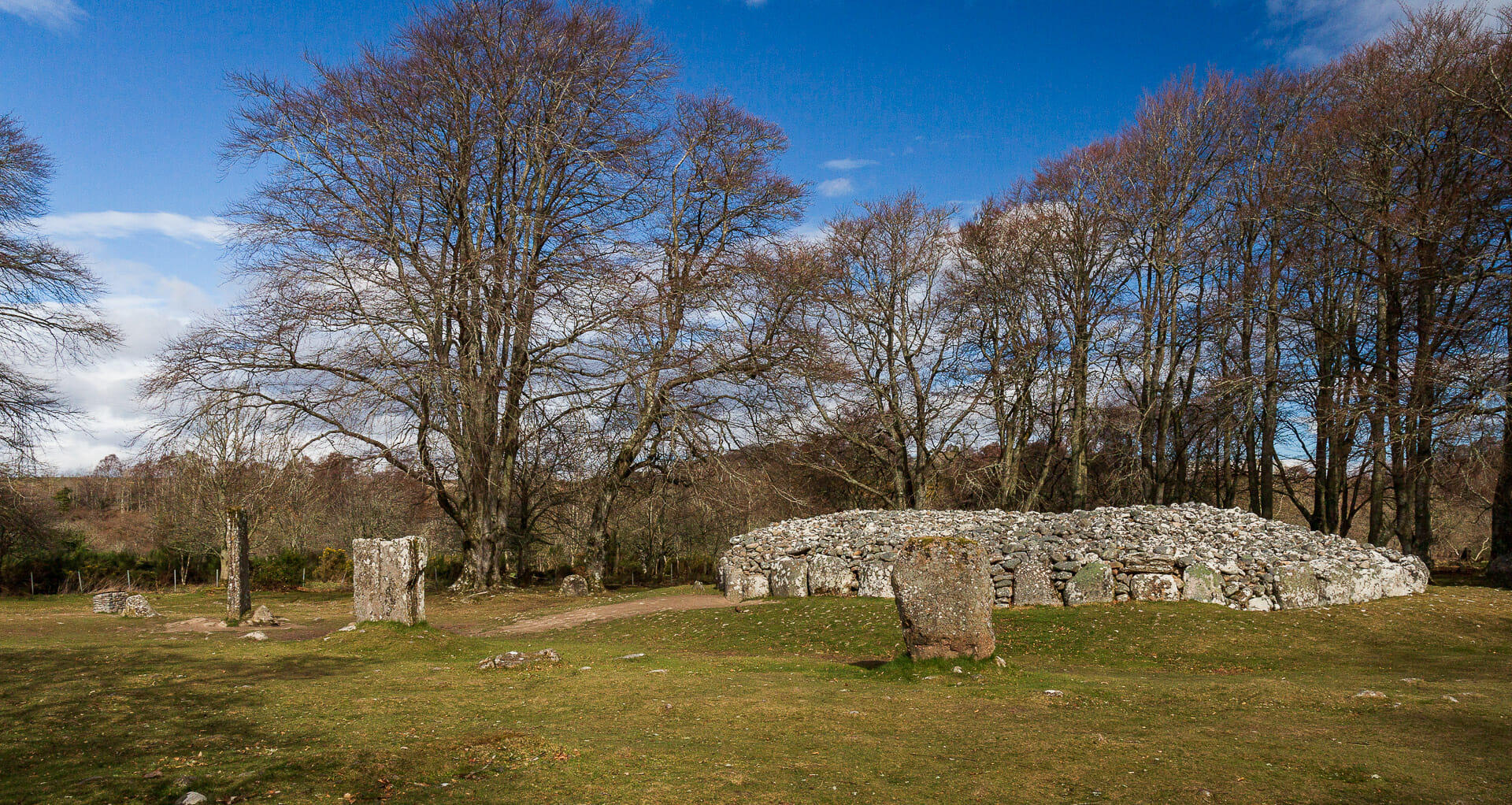
The cairns sit right by the small car park built for visitors (the Milton of Clava site is about 600 metres away on foot). Not every cairn is the same: two of the stone mounds have a passage and a chamber. The cairn between them, however, has no visible entrance. These three large mounds are each surrounded by a stone circle. The so-called kerb cairn, on the other hand, is easy for visitors to miss – it’s just a small ring of stones set into the ground.
There’s an alignment that runs through the whole site. The three large cairns stand along an axis running from north-east to south-west, with their open entrances facing south-west.
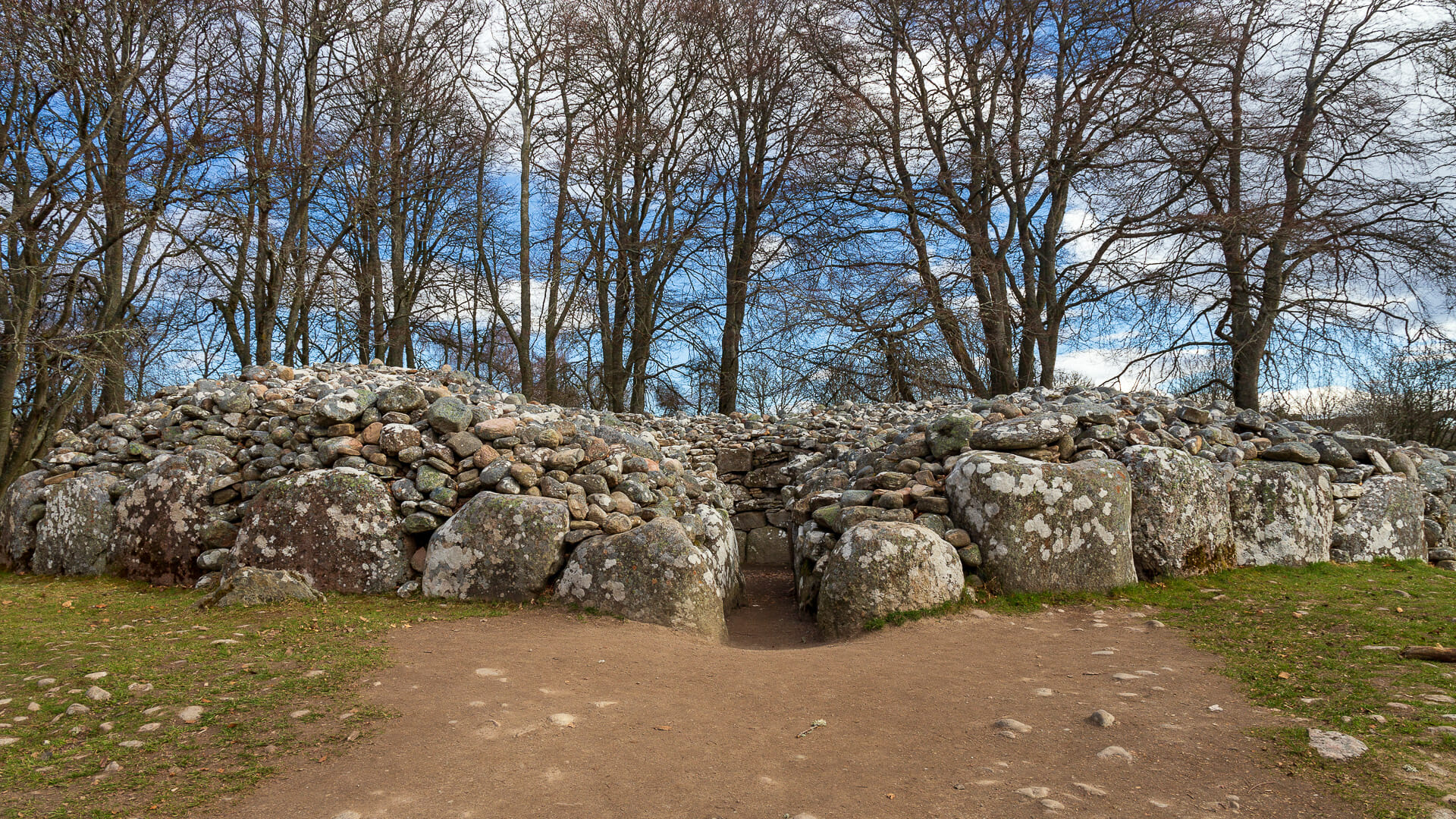
And the stone circles follow the same idea: the largest stone in each circle also stands to the south-west. What’s behind this?
For Bronze Age people, the winter solstice was the defining factor in building these burial cairns – on the shortest day of the year, the sun sets in the south-west. The entrances of the tombs are aligned so that on that one day, the rays of the setting sun shine exactly through the passage and fall onto the wall behind it.
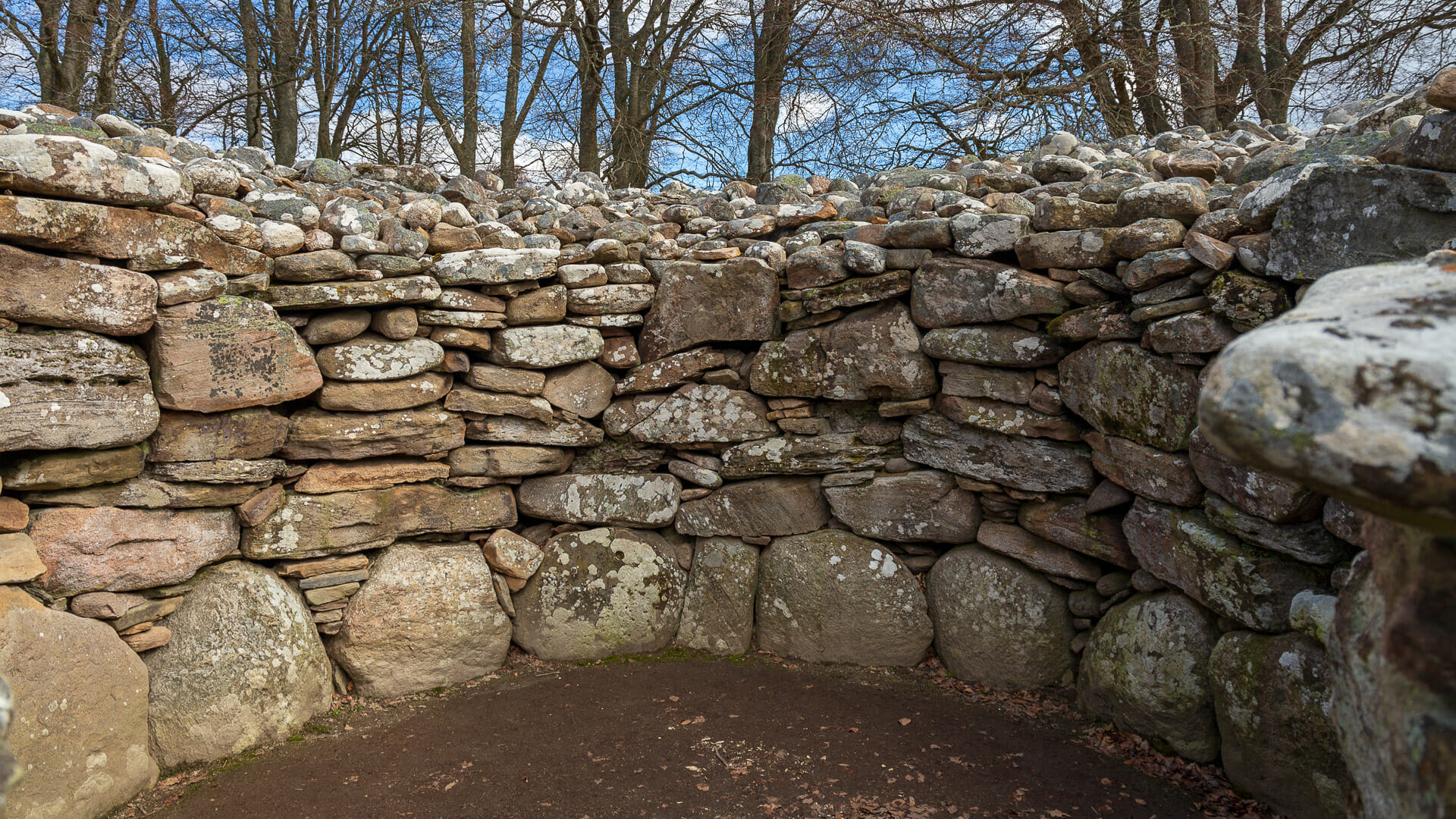
Back then, of course, the cairns weren’t open at the top, so the sun would have beautifully lit up the dark chamber for a few moments. Incidentally, this kind of effect can still be observed every year in the burial cairn of Maes Howe on Orkney.
Stone circles, burial cairns, the winter solstice – Clava Cairns is an ensemble of impressive Bronze Age monuments. Anyone visiting Culloden Battlefield nearby anyway should make sure to also visit this site.
Know-how: how old Clava Cairns is and what it was for
Thanks to radiocarbon dating, we can say fairly precisely how old Clava Cairns is and when it was in use. From around 2000 BC it was used for about two centuries, then again around 1000 BC. The kerb cairn, for example, dates from this later period. It’s a comparatively small round stone ring with a burial site at its centre.
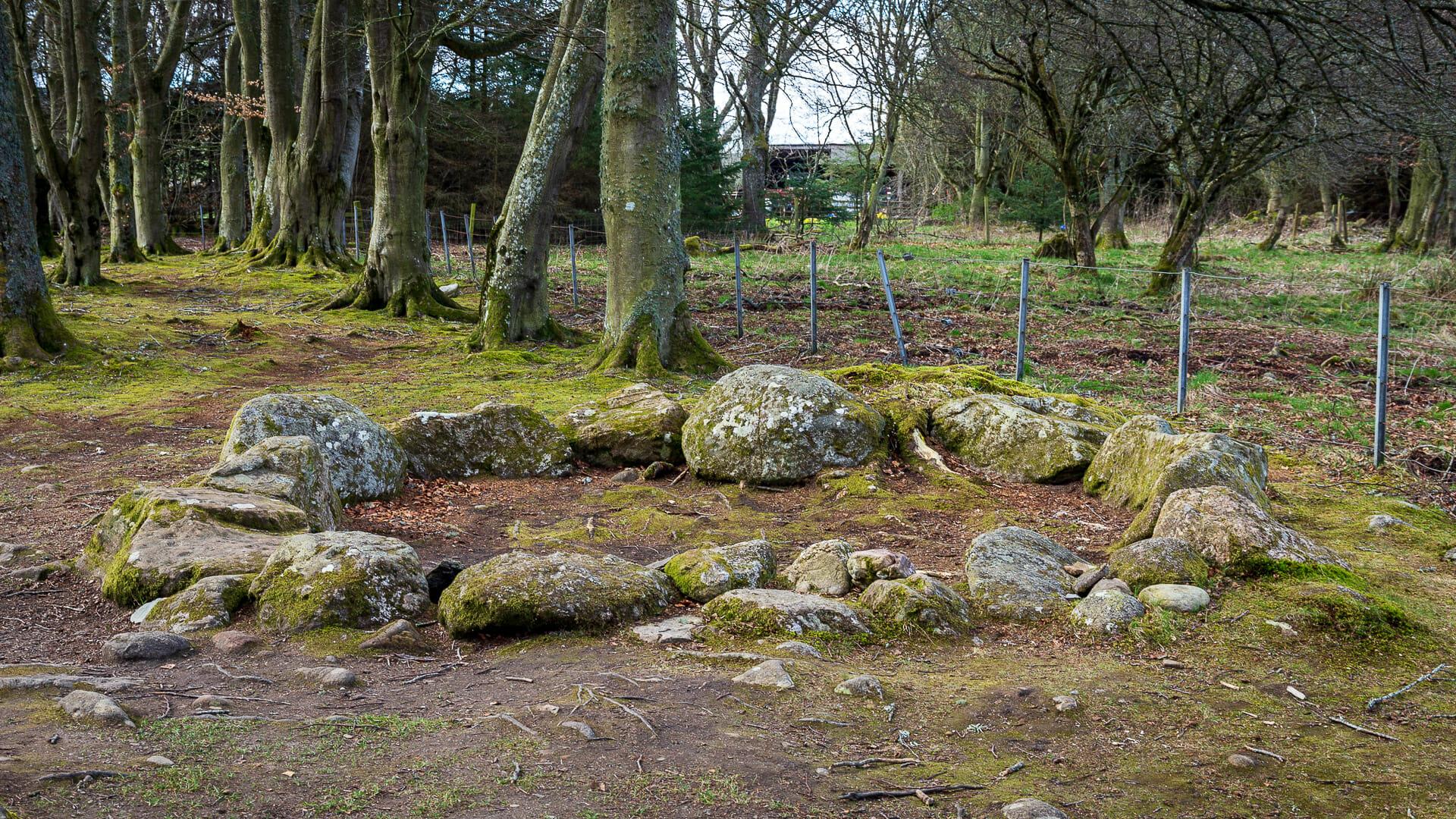
Quartz crystals, which played an important role during the Bronze Age, were also found at its centre. The purpose of the cairns was to give the dead a dwelling. Presumably, though, only important figures were laid to rest here.
The surroundings back then, incidentally, were without the trees we see today. Those weren’t planted until the 19th century.
Over the centuries, various women and men have set out to study the Clava Cairns site. Even before Pitt-Rivers, for example, archaeologist Christian Maclagan drew up a plan. In 1930, Kathleen Kennedy produced an even more precise plan. Stuart Piggott carried out excavations in the 1950s, and finally Richard Bradley had a radiocarbon investigation carried out in the 1990s. The cairns were, and remain, highly significant – and probably still hold a few secrets.
Getting there:
With a sat nav: “IV2 5EJ” will take you to Clava Lodges, just before the turn-off to the car park.
Without a sat nav: From Inverness, head first towards Culloden Battlefield. Drive past its entrance, however, and take the next turning on the right. Clava Cairns is already signposted here. Keep following the road and cross a bridge, then take the first right and continue through to the car park.
