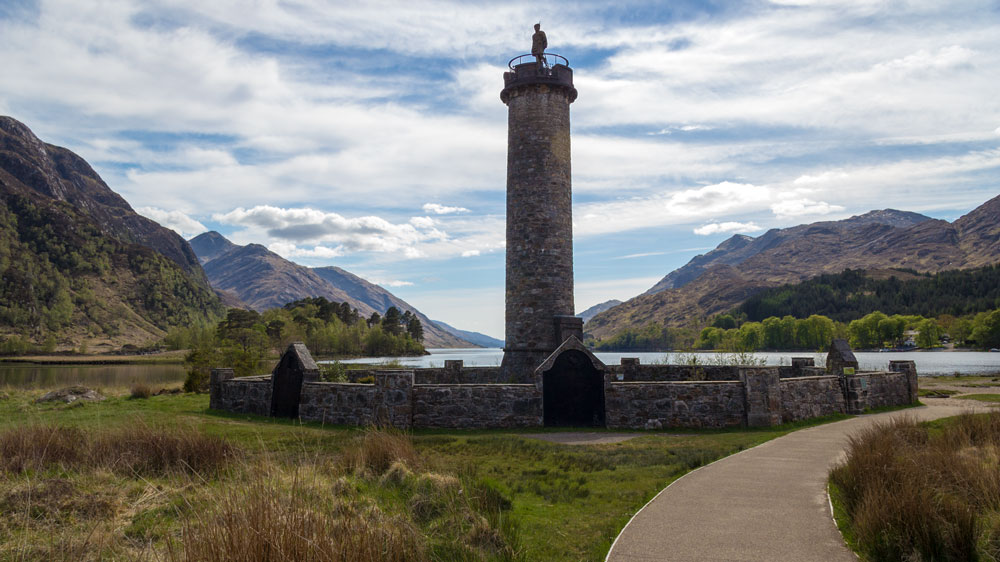
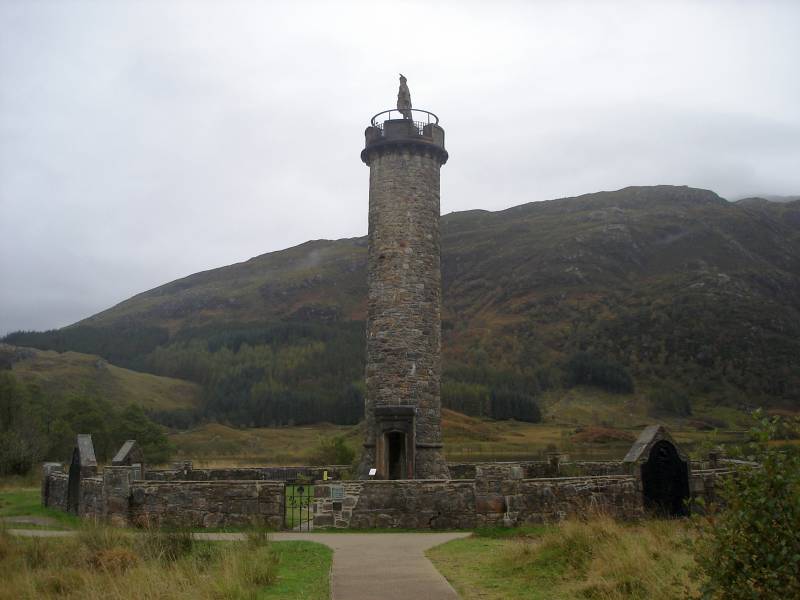
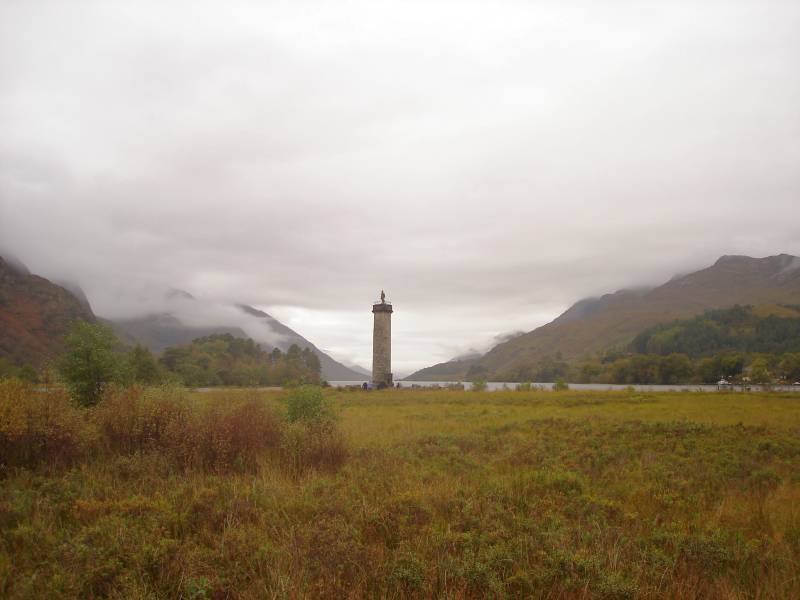
A dark tower set against the picturesque backdrop of Loch Shiel. It was here, in 1745, that Bonnie Prince Charlie landed and raised his standard, before going on to lead the Jacobite Rising.
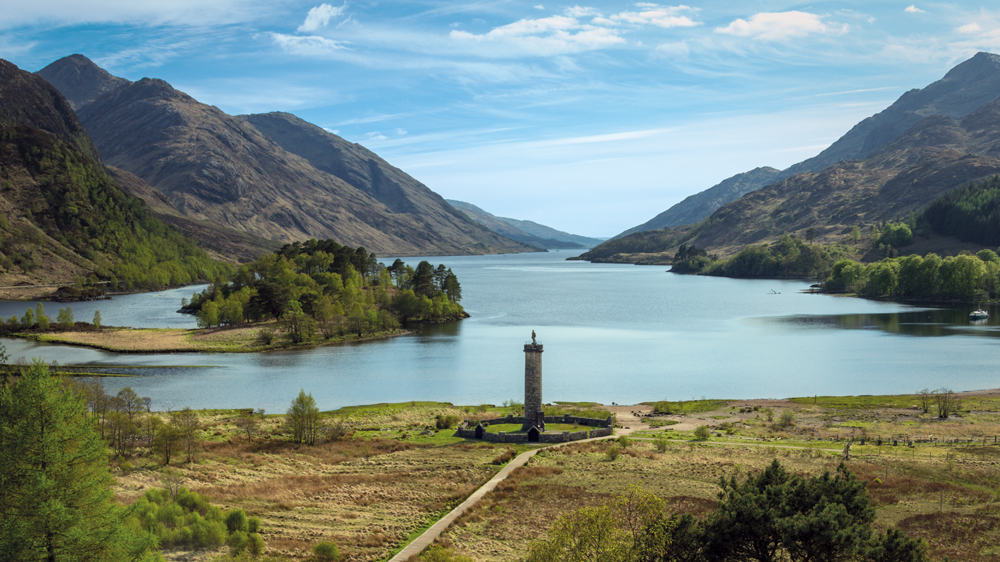
The Prince was nervous. This was where his mission might begin – or already be doomed to failure. He looked up at the standard, the banner of his father James VIII, son of the last reigning Stewart king on the British throne. It fluttered in the wind on a rise, clearly visible to any potential supporters – behind it stretched the beautiful Loch Shiel, on whose shores he had landed that very day.
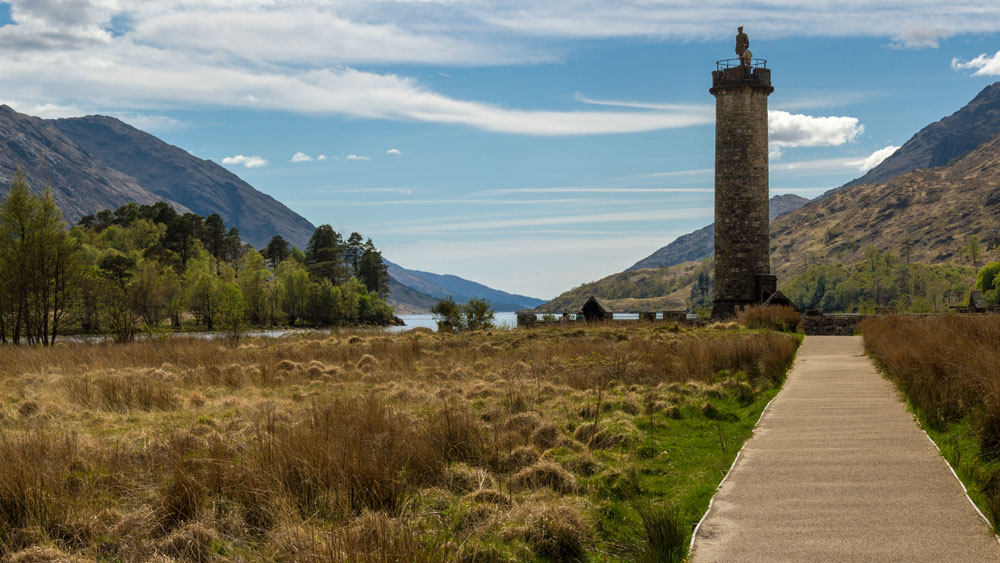
It had been a good month since he had boarded the ship at Nantes that finally carried him, for the very first time, to the land of his forefathers. And now he, Charles Edward Louis Philip Casimir Stuart, would join forces with his loyal followers to reclaim the throne the English had stolen from his grandfather.
So today, on 19 August 1745, it would all begin – if, that is, the Highlanders had answered his call to arms and made their way to Glenfinnan to gather here.
The Prince looked up at the flag. All that could be heard was it fluttering in the wind … but wait! There was another sound too, an anguished tone drifting through the air, dissonant notes slowly merging into a melody.
Bagpipes! And they were drawing closer.
And there they came, the proud Highlanders fully armed, led by their chiefs and guided by the sound of the pipes. They were the Camerons, and there were many of them – several hundred. They were the first to arrive, the most loyal of all – “For King and Country” had always been their motto. Good men!
So the beginning had been made. The Prince was certain: more would follow the Camerons – the MacDonalds of Glencoe, the Grants, the Stewarts of Appin, the MacLeans and MacLachlans, even a few MacLeods … all of them would now join his cause.
And it was here that it would all begin – here in Glenfinnan.
Did you know: The monument at Glenfinnan
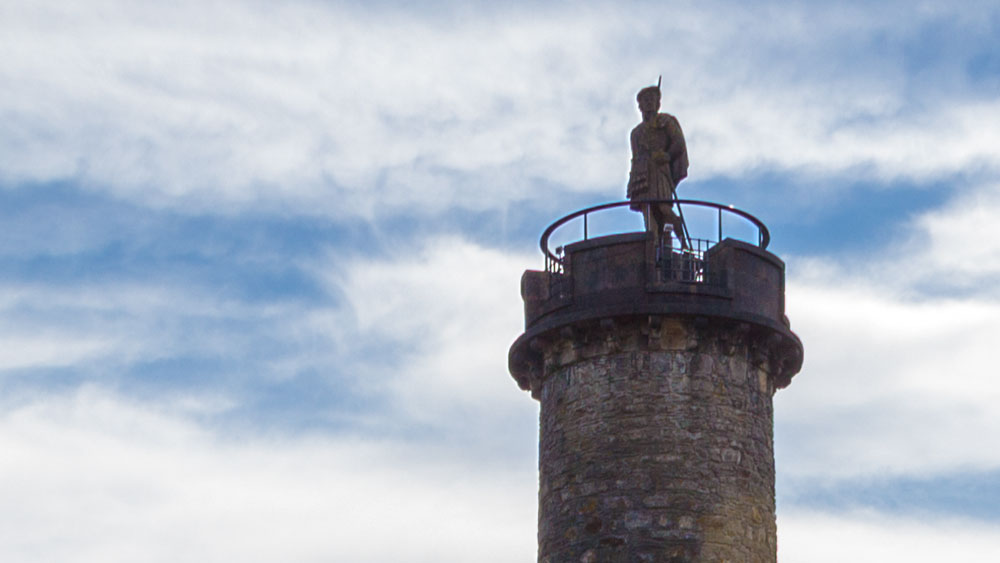
This was indeed where the great Jacobite Rising began – a rising that would end tragically at Culloden. A little over half a century later, a certain romanticising of these events took hold, and a monument was finally erected here in 1815. Incidentally, the statue on top doesn’t depict the Prince, but an unknown Highlander.
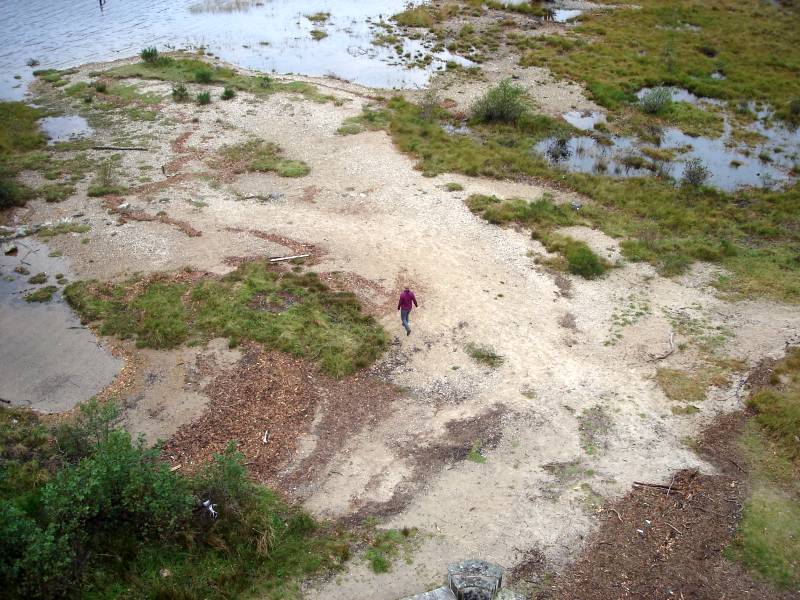
From the top, visitors get a wonderful view over Loch Shiel, nestled between cloud-wreathed mountains.
Film location: Harry Potter and Highlander
Loch Shiel appears in the Harry Potter films as the Great Lake at Hogwarts.
In the film Highlander, one scene takes place on a boat, where Ramirez teaches the Highlander about “balance”. That scene was also filmed on Loch Shiel.
The monument itself appears in the 1948 film about Bonnie Prince Charlie, starring David Niven.
Personal note: a look into the past
On my first trips, I ignored the monument. What’s so special about a monument, I thought? That was a mistake! The view from the top is well worth it, and the history is fascinating. Well worth a visit!
By now, I’ve been there three times. And every single time, I had lousy weather. But after the third visit, I got lucky – the weather suddenly turned fine the next day. So we drove all the way back from Oban, just to finally get some photos of the monument and Loch Shiel in the sunshine.
Tips: history brought to life
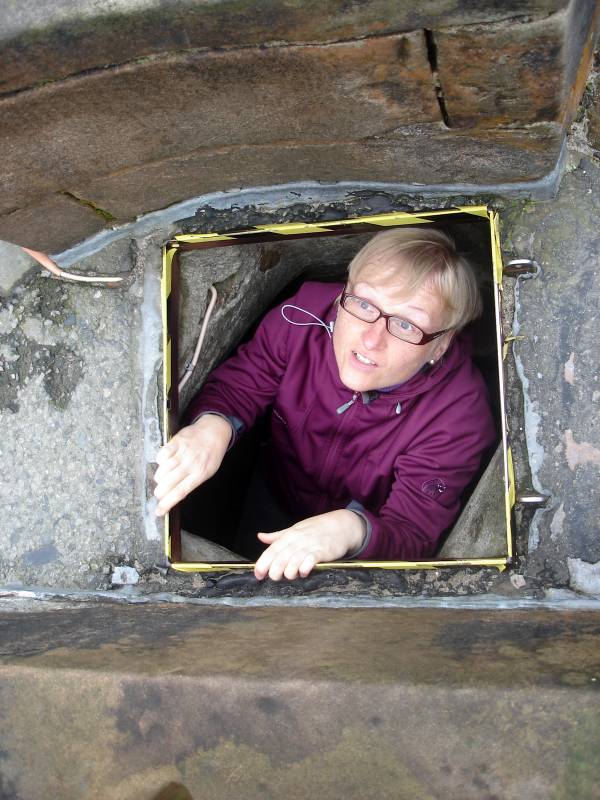
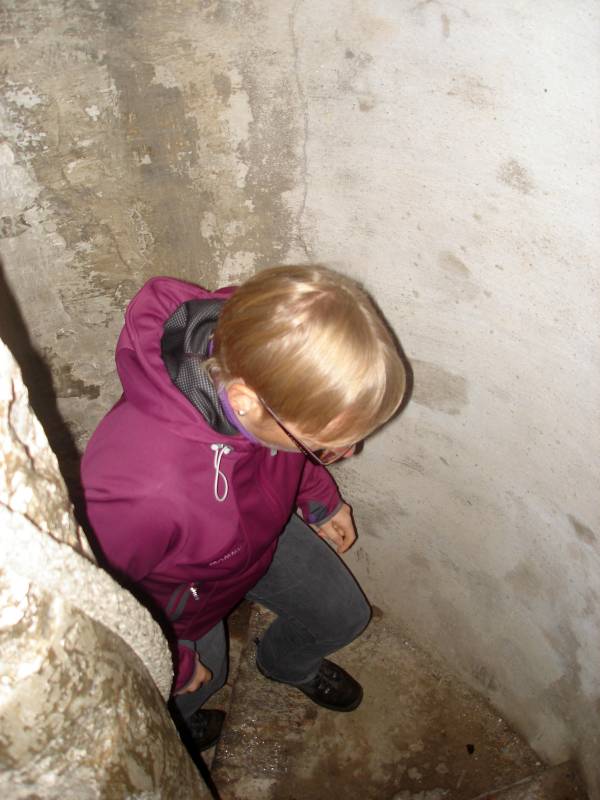
A small spiral staircase inside the monument leads up to the top platform, which gives you a good view of the loch and the surrounding landscape. What it lacks, though, is space: perhaps four people can stand up there at most. The staircase only allows one person through at a time – anyone coming the other way is out of luck. The exit hatch requires a bit of acrobatic skill, and it isn’t suitable for larger or older visitors.
Still, if you’re able to, it’s well worth climbing up to take photos of Loch Shiel. Wear sturdy shoes, and bear in mind that the steps and platform can be slippery.
In the small museum, you can listen to an audio guide telling the story of the Jacobite Rising at a display with a handset. It takes a few minutes, but it’s well worth it.
Getting there:
By sat nav: Entering “PH37 4LT” will bring you to within a few hundred metres of the Visitor Centre.
Without sat nav: From Fort William, take the A830 towards Mallaig. About halfway there, the Glenfinnan Monument appears on the left, just before you reach the village itself. The car park and Visitor Centre, however, are on the right.