It’s Scotland’s most famous, and perhaps most beautiful, church. But who actually had it built? The trail leads north.
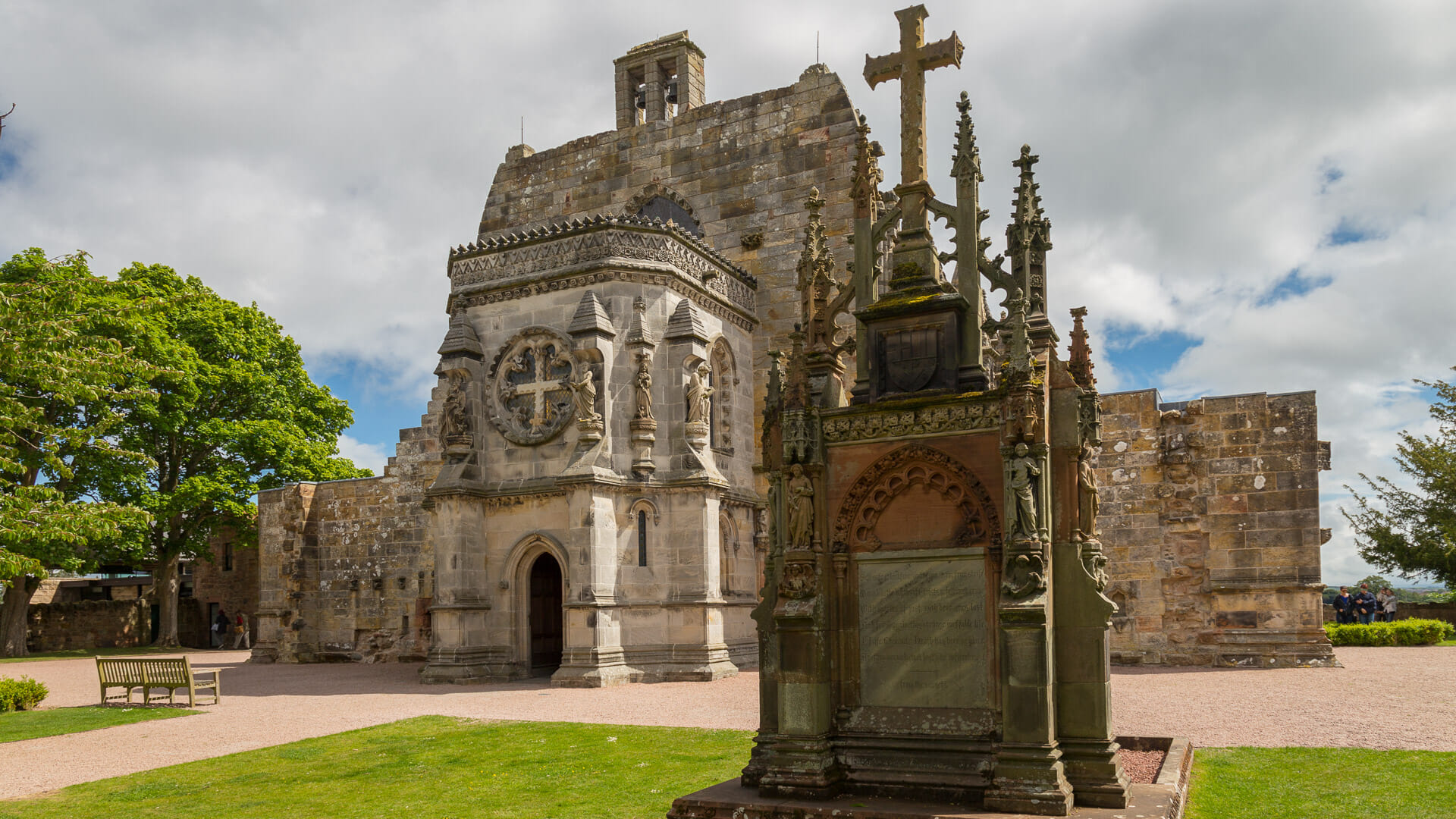
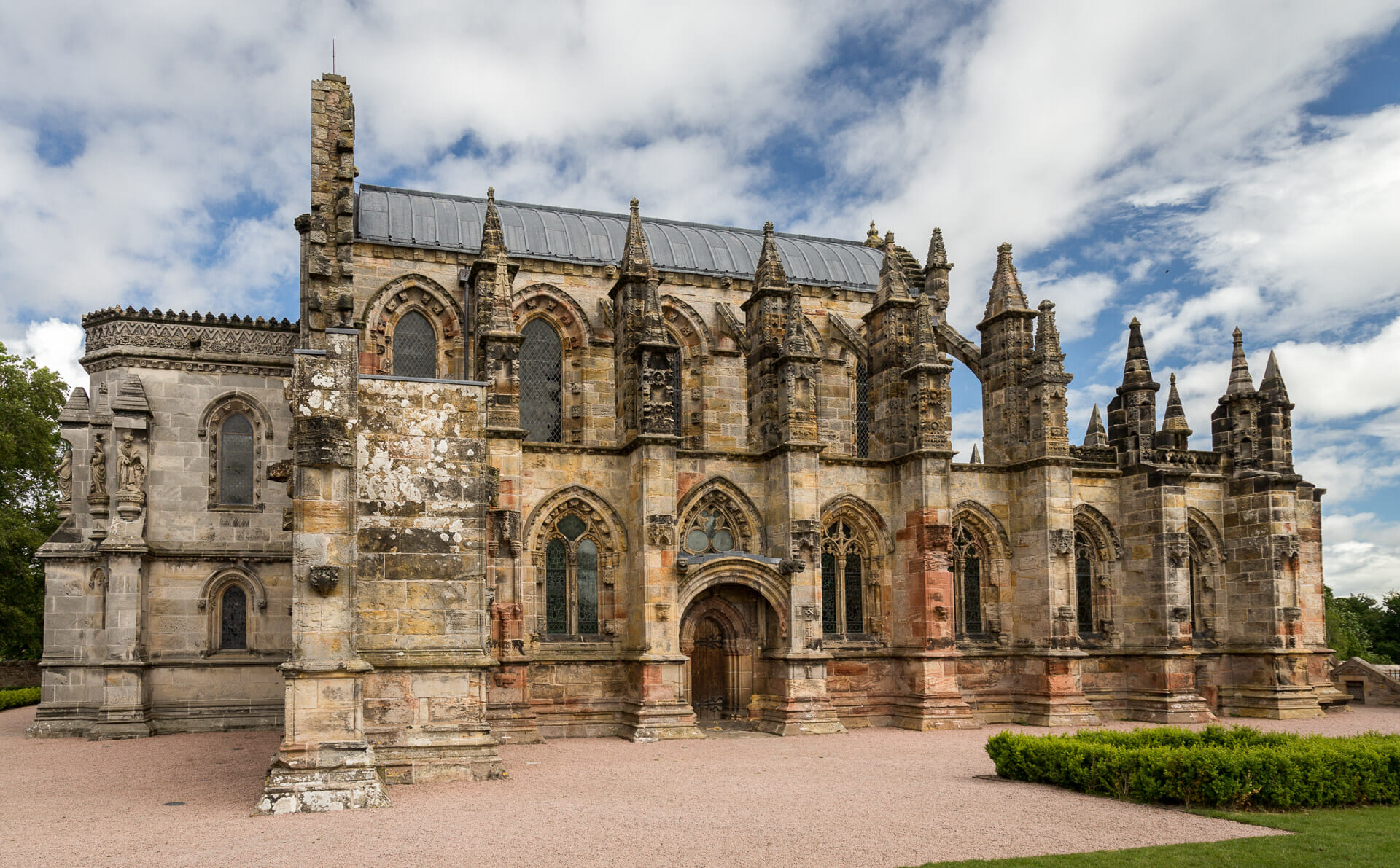
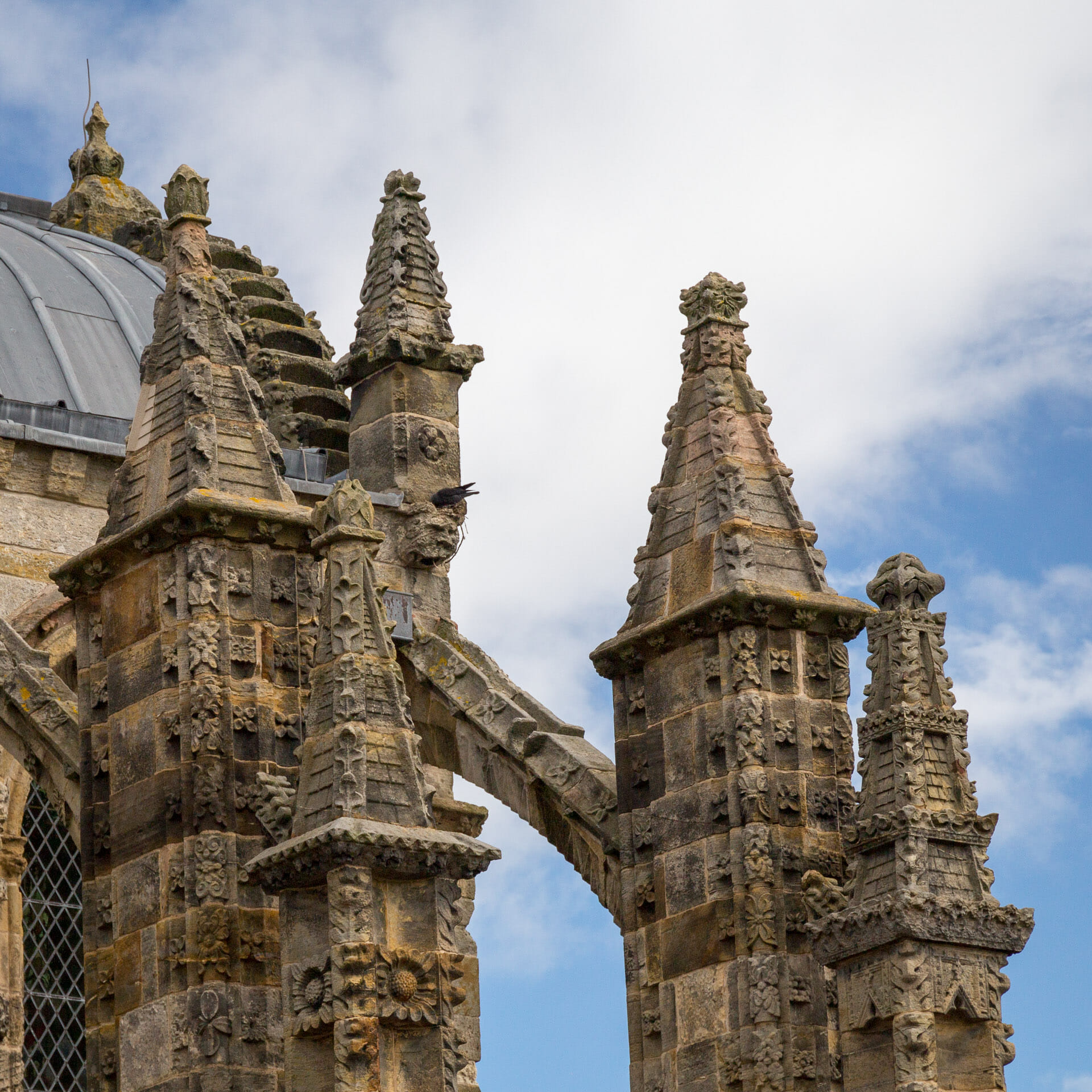
What splendour! Rosslyn Chapel shows off Gothic buttresses topped with pointed little turrets, so-called pinnacles. Ornaments adorn the exterior masonry, and statuettes peer down from their niches at the astonished visitor. And that’s nothing compared to what awaits inside the church.
Rosslyn Chapel is surely one of Scotland’s most beautiful churches, and one of the oldest still standing too – the Sinclair family began building it as early as 1456. Naturally, the building has many moving stories to tell. For instance, the story of the decay it endured for a long time.
When the religious Reformation raged through Scotland in the mid-16th century, the Sinclairs were ordered to destroy the altar and abandon Rosslyn Chapel. The family remained Catholic, but now held Mass protected in a small chapel instead. Troops of the notorious Oliver Cromwell later even used the church as quarters for themselves and their horses. The beauty of Rosslyn Chapel faded.
Yet visitors kept coming even back then. Even the national poet Robert Burns was inspired by the chapel at the end of the 18th century. When Queen Victoria finally saw Rosslyn Chapel in 1842, overgrown with plants and slowly deteriorating, she declared that the church had to be preserved for the good of the country. An order is an order, and twenty years later services were being held here again.
Even so, it took roughly another hundred years before restoration was tackled in earnest, and it still continues today – damp makes life difficult for the walls. But visitors today can nonetheless sense the former splendour once again.
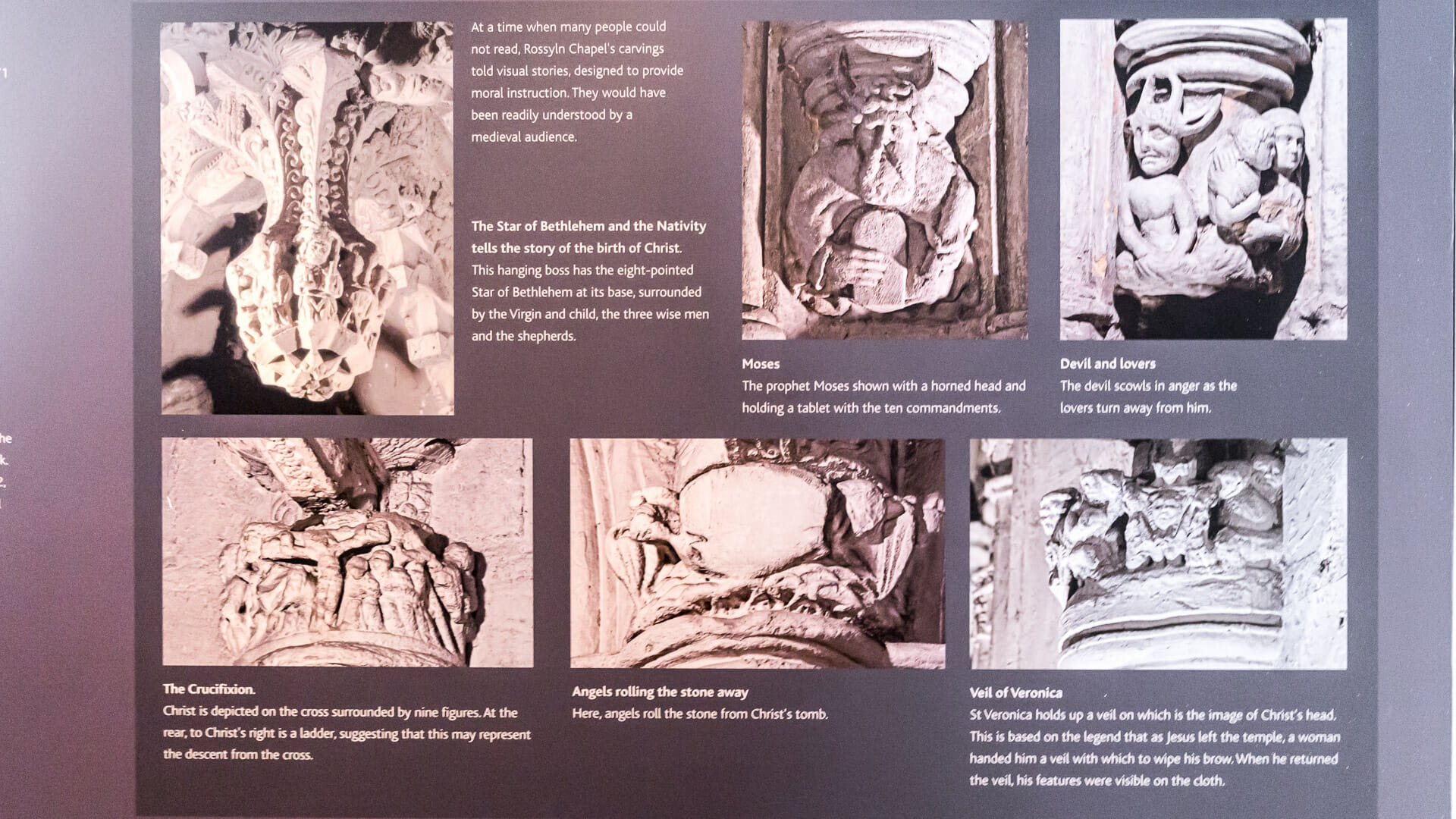
It’s above all inside – where photography is forbidden – that the craftsmanship of that era reveals itself. The finest ornaments, elaborate tombs and colourful stained-glass windows unfold before you. The so-called Lady’s Chapel at the front of the church in particular is adorned with an overwhelming amount of fine stonework.
Behind the obvious stories told by the images and reliefs, there are often further ones that only come to light through the tour guides’ explanations. Take the one about the apprentice who created a beautiful pillar while his master was away. The master, you see, didn’t believe the pillar could be made without having seen the original abroad. So he set off. On his return, however, he saw that the apprentice had already crafted the pillar to perfection. The jealous old man couldn’t bear it and promptly killed the boy. The master himself was sentenced to death for it, and as a further punishment, a stone likeness of his face in the corner of the church must now gaze forever at the apprentice’s pillar.
Finally, there’s one more story – fictional, though – that brought Rosslyn Chapel worldwide fame. Author Dan Brown set the ending of his bestseller “The Da Vinci Code” in the chapel. Some time later the book was also made into a film, which still draws visitors today – around 150,000 come here every year. Funnily enough, the chapel was covered in scaffolding for renovation work at the time of filming. So the filmmakers had to build artificial walls.
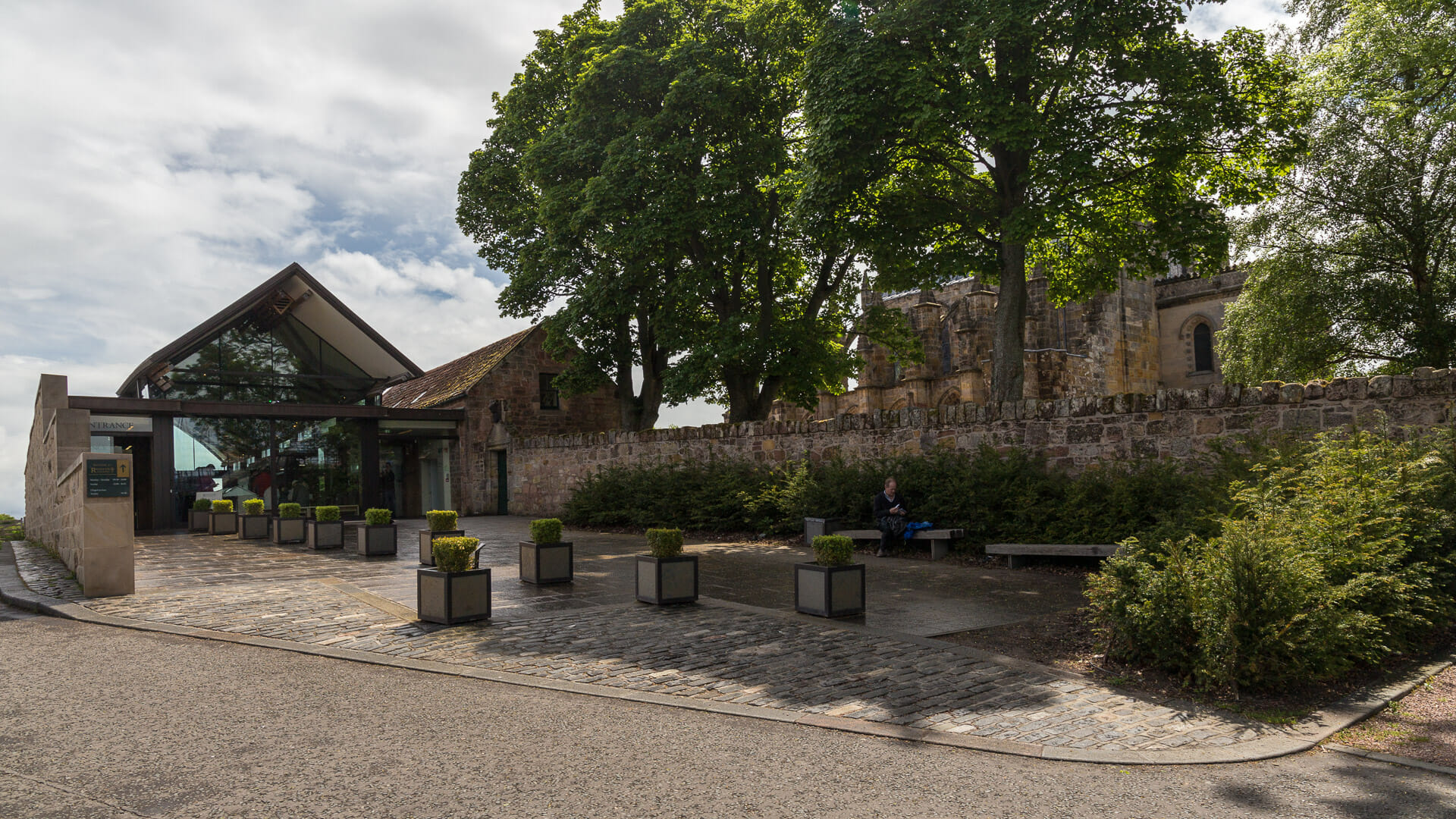
Even before Dan Brown’s novel, rumours had long swirled about a connection between the Sinclair, or Saint Clair, family and the Freemasons and Knights Templar. As so often, though, there’s more wishful thinking here than reality. The Sinclairs, for example, are documented as having testified against the Knights Templar in a medieval trial. That doesn’t quite add up.
Whether the Holy Grail and Templar bones lie hidden in Rosslyn Chapel is for visitors to find out for themselves. What can be promised, though: visitors will certainly find a beautiful church here – quite possibly the most beautiful in Scotland. Rightly one of the 20 most beautiful attractions in Scotland.
Tip: a trip to Rosslyn Castle
Just a few minutes’ walk away, in a valley, lies the ruin of Rosslyn Castle, the former seat of the Sinclairs. The earliest parts date back to around 1304.
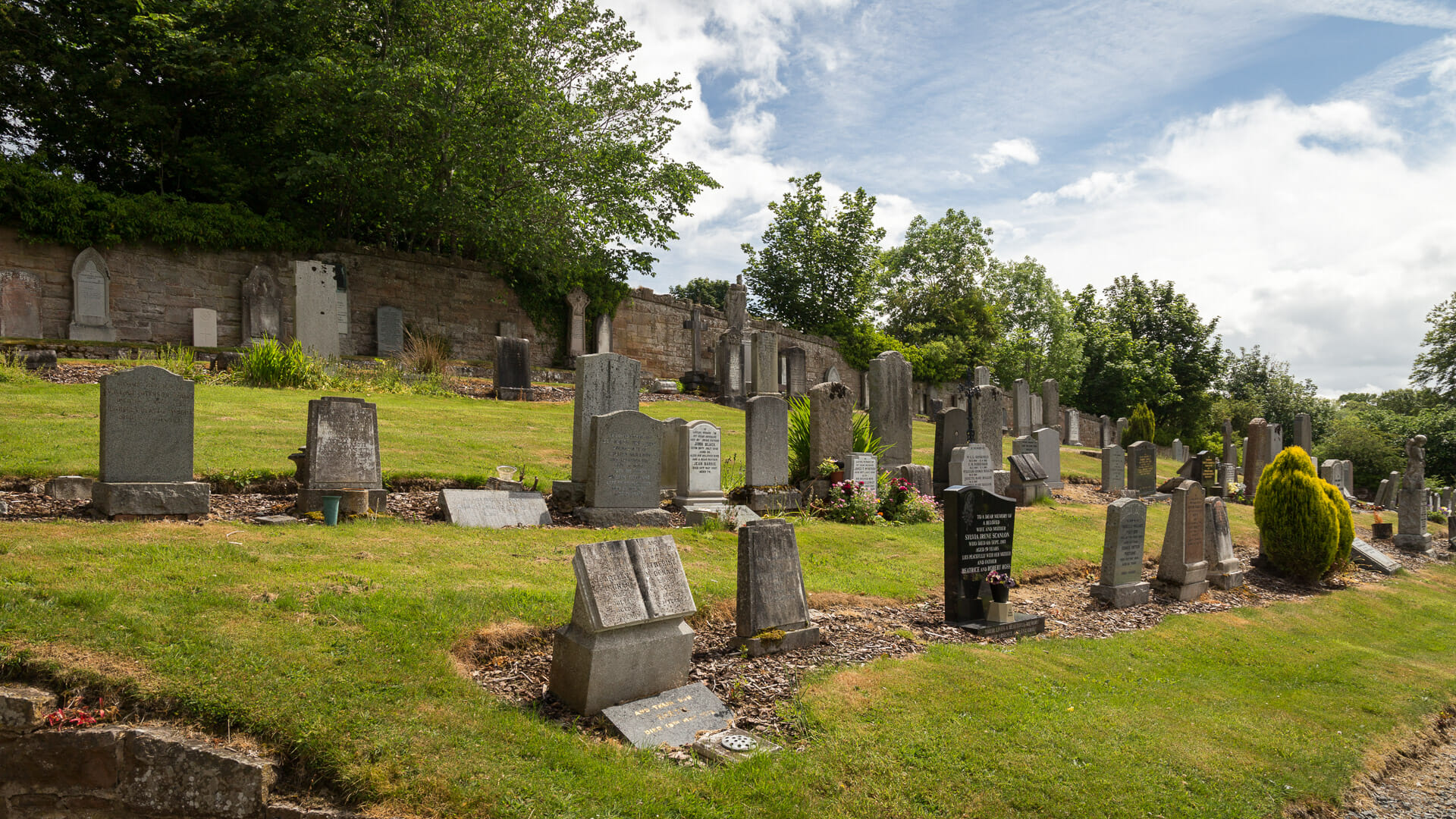
To reach the ruin, visitors first need to walk down the path between the car park and Rosslyn Chapel. This passes a beautiful graveyard along the way.
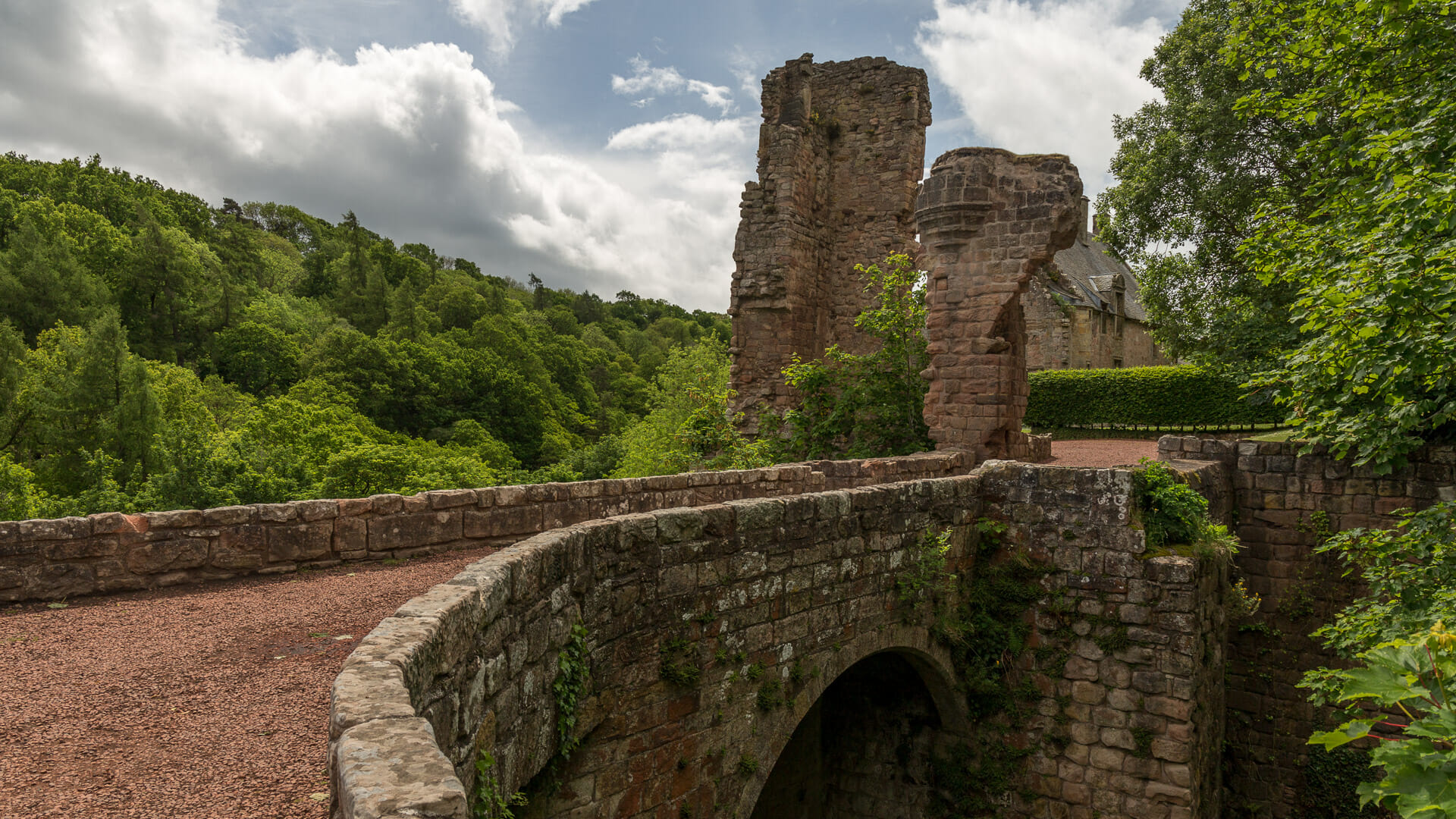
Before you can enter the castle, you first cross a beautiful, tall stone bridge.
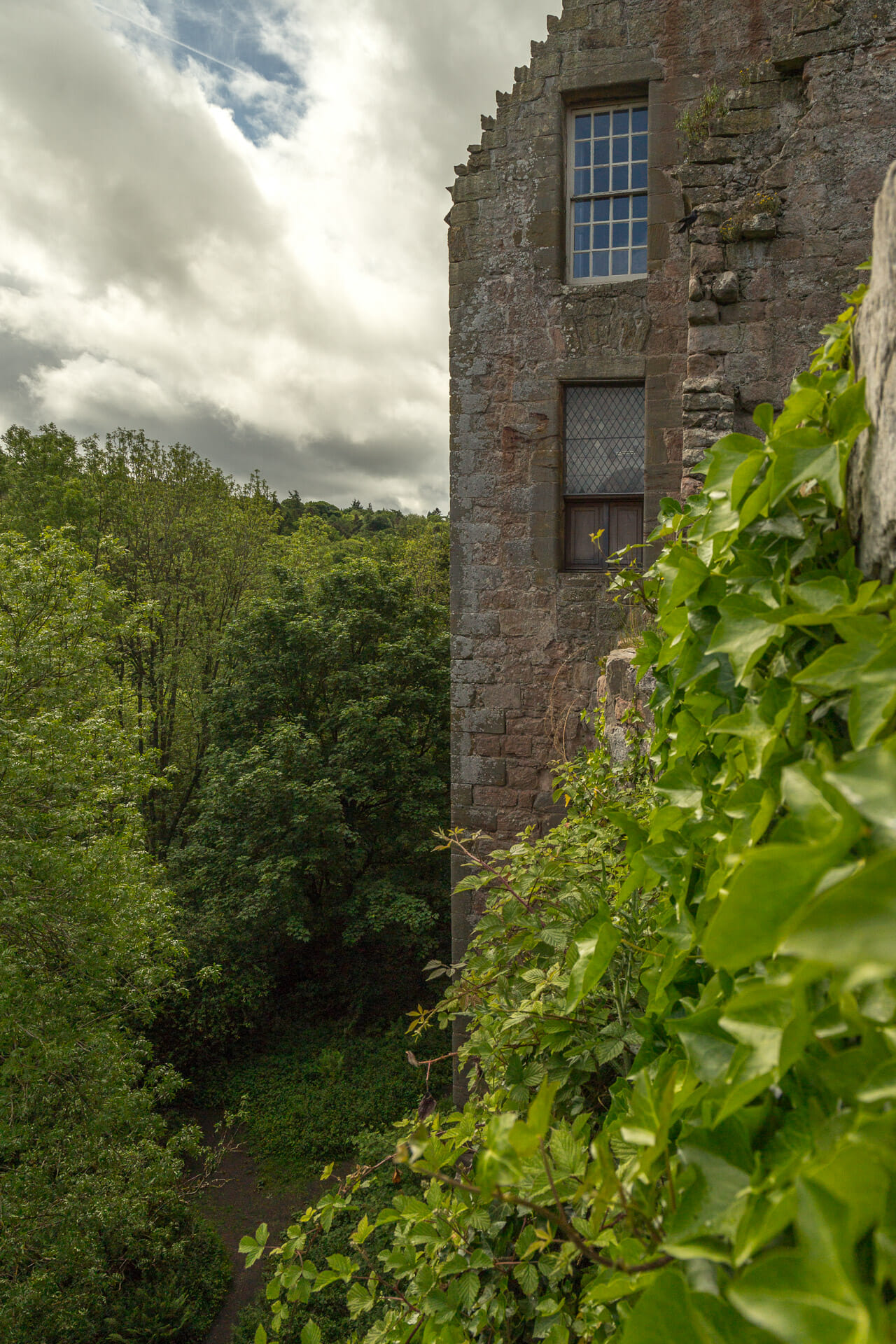
In the courtyard, the view over Roslin Glen is especially lovely, and you can also see just how far the castle’s house drops down below.
The trip and exploring the castle are a great addition to visiting the church – all the more so since few visitors find their way there. However, there are now plans to preserve the castle by fitting it out with accommodation for visitors.
Know-how: about the builder of Rosslyn Chapel
William Sinclair lived in the 15th century, and his domain was split in two: up in the north he was Jarl, or earl, of the Orkney Islands and Caithness. In the south, below Edinburgh, he was Baron of Roslin. Orkney was technically still under Norwegian rule, Roslin under Scottish rule – so he effectively answered to two kings. From 1456 he had the church built, and he was ultimately buried there in 1484.
It was built in the Gothic style, one hallmark of which is the buttresses along the sides. Incidentally, the pointed little turrets sitting on top of them aren’t purely decorative – their weight gives the side buttresses extra stability. They’re called pinnacles.
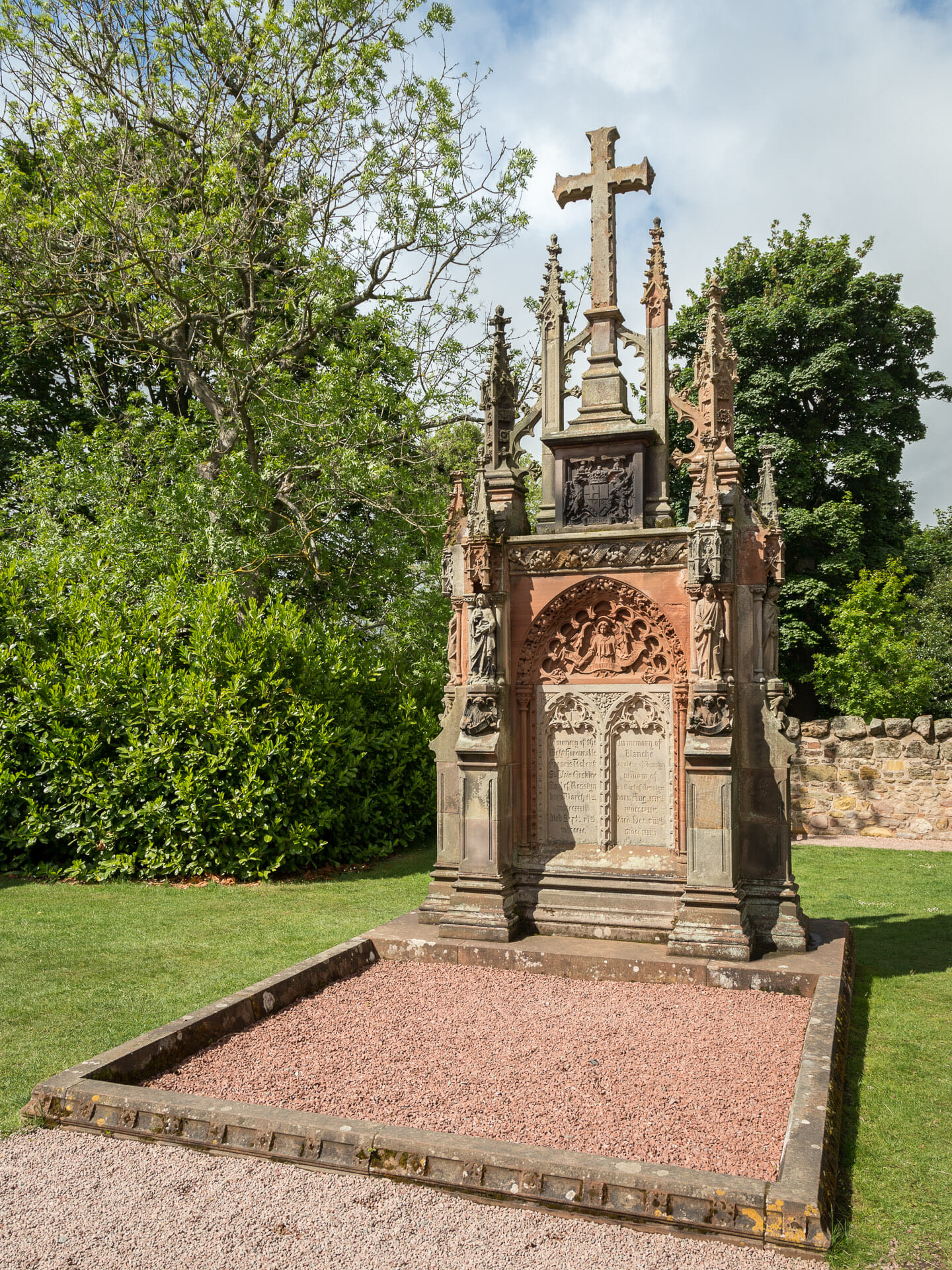
Also interesting is the striking Gothic gravestone in front of the church. It commemorates Francis Robert St Clair-Erskine, who oversaw the church’s renovation in the 19th century.
Personal note: a genuine experience despite the crowds
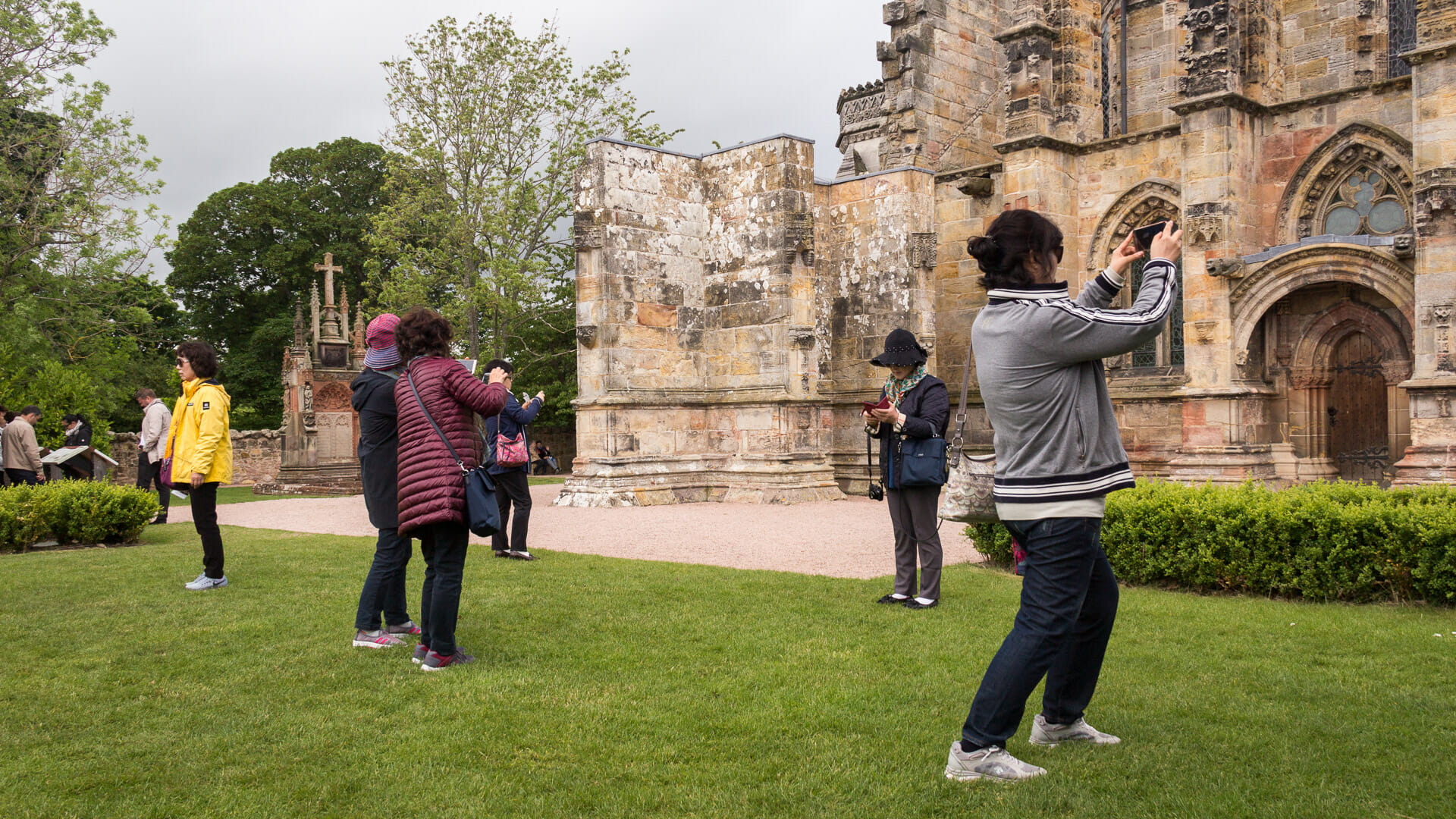
Not least its proximity to the capital Edinburgh makes Rosslyn Chapel a much-visited destination. That said, tourists tend to spread out a bit across the grounds. It can help to turn up quite early, as we did. Getting a clear photo of the church can be tricky, since of course everyone wants one, which ends up looking something like this.
Getting there:
With a sat nav: “EH25 9PU” is the postcode you can enter to get to Roslin. The chapel is on Chapel Loan.
Without a sat nav: Coming from the City of Edinburgh Bypass, take the exit for Peebles. At the roundabout below, take the “Peebles” exit and continue following “Peebles” on the A701. At the edge of Bilston, bear left onto the B7003. A brown sign for Rosslyn Chapel already points the way here. Follow this road straight into the village of Roslin, keeping an eye out for the brown signs. There’s a large car park for cars in front of the Visitor Centre.
