Cool and grey on the outside, but inside, Skaill House holds 400 years of memories and stories. A visit to the estate brings them vividly to life.
It all began with the death of a tyrant: Patrick Stewart, second Earl of Orkney, lost his head – and with it, all his possessions. Among them, an estate on the west side of Orkney Mainland, set on a wide and beautiful bay. The bishop of the time, George Graham, received this land and set about building a house on it. Skaill House.
For 400 years since, Skaill House has been home not only to its family, but to countless guests too – and, some visitors swear, even to ghosts. Over time the house grew, and its ever-multiplying rooms filled with souvenirs from every era and every corner of the world.
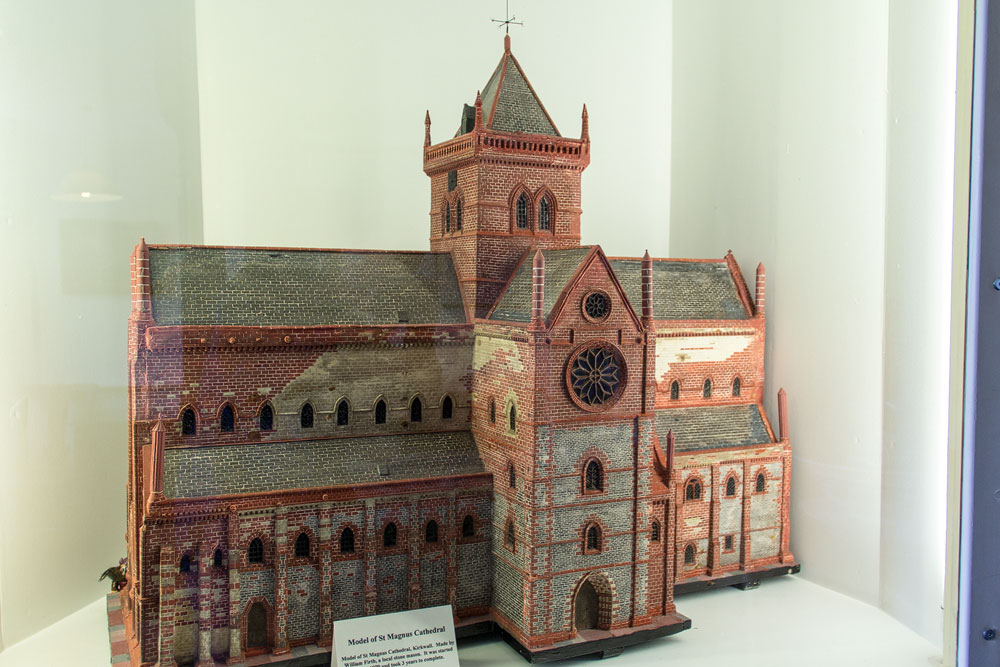
A stroll through Skaill House is therefore a journey through the family’s memories. From its builder, Bishop Graham, visitors today can still see the imposing four-poster bed in the bedroom. Right beside it, protected behind glass, stands a detailed model of St Magnus Cathedral.
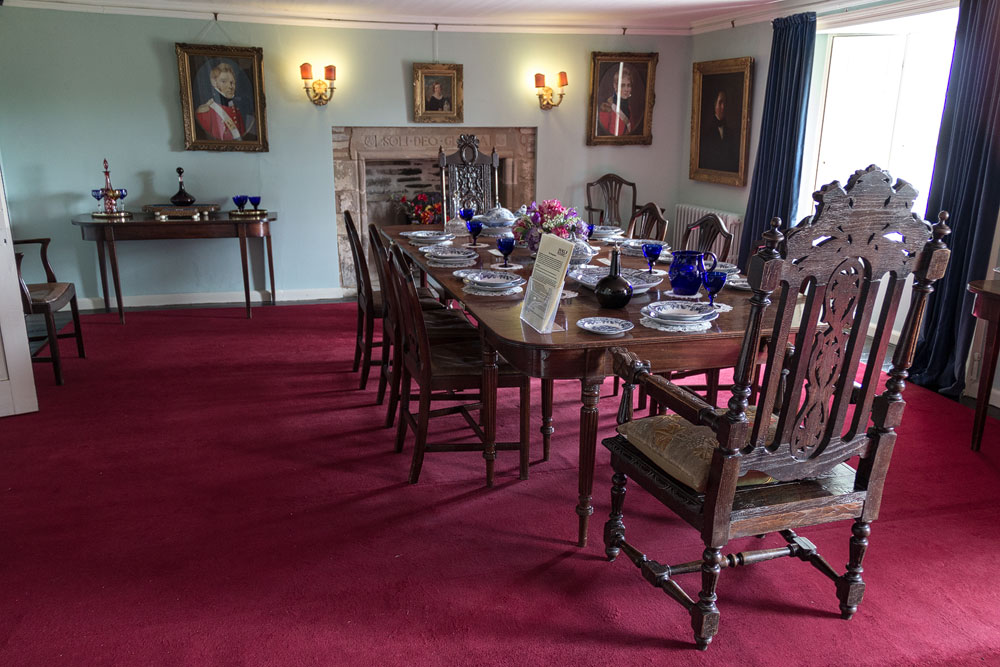
In the dining room, the table is still finely laid. A very special guest was expected here once: Captain James Cook, South Seas adventurer and explorer. He never made it, though, as he met his death on the island of Hawaii before he could visit. His gift for his hosts did arrive, at least – a porcelain dinner service, now displayed in a cabinet.
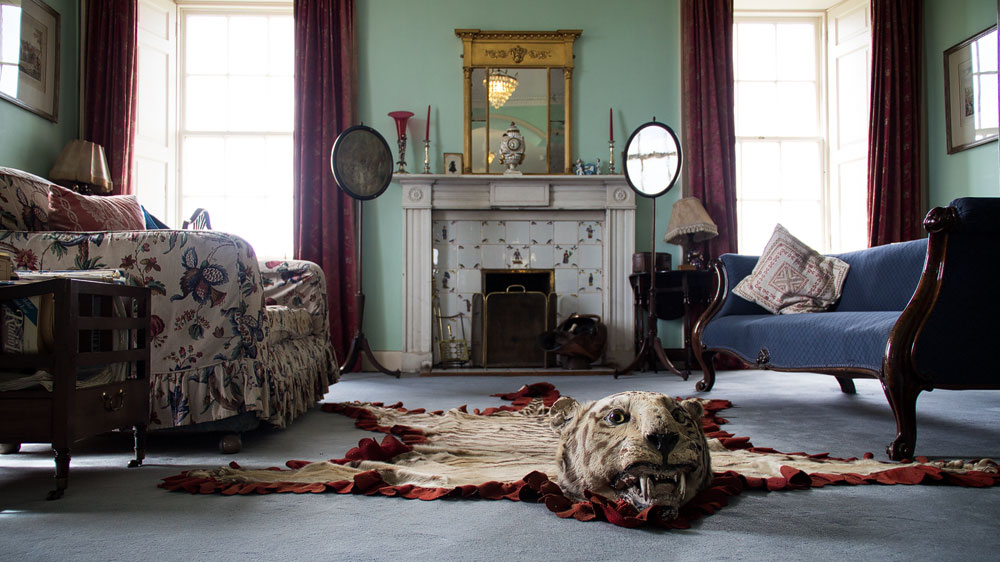
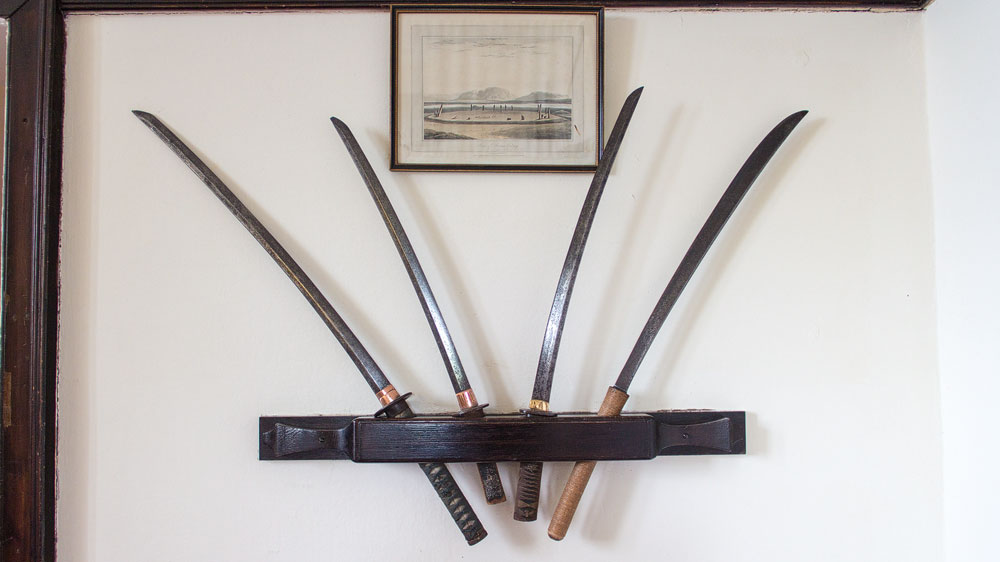
In the elegant drawing room, a pale tiger skin catches the eye, laid out as a rug in front of the sofa. It came from India, where one of the family’s ancestors had served. From Japan, another brought back the silk embroidery hanging on the wall. Even the staircase is decked out with striking pieces from around the world: Japanese swords, the wooden chest of a Spanish galleon, captured flags from Russia.
Skaill House has its own quirks too. In the library, a large round window lets in the light – stylistically, it doesn’t quite belong here, but it does offer a wonderful view. And the house holds secrets here too: one of the bookshelves can be swung open to reveal a hidden space behind it.
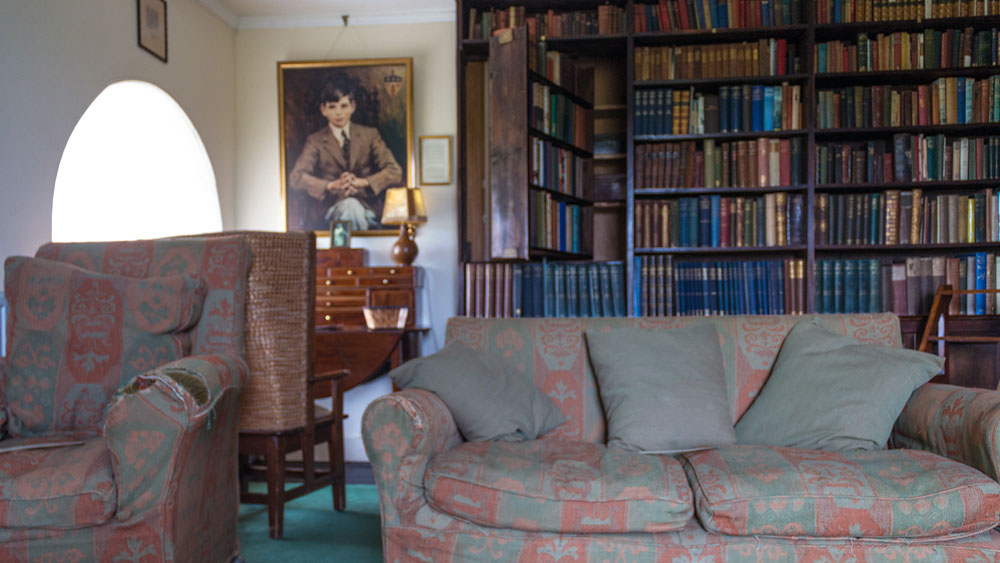
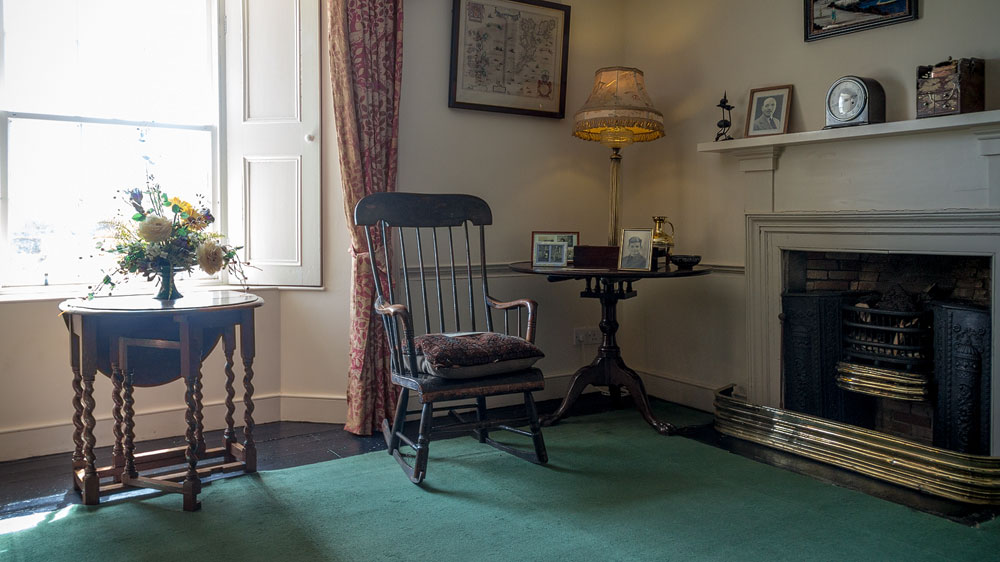
Every resident added their own particular touch to the house. The last of them was Major Malcolm Macrae, into whose hands Skaill House eventually passed. He restored much of the interior and finally opened the house to visitors like us. The entry ticket for nearby Skara Brae also grants admission to the estate.
Good to know: Of ghosts, skeletons and Stone Age houses
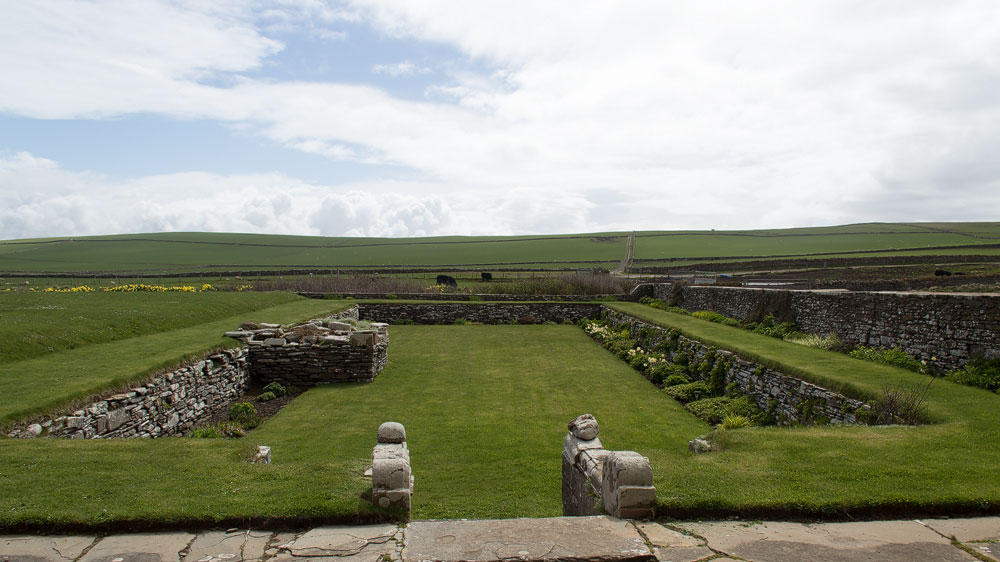
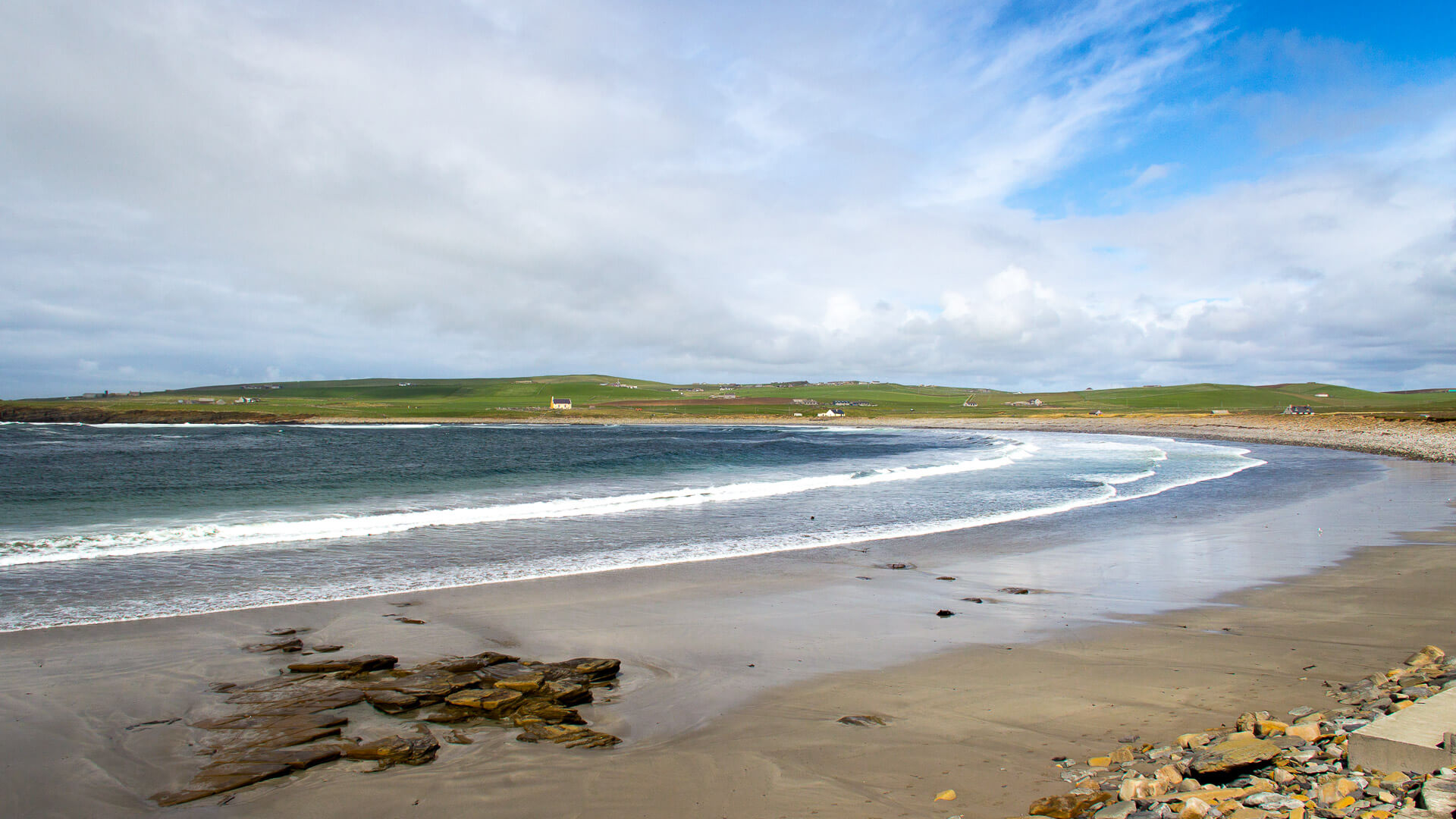
Skaill House lies within walking distance of Skara Brae, and their fates are entwined through one man: William Graham Watt. In 1850, after a storm had raged through the night, the then-owner of Skaill House set off on a walk. Near the bay, something caught Watt’s eye: the wind and water had exposed strange stone formations. In the years that followed, the owner of Skaill House led excavations and uncovered the settlement of Skara Brae.
His house also served, for a time, as a kind of museum. Until 1930, visitors could admire finds from the Stone Age village there, though these are now kept safely at the National Museum in Edinburgh.
But the ground beneath the estate held further surprises. When the stone floor in the entrance hall was replaced with wood, several skeletons were found beneath the house. As it turned out, Skaill House appears to stand on a Pictish burial ground. The remains were laid back to rest, and they are still there to this day.
Little wonder, then, that the odd ghost sighting has been reported over the years. The ghost even has a name: Ubby. He’s said to have been a man who, over many years, built up an island in the nearby Loch of Skaill, and who one day died upon it. Now he haunts the area, though he’s never really harmed anyone.
Personal note: Don’t be put off by the grey façade
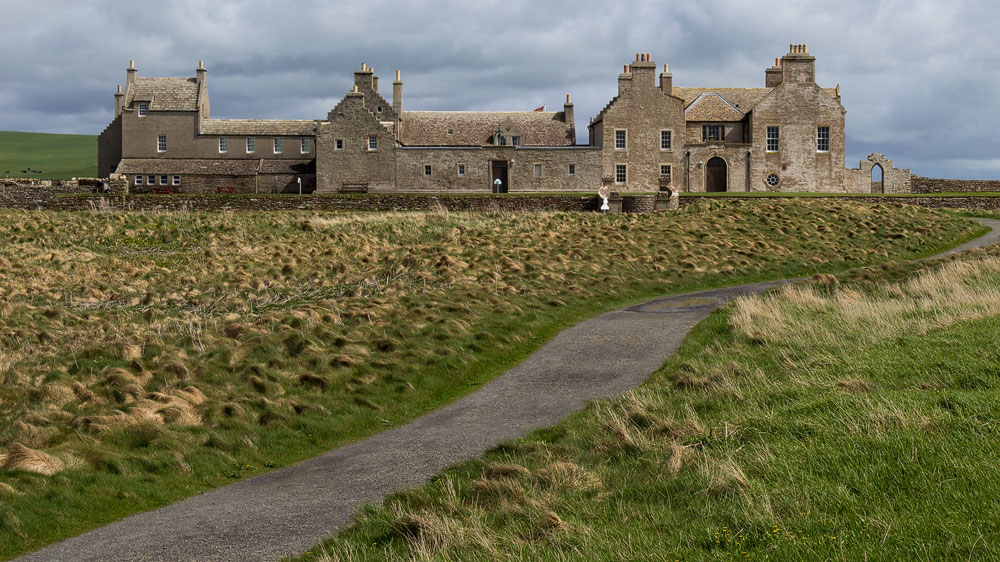
From a distance, the estate doesn’t look all that inviting – a grey façade, a house with some rather modern additions. But don’t let that put you off. The tour inside is well worth it: plenty of little treasures and rooms fitted out in fascinating style. Thanks to the detailed descriptions provided in various languages, you learn everything important right there in each room. It’s a rewarding and worthwhile tour that we thoroughly enjoyed – for us, it even took longer than our visit to nearby Skara Brae.
Tip: Set aside half a day for the area
If you want to take it all in at a leisurely pace – Skara Brae, Skaill House and the nearby bay – it’s worth setting aside half a day just for this. The nearby café at the Skara Brae visitor centre also serves rather good food. We had soup in a bread bowl. Delicious.
Getting there:
With a sat nav: Simply enter “KW16 3LR”, which will bring you almost right up to the door of the Skara Brae visitor centre, and with it, Skaill House.
Without a sat nav: From Stromness, first take the A965, then very soon turn left onto the A967 towards Sandwick. After around five kilometres, keep left towards “Bay of Skaill” and “Marwick”. Stay on this road towards “Bay of Skaill” until a kind of gateway appears on the left – by then, the brown signs will already be pointing the way to Skara Brae.
From Kirkwall, first take the A965 towards Stromness. Just before the town, turn right towards Sandwick, and here too, follow the signs towards “Bay of Skaill” and “Marwick”.
