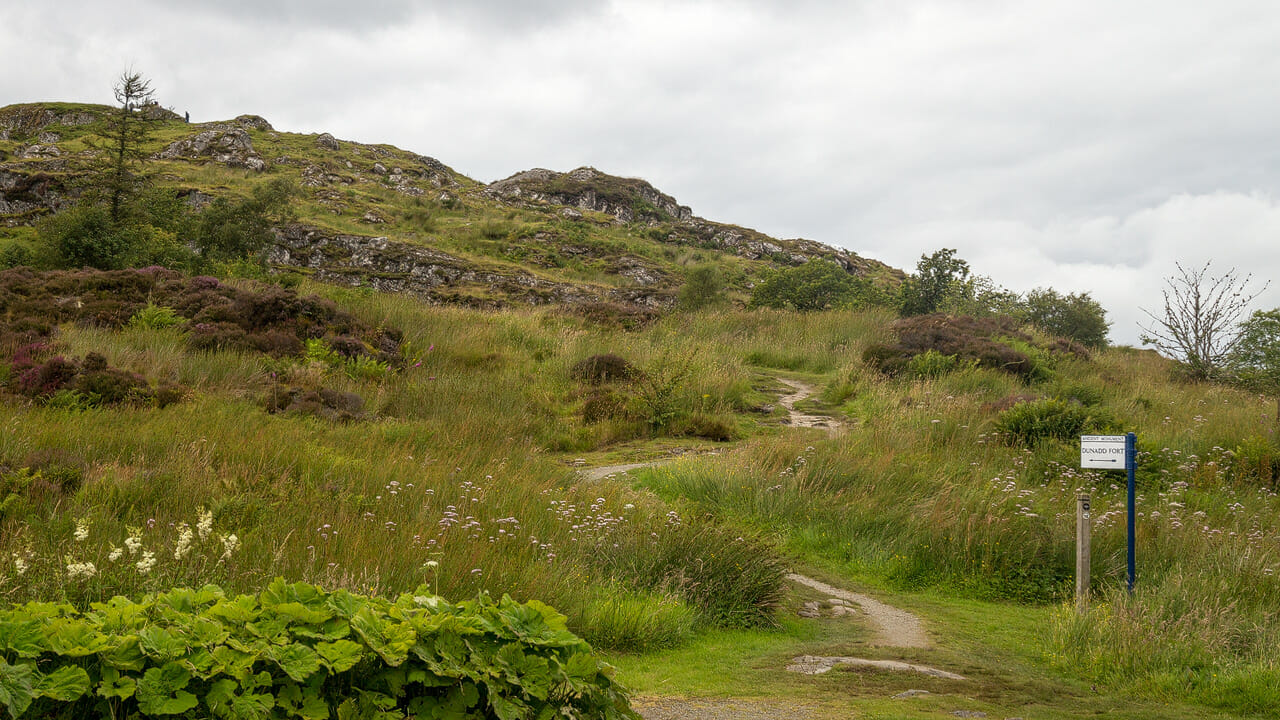
Atop the rock of Dunadd once stood the fortress where the kings of the Scottish realm of Dalriada were crowned. One ritual was especially important.
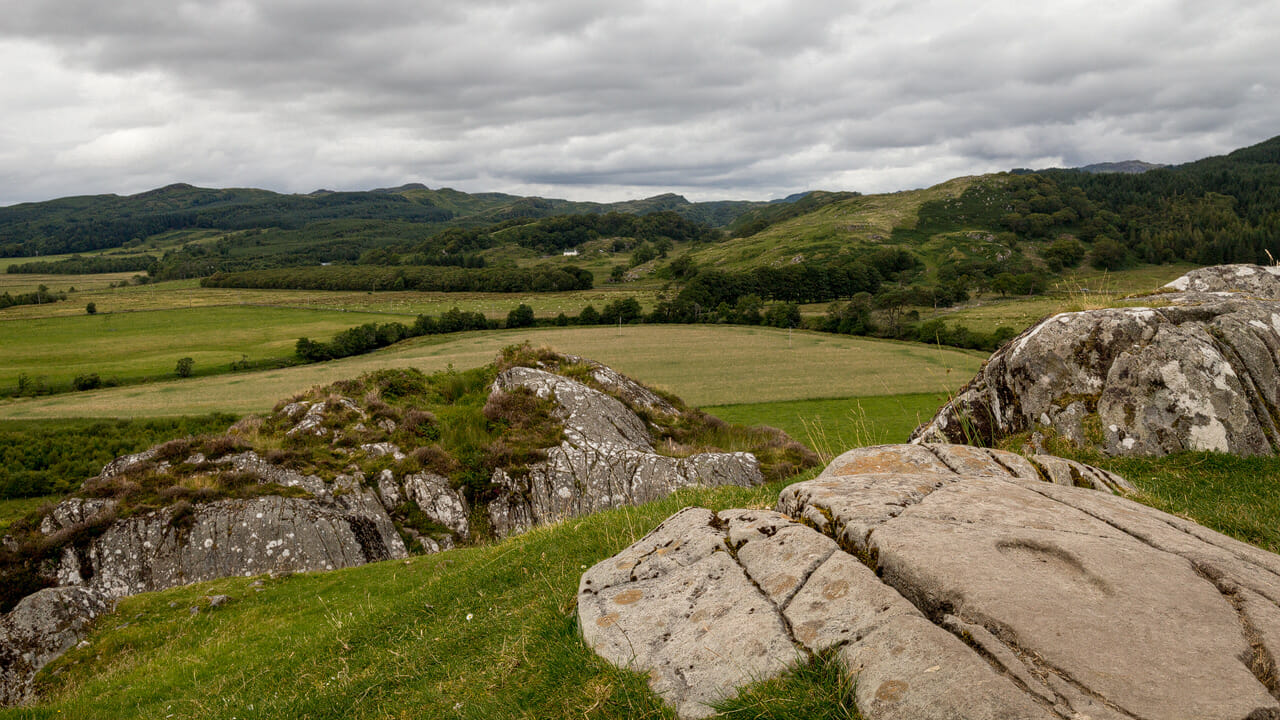
He placed his foot in the carved stone footprint, and the crowd below cheered. From this day on, he, Áedán mac Gabráin, would guide the fate of the kingdom. From here, from Dunadd.
It would be no easy task – Dalriada’s enemies were strong: the Uí Néill to the west in Ireland, the Picts to the east, and the Anglo-Saxons to the south-east. He gripped the hilt of the great sword that had been handed to him during his inauguration. With a strong arm, he would defend and expand the kingdom. Yet the strength of the realm didn’t rest on force of arms alone.
Up here on Dunadd, he had a clear view of what truly mattered: fertile land. Land that had to feed his subjects. The imprint in the stone in which Áedán had placed his foot symbolised the bond between the king and Mother Earth.
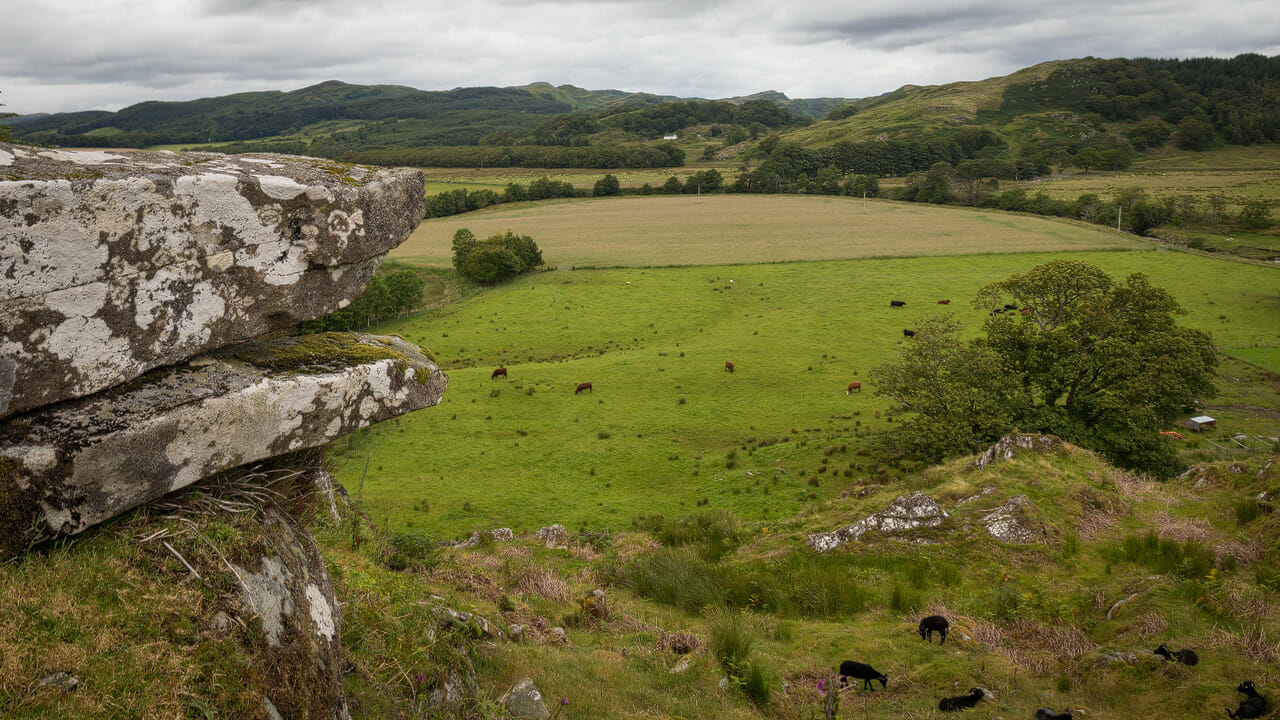
He raised his head and looked out over the long valley with its standing stones and ancient burial mounds. He felt the blessing of his ancestors and knew: he would be a successful ruler.
Good to know: What really happened at Dunadd?
Of course, the scene above is partly a product of imagination. Yet at its core, it rests on scholarship. Archaeologist Ewan Campbell of the University of Glasgow, in his work “Royal Inauguration in Dál Riata and the Stone of Destiny”, has established fairly good grounds for assuming a similar ceremony took place.
The name Dunadd comes from the Gaelic word “dùn”, meaning fortress, combined with the name of the nearby river, the “Add”.
Dùn, incidentally, appears in many Scottish place names, such as Dundee, and even Edinburgh is called “Dùn Èideann” in Gaelic.
A fair amount is well established about Dunadd today, while other aspects remain unclear. The following seems fairly certain:
- there was already a small fort here as early as around 300 BC
- further rampart structures followed over the next centuries
- from AD 500 onward, metal was skilfully worked at Dunadd, including gold brooches
- there were trade links reaching to France and into the Mediterranean
- Dunadd shaped the art of its time, right through to the Book of Kells
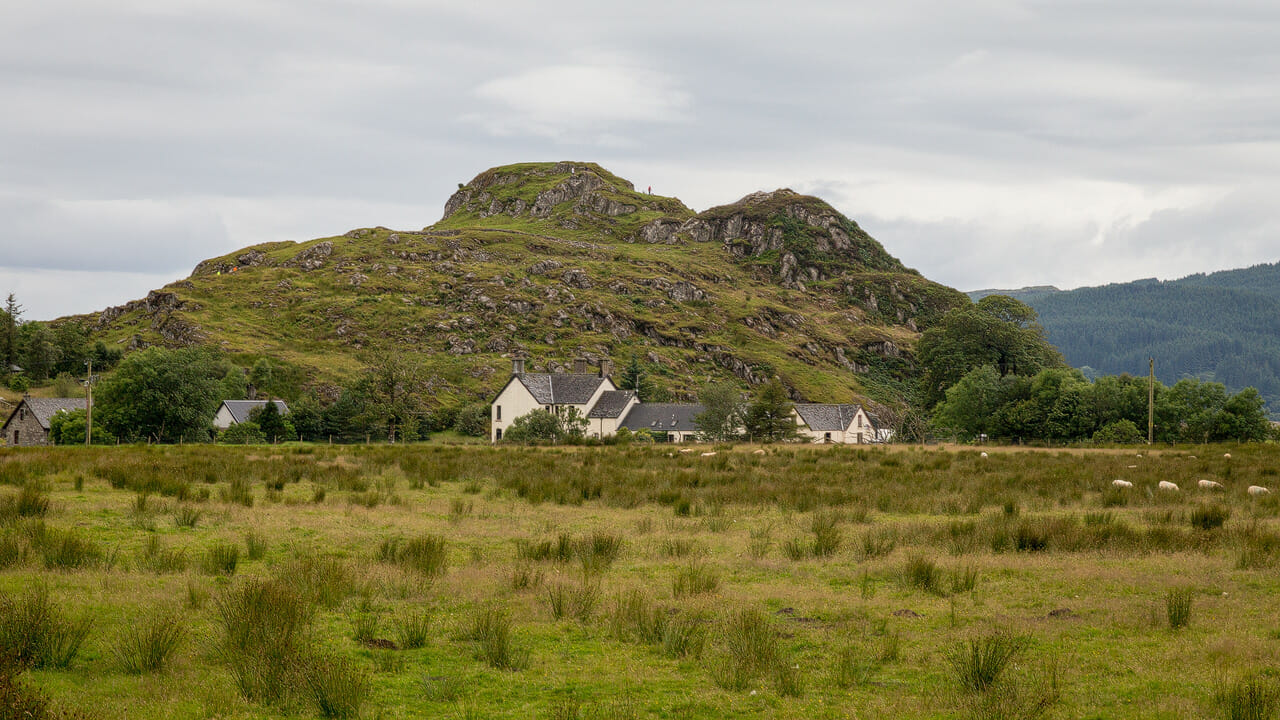
Archaeologists, however, disagree about how important Dunadd really was to the kingdom of Dalriada (or Dál Riata). Was it truly its “capital”? Or just that of a so-called “cenél”? Dunadd sits at the junction of two such sub-kingdoms, namely Cenél nGabráin and Cenél Loairn – today better known as Kintyre and Lorne.
As already mentioned, Dunadd had trading connections that went far beyond those of other sites. And the sheer quantity of artefacts that might belong to a royal inauguration is rarely found elsewhere. It also lies at the foot of Kilmartin Glen, home to the highest density of prehistoric monuments in Scotland – burial mounds, cisterns and ancient stone circles.
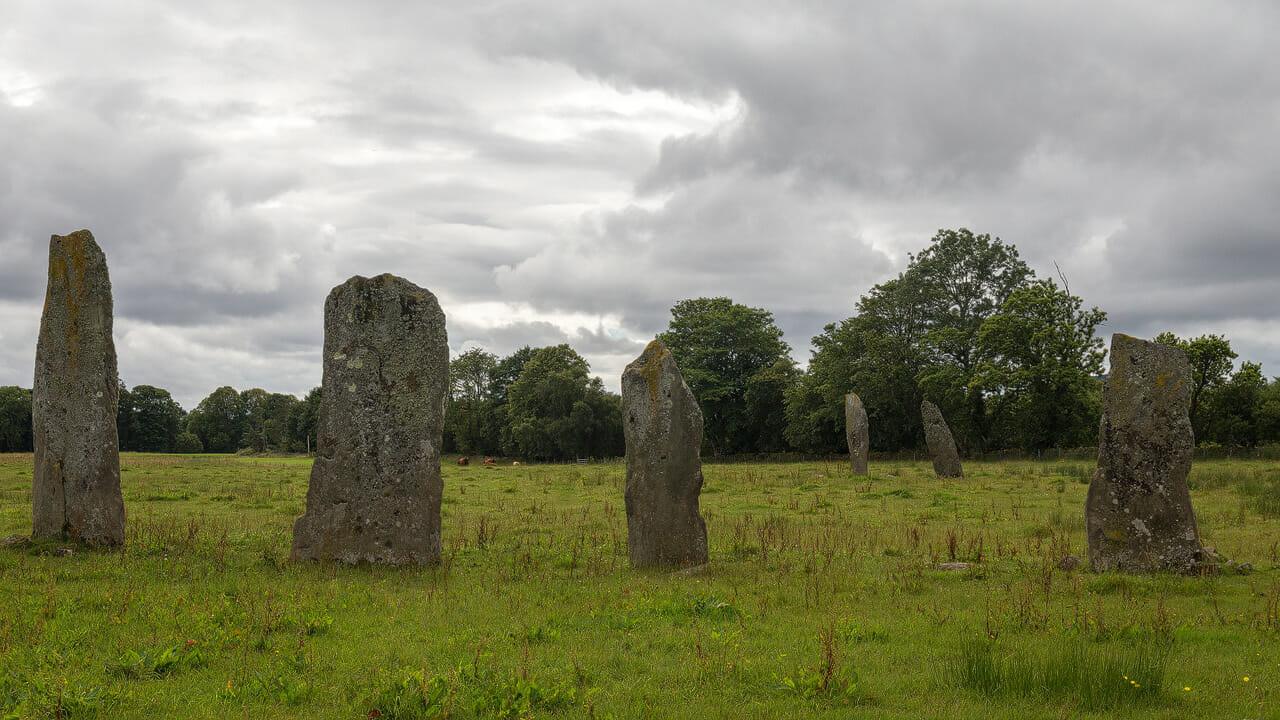
The assumption that Dunadd truly was the political centre of Dalriada is strongly supported by all of this.
Dunadd remained important until AD 736. That was when the Picts conquered the fortress and Dalriada became part of their kingdom. It was once assumed that the fort was uninhabited after that, but it was probably still in use into the 10th or 11th century.
Anyone visiting Dunadd is, incidentally, welcome to place their own foot in the footprint, just as around 50,000 people do each year. That’s because the stone on site is only a replica. The location of the real stone is kept hidden from visitors, so it isn’t worn down and remains available for research.
Áedán mac Gabráin, crowned in 574, led successful campaigns right from the start, reaching all the way up to the Orkneys. He remained victorious until the mid-590s, after which the tide turned and he lost to the Picts and Northumbria. He died around 608, at the ripe old age of 74.
Tip: Definitely head to the top!
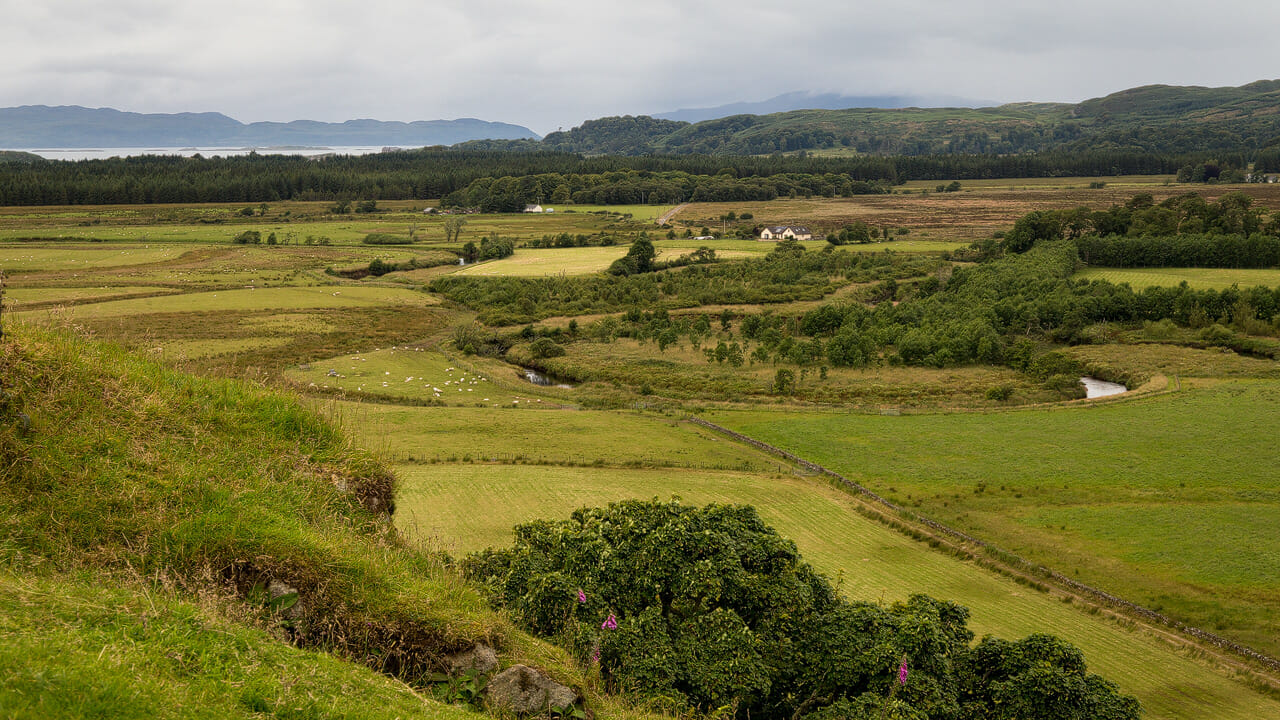
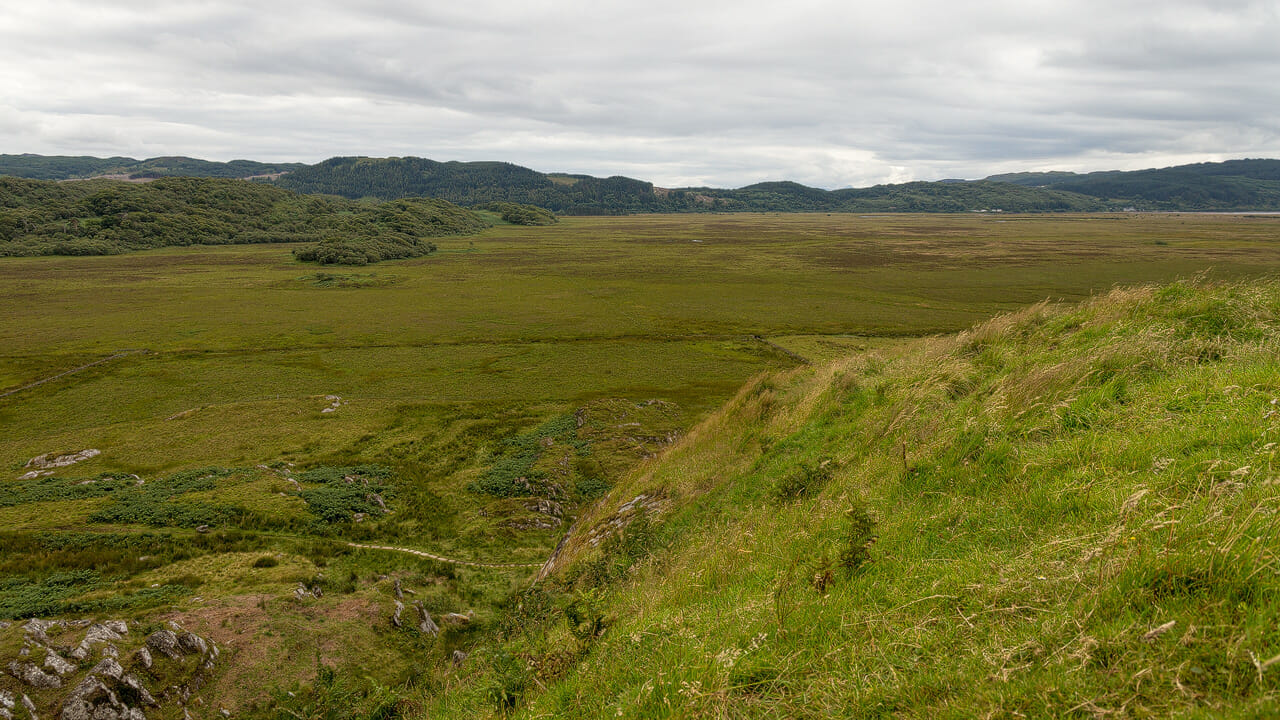
The climb doesn’t take long, but it’s well worth it. The view is huge, taking in for instance the Mòine Mhòr, the great peat bog to the south-west of the rock. It’s a nature reserve.
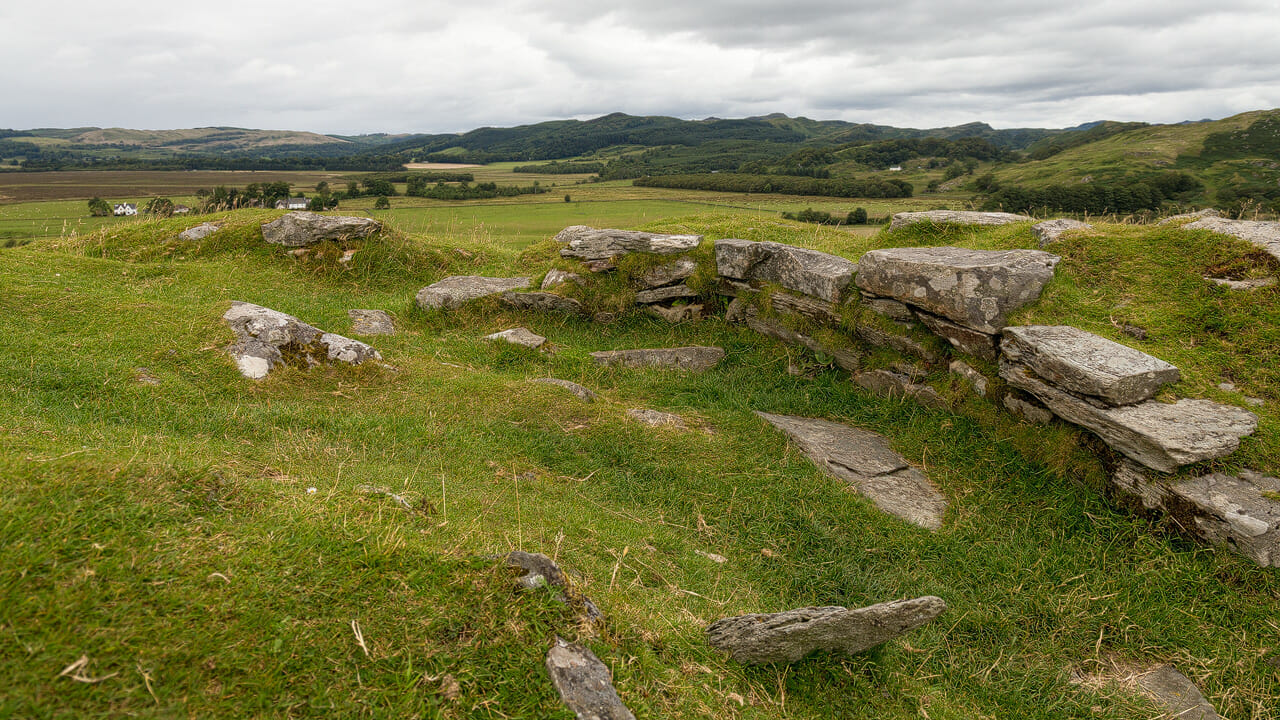
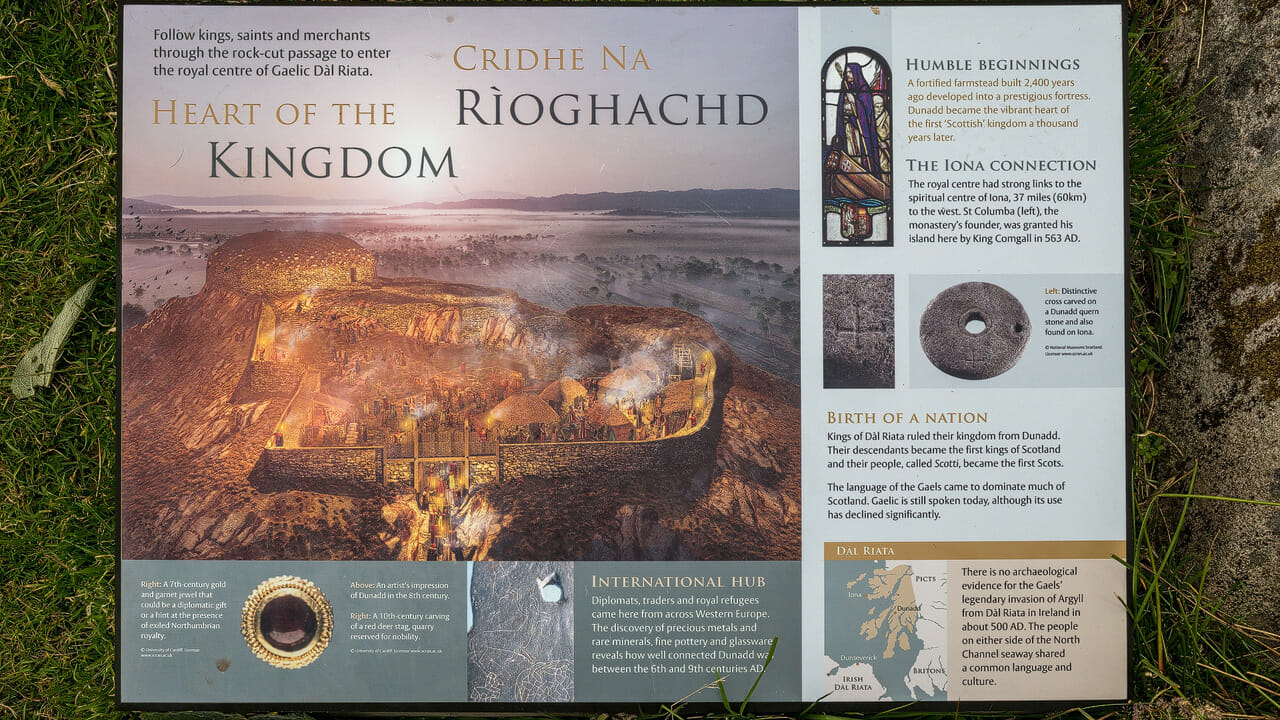
On the way up, you’ll keep finding information boards that help you picture what the old fort once looked like.
Getting there:
With sat nav: “” takes you to Kilmichael, from where it’s just a few kilometres.
Without sat nav: coming from Oban, take the A816 south towards Lochgilphead. You’ll pass through Kilmartin, and a little later see a sign for the “Crinan Ferry”. After that, take the next turning on the right – a sign is already posted here too.
Coming from Lochgilphead in the south, drive towards Oban and Kilmartin Glen. Once you’ve passed the “Horseshoe Inn” sign, it’s not far until the road turns left towards Dunadd Fort. At the end of the road there’s a visitor car park, from which the path up begins.