Isle of Lewis – wild landscapes, prehistoric structures
Sea, moor and mountains shape the vastness of the largest island in the Outer Hebrides. But it’s the impressive monuments spanning thousands of years that make Lewis so special.
Contents: Must-See | all attractions
The rocks of Lewis were ground down by ice-age glaciers thousands of years ago. These giants left behind a landscape that is largely flat, interrupted by rocky outcrops and gentle hills. In places, though, mountains rise along the west coast, stretching down towards the Isle of Harris. At their feet lie white sandy beaches and steep cliffs. There is just one thing the landscape of Lewis never offers: boredom for the eye.
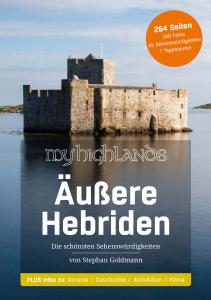
Mein Reiseführer Äußere Hebriden
Auf 264 Seiten beschreibe ich die Inseln Lewis, Harris, North und South Uist, Benbecula, Barra und Vatersay. Außerdem 7 Touren und 180 Fotos.
Mehr Info hier.
On Lewis you should also always keep an eye on the sky, as white-tailed eagles and golden eagles are once again a common sight. In general, the Outer Hebrides are considered a paradise for birdwatchers. Alongside eagles, there are, for example, the rare corncrakes (Crex Crex), which hide in the Machair.
Must See: The main attractions on Lewis

Calanais
Several incredibly impressive prehistoric stone circles.

Stornoway
The capital of the islands, with shops, a museum and the ferry port.

Dun Carloway
A large Iron Age broch overlooking a vast landscape.

Uig
The wild and magnificent west of the Isle of Lewis. Remote and natural.

MY TIP:
The small Uig museum and the equally small “Abhainn Dearg” whisky distillery are real curiosities. The latter is a craft distillery operating somewhere between brilliant and ramshackle. If you’ve already seen the big, polished distilleries, this is something completely different.
All attractions on the Isle of Lewis
MY TIP:
Lewis is the largest island in the Outer Hebrides. To really explore it, you need time. Ideally, spend two or more nights in Uig in the west and maybe two or three nights in Stornoway. Allow plenty of time for driving. Distances on Lewis are long.

