This island can only be visited at low tide. Then a window opens onto the life of the monks of the old Oronsay Priory. Along with that comes some wonderful natural scenery.
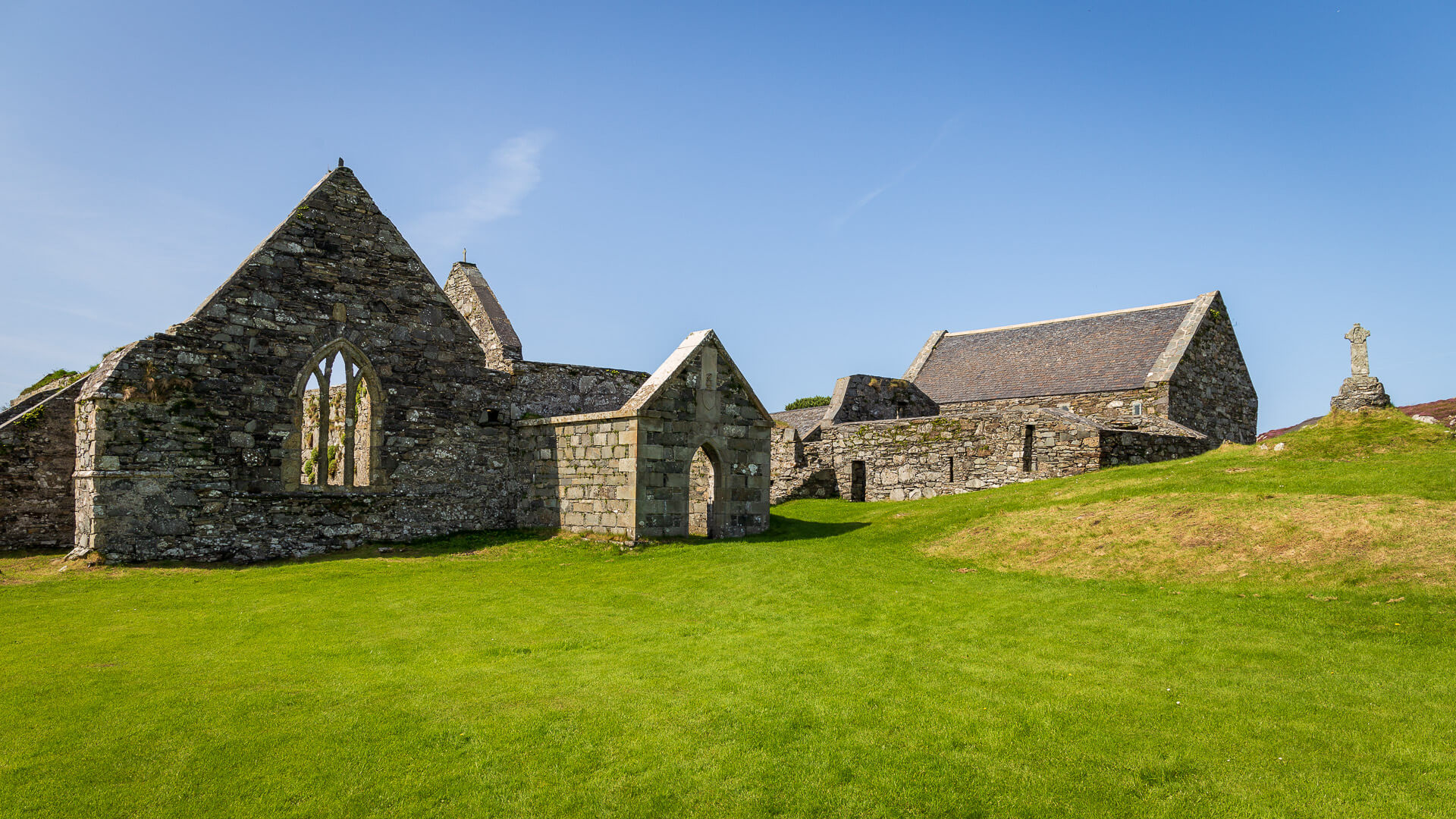
John the Good, the first Lord of the Isles, had a curious sense of fairness. Rather than committing to just one monastic order, he spread them and their monasteries across his island kingdom: the Benedictines on Iona, the Cistercians in Kintyre, and the Augustinians on the island of Oronsay.
Oronsay is a small island reachable on foot at low tide from its neighbour Colonsay. On it lie the remains of the old monastery that John once granted here to the Augustinians. And they’re well worth a visit.
Oronsay Priory was founded sometime between 1325 and 1353. Monks lived and worked here for over two centuries. But in the middle of the 16th century, the place was abandoned. It’s not entirely clear why.
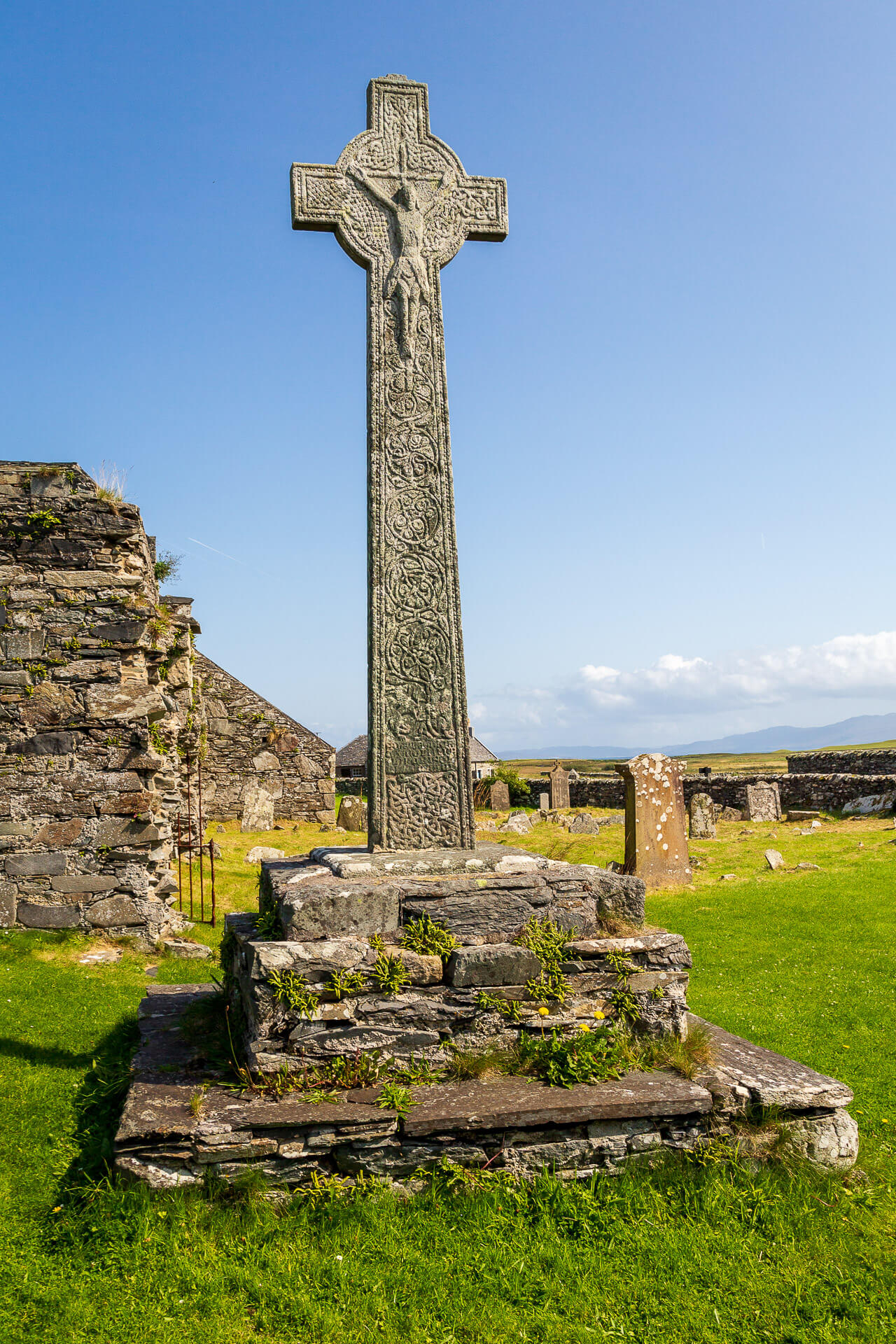
What remains are ruins that give today’s visitors a sense of this place’s former beauty. The stone cross with its beautiful carvings is particularly captivating. It dates from the last quarter of the 15th century and is said to commemorate Malcolm MacDuffie, chief of Clan MacPhee. It’s very thin, yet rises 3.67 metres into the air; the stone itself comes from the mainland. A similar one, incidentally, can be found at Kilchoman on Islay.
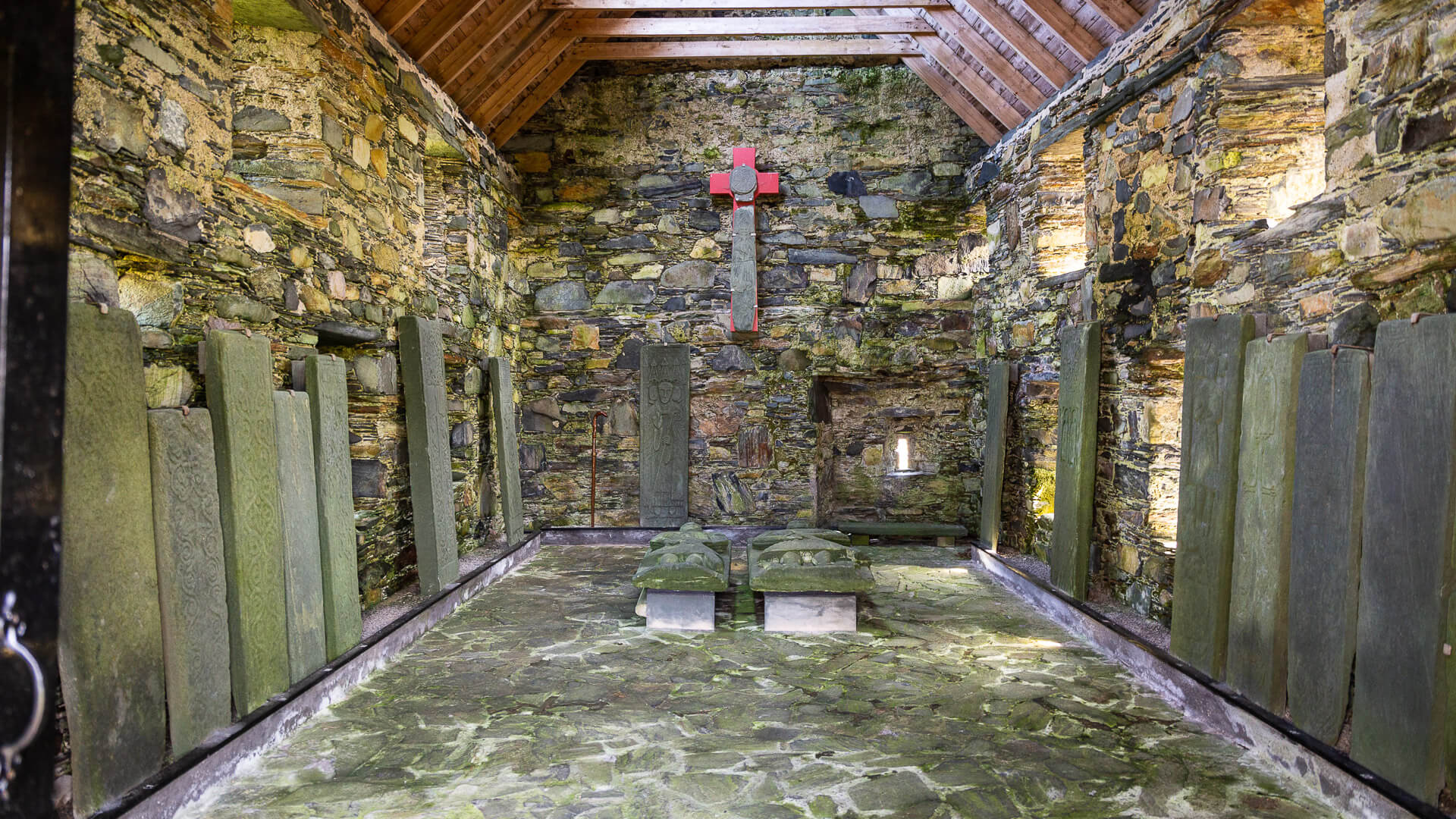
What the stonemasons of the time could still produce is shown in the former grain store. Here, a number of grave slabs are displayed, protected from the weather.
The two reclining warriors in tunics are depicted with helmet and sword. These stones probably come from Iona and were carved in the 14th century. The right-hand and larger grave slab shows mourning figures at the dead man’s feet, the tip of the sword resting on a small demon, with small angels perched on his shoulders.
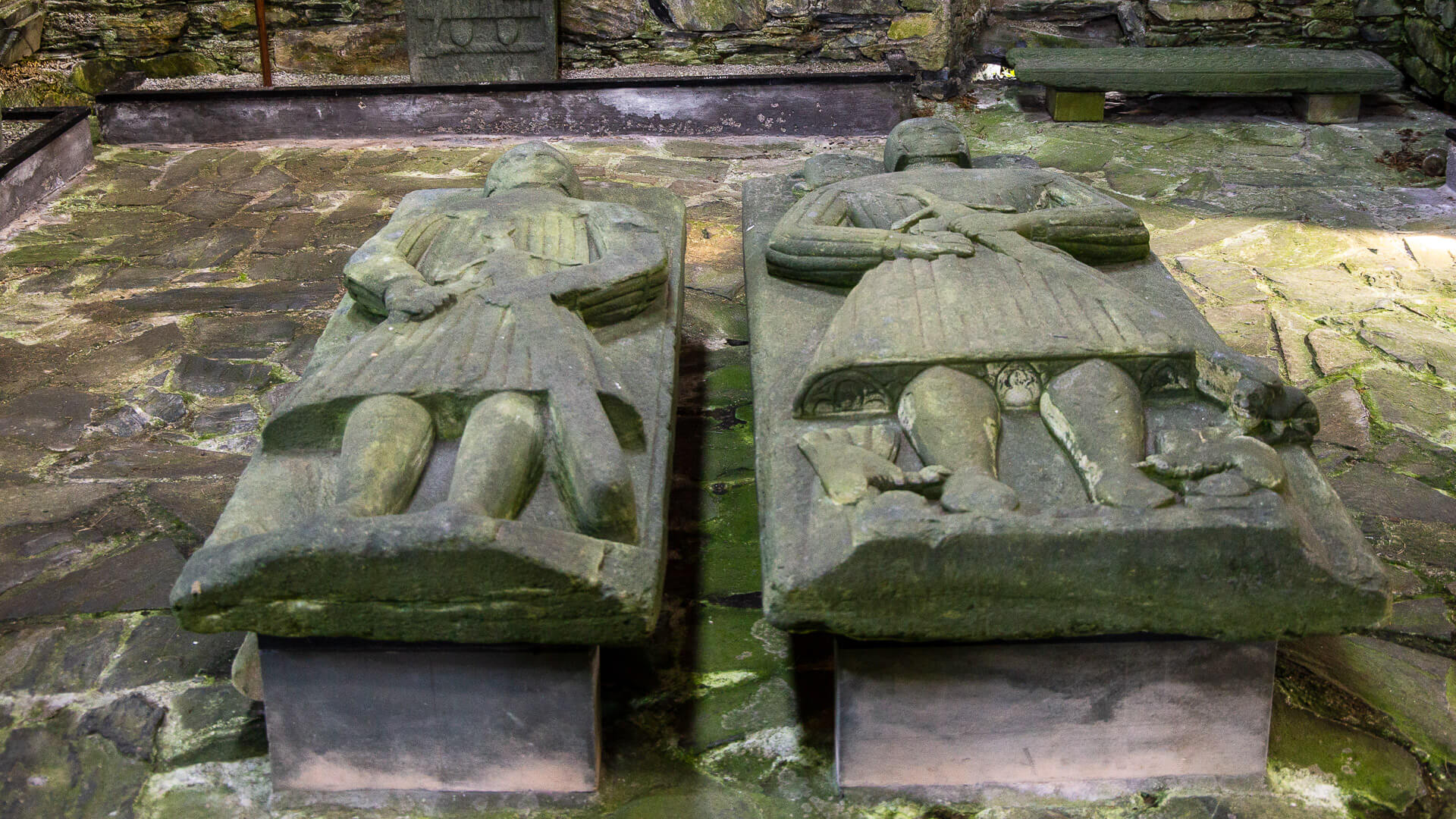
It’s possible that one of the slabs depicts Alexander MacDonald of Lochalsh, who was killed on Oronsay in 1497 by one of the king’s followers. Alexander had sought to claim the title of Lord of the Isles.
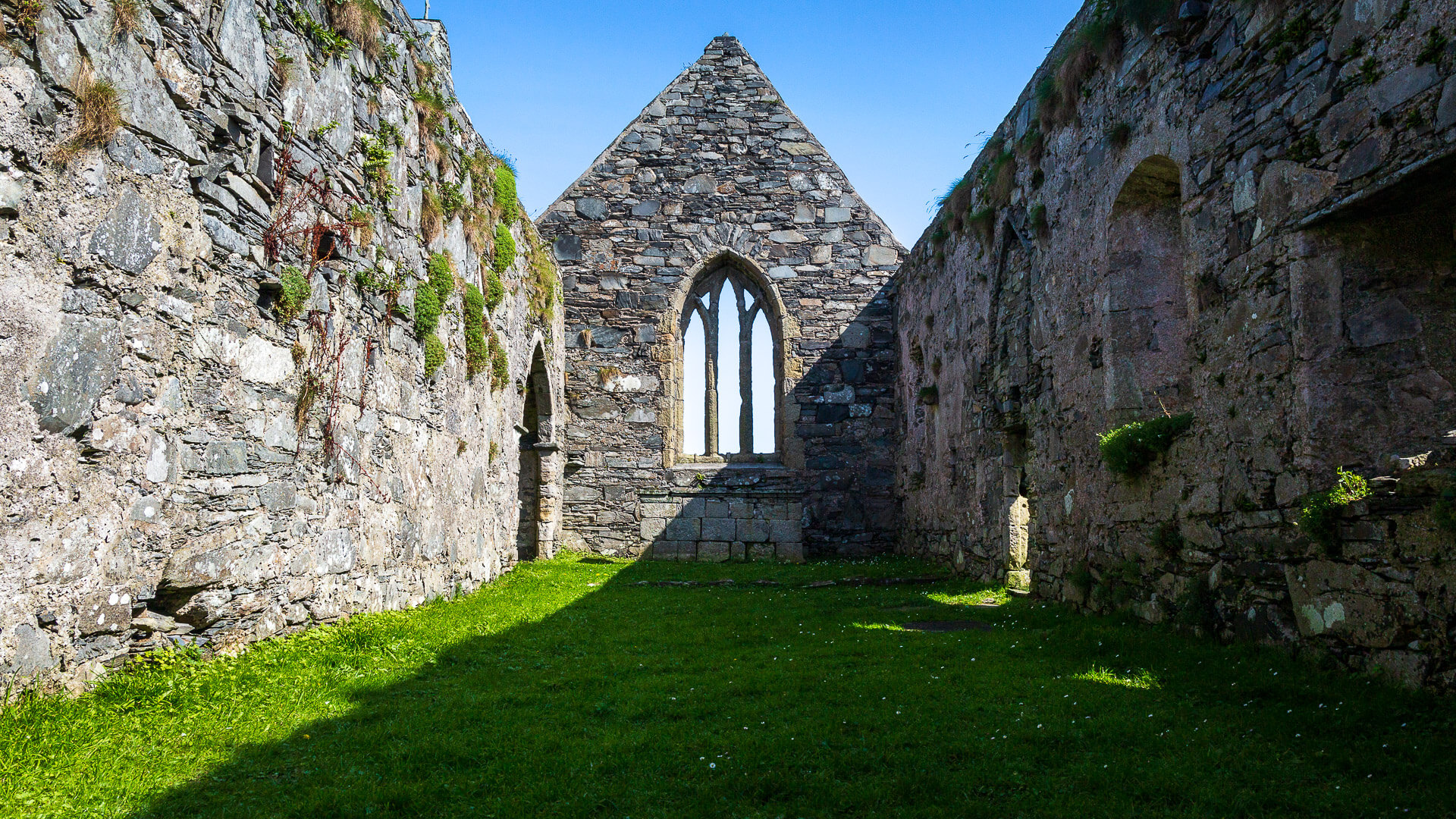
The extensive site naturally also has a church. Beneath the large window, the altar can still be made out.
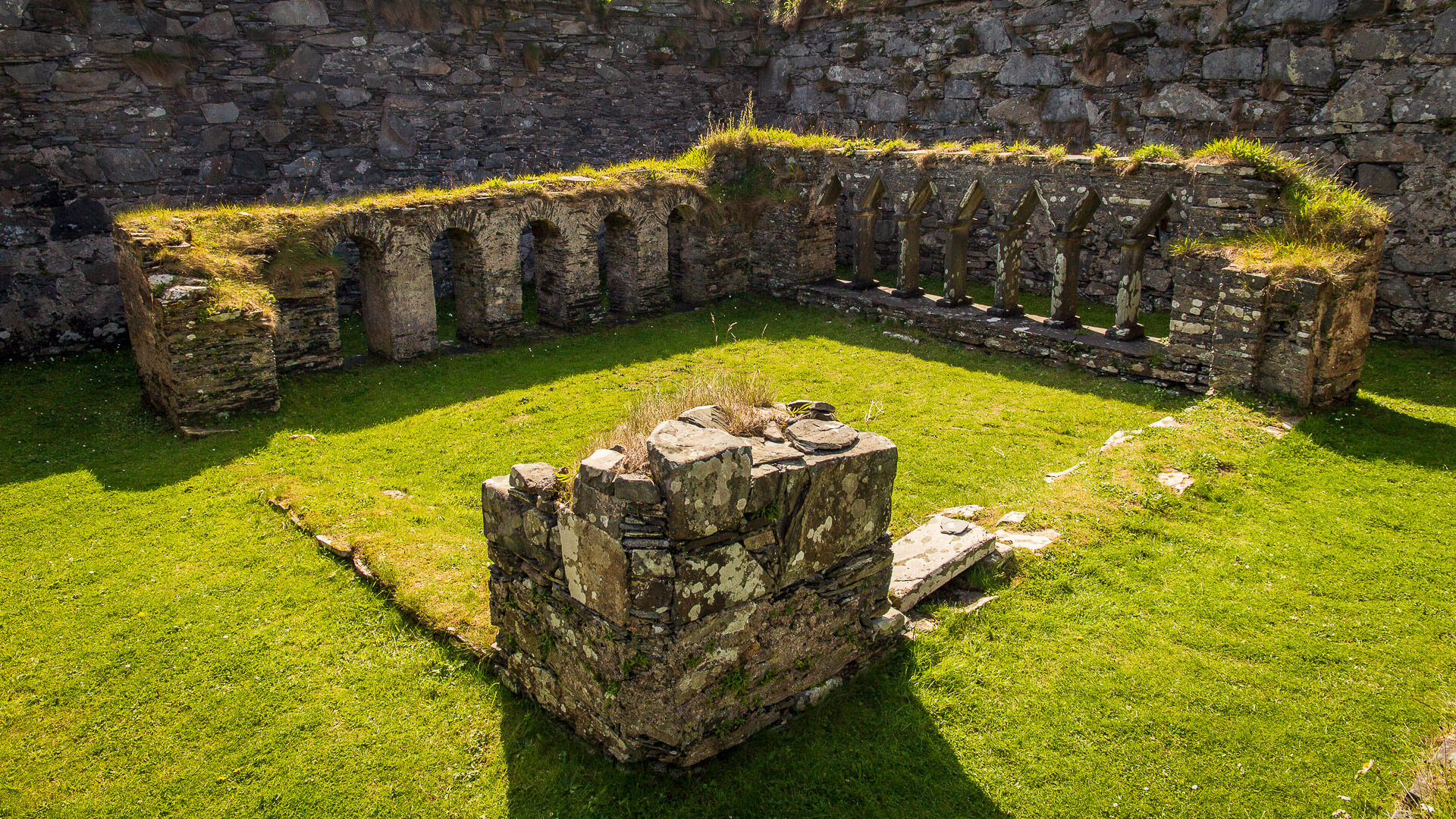
Even the old cloister is still clearly recognisable. Through it, the monks not only reached the various buildings but could also get to its garden, where they could give themselves over to contemplation – quiet, meditative reflection.
There’s still plenty more to discover here: another old cross, for example, or even human bones displayed in an alcove. It’s well worth exploring this history-steeped site. But the island has still more sights to offer.
Did you know: About the island of Oronsay
Only a handful of people live on Oronsay. That means nature can flourish wonderfully in places. A large part of the island is a bird sanctuary, and its edges are lined with vast sandy beaches. On the horizon rise the mountains of Jura.

An island this beautiful has, of course, attracted visitors well before recent times. On Oronsay, refuse heaps have been found dating from the time of hunter-gatherers, over 6,000 years ago. And in the 6th century, St Columba himself is said to have stopped off here on his way to Iona. The island’s name may even point to one of his companions: St Oran. It’s worth knowing that locals still write Oransay rather than Oronsay today.
The island’s name could, however, also come from its next visitors: the Vikings. “Örfirisey” is said to mean “tidal island” – which would also fit rather well.
Route: Walking to Oronsay
To work out the right moment for the crossing, you’ll need a tide table. It’s usually posted in the entrance area of the hotel, or outside the gallery near the ferry pier. You can also ask at the post office.
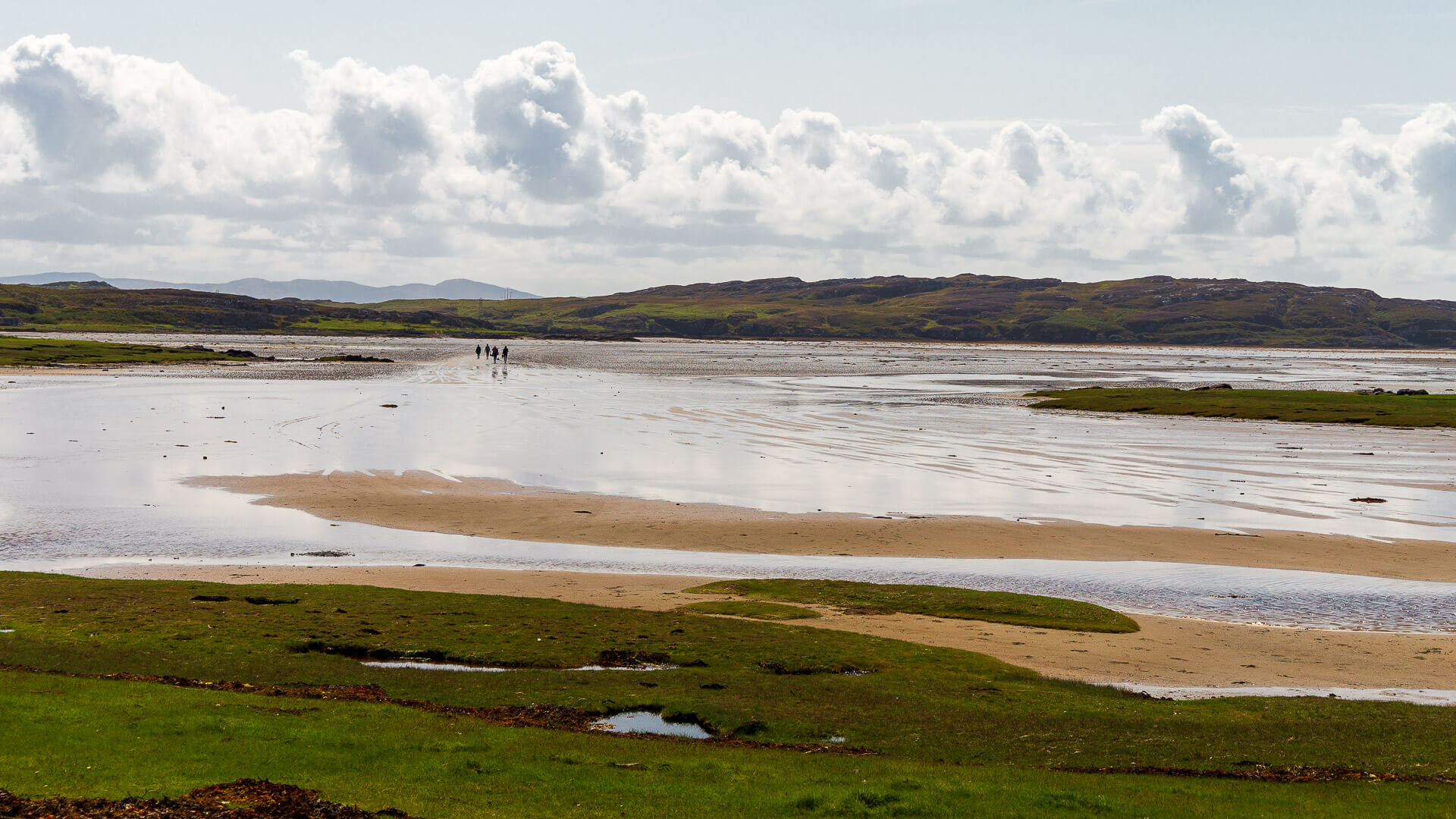
The two days after a full or new moon are said to offer the most favourable window for a visit. On the tide table, look up low tide, add 50 minutes, and be on the beach two and a half hours before that time. As soon as the crossing becomes possible, note the time elapsed from here until the calculated low tide, and add that same interval to low tide. That’s the latest time by which you need to be back on Colonsay.
That said, you should definitely check with the locals on site once more before setting off. They’ll also know whether the wind, for instance, might be changing the conditions.
The starting point is the car park at the end of the road. From here, head left first along the grass at the shore, as this makes crossing the burn easier. After that, head onto the sand and across. On the other side, you should be able to spot where the track begins; tyre tracks from the post van are often clearly visible leading up. From here, follow the track across the island until the gate to the priory appears.
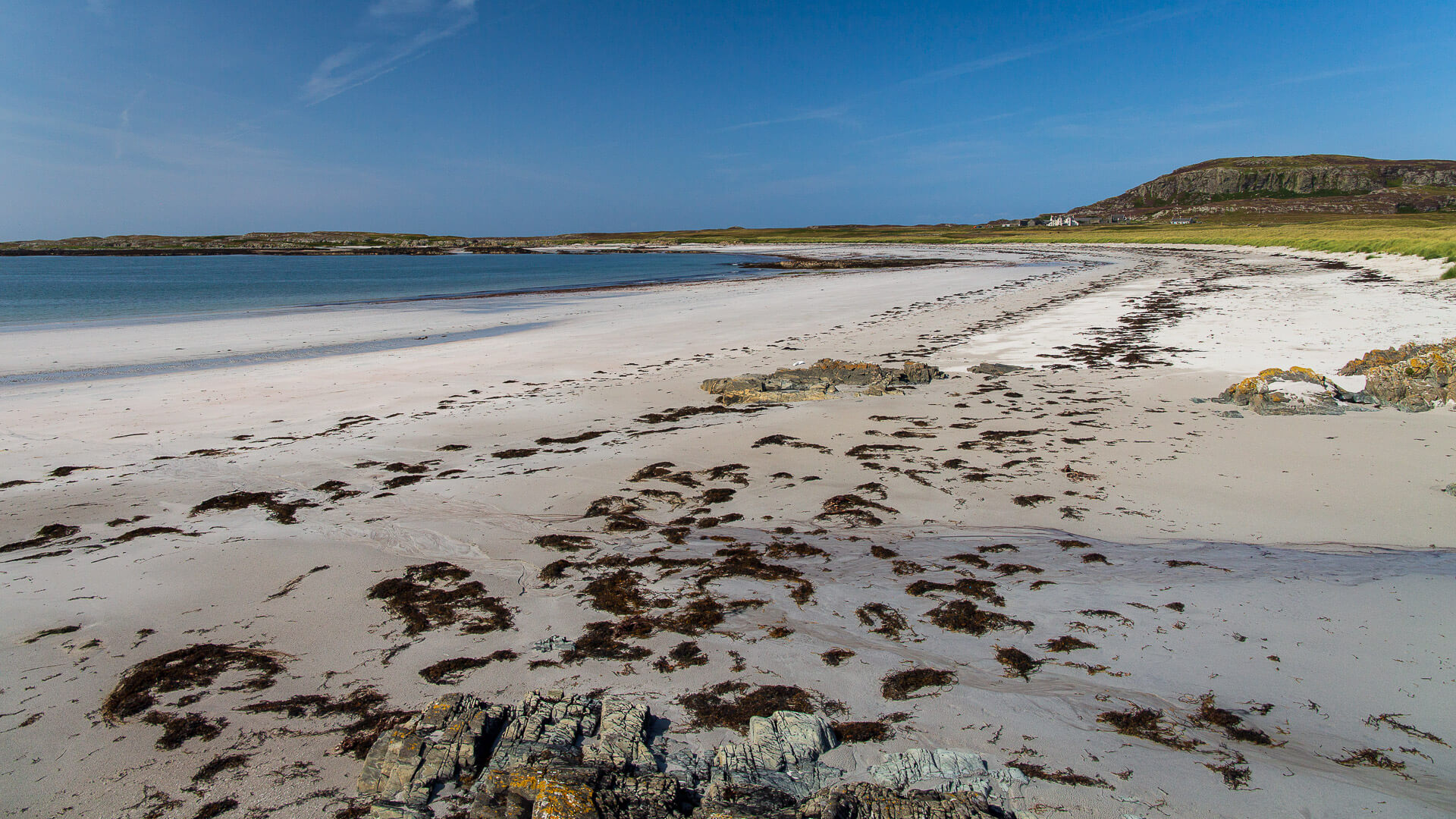
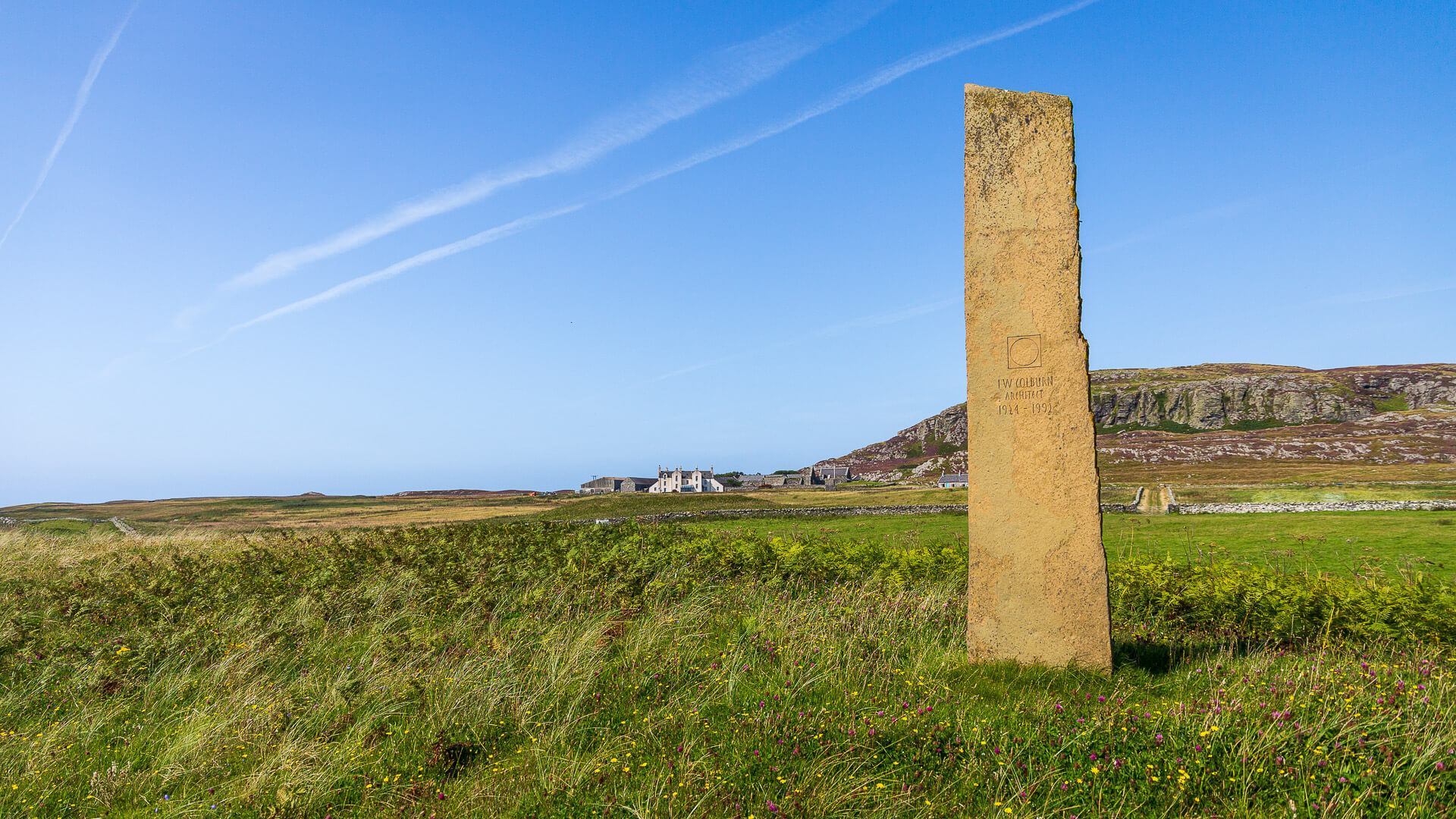
After visiting the abbey, the path continues south. First backtrack a short way, then turn off to the right. A sign here already points the way to “The Beach”. Anyone interested, though, should first take a look at the memorial stone for architect I.W. Colburn, who once bought the island.
After that, head onto the long sandy beach and walk along it. On the other side is an abandoned hut.
In theory, you could continue the path from here to the other side of the island, where another sandy beach lies. The easier route, though, leads back the way you came.
Getting there:
With a sat nav: “PA61 7YP” takes you roughly towards the car park at the large beach.
Without a sat nav: Coming onto Colonsay from the ferry pier, follow the road first towards “Airfield”, passing the hotel and the church. After a short while, a road branches off to the left. Follow it all the way to the end and park on the gravel there. From here, the walk across the beach to Oronsay begins.
