Ruthven Barracks was a military base in the Highlands, intended to keep the clans in check. But the fort only managed that for a short time. Here’s its story.
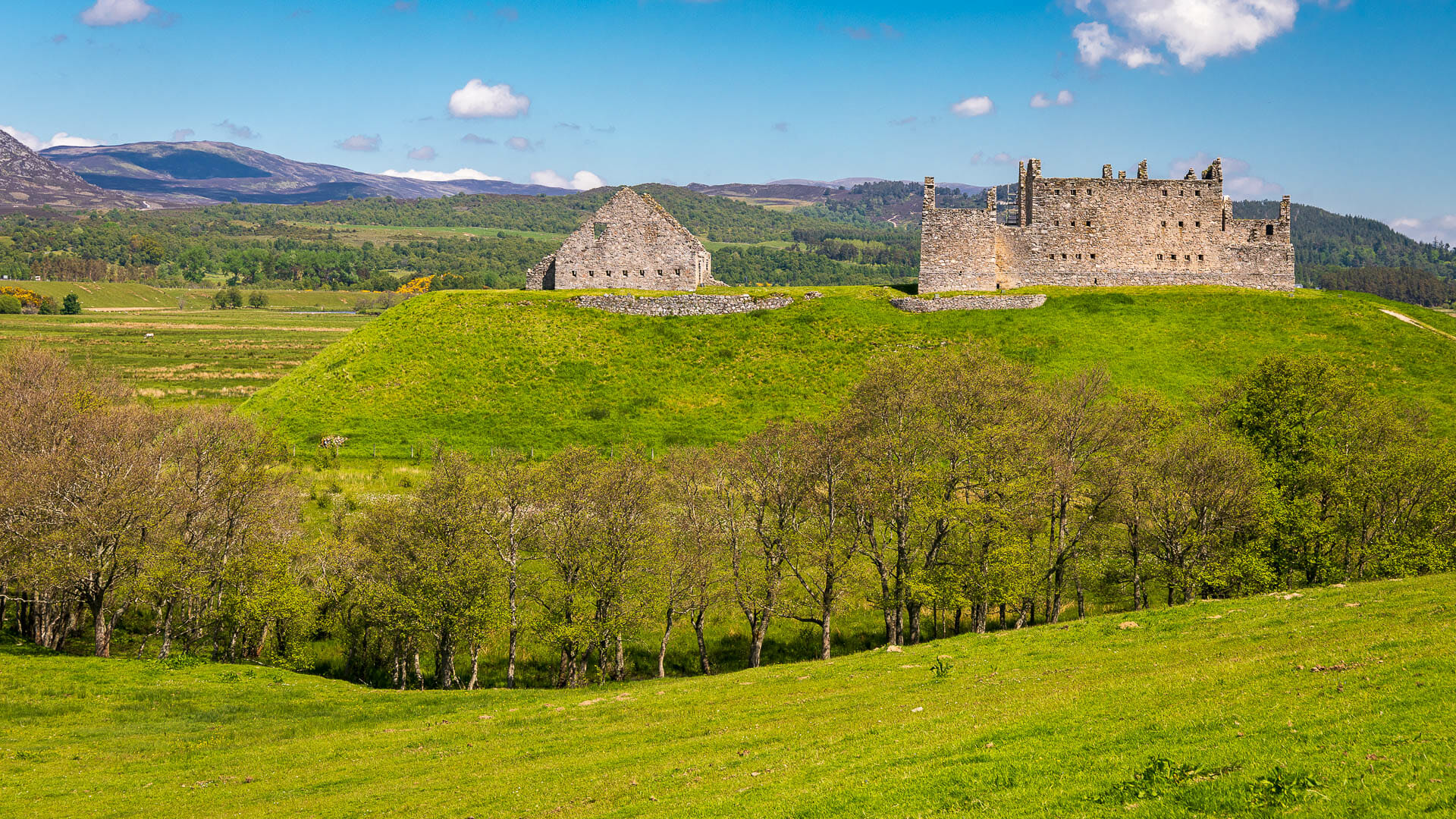
On the way to Inverness, right beside the A9, Ruthven Barracks stands watch over the main route into the Highlands. Today it looks down almost helplessly, yet around 300 years ago it even withstood major sieges.
Ruthven Barracks was meant to bring order to a region whose clans repeatedly backed uprisings. The stronghold was aimed at the Jacobites, supporters of the exiled Stuart kings. After the 1715 rising and the battle in Glen Shiel, the government built several military bases.
Ruthven Barracks was there not only to suppress uprisings, but also to protect the important droving routes used by Scottish cattle drovers. Beef from Scottish cattle mattered greatly to the Borders and to England too.
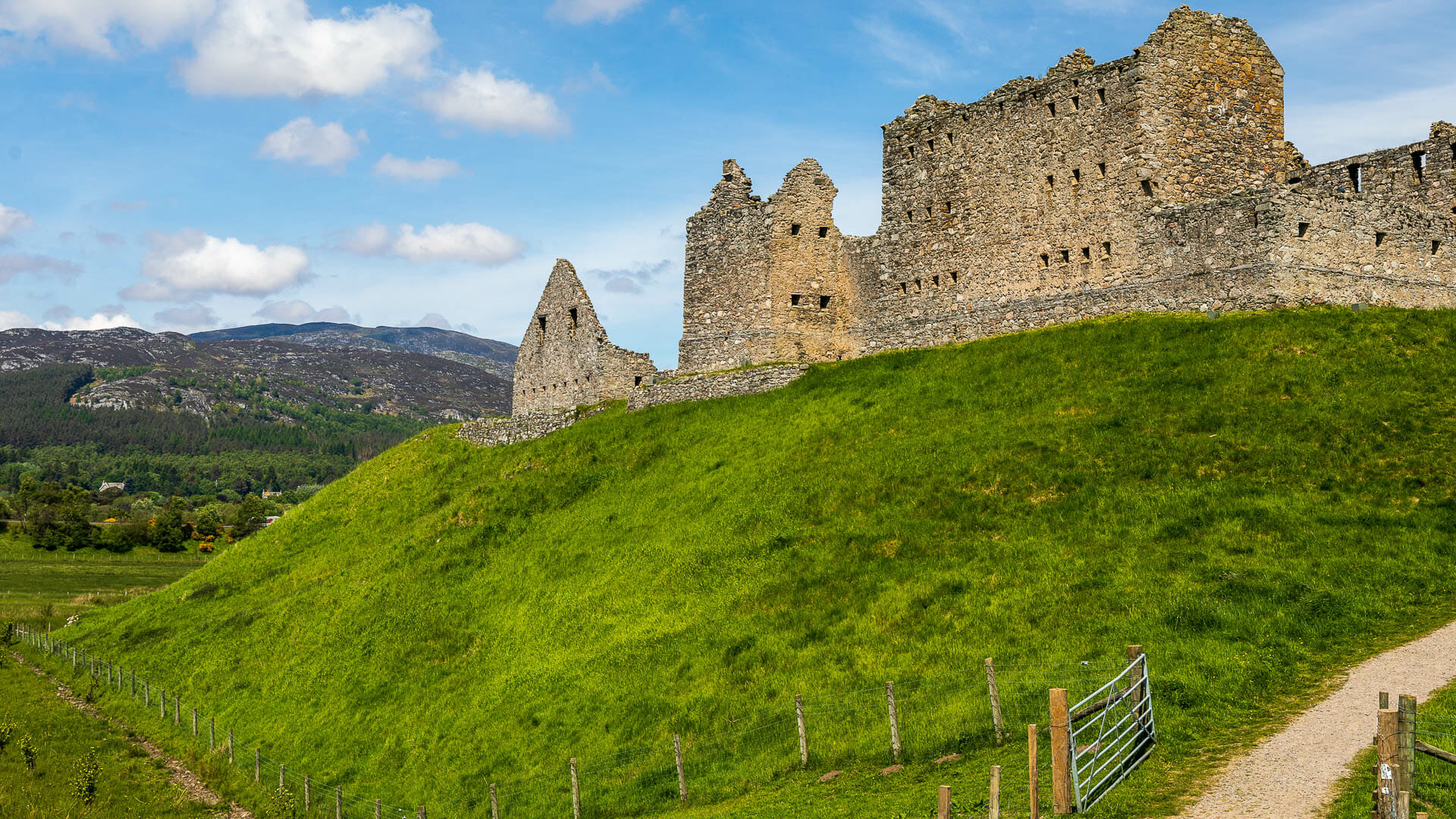
The buildings could accommodate two companies, so around 120 soldiers. That’s what the two large main buildings were intended for. Between them lay a parade ground, surrounded by the facilities of daily life: a bakery, a brewhouse, and the latrines too.
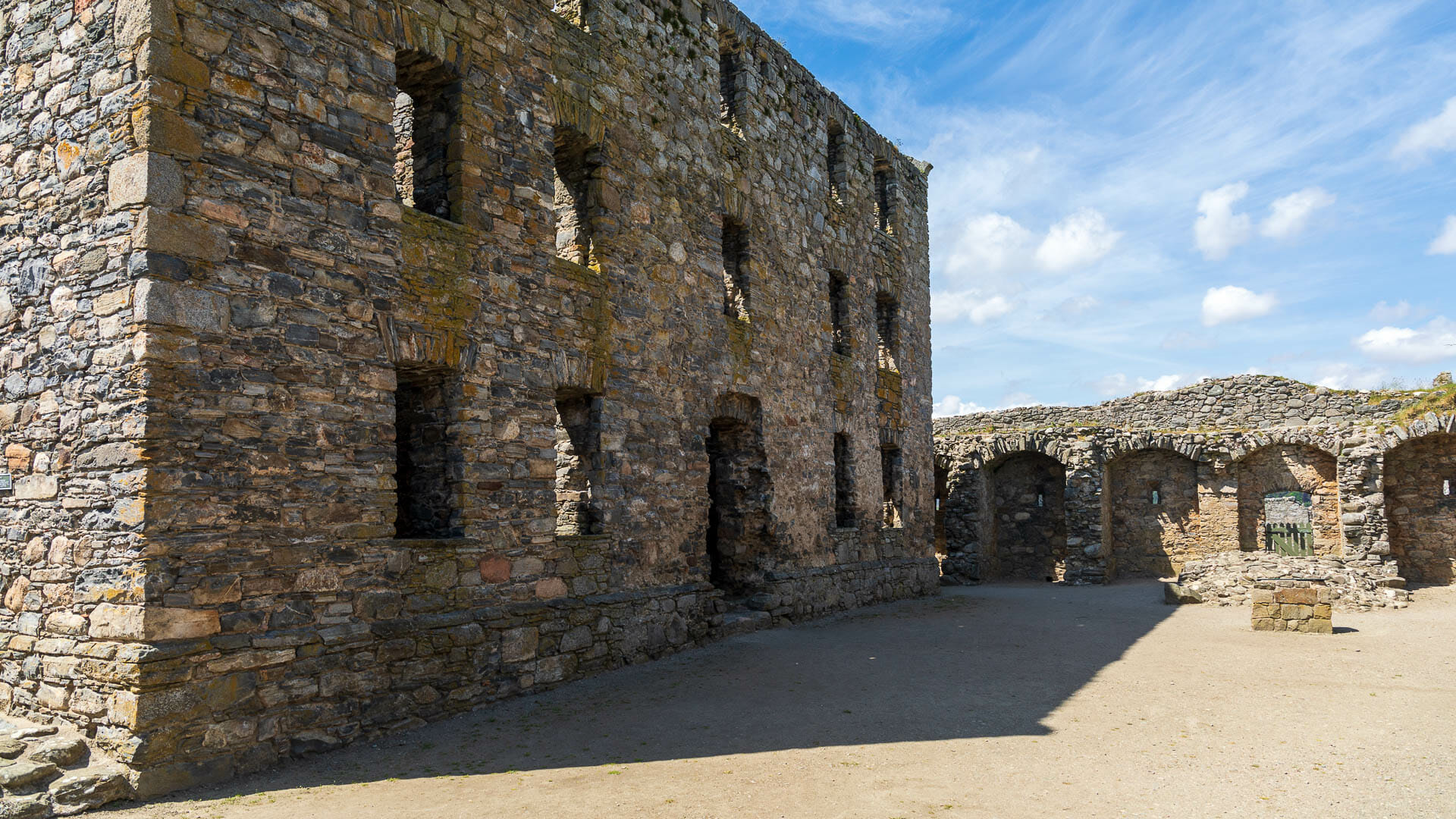
Some unlucky souls also ended up in the prison.
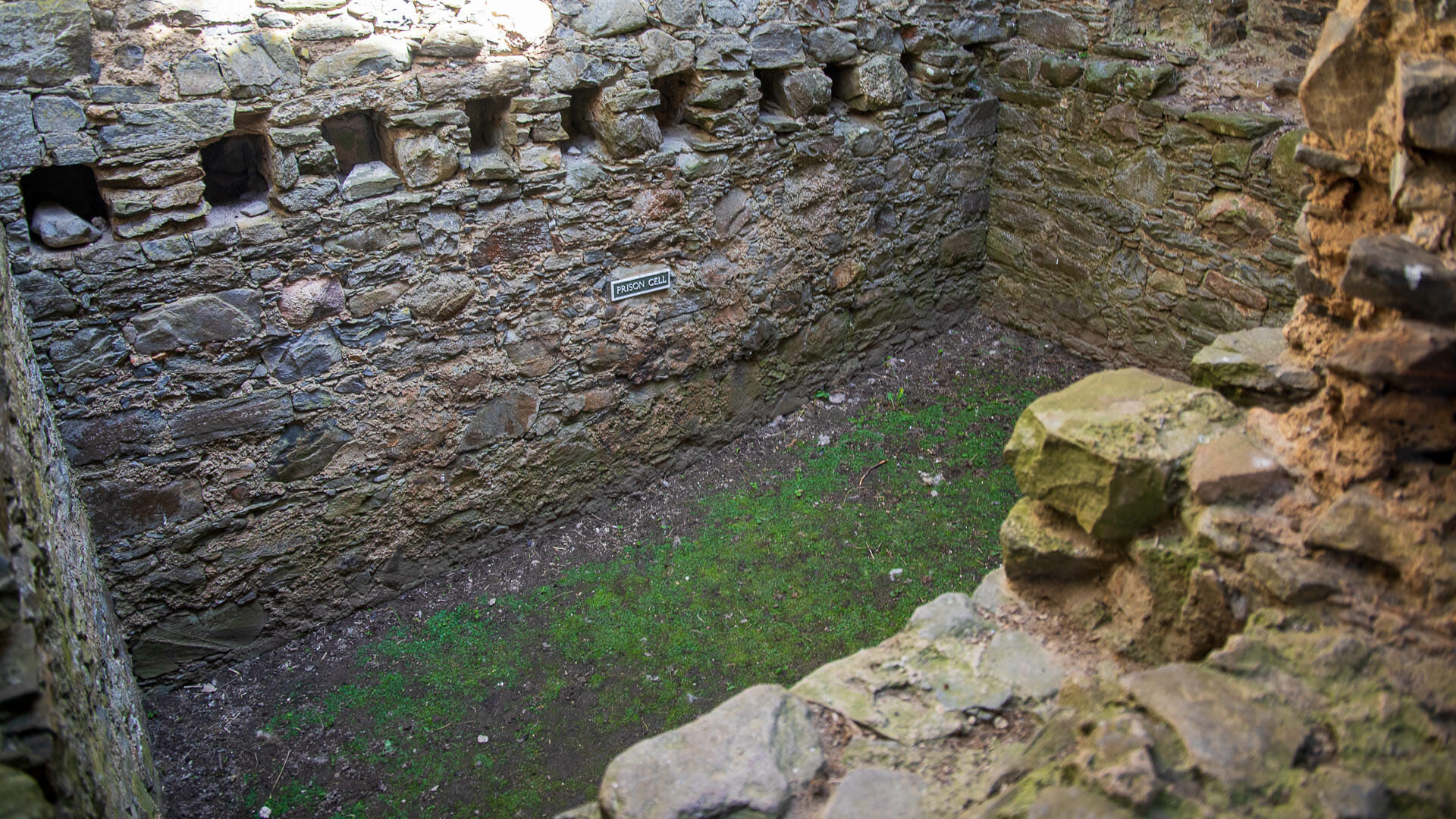
Alongside the infantry, there was also a stable for horses, since Ruthven Barracks could house 30 dragoons. Dragoons were mounted soldiers who didn’t wear armour for protection – in short, an agile, fast, and above all cost-effective cavalry.
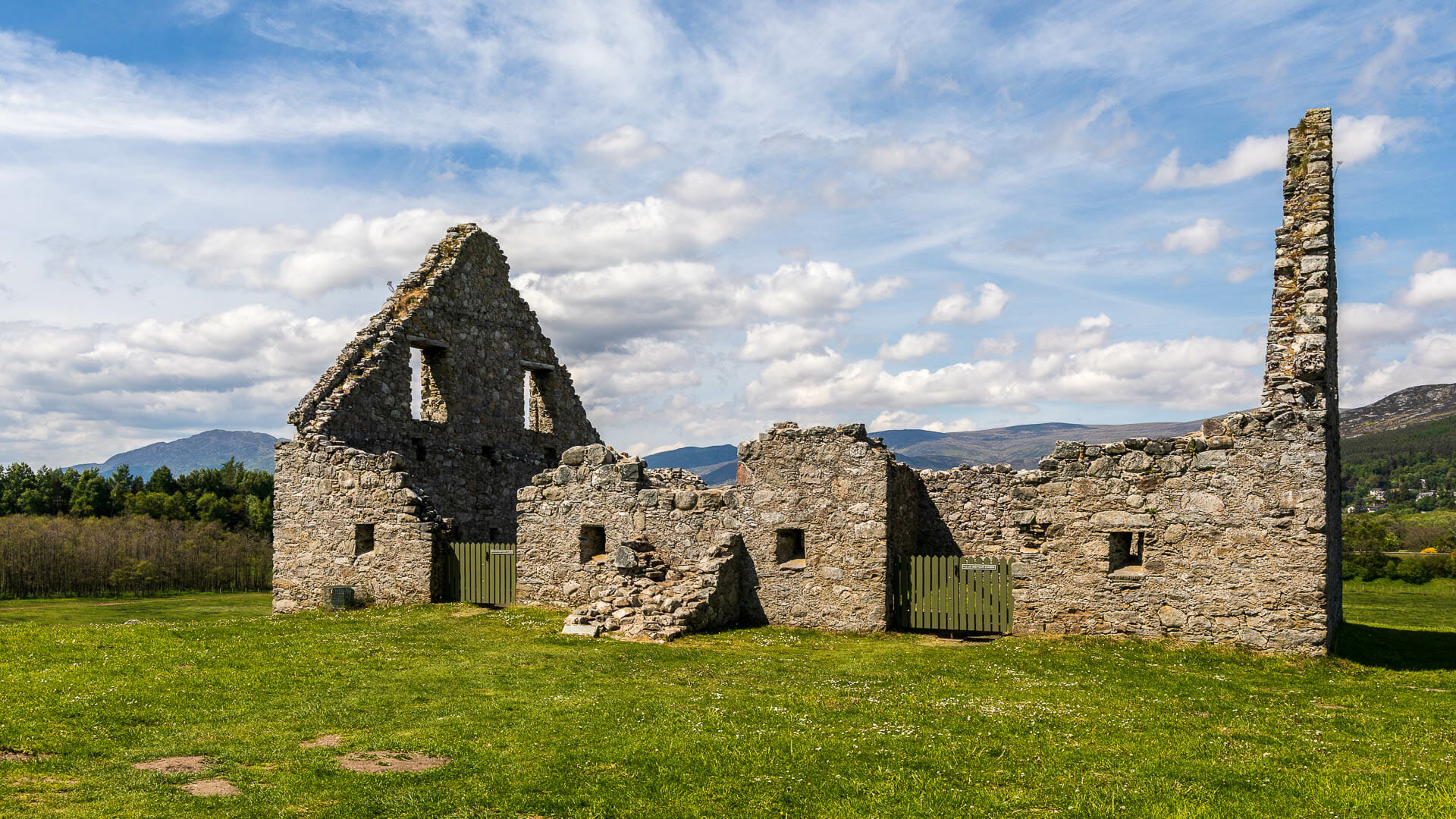
So Ruthven Barracks was well equipped to control and secure the area. But its baptism of fire came in 1745, when several hundred Jacobites tried to take the outpost – and failed. Although only 12 government soldiers were stationed there, the attackers were unable to capture the barracks. Only a single British “redcoat” fell, having leaned too far over the parapet. The Jacobites eventually moved on.
When they returned the following year, things looked different: this time, they had brought cannons. Faced with those, the garrison surrendered. And so it was that Ruthven Barracks even witnessed the final act of the uprising, since after the Battle of Culloden, the remaining Jacobite troops gathered here – still some 3,000 men strong – only to receive Bonnie Prince Charlie’s order that everyone should look after their own safety as best they could.
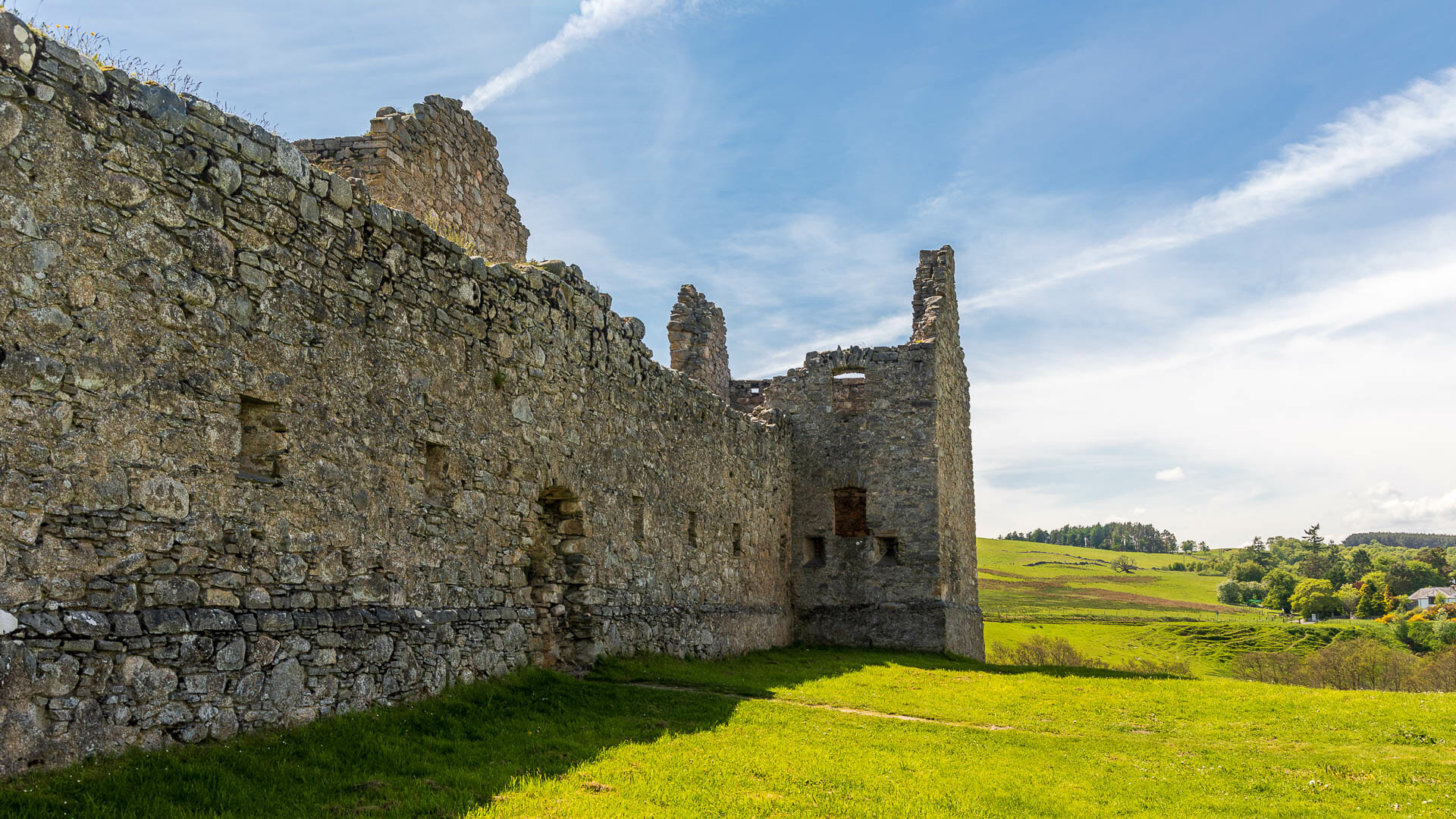
As a final act, the Jacobites went on to destroy Ruthven Barracks – the end of the once-proud military installation.
Good to know: Ruthven Barracks was one of four forts
After the Jacobite rising of 1715, the government decided to get a firmer grip on the Highlands and bring more order to the region. To that end, it built four bases between 1717 and 1723:
- Bernera Barracks near Glenelg
- Cille Chuimein, or – as the English could only pronounce it – “Kilwhimen”
- Ruthven Barracks
- Inversnaid
Bernera Barracks lies near Glenelg, at the spot where all traffic to the Isle of Skye once crossed. Today, the small turntable ferry still operates there. In the past, though, it was above all the lucrative cattle droving from the Hebrides that passed through this narrow stretch of water, which is why Bernera Barracks was so important. It can still be admired today, and the resemblance to Ruthven Barracks is quite striking.
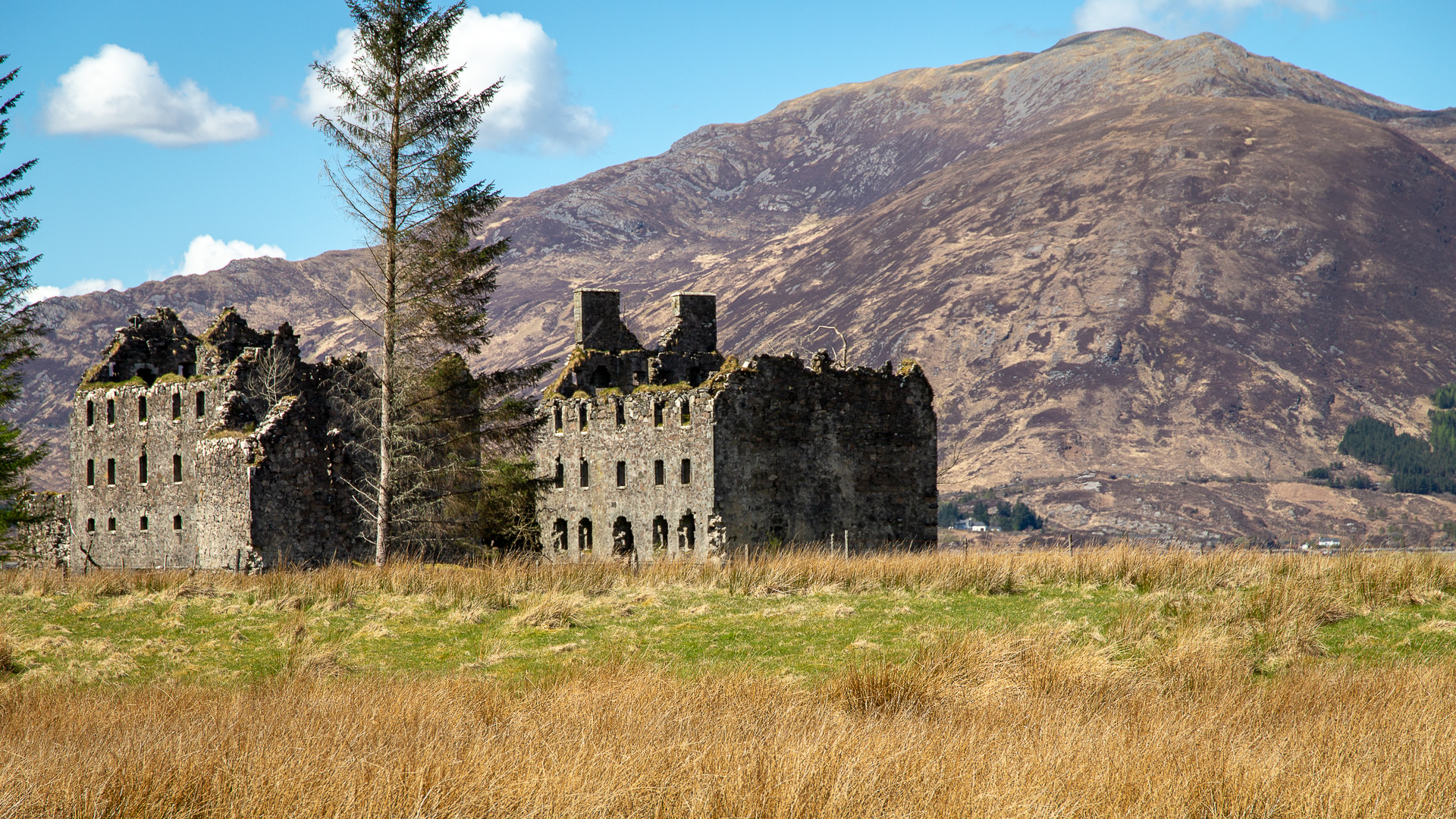
Stones from the nearby brochs of Dun Telve and Dun Troddan were even used in its walls.
Cille Chumein was the Gaelic name for what is now Fort Augustus. This post was important for maintaining the line of communication right across the Great Glen.
While Ruthven lies roughly on an east-west line with the other two barracks, Inversnaid was the clear exception. This base stood near Loch Lomond and was meant to guard part of the route between the town of Dumbarton and Blair Atholl further north.
Little remains today of Inversnaid and Kilwhimen. At least one wall can still be seen at the Lovat Arms Hotel in Fort Augustus.
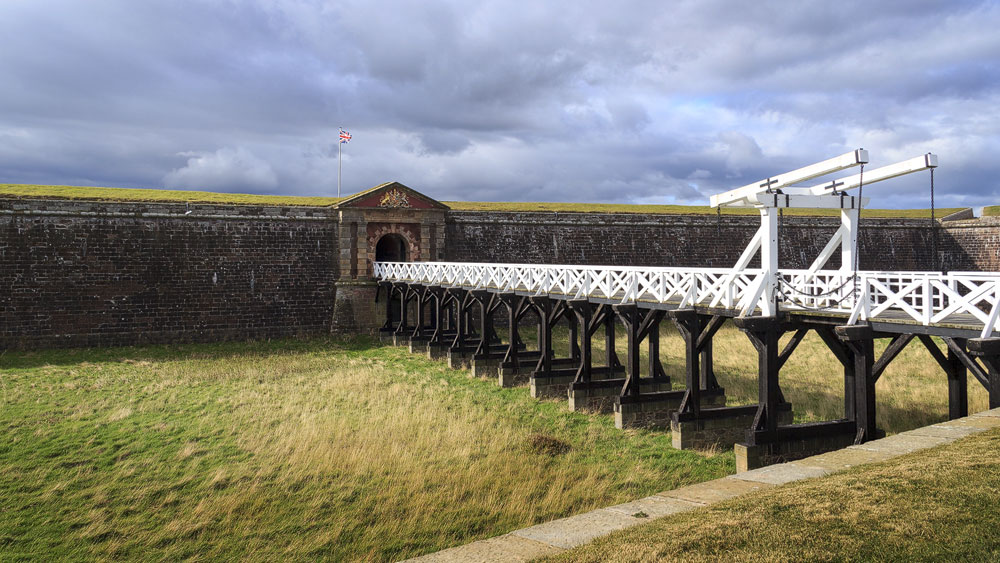
The barracks were partly destroyed during the Jacobite rising of 1745, while others were soon regarded as useless and too weak. After 1746, the British government instead built strongholds like Fort George, or Fort Augustus itself, into the landscape.
Getting there
With a sat nav: “PH21 1HG” will take you to Kingussie, near which the barracks are located.
Without a sat nav: follow the A9 towards Inverness until a sign points to Kingussie – a brown sign here already indicates Ruthven Barracks too. Leave the A9 and keep right at the T-junction. Drive through Kingussie and turn left at the end of the village. Keep following this road until the barracks come into view. There’s a car park on the right.
