Cunning, fearless, ruthless. In the 17th century, the Highlander Alasdair MacColla intervened in the civil war. His goal: to give his clan back its power.
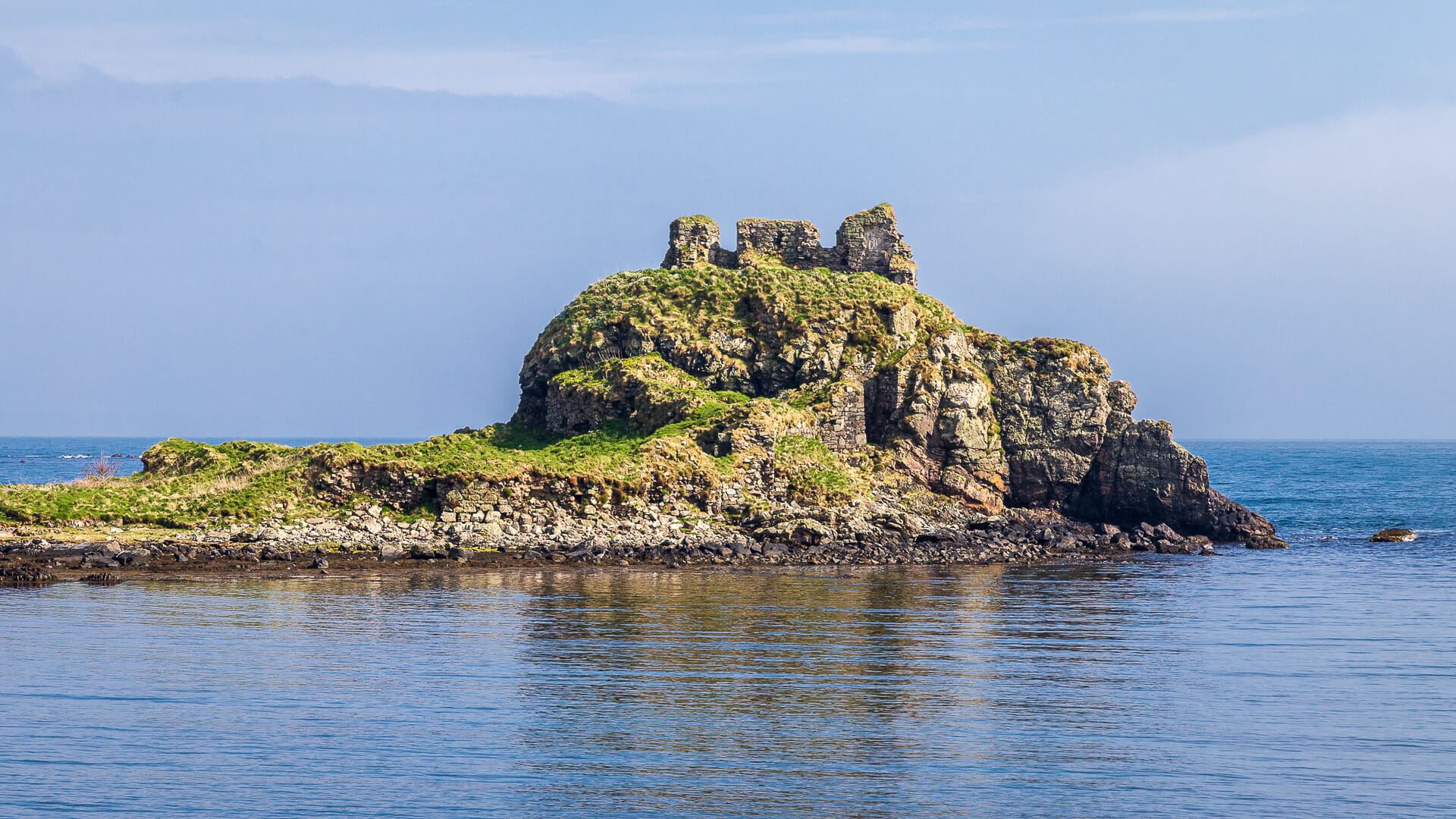
Scottish heroes? Sure: William Wallace comes to mind straight away, or Rob Roy MacGregor. Both became famous through the Romantic movement around 18th-century authors. Above all, Wallace and MacGregor owe their hero status to Walter Scott.
But Alasdair MacColla? Hardly anyone knows the name – yet he is one of the greatest, boldest and most successful heroes of the Highlands.
Time, then, to give this – at times very ruthless – hero of the Highlands a bit more recognition. Here is his story.
Alasdair MacColla: The political stage of his time
The early 17th century. On the European mainland, particularly in the German small states, the Thirty Years’ War still raged. It had initially broken out between Protestants and Catholics, but quickly shifted to questions of power and land. In a certain sense, the conflict in which Alasdair MacColla would later play his part unfolded in a very similar way.

With a little help from my friends …
Ihr könnt Euch denken, dass MyHighlands.de zur Zeit so gut wie kein Geld abwirft. Keine Sorge, ich mach trotzdem weiter – schon aus Liebe zu Schottland. Aber vielleicht mag mich ja einer von Euch künftig unterstützen bei der deutschen Plattform Steady. Hier erfahrt Ihr mehr:
The three kingdoms of England, Ireland and Scotland were at that time still far from being a “United Kingdom”: Ireland rose up against the king and was Catholic at its core. Yet in the north of Ireland, Charles’s predecessor James I (or James VI of Scotland) had established the so-called Plantations of Ulster. These were the deliberate settlements of Protestant, English-speaking English or Scots right in the middle of the Irish-Gaelic territories. The resulting conflict still occupies Europe to this day.
King Charles I stood between the lines. His wife was Catholic, and he himself was at least rumoured to lean towards Catholicism. Yet he had to defend the Plantations. There was also a constant power struggle between him and the Protestant Parliament.
In Lowland Scotland, the Covenanters established themselves – equally strict Protestants. The great and power-hungry Clan Campbell also stood on the side of the Covenanters. The Campbells had acquired large territories, partly through politics, partly through sheer violence.
Parts of these territories had previously belonged to Clan Donald, specifically the branch Clan Iain Mòr – also known as MacDonald of Dunnyveg or Clan Donald South. They were Gaelic and Catholic. And they were related to the MacDonnells of Antrim in Northern Ireland, who in turn had come under pressure from the Plantations of Ulster.
The Scots and the Thirty Years’ War
At the start of the Thirty Years’ War, the Protestant Union sought a new king to place on the Bohemian throne. They found him in the young Palatine Elector Frederick V. His consort Elizabeth was the reason why Scottish mercenaries soon found themselves on German soil. For she was a Stuart, a daughter of the English and Scottish king James I/VI. He naturally wanted to protect his daughter, which is why he sent both English and Scottish soldiers to Bohemia.
Over the years, thousands of Scots went to war on the continent – for Denmark and under the Swedish flag. This was partly about strengthening the Protestants, partly about preserving the Palatinate in the interests of the Stuarts. Many Scottish officers and soldiers gained experience in the battles fought for Sweden and for the Protestants on the continent.
One of them was Alexander Leslie, 1st Earl of Leven, who returned to Scotland in 1638 to lead the Covenanter army. In the Bishops’ Wars they won important victories against King Charles I. The experience these soldiers had gained in the Thirty Years’ War is what made the Covenanters so strong at the outset.
In summary: mainland Europe was sinking into war, the king of three realms was locked in a power struggle with his parliament, the Gaelic way of life was under massive pressure from the English one, and (at least) two Christian denominations stood in hostile opposition to one another. A mixture like dynamite. All that was missing was the spark… and it was about to come.
Alasdair MacColla: Motivation and lineage
Over the years of his life, MacColla changed sides a number of times. But this was not really fickleness, for Alasdair always remained true to his own goals: to give back to his clan – and thus to himself – the lands his family had once owned.
After the fall of the Lords of the Isles, “Clan Donald South” took power over large territories from Dunyvaig Castle: Islay and Kintyre in Scotland, and Antrim in the north of Ireland.
Bit by bit, however, the clan also lost these territories. The Northern Irish branch split off and formed MacDonnell of Antrim. The Campbells, with the king’s support, took first Kintyre and later Islay too. They were the rising clan that no other clan had seriously challenged for generations – until Alasdair MacColla came along.
Coll Ciotach (Kolkitto), Alasdair’s father
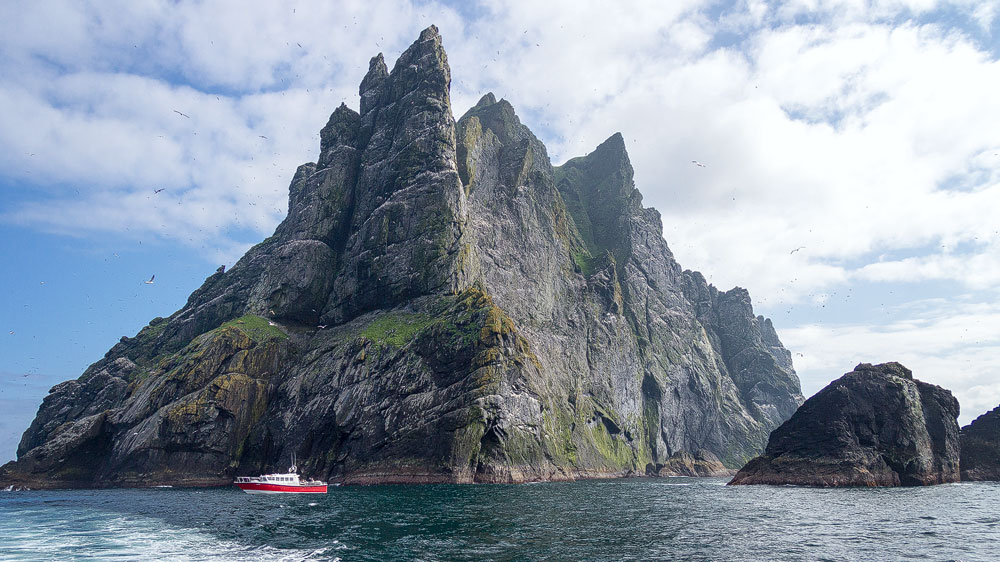
Born in Antrim, Northern Ireland, but raised on the island of Colonsay. The “left-handed” Colla (“ciotach” means “left-handed” but also “sinister” or “devilish”) barely appears in the record until he is around 40 years old. But then, with a bang. He was involved in the unfortunate seizure of Dunyvaig Castle, the former seat of Clan Iain Mòr, in 1614 – an intrigue that also involved the MacDonnells of Antrim and other interested parties. He eventually fled and had to hide from his pursuers for months – even on Boreray, St Kilda’s island where life is barely possible. Up until 1616 he even took part in further uprisings of Clan Iain Mòr, all of which were crushed. In 1623, Coll seized the island of Colonsay by force, killing five chiefs of the local MacPhees. It is not entirely clear how Coll, at the age of 69, eventually became a prisoner of the Campbells at Dunstaffnage Castle along with two of his sons (but not Alasdair). And from then on it was one of Alasdair MacColla’s aims to free his family members.
It was into this era that Alasdair MacColla was born, as the son of Colla “Ciotach” MacDonald of Colonsay. His date of birth is not entirely certain, falling somewhere between 1605 and 1615. He probably grew up on Colonsay near what is now Colonsay House, but often visited relatives in Northern Ireland. The ties through Clan Iain Mòr were still strong, and this is certainly why he earned his first military distinctions in Ireland.
From 1641 onward, revolt broke out in Ireland against the dominance of the Protestants through the Parliament in England. The Irish wanted to remain Catholic, while trying to present themselves as supporters of the king. Meanwhile, the Protestant Covenanters in Scotland were acting against the king. And in Northern Ireland, the Earl of Antrim, a MacDonnell and relative of MacColla, tried to raise an army for the king.
The turmoil in Ireland is not to be part of this story here. Suffice it to say: Alasdair MacColla proved himself a capable commander of soldiers, one who moved towards danger rather than fleeing from it whenever he saw a chance worth the risk. But when politics required it, he switched sides if necessary. When Archibald Campbell, 1st Marquess of Argyll, the great Covenanter general, threatened in January 1642 to move his soldiers against MacDonnell in Ireland too, MacDonnell made every effort to send an army to Scotland with MacColla at its head.
Alasdair MacColla: Fighting in Scotland
But why move the fight to Scotland? The idea was to keep the Marquess of Argyll busy there, thereby diverting him from campaigns in Ireland. This naturally played into MacColla’s hands, since he wanted lands back in the Highlands. It was also meant to relieve pressure on the Royalists under Montrose. James Graham, 1st Marquess of Montrose, was the king’s general in Scotland – a general without any army or support worth mentioning.
In the summer of 1644, MacColla set sail from Northern Ireland with around 1,600 battle-hardened Irish soldiers. His first military target was former MacDonald land: Ardnamurchan with its Mingary Castle. After a short siege, the garrison surrendered on 10 July. With that, he had already inflicted a painful defeat on the Campbells.

Yet that victory too had relied on the element of surprise, and that had now passed. The Marquess of Argyll would surely send larger forces against MacColla. MacColla therefore needed more men. So he left the castle, left behind a garrison, and set off north into the Lochaber region to gain more support from the clans – such as the MacDonalds of Sleat.
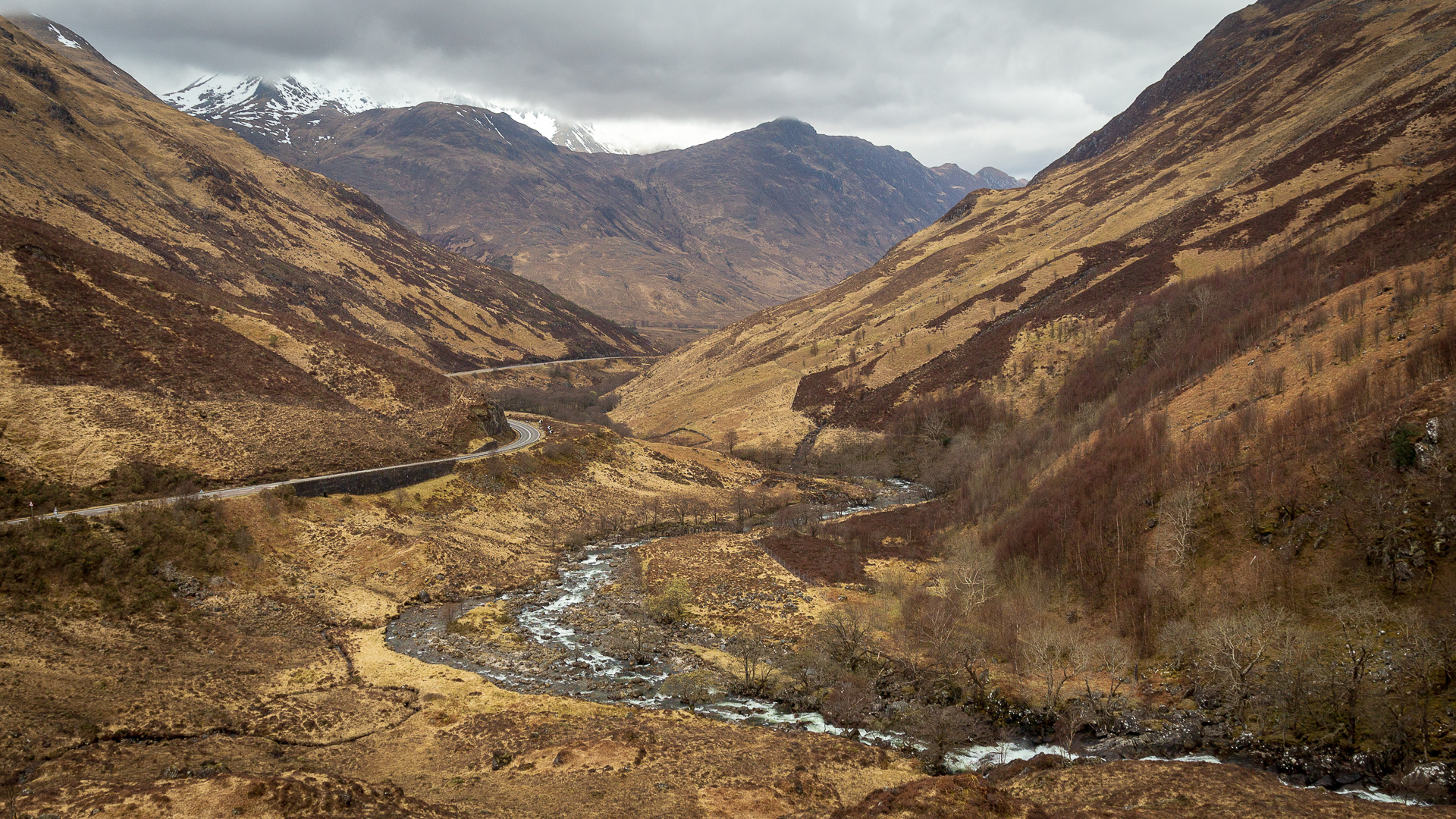
He then swung east, through Glen Shiel to Loch Ness and on into the area around Kingussie – always wary of the Campbells’ troops. The situation was not good: he could recruit only a few hundred men along the way, and his enemies were pushing him towards the Lowlands, where he had little support. The campaign was in danger of failing.
An alliance forms: Meeting Montrose and the first victories
In August, two masterminds finally met: James Graham, 1st Marquess of Montrose, the king’s general in Scotland, and Alasdair MacColla. Both possessed tactical skill and military expertise. MacColla brought his experienced Irish troops, Montrose brought legitimacy and support from the Royalists in the Lowlands. Together, they launched a triumphant campaign.
It began on 1 September 1644 with the Battle of Tippermuir near Perth. Although the Covenanter force was almost twice the size of the Royalist force under Montrose and MacColla, it was inexperienced (the soldiers and officers with experience from the Thirty Years’ War on the continent were fighting in Ireland or England).
MacColla took command of the centre of the battle line with his Irish soldiers. And for the first time they demonstrated what would later become famous as the “Highland charge”: fire once, then rush the enemy and go straight into hand-to-hand combat. This attack proved effective and the Covenanter army began to flee. A complete victory! The town of Perth fell into Royalist hands.
The army then turned towards Dundee. The town refused to surrender. MacColla and Montrose accepted this, for the real danger lurked in Aberdeen, which had strong Covenanter forces. Dundee was left unscathed – unlike Aberdeen, which was to experience the cruel side of the Royalists.
On 13 September 1644, matters came to a head at Aberdeen. Around 1,500 Royalists faced 2,500 Covenanters. Once again, however, the Covenanter side lacked experienced leadership. To be precise: the leadership was too sure of itself. Through tactics, combat experience and discipline, the Royalists won again.
And afterwards they descended on the town: killing, raping, plundering and burning. Aberdeen showed the brutal face of the Royalists under Montrose and MacColla.
Successful apart: The forces split
After these important victories and the capture of the eastern towns, Montrose and MacColla amicably parted ways once more. MacColla had to rush to the aid of the garrison at Mingary and now hoped – having shown what was possible – for support from the clans. He succeeded in both endeavours.
Montrose, meanwhile, moved north of Aberdeen and held his position there. Alasdair MacColla rejoined him in winter – bringing with him fighters who now swelled the Royalist army to 3,000 men.
Except: the timing was poor. An army in winter? It had to be fed, but could it wage war? Or could it?
Alasdair MacColla: Destroyer of houses
Once again, MacColla provided the answer: yes, it could! Namely by invading Campbell land and stealing their cattle. The fact that this was, in a sense, madness – since Argyll is hard to access, and no one had succeeded militarily there in decades – is exactly what created the element of surprise.
MacColla prevailed over Montrose’s misgivings, and so the army invaded Campbell land. For this, MacColla soon earned the nickname “fear thollaidh nan tighean” – “the piercer (i.e. destroyer) of houses”. For between December 1644 and January 1645, the troops murdered and plundered their way through Argyll. The Campbells’ aura of invincibility was shattered afterwards. The famous Marquess of Argyll, until then the hero of the Covenanters, even had to flee his castle at Inveraray.

The Royalists then turned north until, at the end of January, they reached Loch Ness again via Lochaber. The devastation of Argyll and the defeat of the Campbells was complete. And Alasdair MacColla was now a celebrity among the Highlanders.
In the Highlands: War among the Gaels
But the Marquess of Argyll had not been idle. In January he had gathered around 3,000 soldiers at Inverlochy, near present-day Fort William. Montrose had to attack this army if he didn’t want to risk losing all he had achieved. And MacColla had to protect his newly seized lands and Mingary Castle.
But the route would run from Loch Ness through the Great Glen. The Duke of Argyll would be able to see the Royalists coming from many miles away. Not good odds.
But the Highlanders and Irish in the army had proven themselves: they were tough and enduring. And so MacColla and Montrose once again chose an “impossible” route. Over the winter mountains!
A further ruse helped them: they sent small raiding parties ahead, who attacked the Campbell outposts. These then withdrew to report that small skirmishes were taking place with marauding Highlanders. But they had failed to recognise that the entire army of MacColla and Montrose was marching behind them.
So the commander at Inverlochy, Sir Duncan Campbell of Auchinbreck, was taken by surprise when the Royalists appeared. He hastily ordered his troops into formation, its left flank resting against Inverlochy Castle.

Where before it had gone against “Lowlanders”, here Gaelic armies faced one another. The Campbells and their allies, with a few Lowlanders, on one side; the MacDonalds of Glengarry, Keppoch and Lochaber, Clanranald, the MacLeans, the Stewarts of Appin and Atholl, MacGregor, the Camerons and the Irish on the other. It was a Gaelic battle that day, and it was the chance for all the clans humiliated by the Campbells over the preceding decades to pay them back.
It was the greatest victory for MacColla and Montrose. The Royalists killed more than 1,500 opponents. The Duke of Argyll watched the disaster from his boat and sailed away unharmed. Sir Duncan Campbell of Auchinbreck, however, was killed (legend even has MacColla beheading him himself after the battle) – along with many other Campbell chiefs. MacColla’s dreams seemed to be coming true.
At the same time, Montrose had sent a clear signal that the power of the Covenanters and Protestants was limited. They could be beaten. A sigh of relief for King Charles I.
The victories also finally brought the army the influx it had hoped for: new Highland recruits arrived in droves.
More on the Battle of Inverlochy Castle in the podcast (German only).
Cat and mouse: Avoiding the conflict
There was now little resistance left from the Covenanters. The Royalists marched back to Loch Ness and controlled the situation. There were only minor skirmishes with Covenanters. But the waiting and the success slowly caused the army to disintegrate. Highlanders went home with their spoils.
To make a statement against this, the Royalists took Dundee – Alasdair MacColla leading the attack from the front. But by now Covenanters under General William Baillie had arrived from the south. Montrose and MacColla fled Dundee before him. The Covenanters proclaimed this a great victory – but no one believed them.
Nevertheless, Montrose and MacColla came under pressure from Baillie’s army. They split up. Montrose withdrew to the area around Doune, while MacColla went plundering in Angus.
The Covenanters made a mistake: they also split their forces. And soon they were more spread out than the Royalist soldiers. Montrose and MacColla, however, joined forces again. Lord Gordon’s troops joined them too.
At Auldearn, the Covenanters under Sir John Hurry (or Urry) attacked Montrose’s camp. He sent almost 4,000 infantry and 300 cavalry against just 2,000 foot soldiers and a few hundred cavalry on the Royalist side. Should have been an easy win, right?
Historians know only little for certain about the Battle of Auldearn on 8 May 1645 (editor’s note: Wikipedia takes quite a strong stance here, while historians such as Prof. David Stevenson of St Andrews University compare the conflicting accounts far more cautiously). And so, depending on the source, the story ranges from a meticulously planned trap by Montrose to a hasty improvisation by the surprised Royalists.
The description of MacColla, too, ranges – depending on the historian – from foolish but brave to well-planned and brave (brave is always part of it). What is certain is that he drew the Covenanters’ attack onto himself, allowing Gordon’s cavalry to attack their flank. In the end, Hurry’s superior army was crushingly defeated.
Thanks to the victories, the show of strength, and the hostages MacColla held at Mingary, he achieved another important goal: his father and relatives were exchanged and set free.
At their peak: Victory of the Gaels, the triumph of the Royalists
It was as if there were no opponents left for MacColla and Montrose. They rushed from victory to victory. After Auldearn there was only one serious opponent left: Baillie commanded the last intact Covenanter army.
Montrose (without MacColla, but with his Irish soldiers) confronted Baillie at Alford on 2 July 1645. For the first time, the two armies were roughly equal in size in battle. Yet once again Montrose managed to defeat the Covenanters.
Even so, their power was not yet broken. And all the victories so far concerned only the Highlands and the east of Scotland. Montrose was eager to subdue the Lowlands. MacColla’s interests continued to lie in the west and the land of his ancestors. Nevertheless, the two military geniuses were to meet once more, fight once more, and win once more.
United, the two commanders marched south. At Kilsyth, roughly halfway between Stirling, Glasgow and Edinburgh, they set up camp and waited for Baillie and his army.
The Battle of Kilsyth was anything but a planned masterpiece – confusion reigned on both sides. The Covenanters in particular were divided, and MacColla too did as he pleased. Some Covenanters attacked too soon, the Highlanders responded, and suddenly the armies were fighting without either having really taken up formation.
Passion, well-timed micromanagement and ruthlessness once again brought the Royalists victory. And after that there was no longer any Covenanter army left in Scotland – not even in the Lowlands. Scotland now belonged entirely to the king.
It was not only a victory of the Royalists over the Covenanters, it was also a victory of the Gaels over the Lowlanders and all things foreign. That is why Alasdair MacColla is still sung about today: because he was a hero of the Highlands. Because without his courage, his skill and, not least, his men, Montrose probably could not have won a single victory. Anywhere.
After this success, Montrose set up his headquarters in Glasgow, since the plague was raging in the capital, Edinburgh, at the time. There, Montrose knighted MacColla. Yet to the king, Montrose had scarcely mentioned the role of his ally and the Highlanders. And in Ireland and England, the Covenanters continued to dominate.
Beginning of the end: The alliance breaks apart
In September 1645, MacColla left Glasgow – and his partner Montrose – with 3,000 Highlanders and 120 Irish. Most of the Highlanders returned to their home districts, so that soon only the Irish and 500 further soldiers remained at MacColla’s side.
The break in the alliance between MacColla and Montrose marked their decline. Montrose wanted to increase the pressure on England. But all the Highlanders had left, and the “new allies” had until recently been his enemies. As a huge and experienced Covenanter army marched up from the south, Montrose waited at Philiphaugh in the Borders. Apart from the remaining Irish, no one was truly prepared to fight for the Royalists any more. This was the end for most of the Irish MacColla had brought with him. They died in battle or were executed afterwards.
MacColla marched once more through Argyll to further harass the Campbells. He did so for 20 months. He was unable to take most of the castles, but instead laid waste to the land and killed ordinary people.
At Lagganmore there was another clash with the Campbells, which Alasdair again won. And once again his cruel and merciless side showed whenever it came to Campbells. He had all the prisoners (women and children included) driven into a barn and set it alight.
Alasdair MacColla: Ruler of Argyll – for a while
MacColla had reached his goal. He ruled Argyll and the old realm of Clan Iain Mòr. He was able to hold onto it until 1647. But his luck turned. As early as May 1646, King Charles I had, for political reasons, ordered Montrose to lay down his arms. Montrose had done so, and about a year later fled to mainland Europe.
Also in May, an army of Campbells entered Cowal and slaughtered the Lamonts at Dunoon, who had previously surrendered.
Ultimately, it was the political situation that isolated Alasdair. The king had placed himself in the custody of Scottish Covenanters in England, who had taken him in since they had by now also fallen out with the English Parliament. The king ordered his Royalists, such as Montrose, to lay down their arms. The Irish thus had no reason left to fight in Scotland. The foreign clans had no interest in supporting MacColla’s claims to power alone.
MacColla was politically isolated and delegitimised.
At least one small triumph remained: Alasdair appointed his father, Coll Ciotach, as his deputy at Dunyvaig Castle. Islay was to remain his domain.
On 24 May 1647, David Leslie began the reconquest of Kintyre and the Campbell territories. And of course, the previous atrocities were avenged with further atrocities.
From then on, MacColla offered little resistance, retreating quickly via Gigha, and by then he had probably long since resolved to return to Ireland with many of his comrades.
By the end of June, troops stood before Dunyvaig Castle, held by Coll Ciotach. He quickly began to negotiate. Coll was, after all, already 76 years old, and his manner of negotiating soon made clear that having whisky mattered more to him than fighting. He went back into captivity, and on 5 July the Dunyvaig garrison surrendered.
By autumn, the Campbells ruled once again across the whole of the Highlands & Islands. They took revenge wherever they could. Coll Ciotach, Alasdair’s father, was hanged, as was the rest of his family. Short work was made of the Irish still remaining in the garrisons.
As brilliant as MacColla had been on the attack, he neither could nor wished to defend his new realm. It lacked support – and he knew it.
Death in Ireland: Alasdair MacColla’s end
MacColla was back in Ireland, while the lands of Clan Iain Mòr passed permanently to the Campbells. Although MacColla had managed an orderly retreat with almost all of his men, he probably thought his garrisons would be able to hold the land for longer.
The rest is quickly told: MacColla entered the service of the Irish Confederation against the English Parliamentarians. In November 1647, this Confederation lost the Battle of Knocknanuss – and MacColla lost his life. Exactly how he died is not entirely certain. He is said to have been killed in captivity by a Major Purdon. Many of his Highlanders and his long-standing Irish companions shared his fate in those days.
His former ally Montrose initially had better luck. He tried to rally support for the English monarchy on the continent. When Charles I was hanged in England, he supported his successor. In 1650 he attempted an invasion with mercenaries via the Orkney Islands. He had no luck, was captured, and was hanged in Edinburgh in 1650. His head and limbs were cut off and put on display in various towns.

It was only with the restoration of King Charles II that he was rehabilitated. A monument to him stands in St Giles’ Cathedral.
His opponent Archibald Campbell, 1st Marquess of Argyll, was himself executed as a traitor after the restoration of the Stuart kings in 1661. His monument likewise stands in St Giles’ Cathedral in Edinburgh, in the aisle opposite. In death, the adversaries are very close indeed.

Aftermath: Alasdair MacColla’s legacy
MacColla had risked everything, won everything, and lost even more. His family was afterwards almost wiped out, Clan Iain Mòr would never again play a role, and the Campbells were more powerful than ever.
Worse still: MacColla’s brilliance was at first diminished. It was said that his stupidity had almost cost the victory at Auldearn. That his withdrawal of troops had led to Montrose’s first defeat. A Gaelic barbarian, wild and prone to drink, but a bit stupid. Of little importance to history.
Today we know better: without MacColla, Montrose would never have had the men he needed. Together, both were daring and shrewd. Alone, however, Montrose never won a single victory.
Yet MacColla was also a cruel man, who pursued his own claims to power on the backs of civilians. His Irish soldiers were brutal. This should not be forgotten.
At least in song, MacColla still lives on as a hero in the Highlands today. As in “Alasdair Mhic Cholla Ghasta”, sung here by Capercaillie:
Sources:
- “Highland Warrior – Alasdair MacColla and the Civil Wars”, David Stevenson, Birlinn 2014
- “On the Fringe and in the Middle: The MacDonalds of Antrim and the Isles 1266-1586“, Philip Smith, History Ireland
- History Scotland, Mar/Apr 2020 issue, p. 24ff