Burial mounds, stone circles, fortresses – Kilmartin Glen was a hotspot of prehistoric human culture in the west of Scotland.
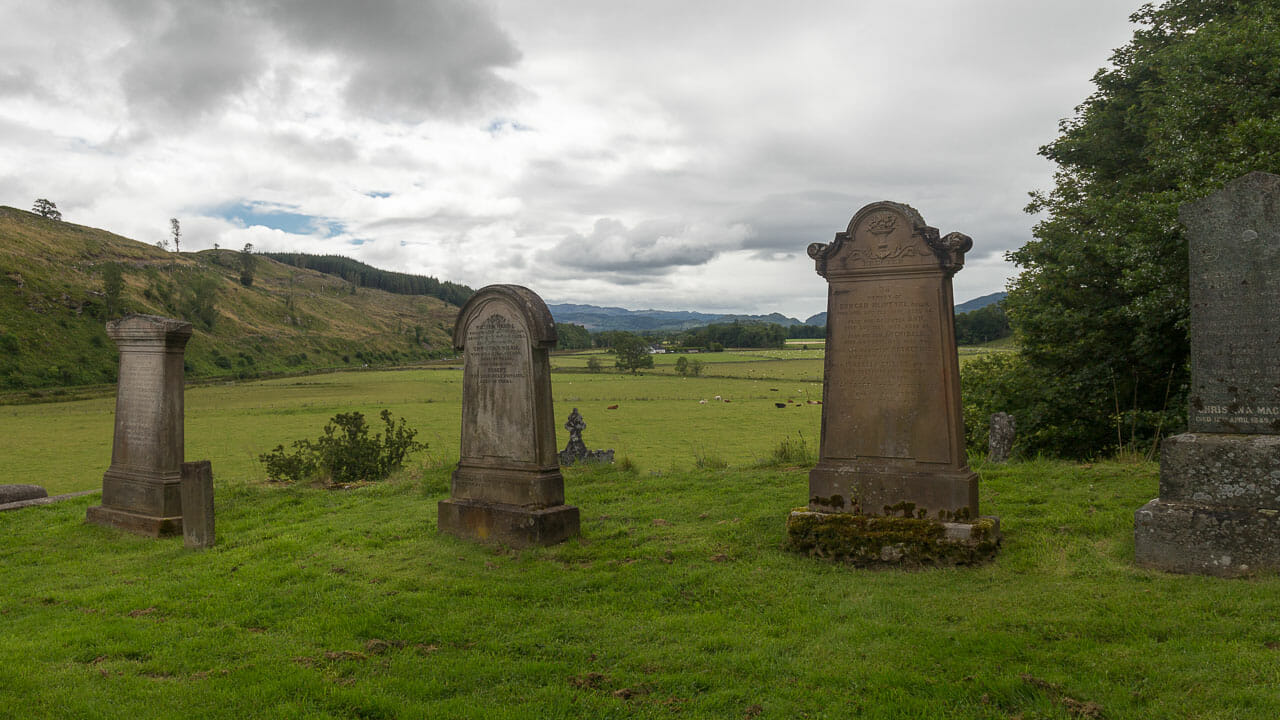
The glaciers of the Ice Age carved this beautiful valley into the landscape of Argyll more than 11,000 years ago. And a broad river, flowing from nearby Loch Awe into the sea at Crinan, added the finishing touches. Together they prepared the ground for human cultures long before our era.
That alone wouldn’t be especially unique. What is unique, though, is that Kilmartin Glen has preserved the traces of these civilisations like almost nowhere else. Reason enough to build a museum here, gathering the knowledge and finds from the valley and the whole of Argyll.
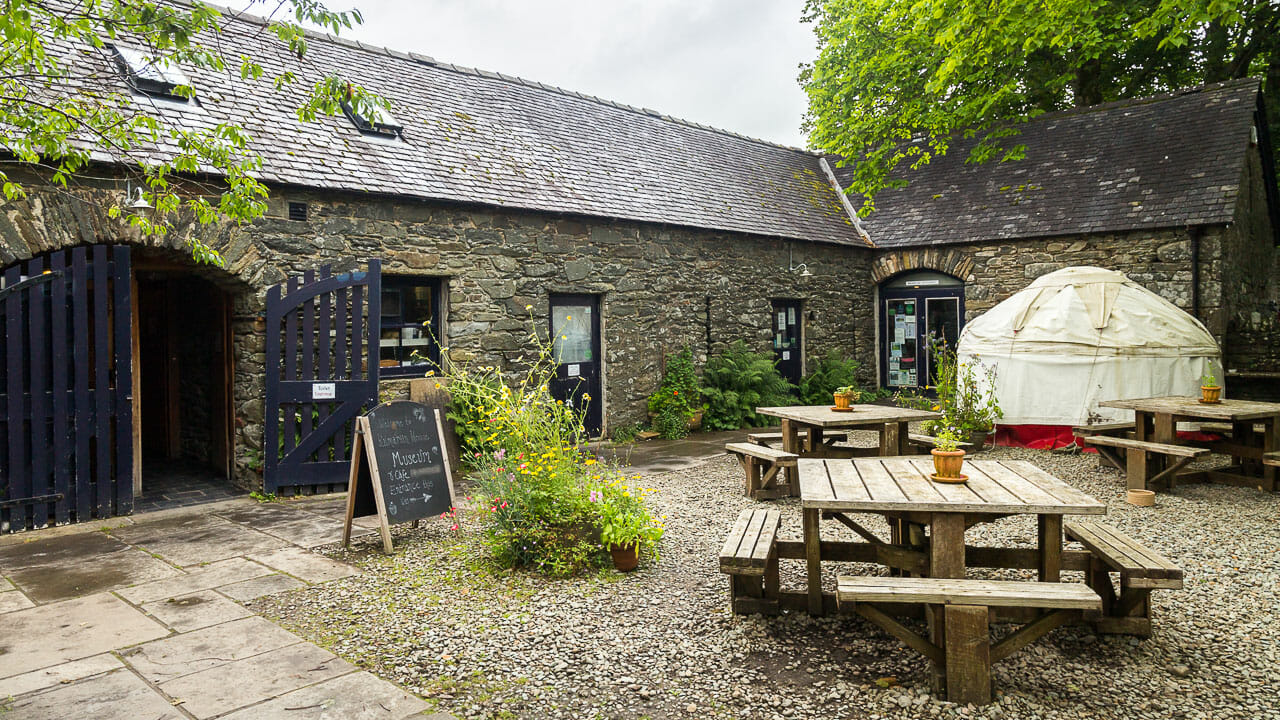
That said, the valley’s greatest treasures don’t fit inside a museum. No fewer than seven large burial mounds, known as cairns, are strung like beads along the lowland. Add to that numerous stone circles and standalone monoliths.
Kilmartin Glen is, in a sense, one single exhibit in itself.
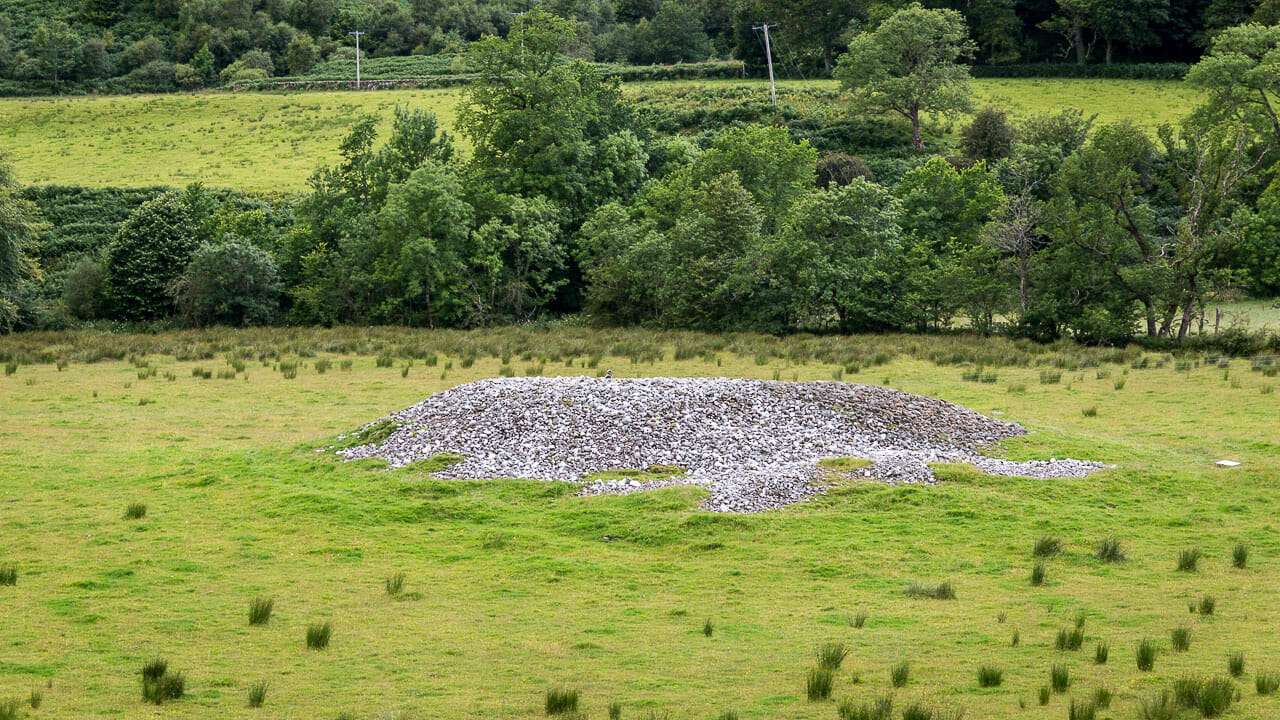
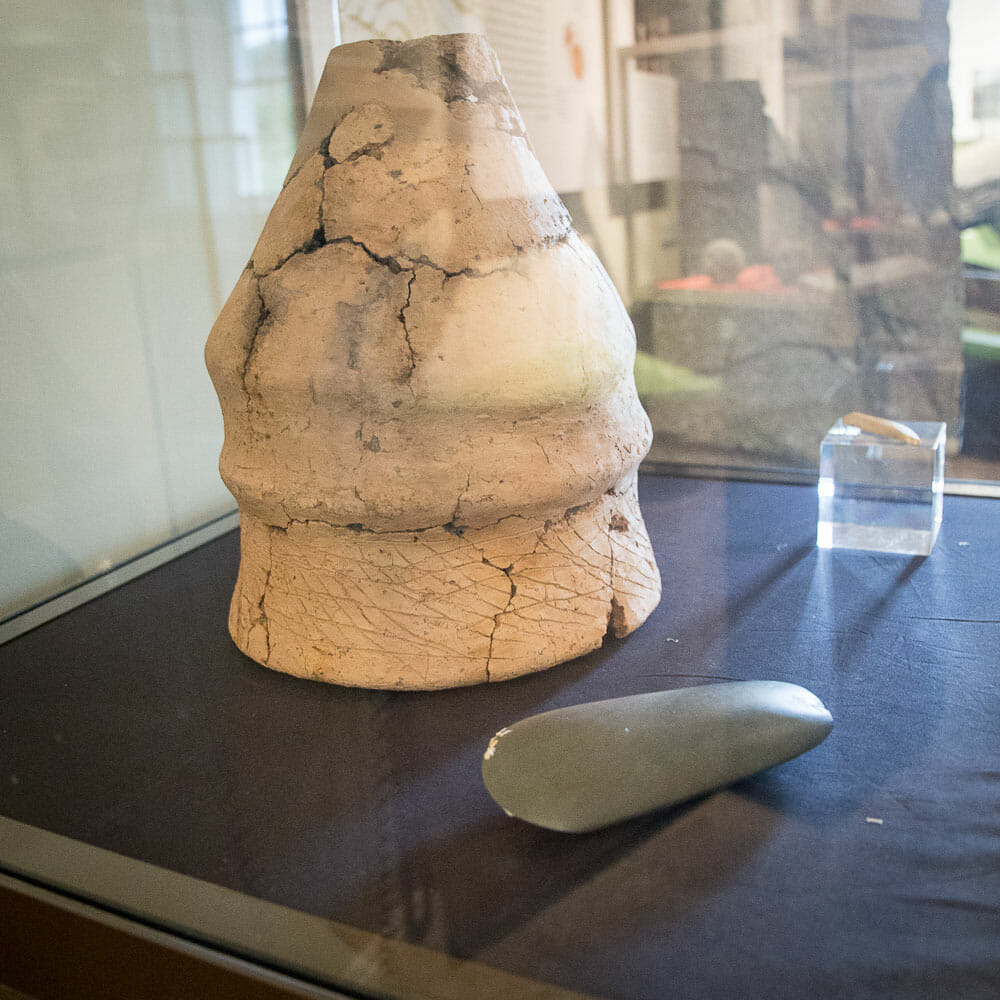
Still, a good starting point is Kilmartin Museum, right in the village of the same name. It offers an overview of the development of the land, time and people, and displays relics of past cultures such as beakers, weapons and tools.
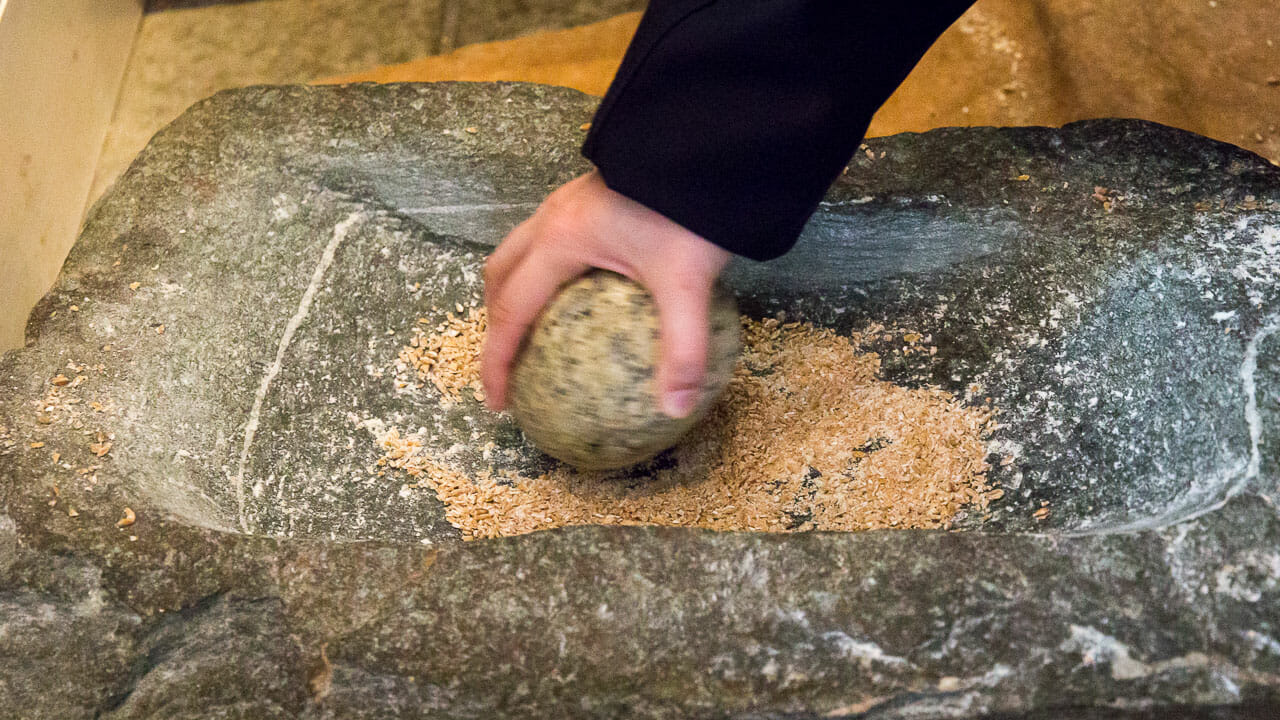
And there’s a chance to try things out yourself, such as grinding grain with a stone, or comparing that with a stone mill.
As early as 6,000 BC, hunter-gatherers roamed along Scotland’s west coast and its islands. Bones and middens of shells bear witness to their eating habits. They will have wandered through Kilmartin Glen too – back then, the sea still reached almost as far as the village of Kilmartin, only receding later.
But it was the settlers from around 3,700 BC onward who left the first real traces. They began working stone with precision and shaping clay. Yet not all stone is the same. Quartz dominates the valley, and it’s poorly suited to being worked into tools. The people of the time already had a trading network, though, and sourced flint from nearby Northern Ireland and from what would later become Cumbria in England.
And they began building with stone. The first burial chambers appeared.
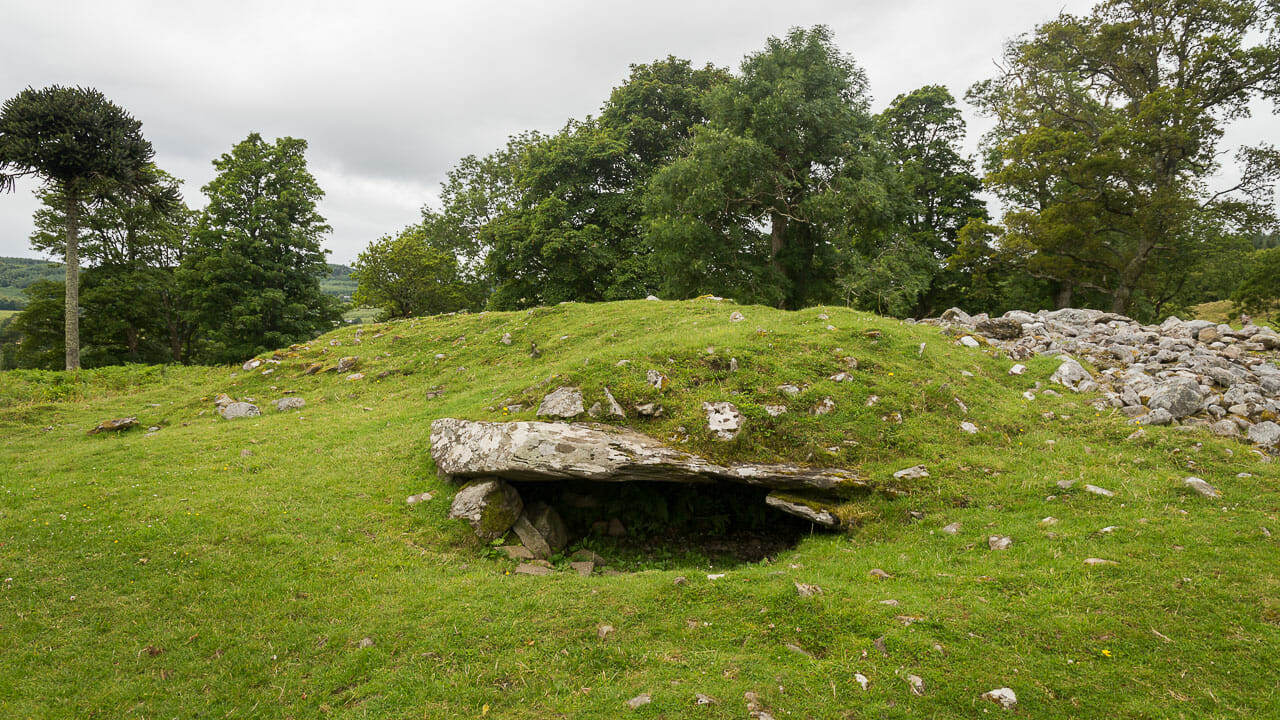
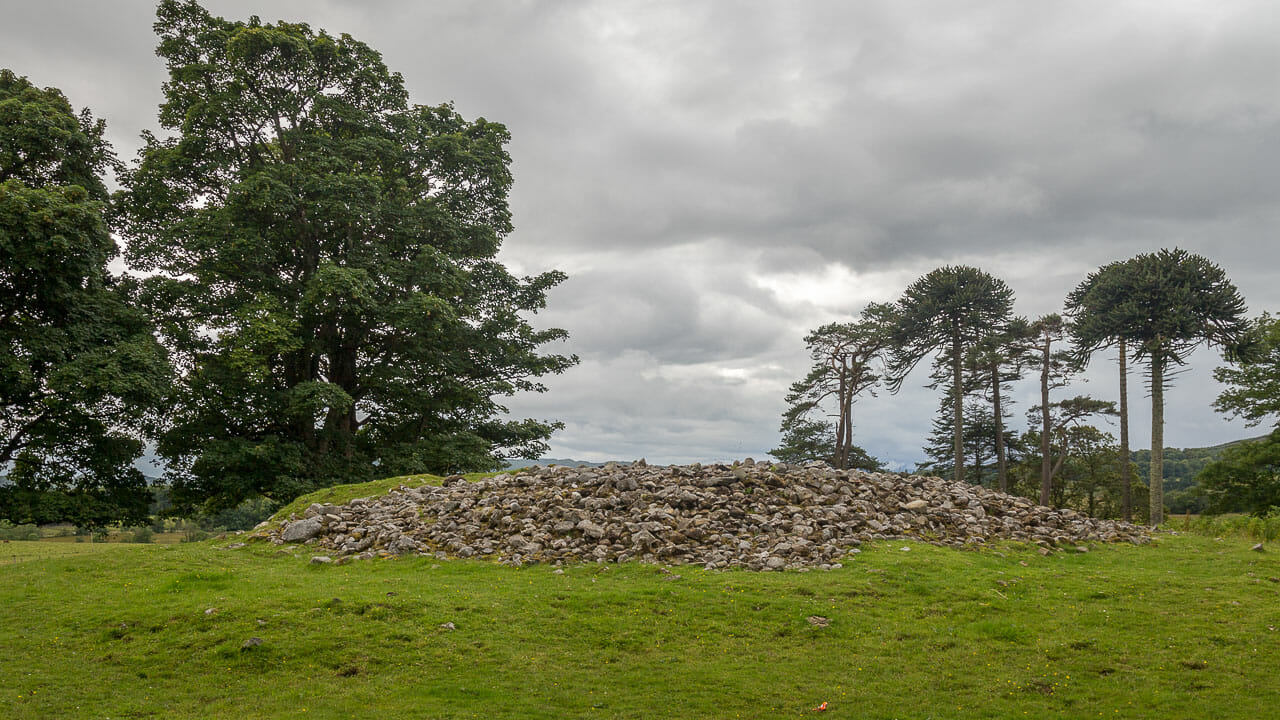
Over the following centuries, up to around 1,500 BC, an impressive ritual landscape of burial mounds and stone circles must have taken shape in the valley, much of which can still be made out today.
Visitors to Kilmartin Museum, for instance, look straight out onto Glebe Cairn. A little further along the road towards the sea, among other things, is the car park at Dunchraigaig, from which visitors can view not just the cairn of the same name.
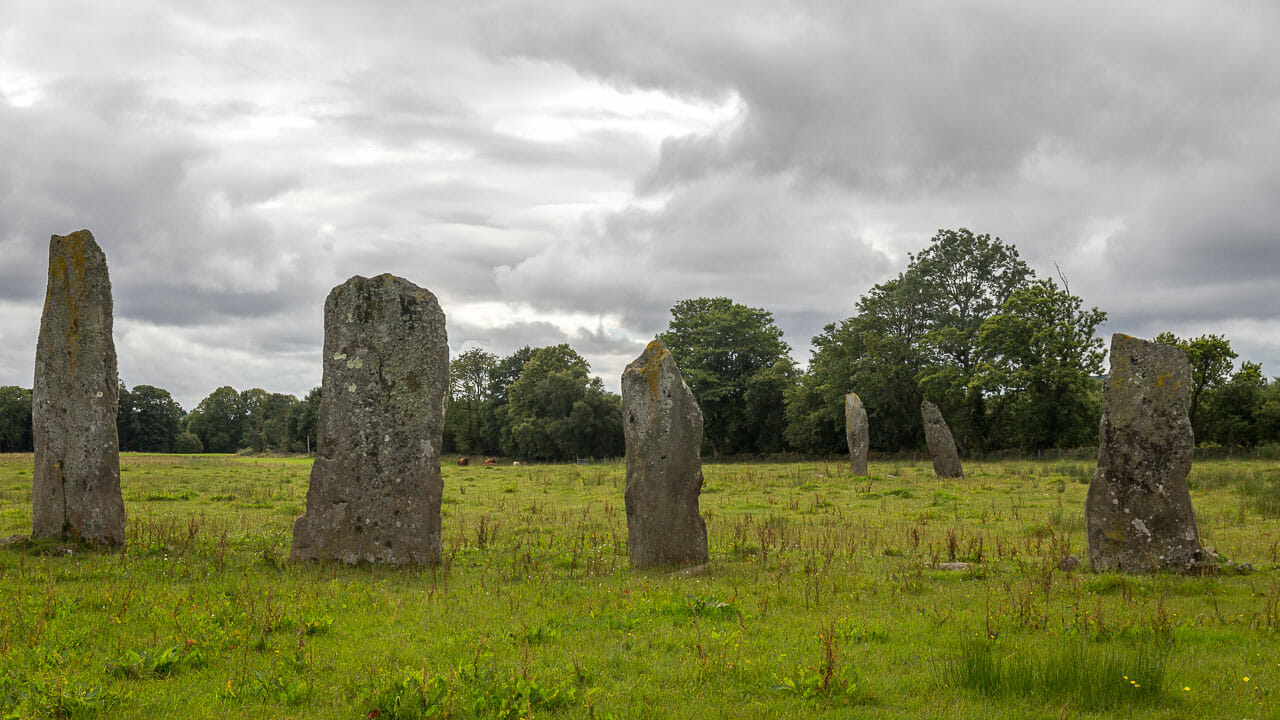
From here it’s only a short walk to the Ballymeanoch stones.
Yet Kilmartin Glen is by no means a place showing only the development of the Stone Age. At the far end of the valley lies the former fort of Dunadd, the capital of Dalriada. Together with the church on Iona, a Christian culture also developed here, producing for example the stonemasonry work on display at the museum’s entrance.
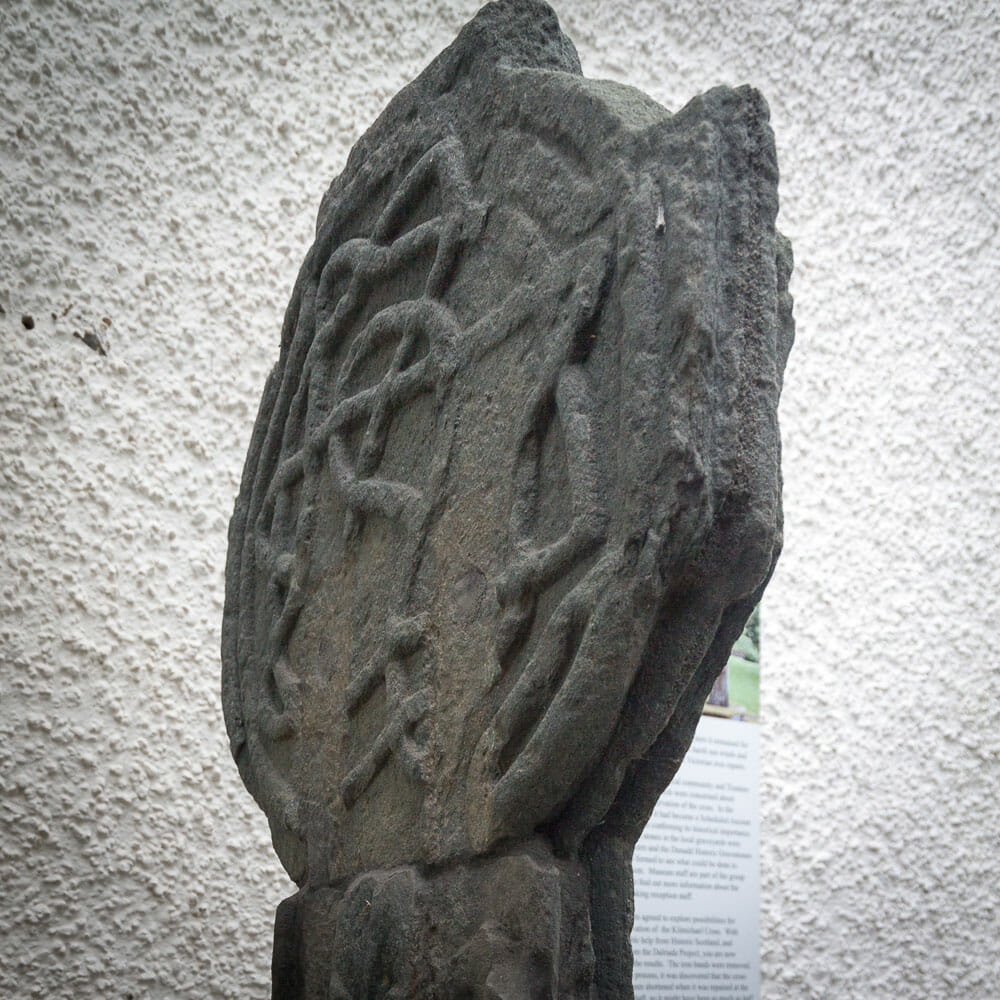
And right next to the museum stands a church. It was built in 1836, but the earliest recorded one on this site dates back to 1323. A visit is well worth it.
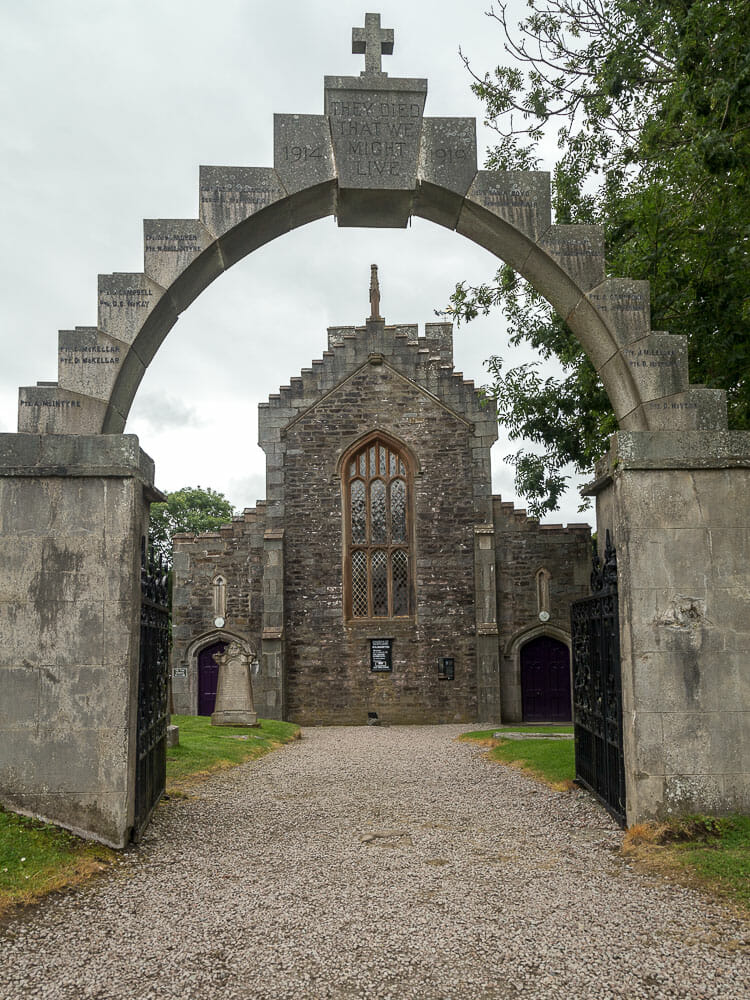
Because inside the church you can see another Celtic cross, and in the churchyard there’s a building housing a collection of grave slabs.
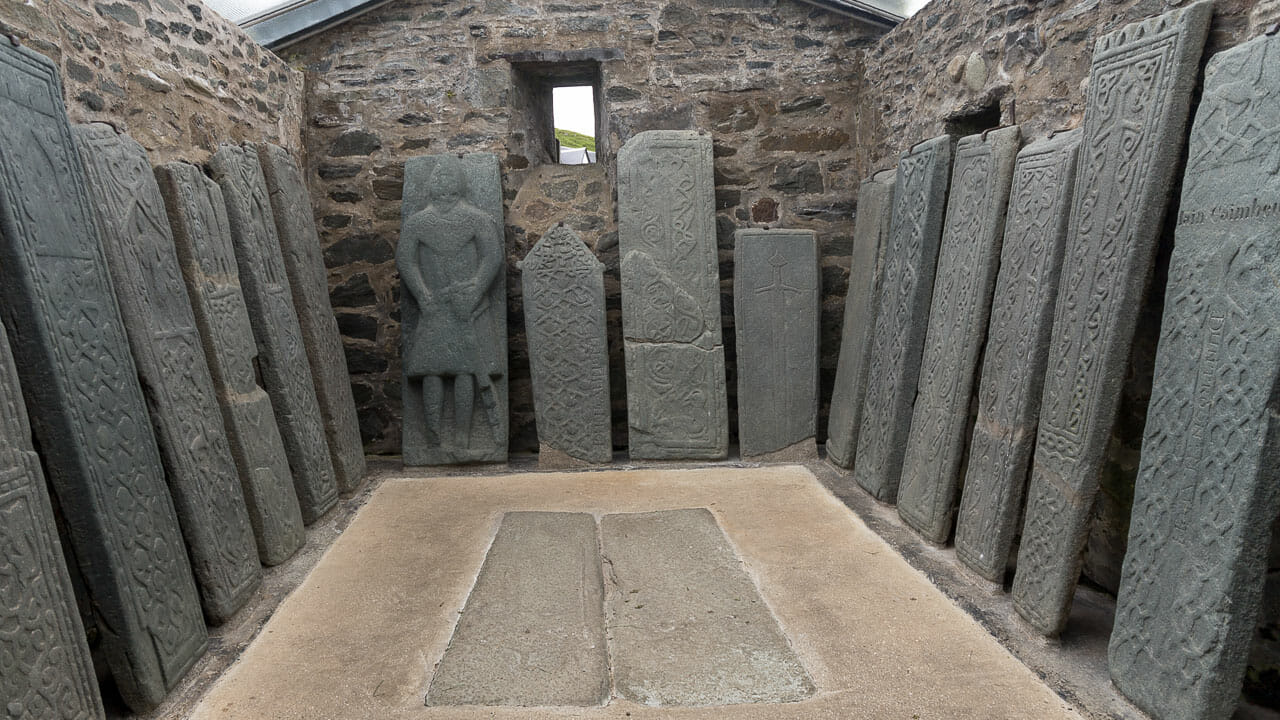
These are arranged chronologically from right to left, starting in the year 1200 and running through to 1712. One of them belongs to the grave of Sir Colin Campbell, from around 1480, who had Kilchurn Castle built.
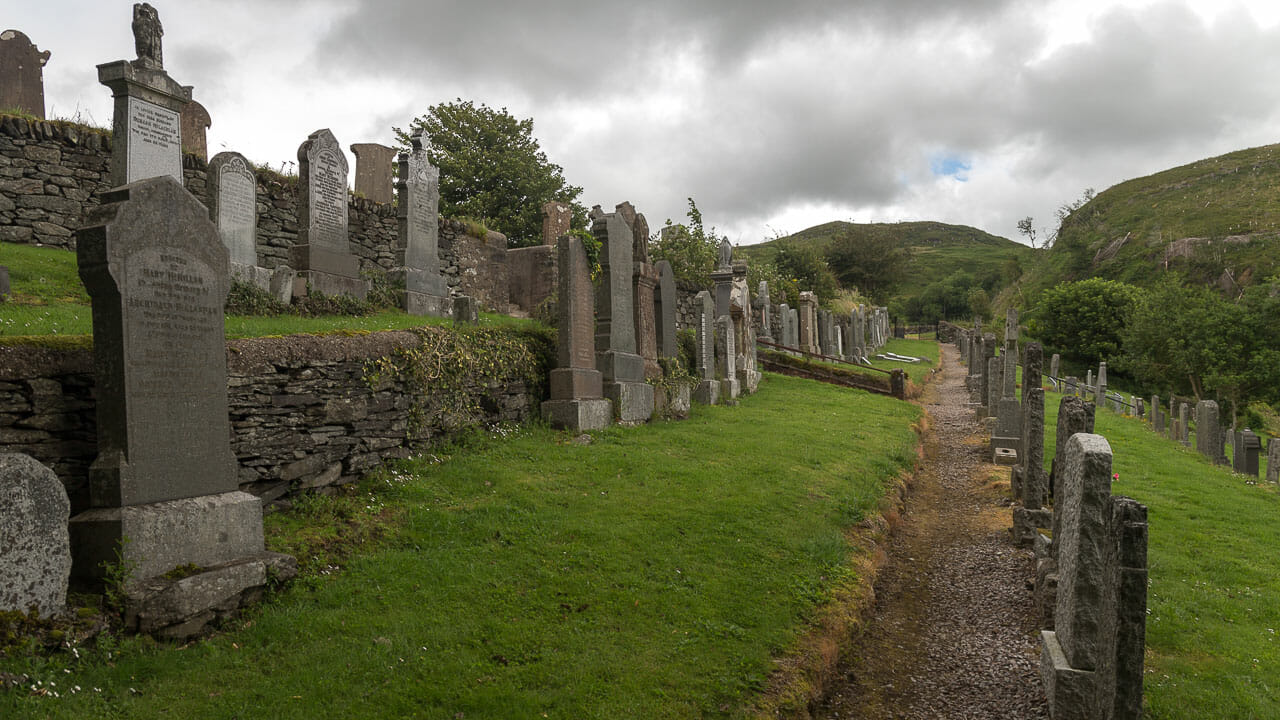
The churchyard has one more advantage too: it sits on the slope of the terrace once shaped by the glaciers of the Ice Age and the river flowing from Loch Awe. You could almost say the dead look out over the valley of the graves.
Good to know: The name Kilmartin and the river from Loch Awe
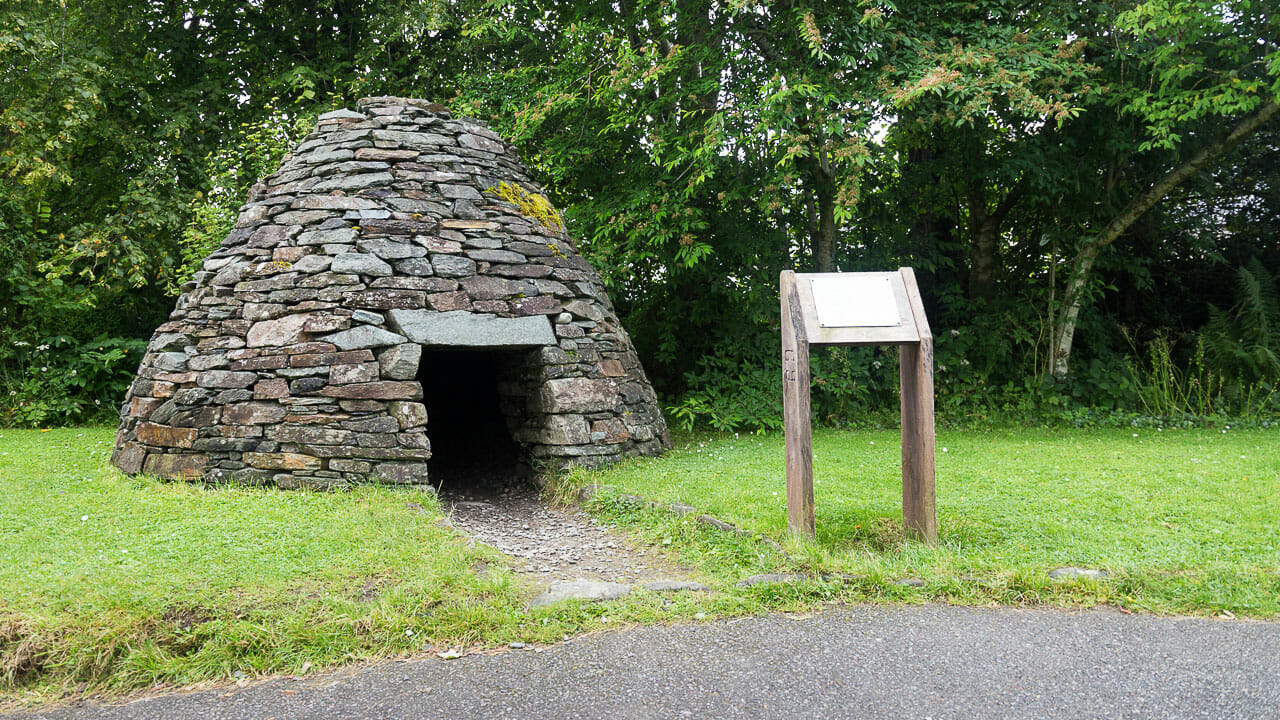
Kilmartin points to a Christian origin. The word “kil” derives from the Latin “cella”, which also gives us our word “cell”. This usually refers to the former dwelling of a clergyman. So this was most likely “Martin’s cell”. A reconstruction in front of the museum shows what this might have looked like:
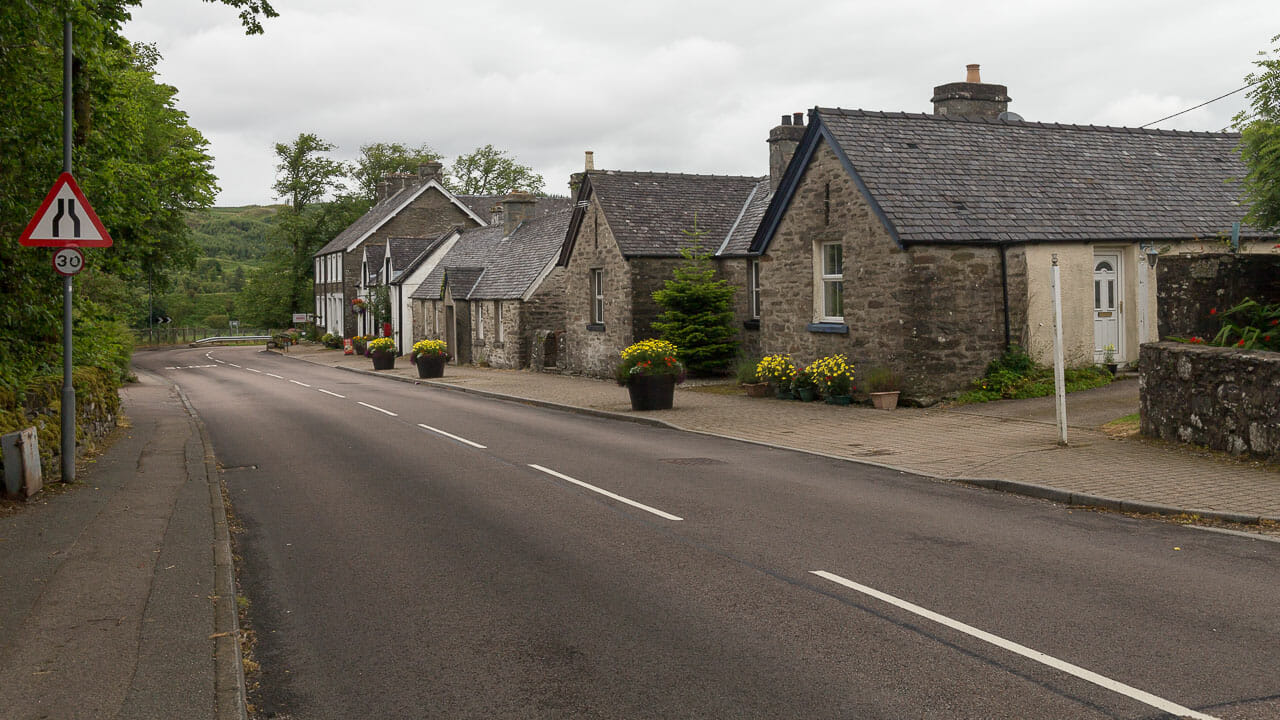
Just over a hundred people live in the village today, with the houses grouped right along the road.
The river from Loch Awe that once helped shape the valley further has long since disappeared. Loch Awe now drains into Loch Etive, in the glen of the same name, Glen Etive.
Tip: Perfect between the Mull and Islay ferries
We fitted the valley visit into our island-hopping trip from Mull to Islay. Arriving on the earliest ferry from Mull into Oban, the route naturally takes you straight through the valley. After admiring the exhibition, we refuelled at the small museum café.
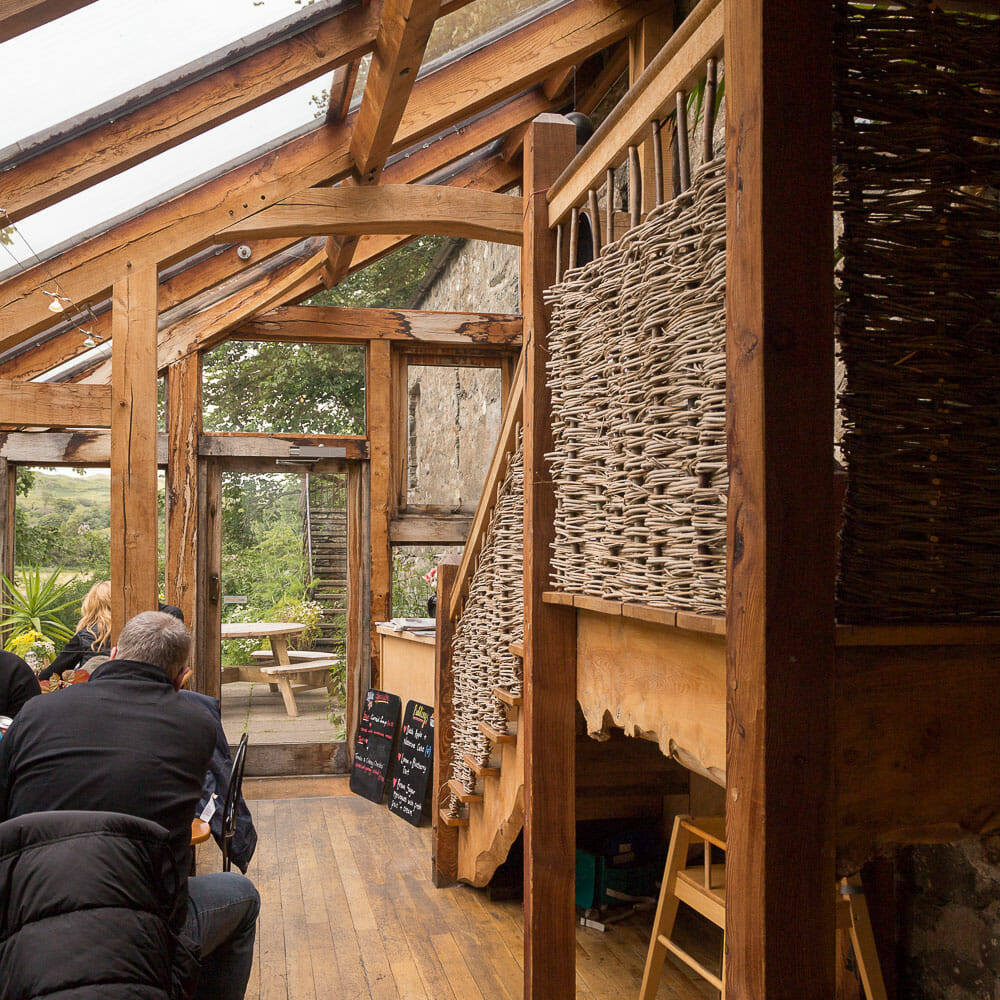
After that we took in a few of the cairns and stones along the route. We finished the tour at Dunadd, then continued on to the ferry terminal at Kennacraig to cross over to Islay.
Getting there:
With sat nav: “PA31 8RQ” takes you straight to the village of Kilmartin. The museum is signposted from there.
Without sat nav: from Oban, follow the signs towards Campbeltown onto the A816. It runs straight through the village, where you just need to watch for the signs to the museum. From Campbeltown, follow the signs towards Oban. From Glasgow, take the A82 along Loch Lomond to Tarbet, then the A83 towards Campbeltown, through Inveraray and on to Lochgilphead. Then head towards Oban on the A816.
There’s a medium-sized car park in front of the museum.
