The North Coast 500 is a beautifully scenic route through the northern Highlands of Scotland, starting from Inverness. Here’s all the info and travel tips.

On this page
» What is the NC500?
» Route
» Length & duration
» Getting there
» Sights
What is the North Coast 500?
The North Coast 500 is a driving route through the Highlands of Scotland. As a round trip, it aims to raise the profile of the coasts, nature and sights of northern Scotland.
It starts in the Highland capital Inverness. Over a distance of more than 500 miles it runs along the east, north and west coasts, before returning to Inverness across the interior.
In principle, this round trip has already been driven by many visitors and tourists in the decades before – experienced Scotland travellers would say: old wine in new bottles. What’s mainly new is the name North Coast 500, under which it’s now meant to become even better known.
Where exactly does the North Coast 500 run?
The following map shows the detailed route and important sights along the way:
How long is the North Coast 500 and how many days do you need?
The exact length of the tour is 520 miles, which is about 830 kilometres. Pure driving time is around 14 hours – depending, of course, on your own pace.
The number of days you should plan for driving the North Coast 500 naturally depends on how often you stop to see or enjoy something. Driving more than two sights a day along with longer stretches already becomes tiring.
I’d budget a minimum of five days, but preferably more. An extra day can be planned for exploring Inverness.
That naturally also depends on how you’re travelling, by what means and to where. And that brings us to the next question.
Getting to the North Coast 500
The direct entry point begins from Inverness. The town is served, for example, by EasyJet – though not directly, but via London. Financially and time-wise, this can certainly be worthwhile – depending on the connection from your home airport. That’s because you save the journey from other places like Glasgow, Edinburgh or Aberdeen. You can pick up a rental car as normal from Inverness Airport.
If you have a bit more time, however, and want to fit the North Coast 500 into the rest of your holiday, you travel via the usual routes (in German for now). If you want to bring your own car, a motorhome or a caravan, the only option is the usual journey by ferry to Scotland.
Jetzt NC500 buchen
Wir organisieren, Du genießt. Unser Reiseangebot mit dem familiären Reisebüro Lüttje Törn:
👉 die gesamte Nordroute plus Orkney erkunden
👉 Organisation und Betreuung aus einer Hand
👉 12 Übernachtungen

North Coast 500 sights and photos
Each stretch of coast has its own character. In the east, the landscape is calmer and more fertile. Population density seems a little higher, with small, charming villages appearing again and again. Further north it gets bleaker, and the further west the route goes, the more the wild and impressive Highlands take over.
Tourists can drive the North Coast 500 tour either clockwise or anticlockwise. It’s purely a matter of taste. I would however always recommend driving up the east and back via the west. That way the wild landscape comes at the end. Unfortunately, our weather during the drive in the north was rather gloomy to rainy – but the Highlands aren’t that green without reason.
It starts in the Highland capital Inverness. If you’ve planned a day here, you can walk along the River Ness, visit the castle and browse the covered Victorian Market.

Then the North Coast 500 first swings briefly to the west, before heading north and east again. In doing so it also touches the Black Isle peninsula. It’s the granary of the Highlands, and many whisky distilleries source their grain from here, since farming is barely possible in the peaty west of the country.

If you have time, you can drive right around this peninsula. Here you’ll find special places such as the Clootie Well and Pictish (in German for now) artefacts, such as at the Groam House Museum in Rosemarkie. After that, the North Coast 500 leads into the small market town of Dingwall.
From here it runs along the Cromarty Firth, where oil rigs are moored near the village of Nigg, being built or repaired there.

The mysterious Picts were present here too and have left behind some impressive stones. A detour off the main road to the Shandwick Stone is worthwhile if you’re interested in these ancient Scots.

Further along the road you reach Tain, where the Glenmorangie distillery stands right on the way. Of course, you can visit it on a tour.
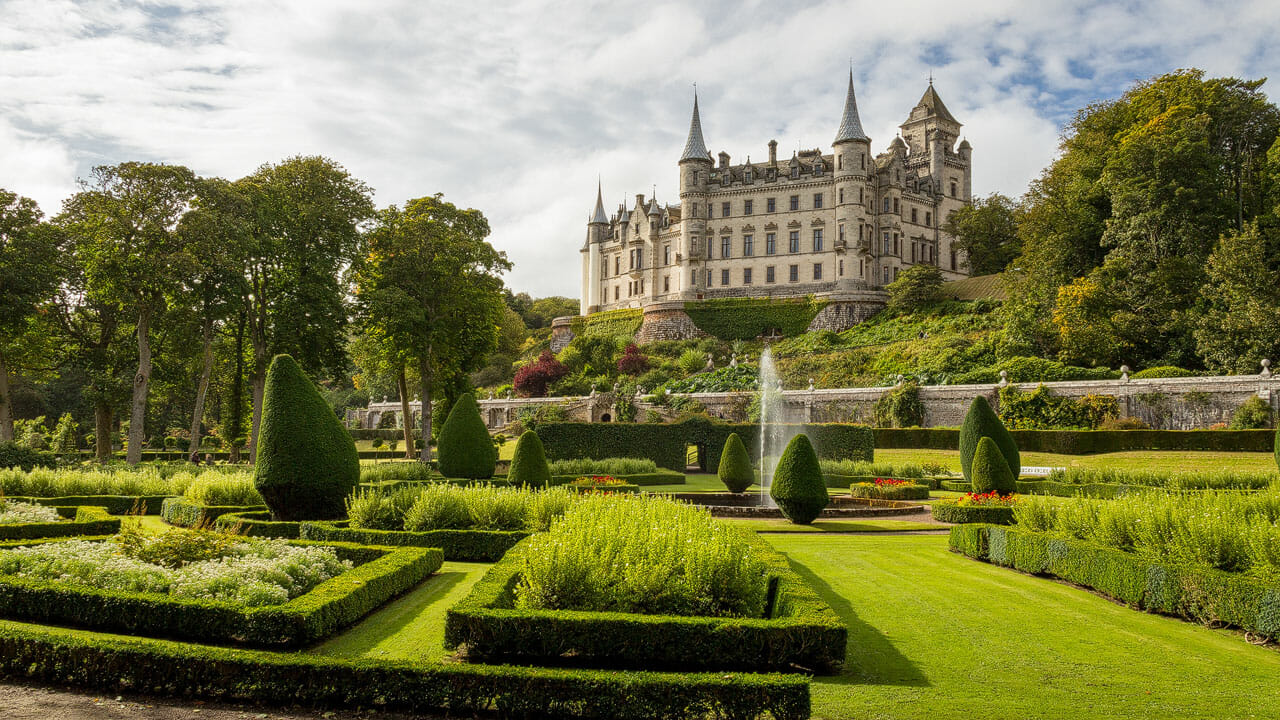
Again a sea loch cuts into the interior, this time the Dornoch Firth. The road crosses it too and soon reaches Golspie, at the end of which lies what is probably the most fairy-tale castle in the Highlands: Dunrobin Castle. Tip: in good weather, definitely also visit the falconry display.
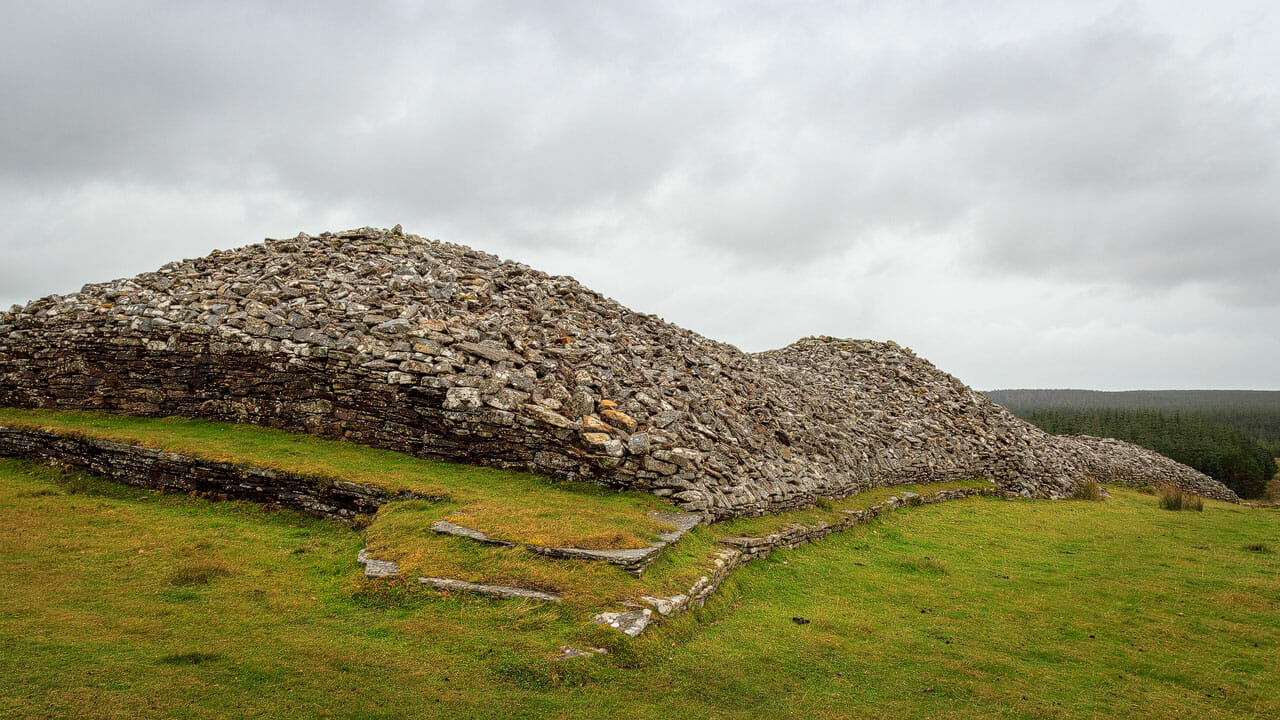
Back on the road heading north. Soon we leave the county of Sutherland and enter the county of Caithness. Like Orkney, Caithness also has burial cairns and brochs. These are structures dating from the Neolithic right through to the Iron Age. The Camster Cairns lie a little off the main route, but are among the most impressive burial cairns of the tour.
Passing through Wick, we finally reach John o’Groats. From here you can walk along the coast to the Duncansby Stacks. If you’re not up to much walking, you can also drive to the Duncansby lighthouse car park and reach the sea stacks after a few hundred metres.

Back on the North Coast 500, we can soon turn off towards Castle of Mey, the former residence of the Queen Mother. A visit is worthwhile because many charming anecdotes from the era of the Queen Mother are still known and told there.

After that, in good weather, it’s worth driving to Dunnet Head (in German for now), the northernmost point of the British mainland, from where you can see Orkney. In bad weather, on the other hand, there’s really nothing of interest there. (Which is why there’s no photo here.)
Now that we’ve reached the very north, the North Coast 500 turns and runs straight along the north coast through Thurso. And on and on. The character of the landscape slowly changes: the Highlands become more rugged and higher. And oncoming traffic increases drastically:

More and more, bays with dreamy sandy beaches appear in the rocky coastline.

Eventually the North Coast 500 crosses Loch Eriboll (in German for now).

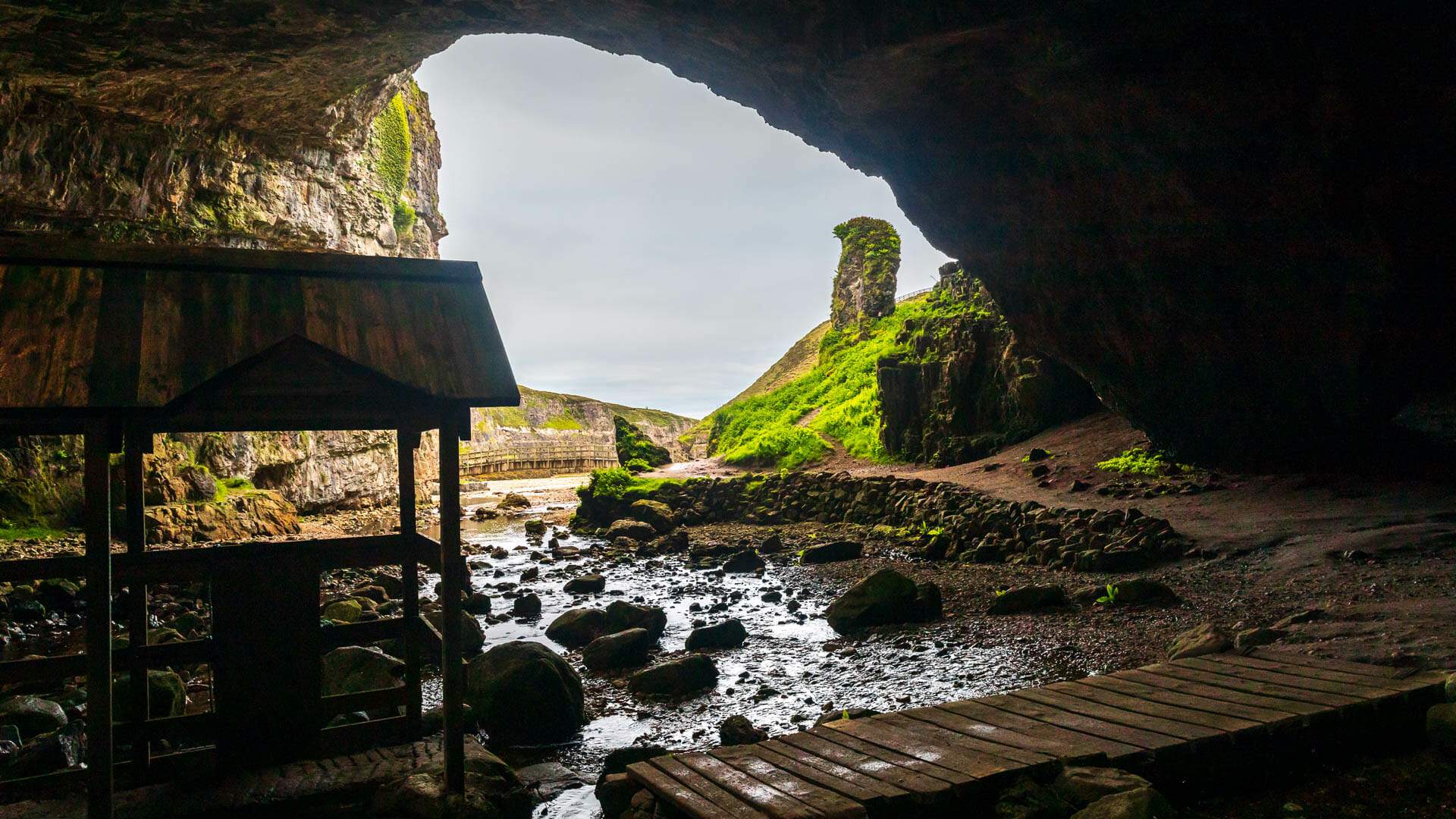
The peninsula stretching here between Loch Eriboll and the Kyle of Durness is one of the most interesting stretches of the North Coast 500 in the north. This is where, for example, the wonderful Smoo Cave is found.
Near Durness lie the Sango Sands; a little way off the road you can visit Balnakeil – also a beach, plus a ruined church and a lovely café with chocolate treats.
But let’s leave Durness again now – from here it heads back down south, along the Kyle of Durness (in German for now).

If you have time, you can cross the Kyle of Durness and take a bus to Cape Wrath (in German for now). But you should plan a minimum of half a day for that.
The landscape now becomes ever wilder, ever more beautiful. Thanks to the many hills, it’s also worth stopping again and again to enjoy the view, as here at Loch Dubhaird behind Scourie.

Travellers can take a great little walk (with sightseeing, about 45 minutes) at the Wailing Widow Waterfall (in German for now) from Loch na Gainmhich. However, to do so you need to take the A894 straight down to Loch Assynt, instead of staying right on the coast.

At Loch Assynt you can make one more stop at Ardvreck Castle (in German for now) and Calda House. A picturesque spot.

Then it’s not far until the North Coast 500 arrives in Ullapool. Ullapool is a larger fishing town, also considered the gateway to the Outer Hebrides.

Ullapool actually feels like a big city, after the few villages and houses you otherwise see along the North Coast 500. And after it too, you head back into the “wilderness”. At the latest here, the North Coast 500 shows its most beautiful side for landscape lovers. For example at the Little Loch Broom viewpoint:

Or also at Gruinard Bay and many other lovely stops that appear along the ups and downs of the coast and the lochs.
The landscape is of course dominated by peat, grass and heather. Anyone wanting a change stops along the way at Inverewe Garden & Estate (in German for now) just before Poolewe. This park contains wonderful flowers from all parts of the world, and it’s easy to spend half a day there.

The North Coast 500 is slowly drawing to a close. And it seems to have saved the best for last. We reach the Torridon mountain range – lonely and immense.

Finally, the North Coast 500 swings west once more, taking us onto the Applecross (in German for now) peninsula.

An extremely narrow road, which later even runs close to the steeply falling seashore. It demands considerable concentration from the driver once again, since after crests you often don’t know whether a speeding local might be coming the other way. And yet this single-track road is so beautiful that you shouldn’t miss it.

In the little village of Applecross you can then enjoy a tasty meal at the Inn, before driving over the Bealach na Ba mountain pass down to Lochcarron.

Once down at the bottom, you now have the option of taking the way back via Achnasheen to Inverness. Or you can stay out longer, drive to Kyle of Lochalsh and also visit the Isle of Skye …
Jetzt NC500 buchen
Wir organisieren, Du genießt. Unser Reiseangebot mit dem familiären Reisebüro Lüttje Törn:
👉 die gesamte Nordroute plus Orkney erkunden
👉 Organisation und Betreuung aus einer Hand
👉 12 Übernachtungen