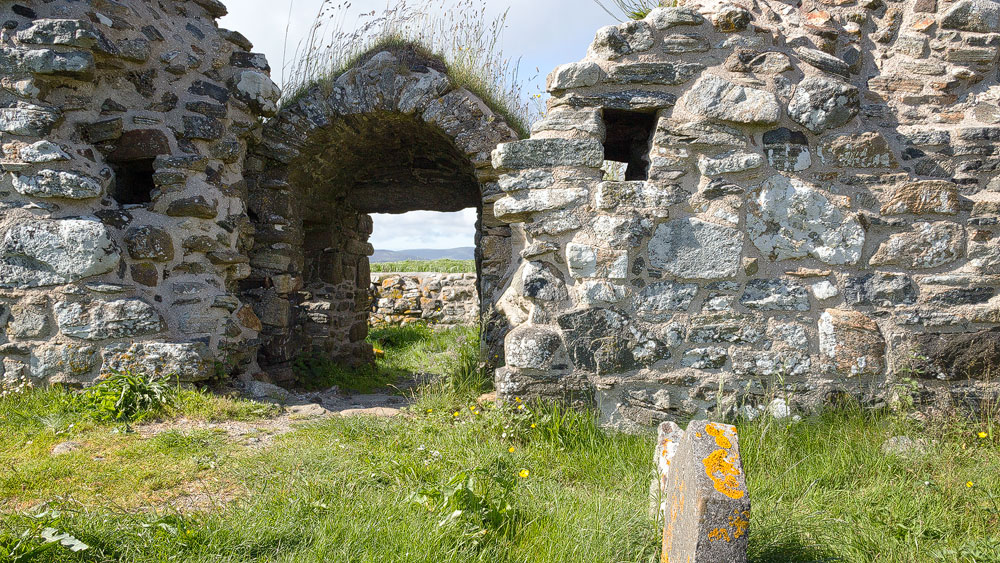
The knowledge of the Gaelic world once resided within these walls. Sadly, not much of it survives today. Why the writings of Teampall na Trianaid fell prey to the flames.
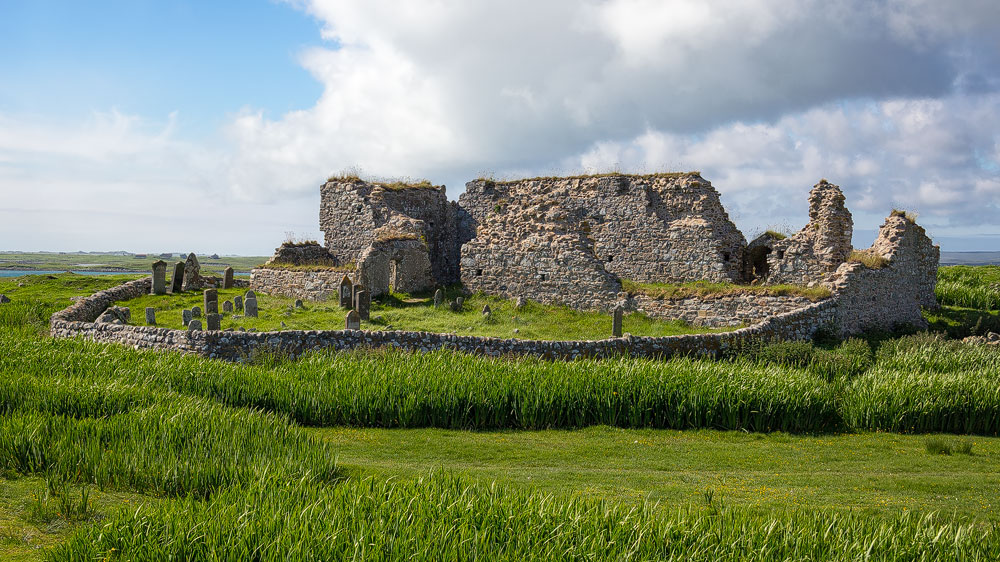
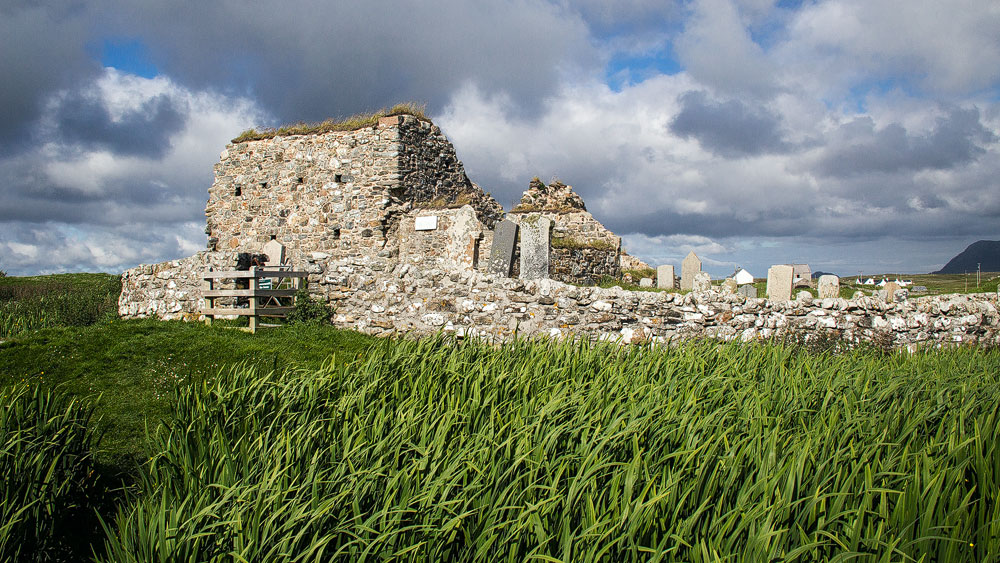
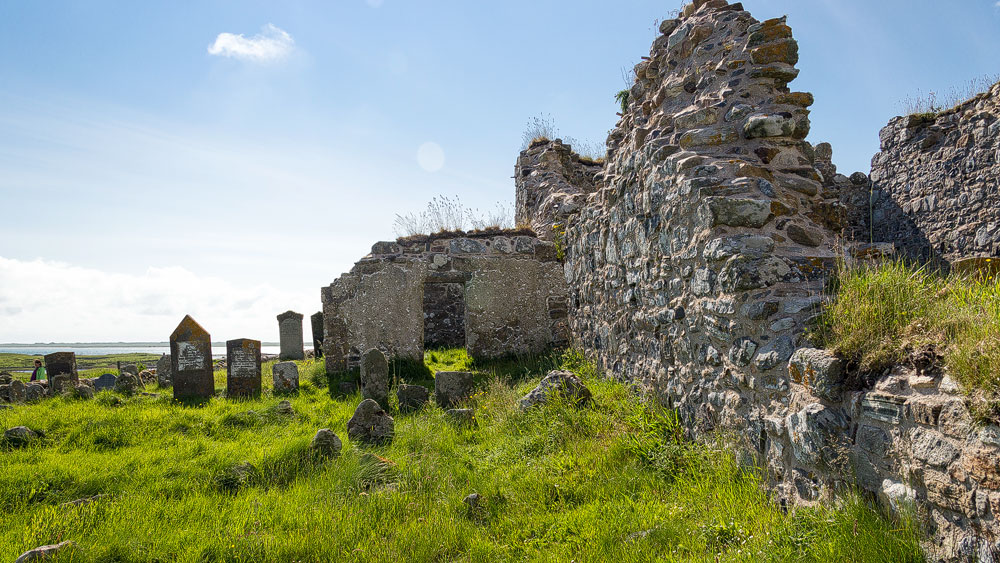
Teampall na Trianaid translates as “Temple of the Trinity”. But when visitors approach the ruin on North Uist, the few remaining walls give off a rather austere charm – little suggests the kind of magnificent building the word “temple” tends to conjure up.
In truth, Teampall na Trianaid was always fairly plain in appearance; it was always what lay inside that mattered – a collection of writings gathered across many centuries. Teampall na Trianaid was a school. Some even claim it was Scotland’s first university.
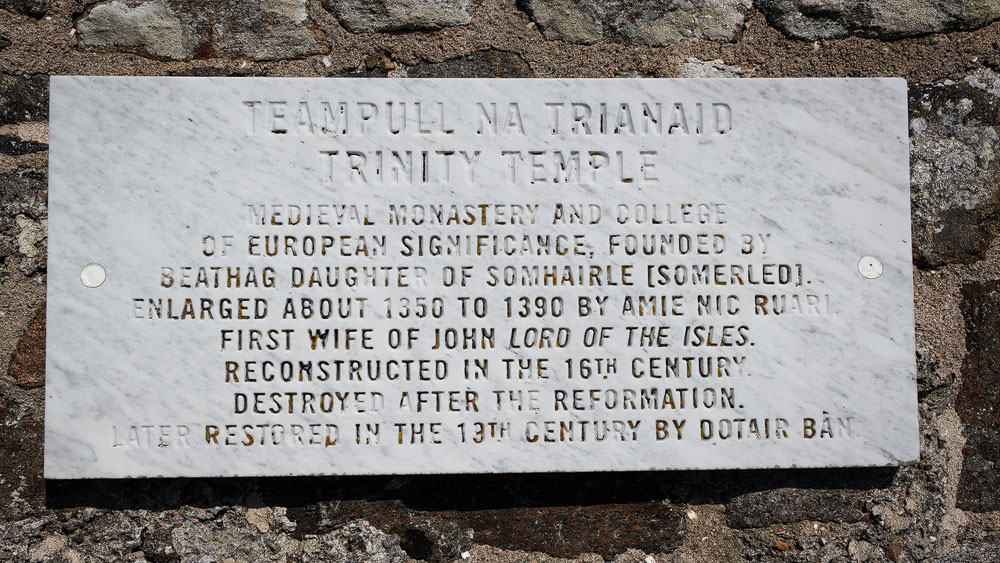
Legends already surround its founding. Beathag (Beatrix), daughter of the legendary island lord Somerled, is said to have ordered the founding of Teampall na Trianaid in the 13th century. Beathag, as some accounts have it, was an important figure – prioress of the nunnery on Iona, the island considered THE centre of Christianity in Scotland.
Another notable woman was behind the temple’s expansion. Amie MacRuari, first wife of John, Lord of the Isles, is said to have commissioned the extension around 1350 AD. Amie was the mother of Ranald, founder of Clan Ranald, a powerful branch of the MacDonalds.
Over the following centuries, many students sought out the temple and were taught there. One of the most famous is said to have been John Duns Scotus, who was already spreading philosophical insights in the 13th century that wouldn’t be taken up again by modern philosophers for another 600 years. Duns Scotus, incidentally, is buried in Cologne Cathedral – whether he truly received his education on North Uist has never been proven.
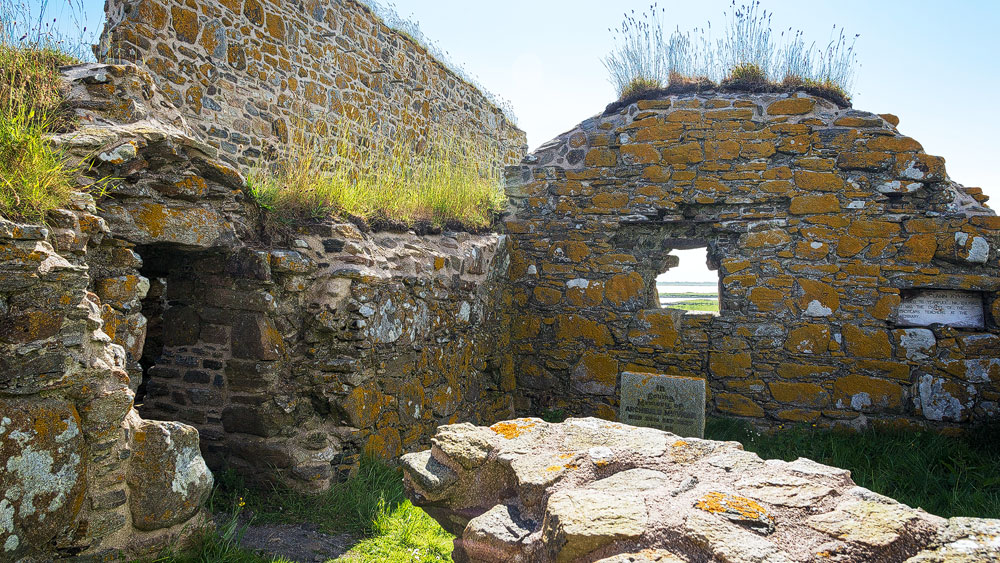
Teampall na Trianaid was linked to another clan, the MacVicars. They were both teachers and keepers of knowledge. They even had their own chapel, which visitors today can reach through a short passage from the main part of the temple. It’s for this reason the building is also known as “Teampall Chlann a Phiocair” – “Temple of the Clan Vicar”.
Yet even the MacVicars couldn’t prevent the loss of these treasures of knowledge. In 1581, the Reformation swept across the Outer Hebrides too. The temple was a thorn in the reformers’ side, and so a conspiracy was hatched. An invitation to a banquet was used to lure away the temple’s keeper at the time, Donald am Phiocair Mòr. He sensed something was amiss, however, and ordered his sons to remove all the writings from the temple and store them somewhere safe.
Once Donald was gone, his fears were confirmed: a group led by a Hugh MacDonald of Skye landed on North Uist, killed Donald am Phiocair Mòr’s sons, and burned down every building near the temple – including the hiding place of the writings. And so several centuries’ worth of culture and knowledge went up in flames.
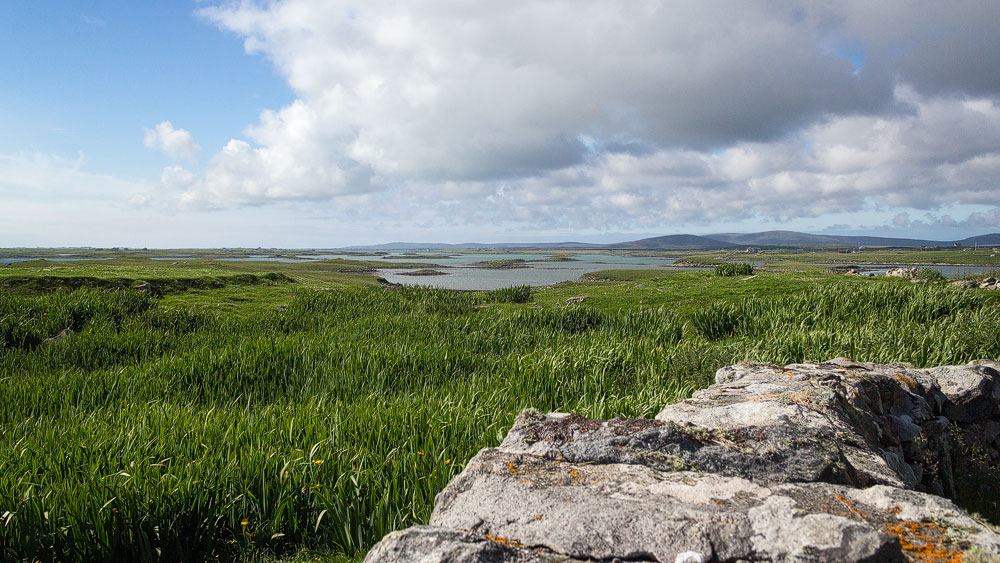
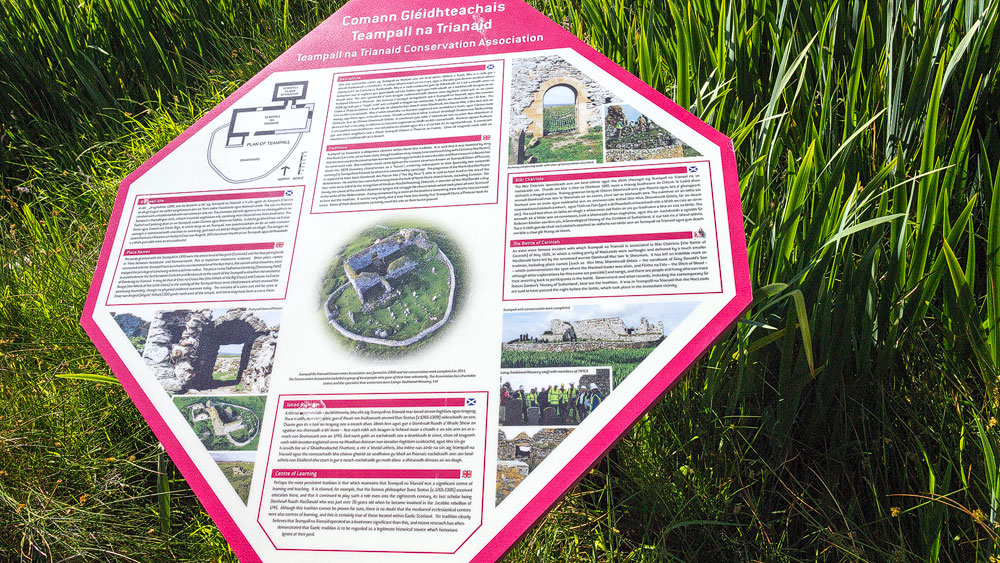
The next bloody chapter in the story of Teampall na Trianaid took place in 1601. A band of plundering, murderous MacLeods from the Isle of Skye are said to have once spent the night within its walls. Forty men under their leader, Donald Glas MacLeod, ate and drank in the temple. Word of this reached Donald MacIain ‘ic Sheumais on Eriskay, who set off with twelve men to confront the MacLeods. Being outnumbered, he lured the MacLeods out of the temple and into an ambush through cunning. The battlefield lies just a few minutes from the temple and is marked today with an information sign. The hollow here is known as “Feith na Fala” – the “ditch of blood”. The MacLeods were worn down bit by bit, since their bows had shorter range than those of the MacDonalds. Only Donald MacIain took an arrow to the foot. Of the forty MacLeods, only a handful made it back to report the defeat to their chief. The clan feud only truly ended with the next battle, at Coire na Creiche on the Isle of Skye.
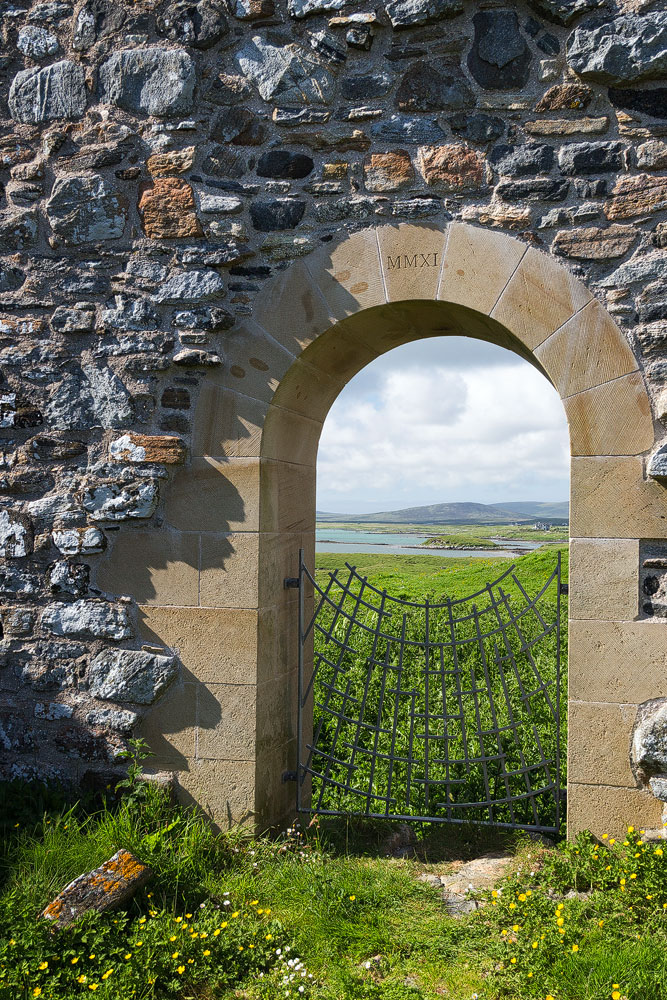
Although much knowledge was already lost in 1581, teaching continued at Teampall na Trianaid into the early 18th century. But at the latest with the defeat at Culloden in 1746, the little university’s significance declined. Parts of the building began collapsing in the 19th century. The once-thriving centre of knowledge deteriorated into today’s ruin.
It wasn’t until 2011 that an organisation took on the preservation of the walls. They were reinforced, and an archway bearing the restoration year in Roman numerals was added.
Good to know: why it’s called a “temple”
From the very start, this building was never a temple in the sense of a place of worship – it was always more of a kind of centre of learning. So why was it called a “temple” anyway? The reason likely lies in its construction. Not everyone could afford such a massive stone building, and that alone was probably reason enough to give it the dignified name “temple”.
Incidentally, the name appears in several spellings: Teampal na Trianaid, Teampull na Trionaid, or in English, Trinity Church.
Personal note: a must-see on North Uist
Gorgeous weather, tall grass swaying in the wind, sunlight setting the buildings off just right – that’s how much I enjoyed our visit to Teampall Na Trianaid. That said, it does take quite a bit of imagination to see, in this plain building, what it once represented: an important centre of knowledge in the medieval world.
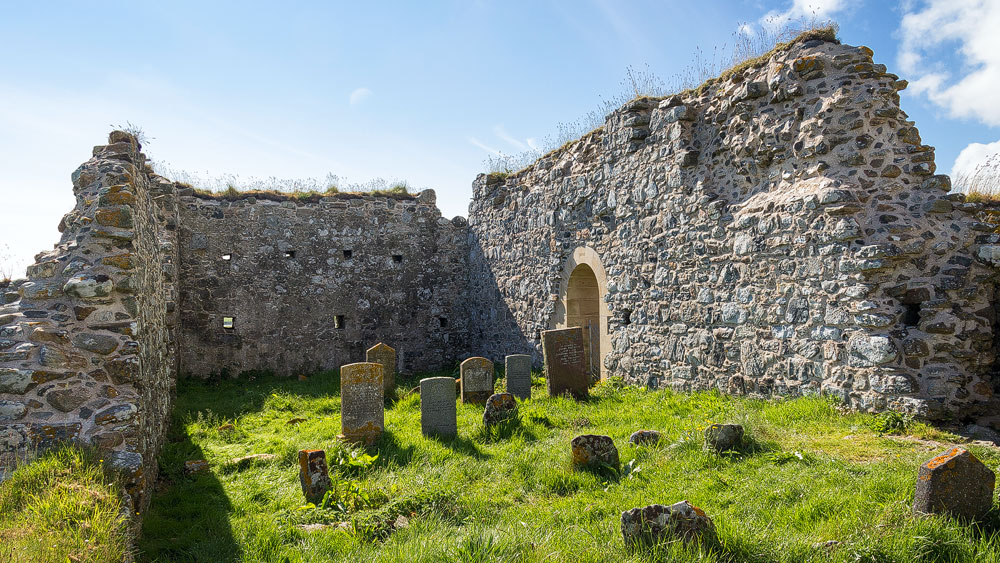
I found the gravestones inside the walls of the main temple building rather bizarre, if anything.
Even so, this temple is one of the sights you shouldn’t miss when visiting North Uist.
Getting there:
With sat nav: “HS6 5HR” will bring you to Cairinis; from there follow the signs to the Teampall.
Without sat nav: follow the A865 across North Uist until you reach the sign to Cairinis. Turn in that direction, and shortly afterwards turn right onto the small road towards the church. Park at the church and take the footpath to the temple. The walk takes maybe five minutes.