The production process is the same at every distillery, and yet the varieties taste different. When and how does flavour get into whisky?
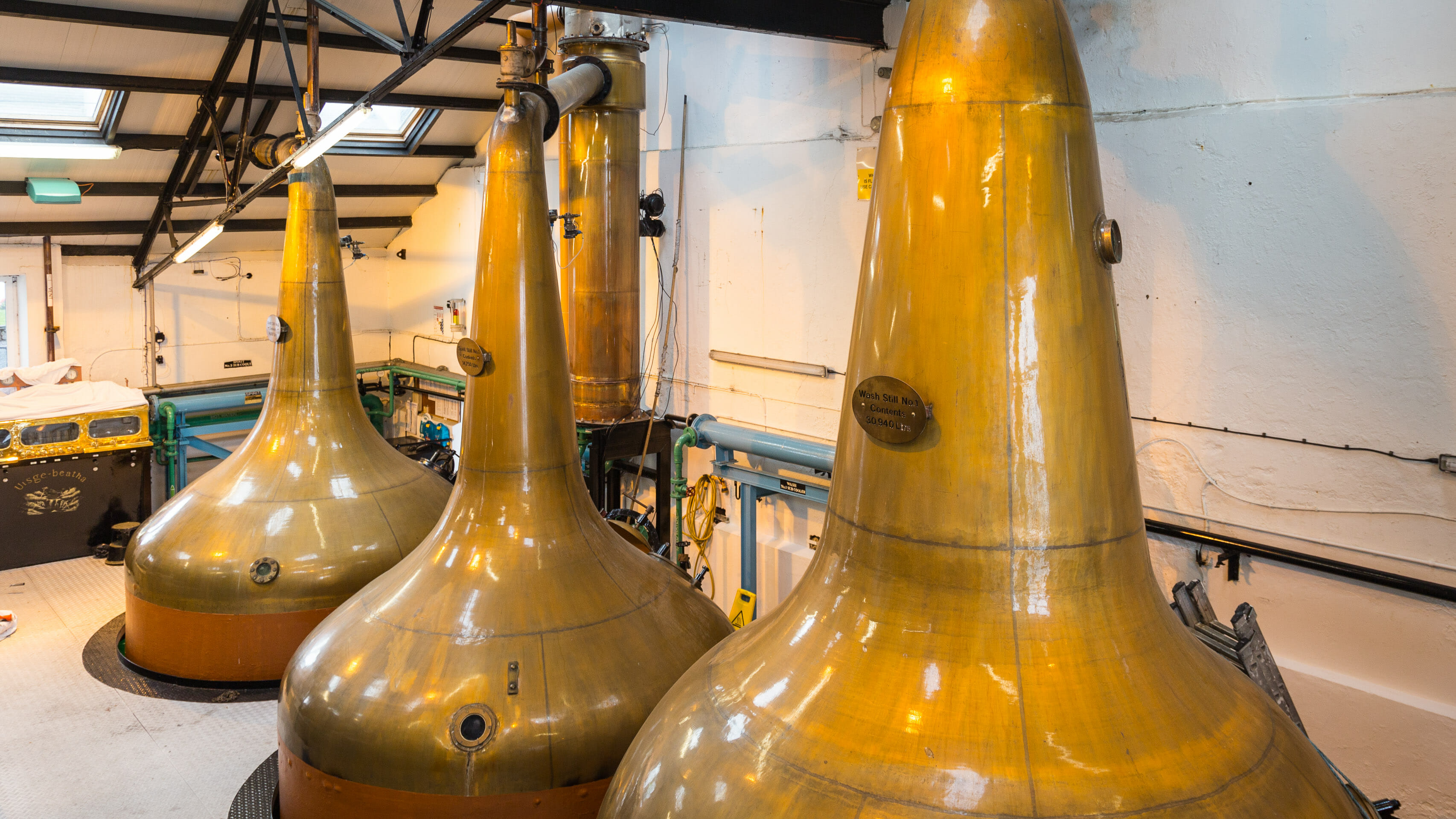
Distilled alcohol made from grain is called schnapps in Germany and vodka in Russia – a neutral spirit that has nothing whatsoever to do, flavour-wise, with Scotch whisky.
Because when whisky connoisseurs talk about flavour, they talk about peat, smoke, honey, vanilla, chocolate, and many other notes they believe they can detect in it.
So where and when in the production process do these flavours actually get into the whisky? Let’s go looking for clues …
Raw materials: what whisky distilleries need for production
Barley is the starting point for single malt whisky. It forms the basis of the mixture that’s later fermented into the first alcohol. But first, distilleries need to get hold of the barley.
Träumen und Planen: Die MyHighlands.de Bücher im Shop



On Islay there are around ten distilleries (depending on how you count), almost all of them ranking among the world’s finest single malts. The amount of barley they need for production far exceeds what Islay itself could ever grow. And if you look at Talisker on the Isle of Skye, it becomes clear: the barley usually doesn’t come from the places where the distilleries stand at all. It’s often delivered by ship – on Islay there’s a central store for this at Port Ellen.
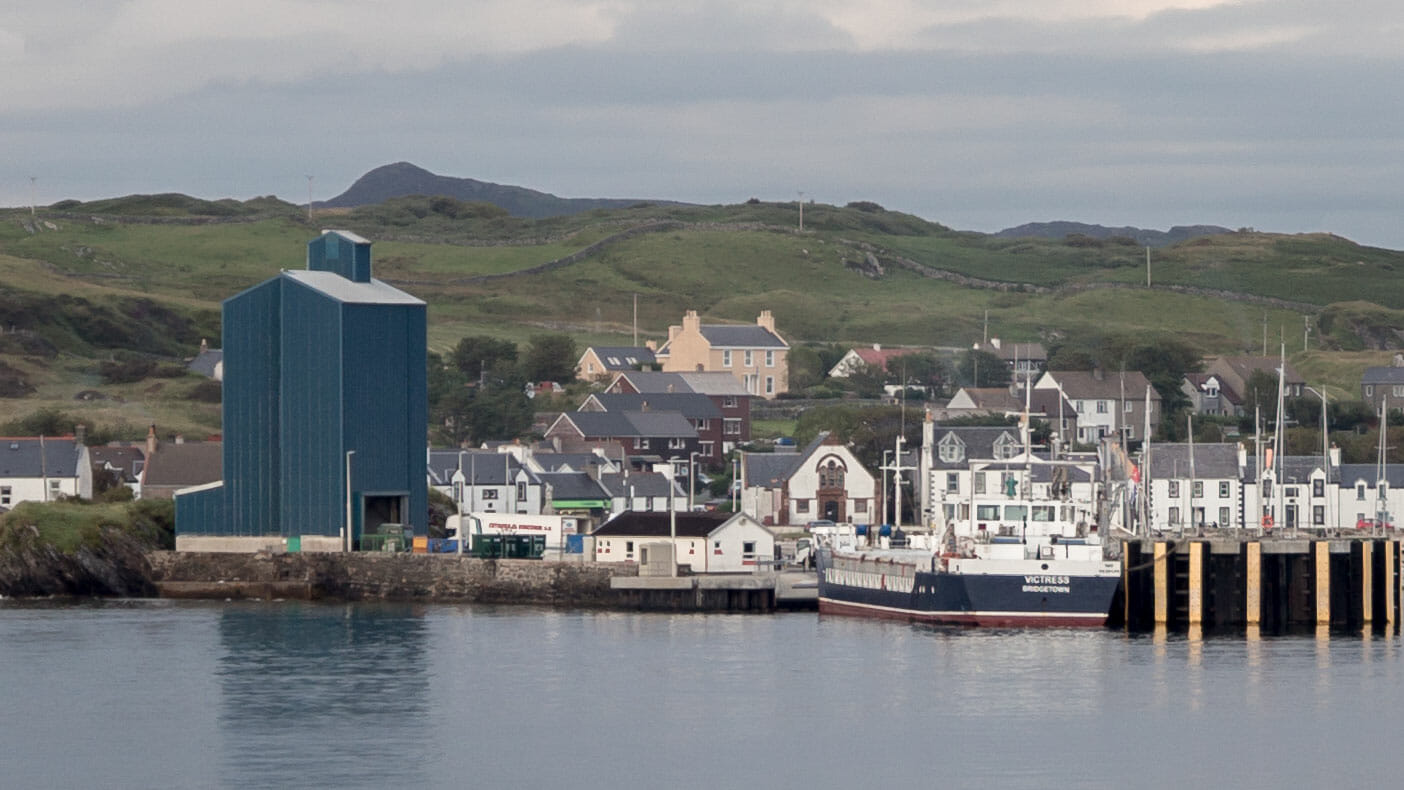
On Islay in particular, though, there are two distilleries genuinely proud to distil using local barley: Kilchoman and Bruichladdich.
Does the barley already bring flavour of its own? No – since it’s actually bought in from all corners of Britain.
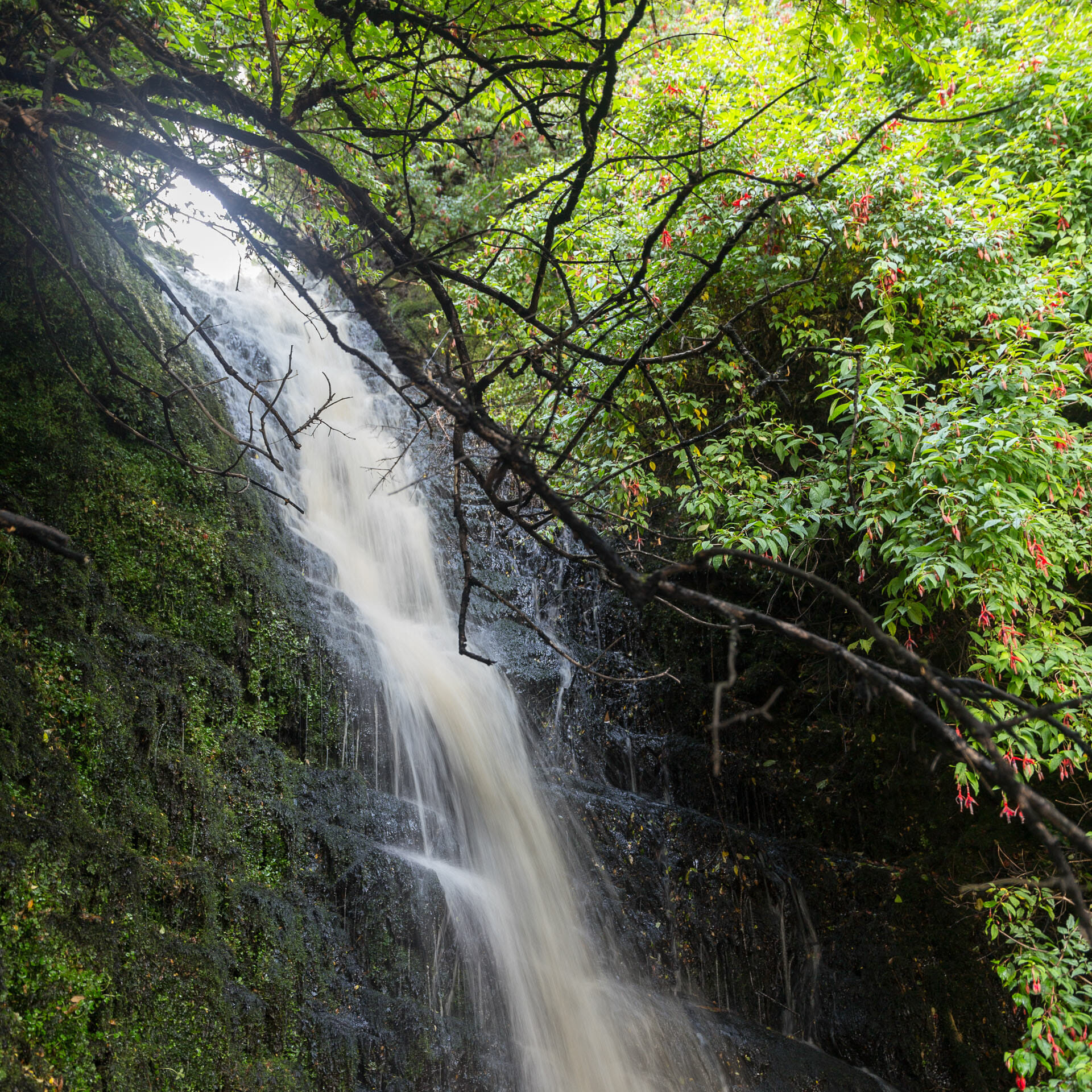
Water – as we’ll see shortly – is actually needed throughout whisky production, and in huge quantities.
Does water already bring flavour of its own? The water, too, has little to do with the flavour of the whisky.
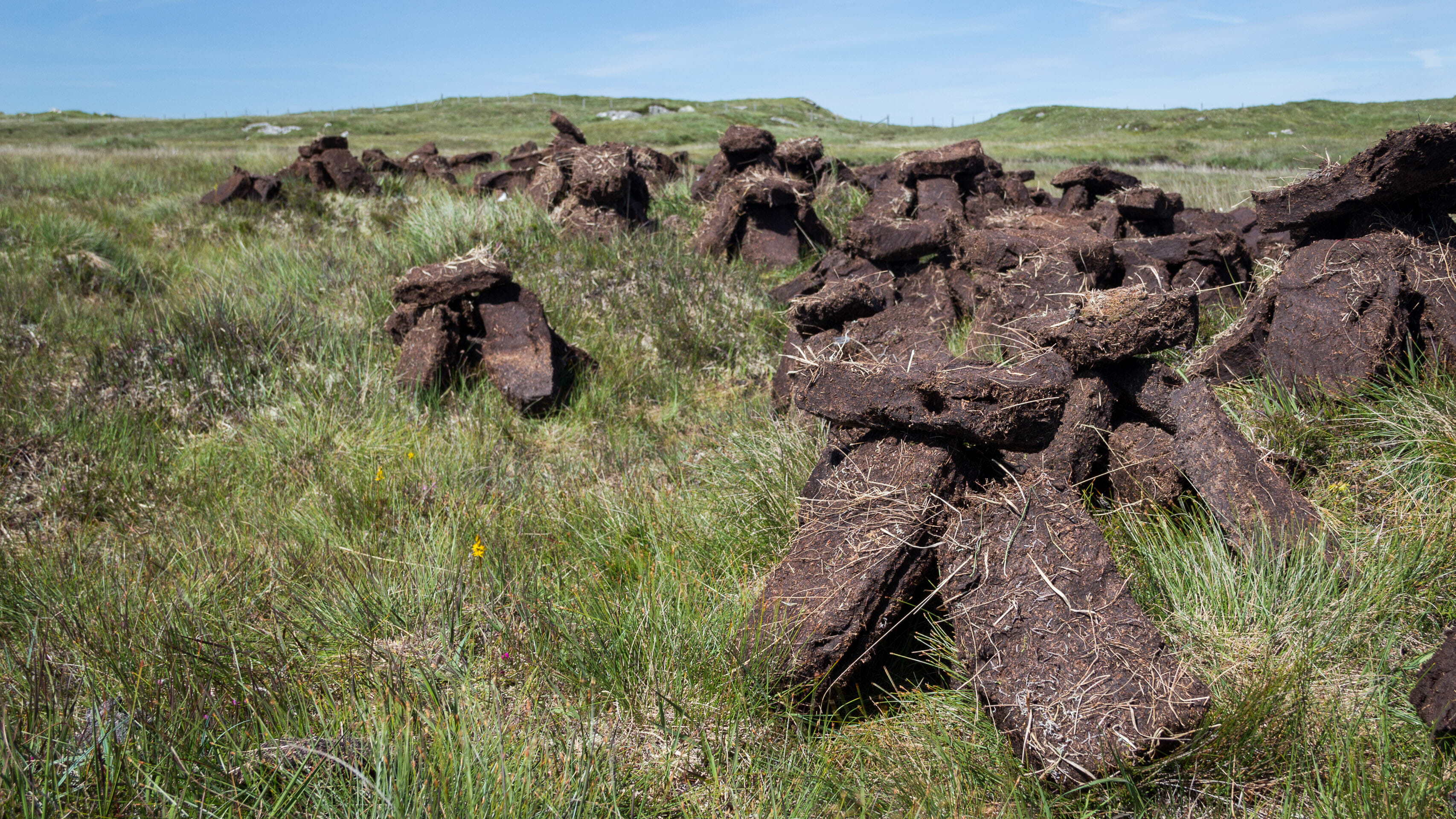
Finally, peat is used as fuel.
Does peat already bring flavour of its own? Yes! We’ll soon see exactly how.
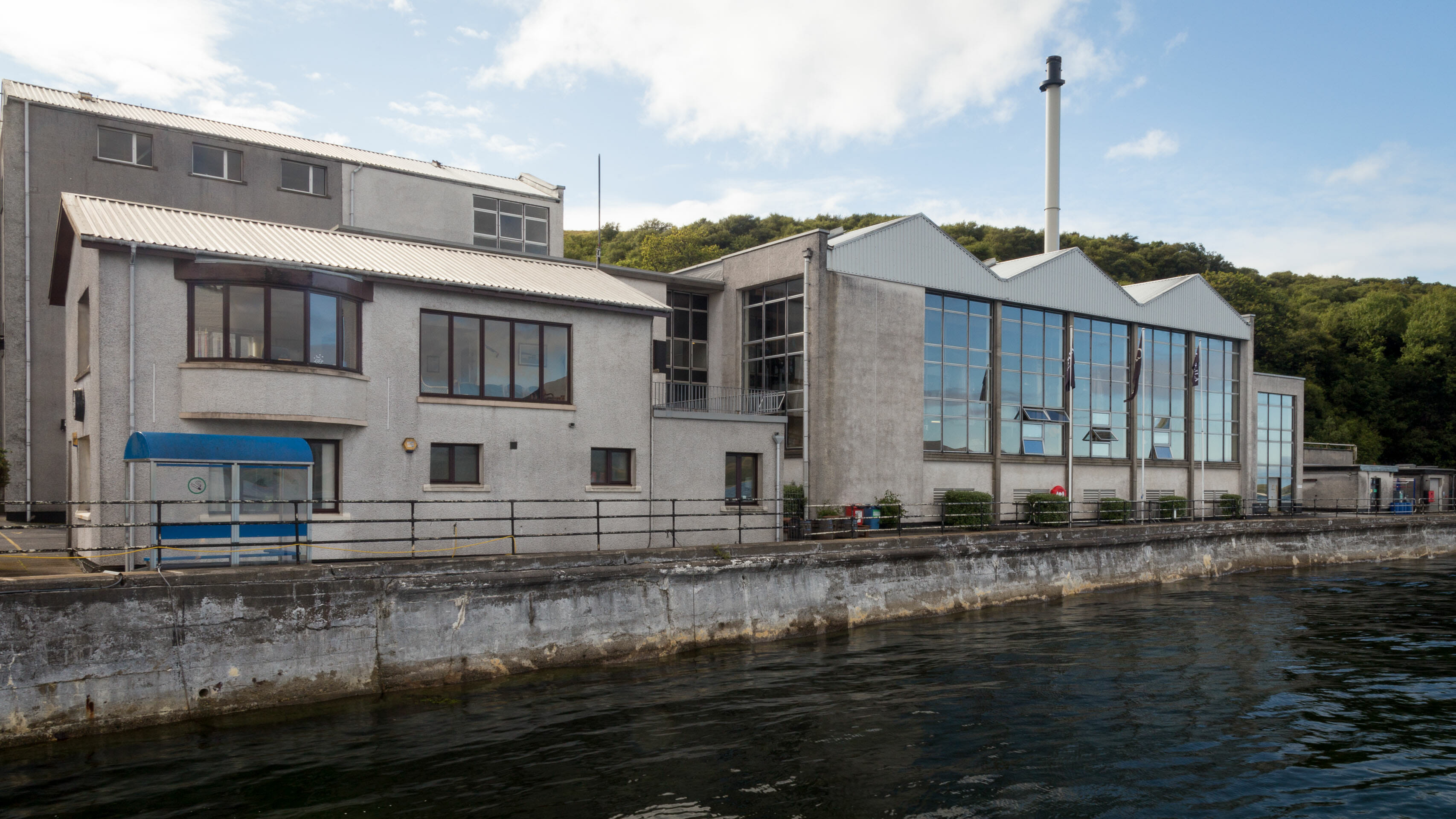
The three starting materials – barley, water and peat – along with the finished whisky, used to determine the location of many distilleries. On Islay, for instance, you’ll mostly find them beside a sheltered sea inlet, near a burn or river. The reason: barley often arrived by boat, and the bottles or casks were shipped back out again by boat too. At the same time, fresh water was drawn from the nearby stream.
Malting the barley: turning starch into sugar
Barley contains plenty of starch. But the yeast that will later carry out fermentation can’t do anything with that. It needs sugar, such as malt. So the barley is first malted.
The countless grains are soaked in water and spread out on a floor. Or, as Andrew Jefford describes it in his book “Peat, Smoke and Spirit”, they’re tricked: made to believe spring has arrived. Hopefully, they begin to germinate and put out a first small shoot.
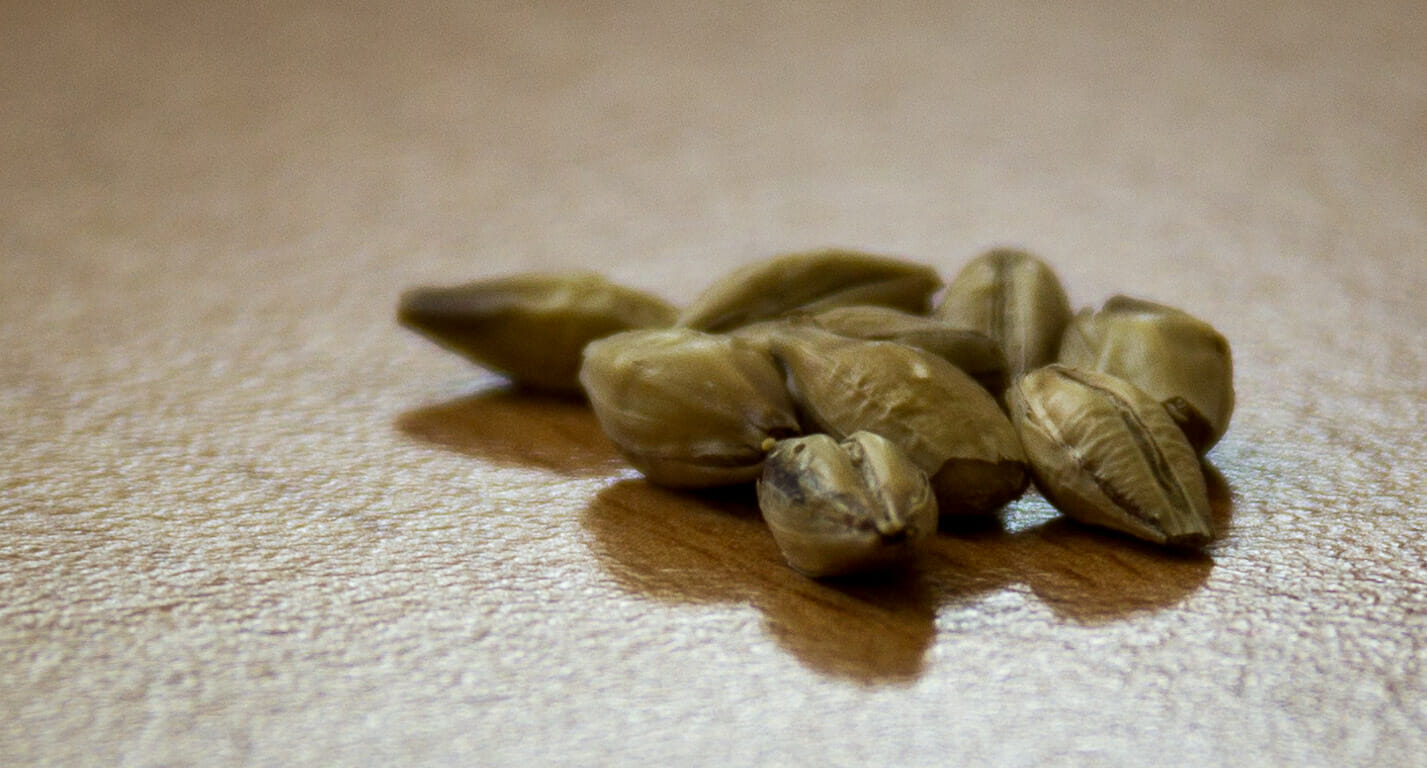
Meanwhile, the starch contained in the grain is converted into malt sugar by enzymes. That’s exactly what the distillers are after. Because rather than feeding the shoot, that sugar will soon be consumed by the brewer’s yeast instead.
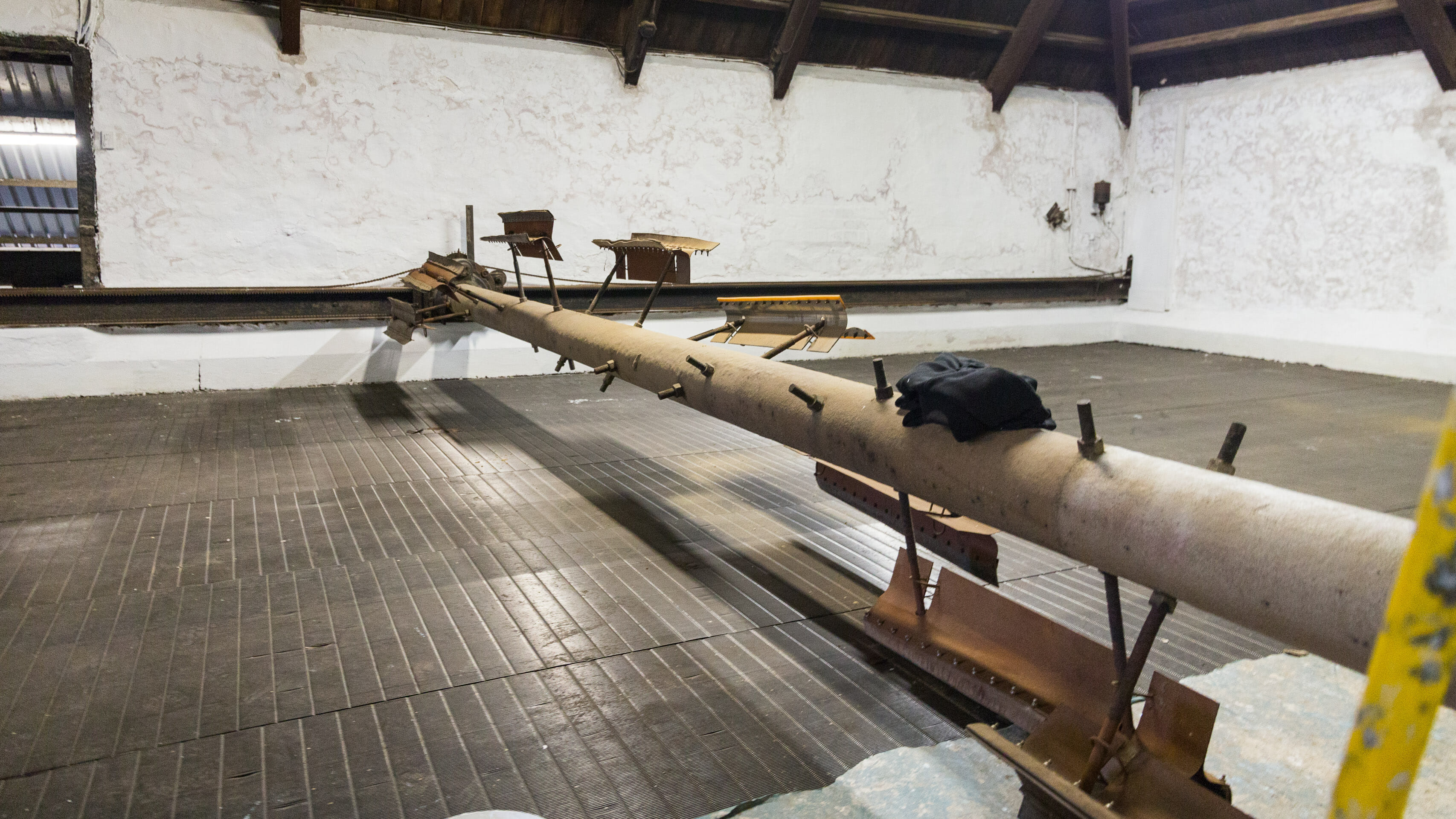
So the distillers now brutally halt the growth process: they dry the grain over a fire on the so-called malting floor, or “mesh floor” in some older usage.
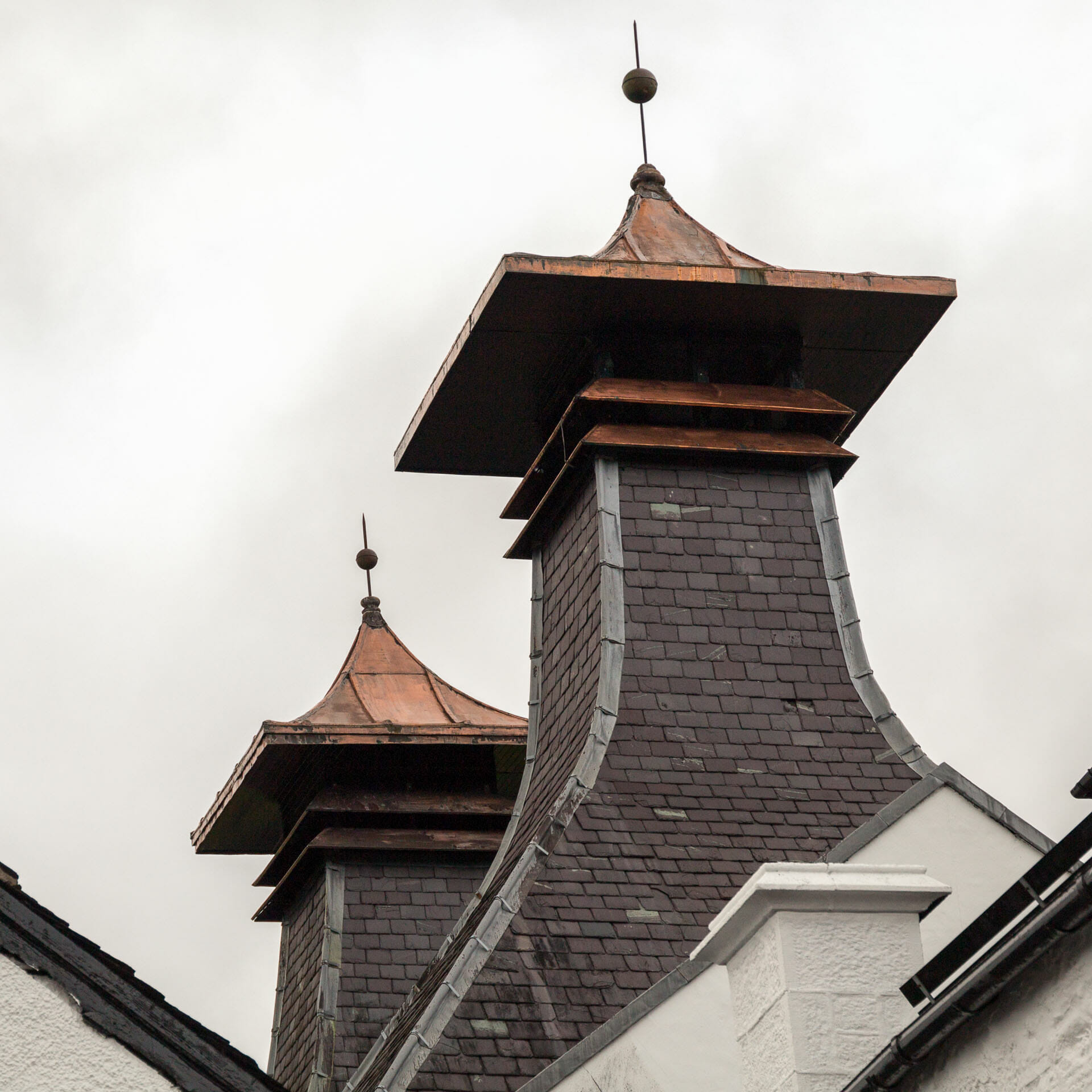
The smoke, incidentally, escapes through the now iconic pagoda-shaped chimneys found on almost every distillery.
Does flavour enter the whisky during malting? Yes! This is where the peaty flavour enters the whisky. Because when peat is added to the fire as fuel, it produces heavy smoke that infuses the malted grain with phenols. These phenols are measured in millionths, described in a whisky’s tasting notes as “parts per million”, abbreviated ppm.
The record-holder here is Bruichladdich’s Octomore whisky. It reaches between 167ppm and 208ppm depending on the bottling – though that ppm figure refers to the barley itself. For comparison: a 12-year-old Bowmore sits at around 30ppm, but here it’s the phenol content of the finished product being measured.
Whether the figure refers to the barley or the finished whisky matters, because phenol content diminishes over time – both during distillation and during maturation. That’s the reason some peaty whiskies are fairly young.
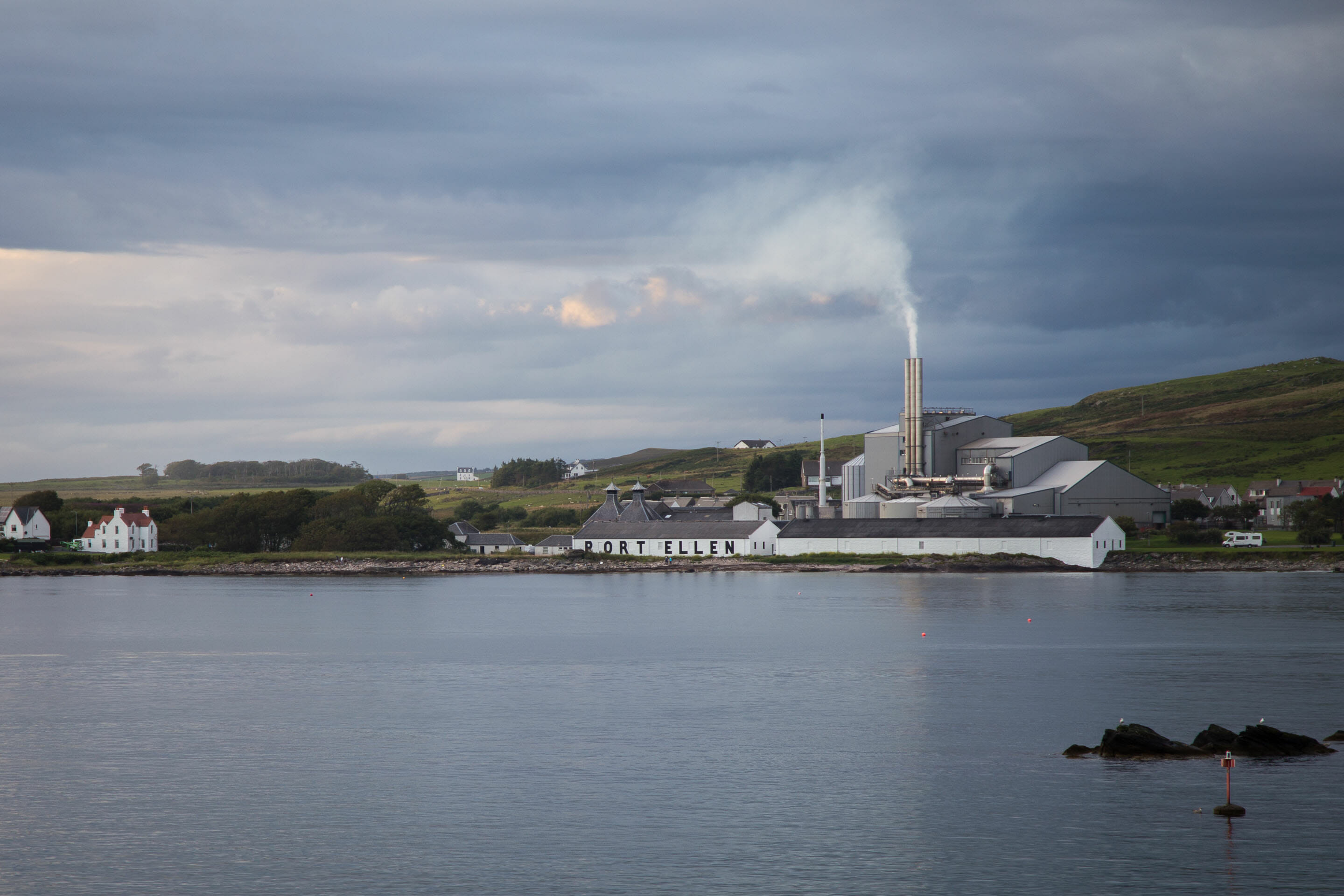
In some cases, though, distilleries no longer do this step themselves at all. On Islay, the Port Ellen Maltings handles it, for instance, for all Diageo whiskies (Diageo owns a number of distilleries in Scotland). Here the barley is delivered, malted, and kilned with peat smoke.
Milling the malt: not too fine, not too coarse
Next, the malted grain is passed through a mill, where it’s ground down. The art lies in finding just the right fineness. Ground too coarse, and the next process won’t release the optimal amount of sugar. Ground too fine and floury, it can clump together and clog the mash tun.
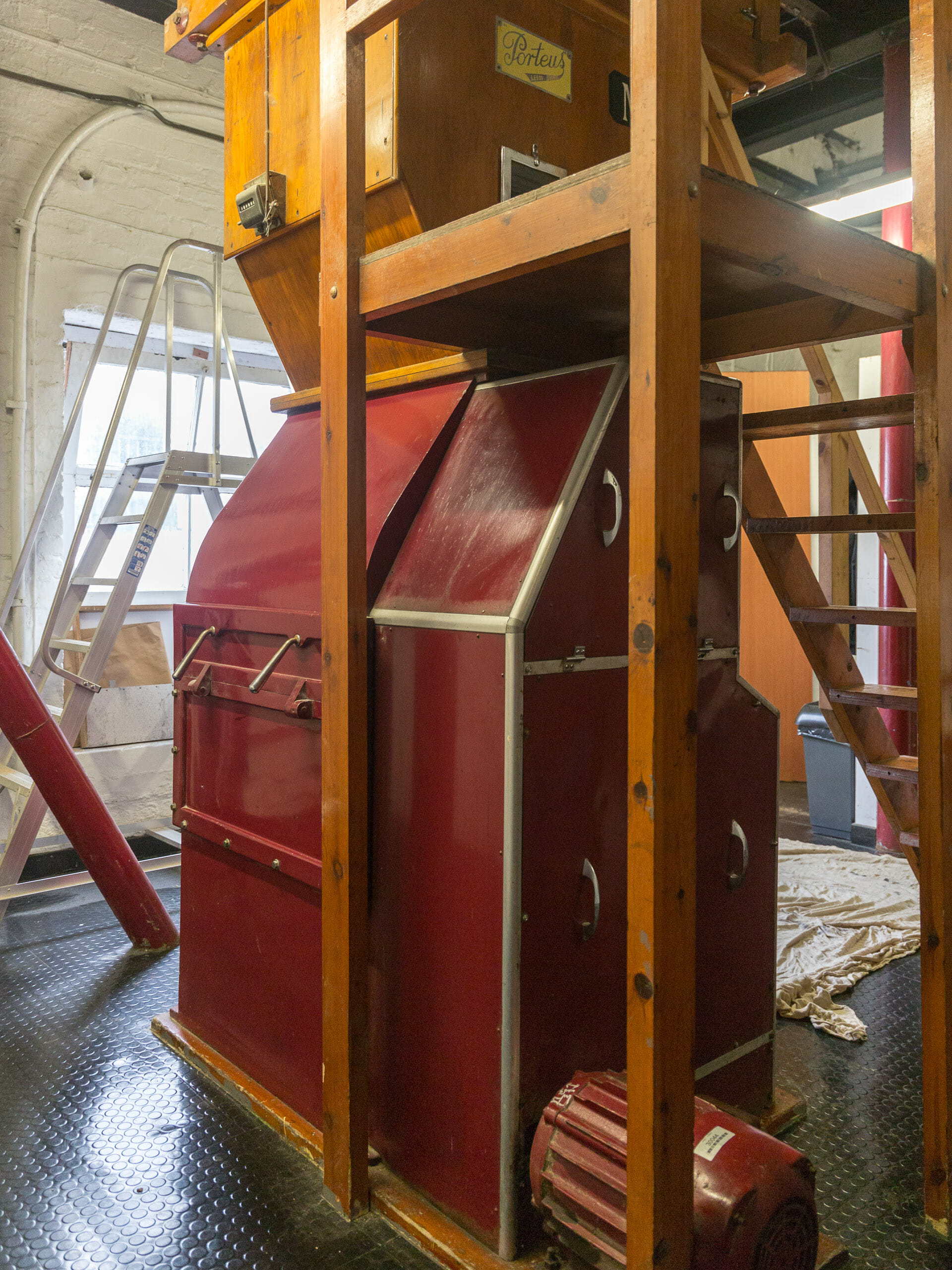
The mills at most distilleries come from either Porteus or Robert Boby Ltd. Both companies built mills so durable that replacements were almost never needed – which ultimately drove both manufacturers out of business.
Does flavour enter the whisky during milling? No. The consistency matters for processing. In fact, many distilleries today have the grist delivered ready-milled and don’t grind it themselves at all.
Mash tun: washing out the sugar
Bowmore distillery stores its grist in a grist bin.
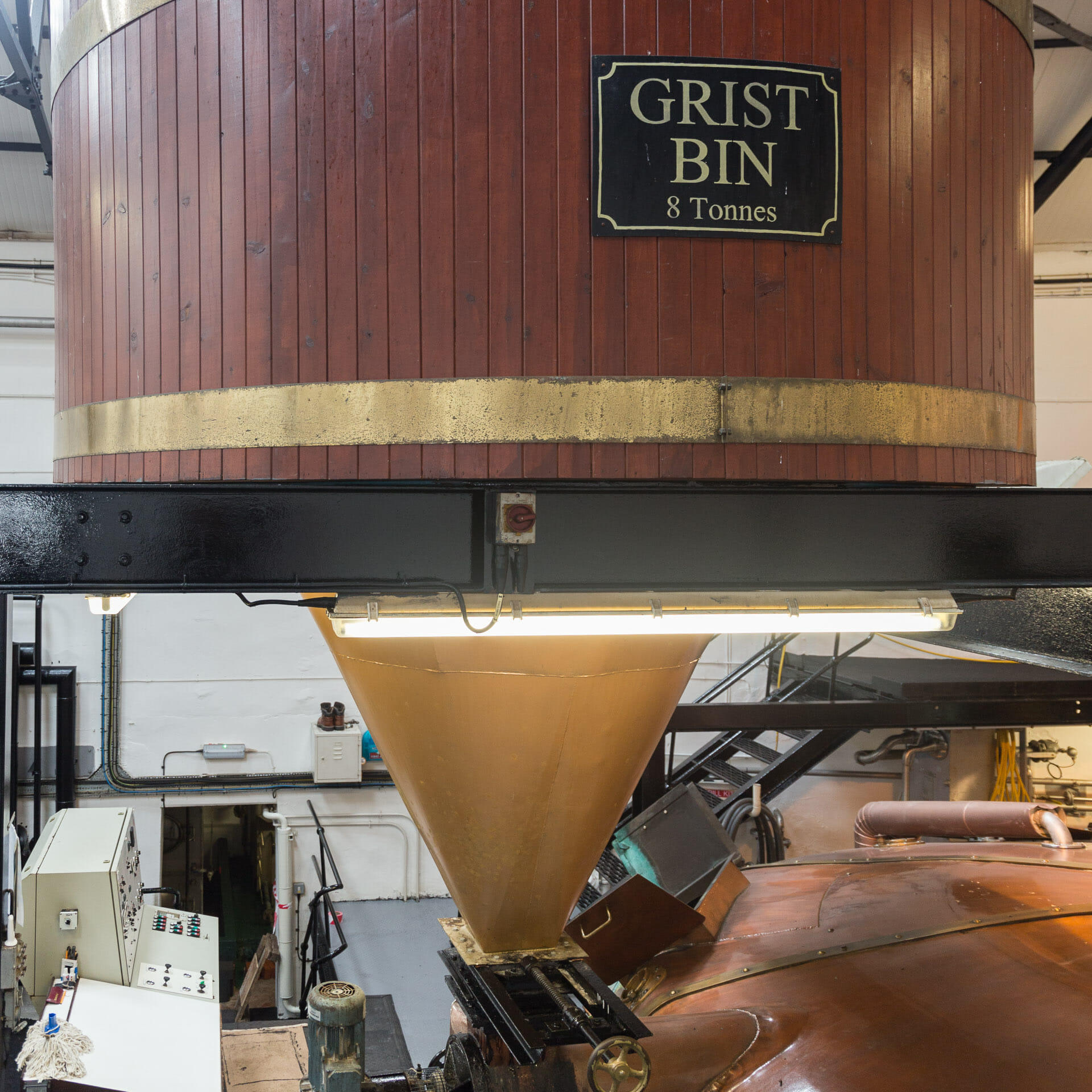
At the end of this container, you can see the grist already being fed into another vessel.
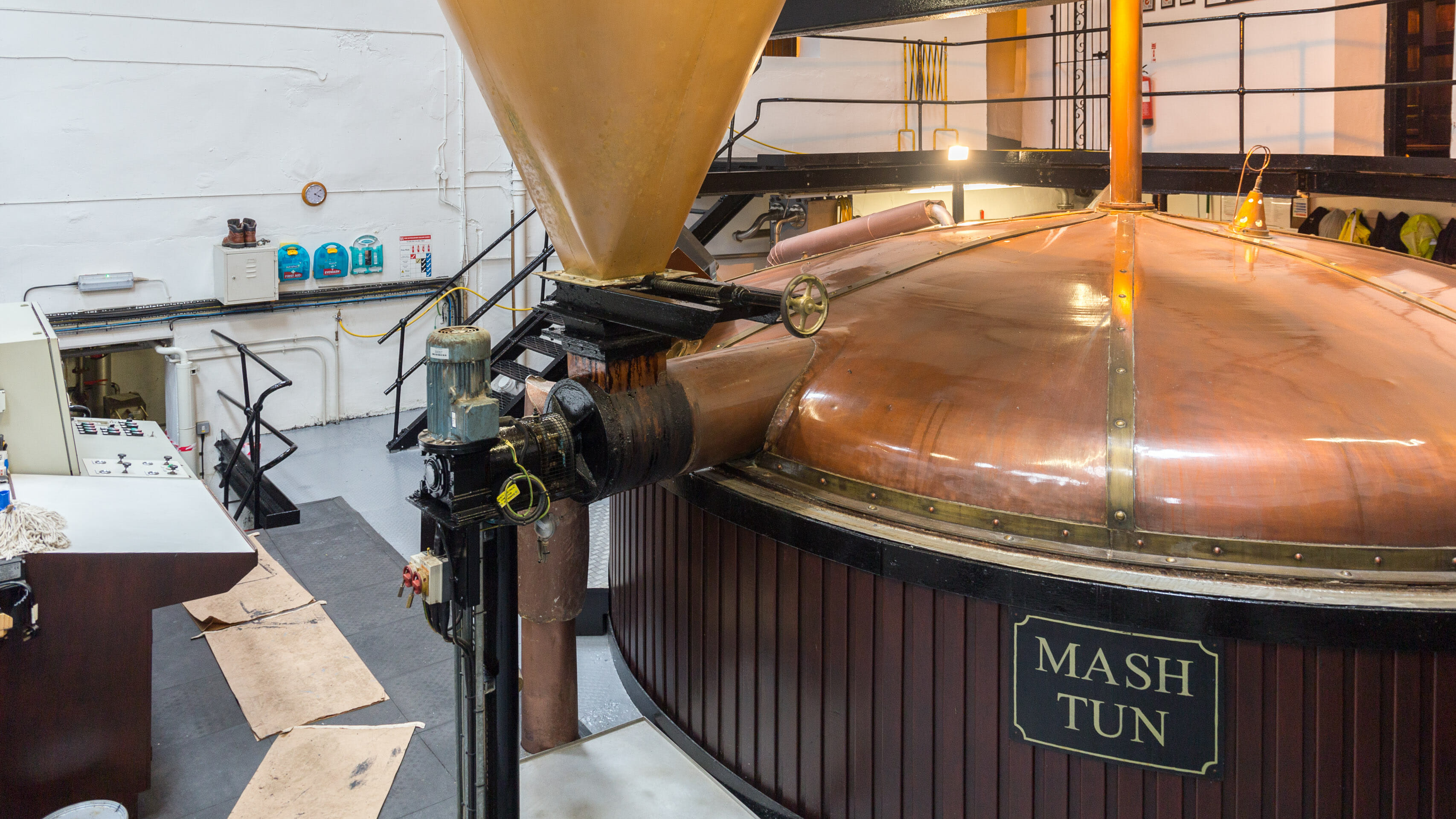
After this rather brutal treatment, the former grain has now earned itself a bath. Hot water is added, which washes out the sugar. The result is a sweetish liquid called the wort. The waste material – the spent grist – often ends up as animal feed in barns. The wort collects in what’s known as the “underback”.
Does flavour enter the whisky with the wort? No. Because the water added here – however peaty it might be – no longer has much influence on the flavour at this point. Bruichladdich, for instance, also produces unpeated whisky using very peaty water.
Washback: yeast turns sugar into alcohol
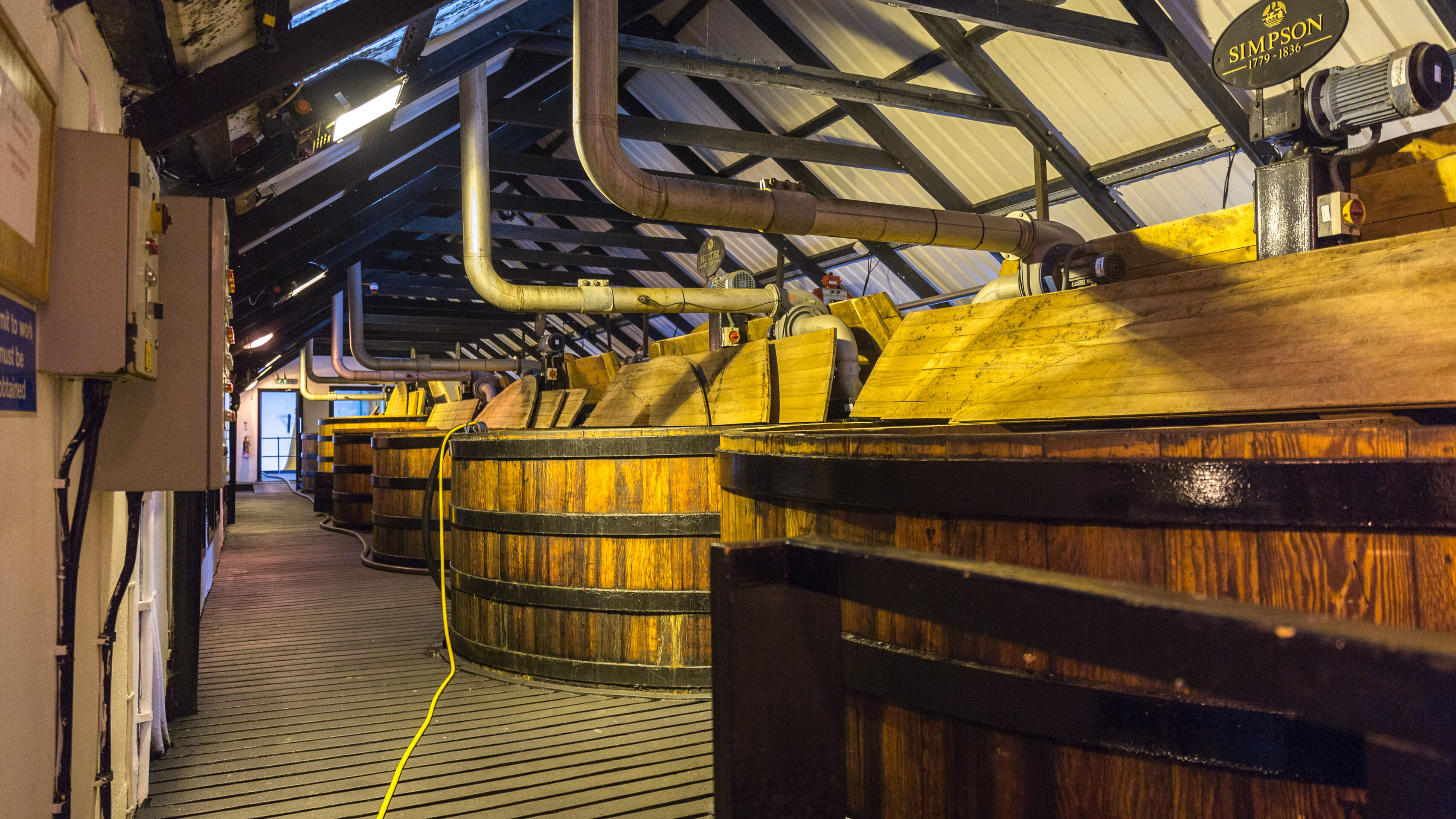
The wort ends up in a vessel called a washback. Brewer’s yeast is added to the liquid here, which sets upon the sugar and converts it into alcohol. This is also called fermentation. Depending on the distillery, it takes anywhere from two days to 120 hours.
The result is a kind of beer, called the “wash”, which collects in the washback.
Does flavour enter the whisky during fermentation? Yes! Short fermentation produces a sharper whisky, long fermentation a lighter, more delicate one.
Once the beer is ready, it finally moves on to the distilling process – separating out the alcohol.
Distilling: now the beer becomes something much stronger
Distillation is the basis of many spirits and eaux-de-vie. So what happens there? In short: alcohol has a lower boiling point than water. So its vapours rise before water vapour forms. That’s how heating separates the alcohol out of the beer mixture.
In classic whisky-making, there are usually two, sometimes three, consecutive distillation runs. And although fully modern methods now exist, distillers stick firmly to old copper pot stills.
First, the beer goes into the wash still, where a fairly simple distillation run produces the “low wines”, at around 25 per cent alcohol content. Two-thirds of the wash ends up as waste, the so-called “pot ales”.
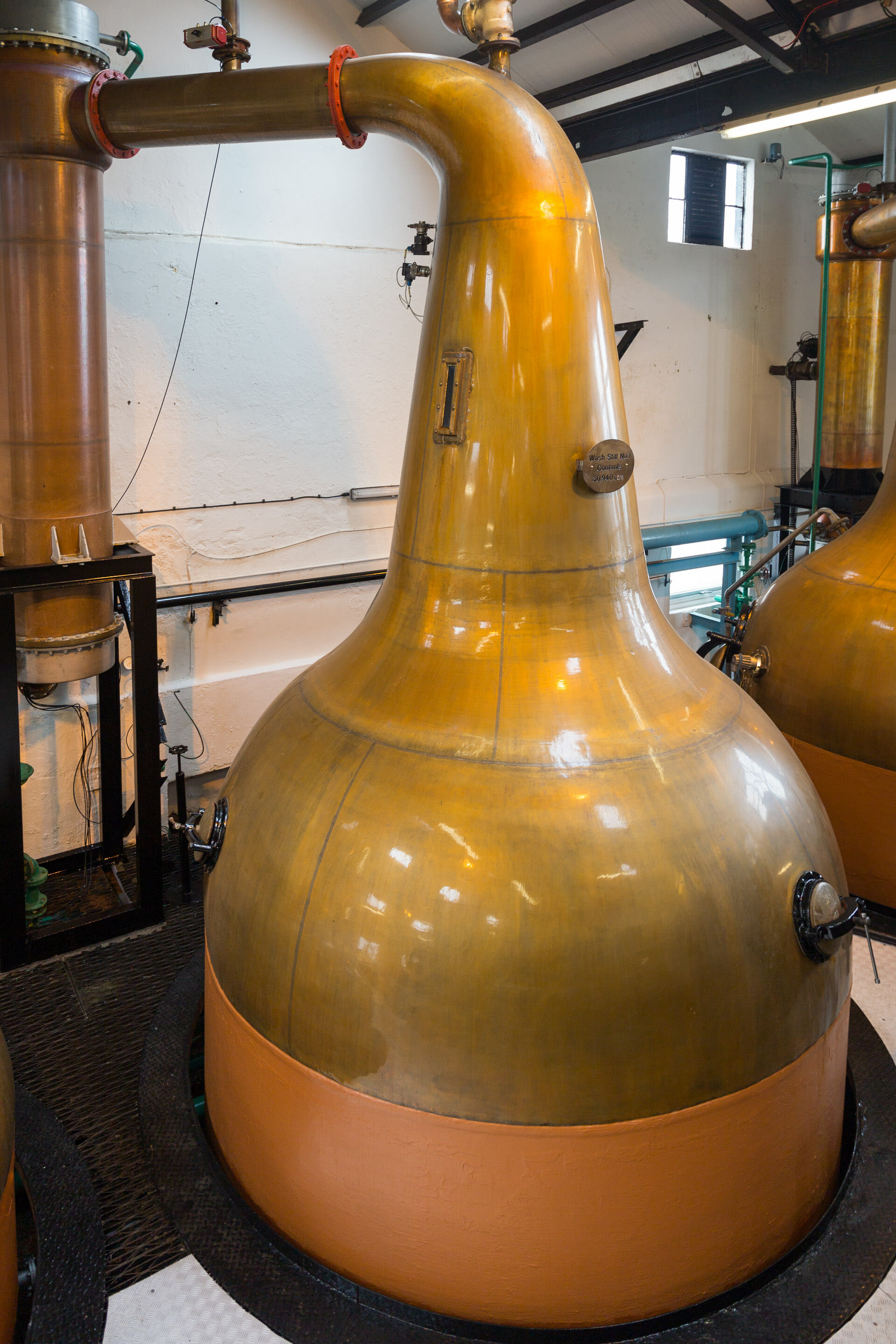
In the second distillation, in the spirit still, alcohol of around 70 per cent is produced. Here too, a leftover liquid, the low wines, remains as waste. It’s mixed with the pot ales and both are pumped back into the river or sea. Sometimes it also ends up as fertiliser on fields.
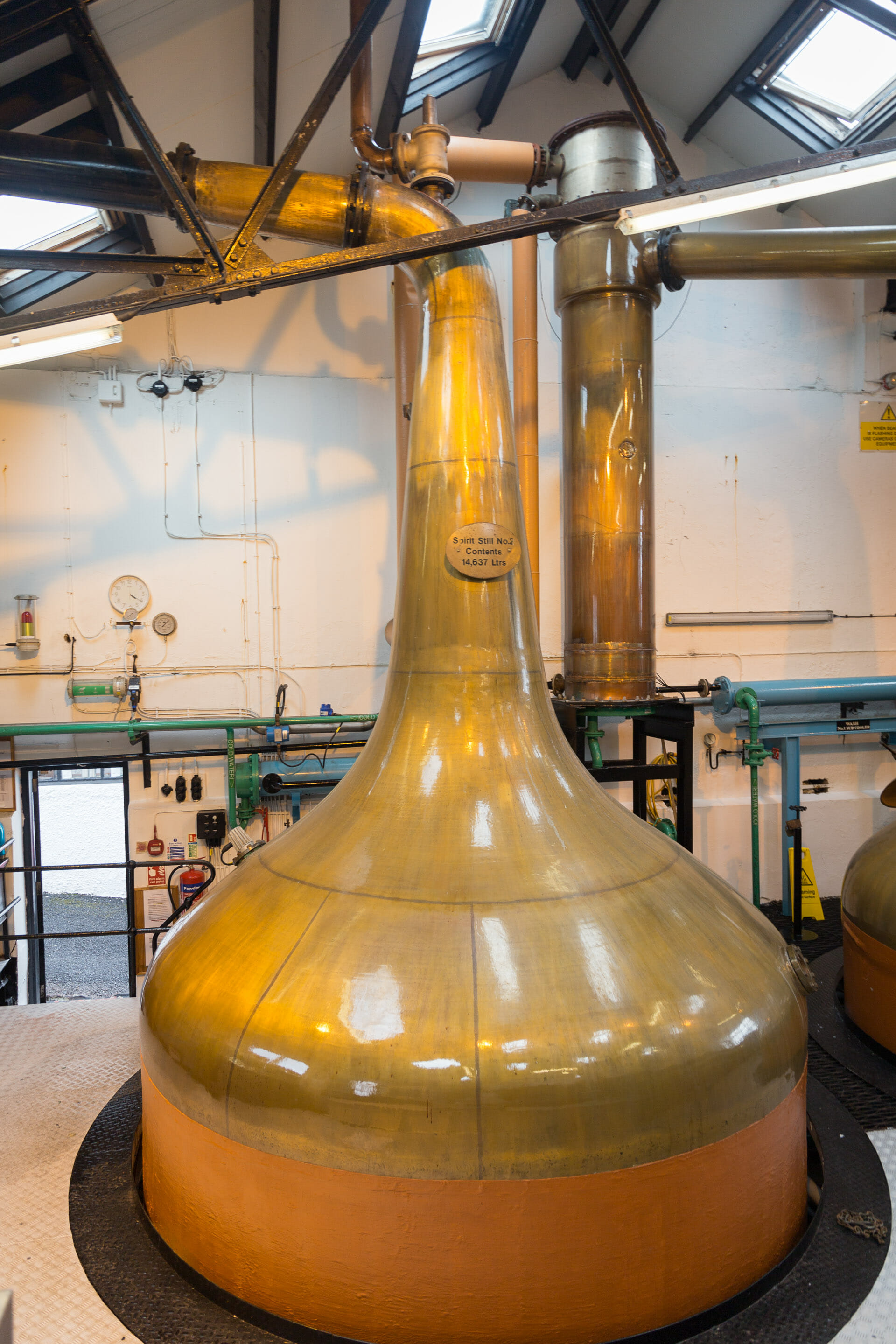
Does flavour enter the whisky during distillation? Oh, very much so! And in several different ways, which need a bit more explaining here. Because the old copper pot stills specifically do not produce pure alcohol – and that’s precisely what makes them so important.
For one thing, “alcohol” doesn’t just mean the desired ethanol. During distillation, for example, methanol rises earlier on – an alcohol that, in too high a concentration, can cause blindness. The master distiller definitely doesn’t want that in the mix.
At the same time, though, certain substances shouldn’t be lost during distillation either. The phenols mentioned earlier, for instance, or certain acids. These are referred to as “congeners” – related compounds. It’s precisely these that distinguish the future whisky from, say, vodka.
What happens in the spirit still is complex and important. The rough surface of the copper plays a major role here: it’s said that the vapours “converse” with the copper. The angle of the arm at the top, the size and height of the still, how full it is, and the speed of heating – all of this shapes the composition of the final distillate.
Condensing: turning alcohol vapour back to liquid
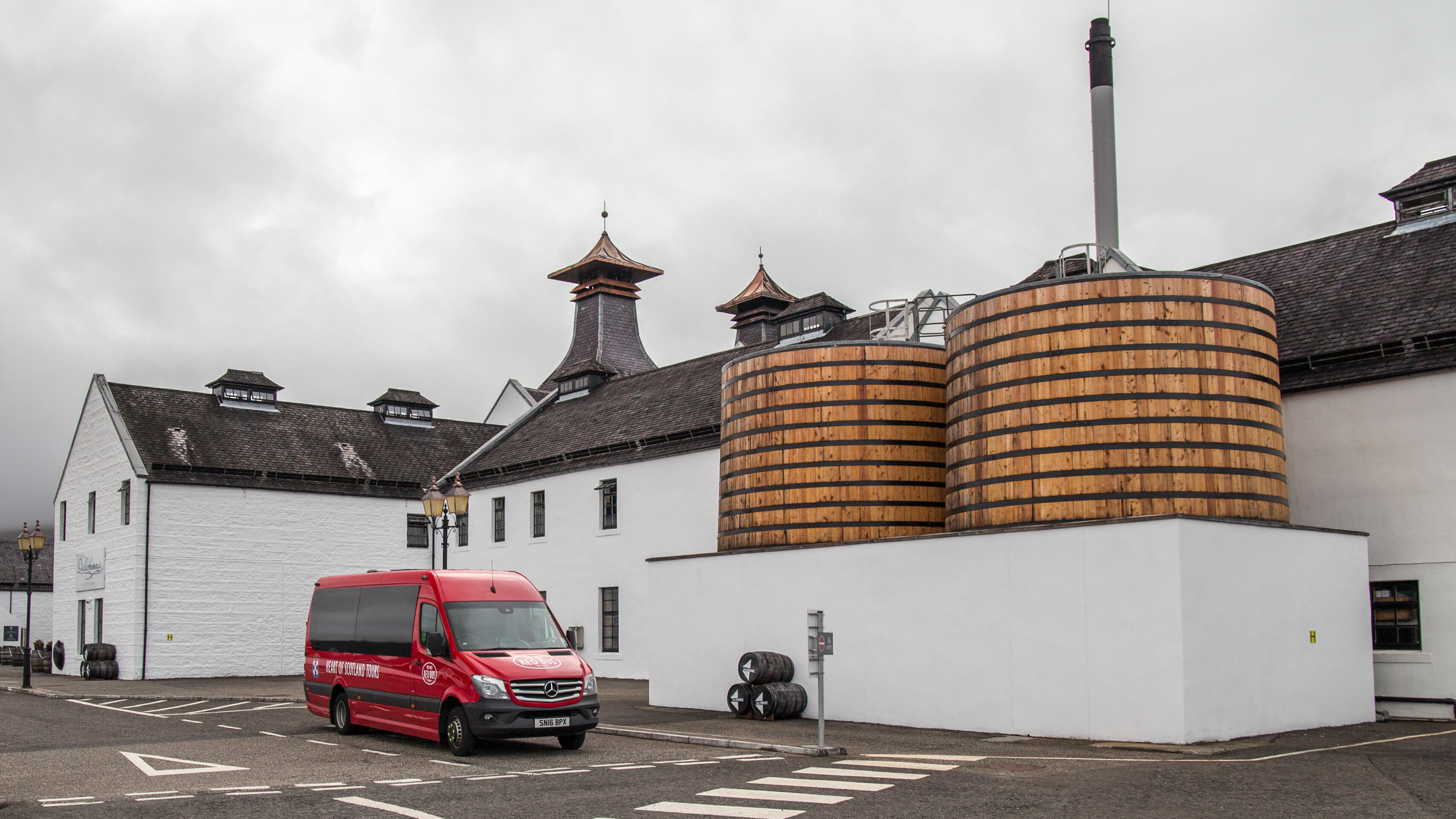
Water is needed again at this stage. The hot alcohol vapour is passed through the condenser. These are usually copper coils inside water tanks, whose job is to cool the distillate vapour back down into liquid form.
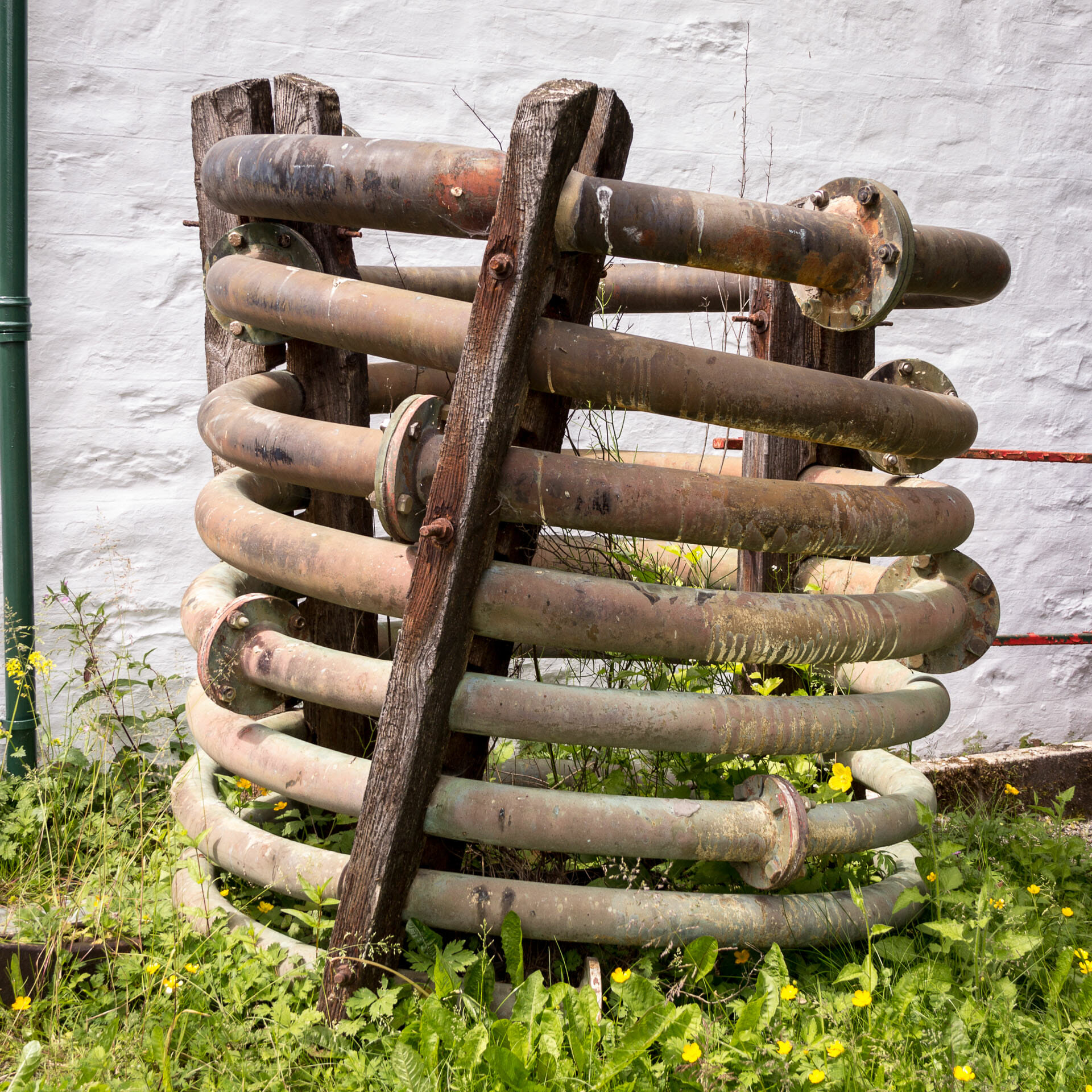
Does flavour enter the whisky during condensing? A little! Because the speed of cooling further alters the character of the distillate. The slower the cooling, the lighter the character.
Spirit safe: finding the heart of the distillate
The liquid now passes into the spirit safe. This brass-and-glass cabinet is where the master distiller decides at what point in the run the distillate should be used. To do so, he simply swings the outlet arm over one collecting vessel or another. The early part of the run, known as the “foreshot” or “heads”, and the later part, known as the “aftershot”, “feints” or “tail”, aren’t used – the distiller is after the middle cut, the “hearts”.
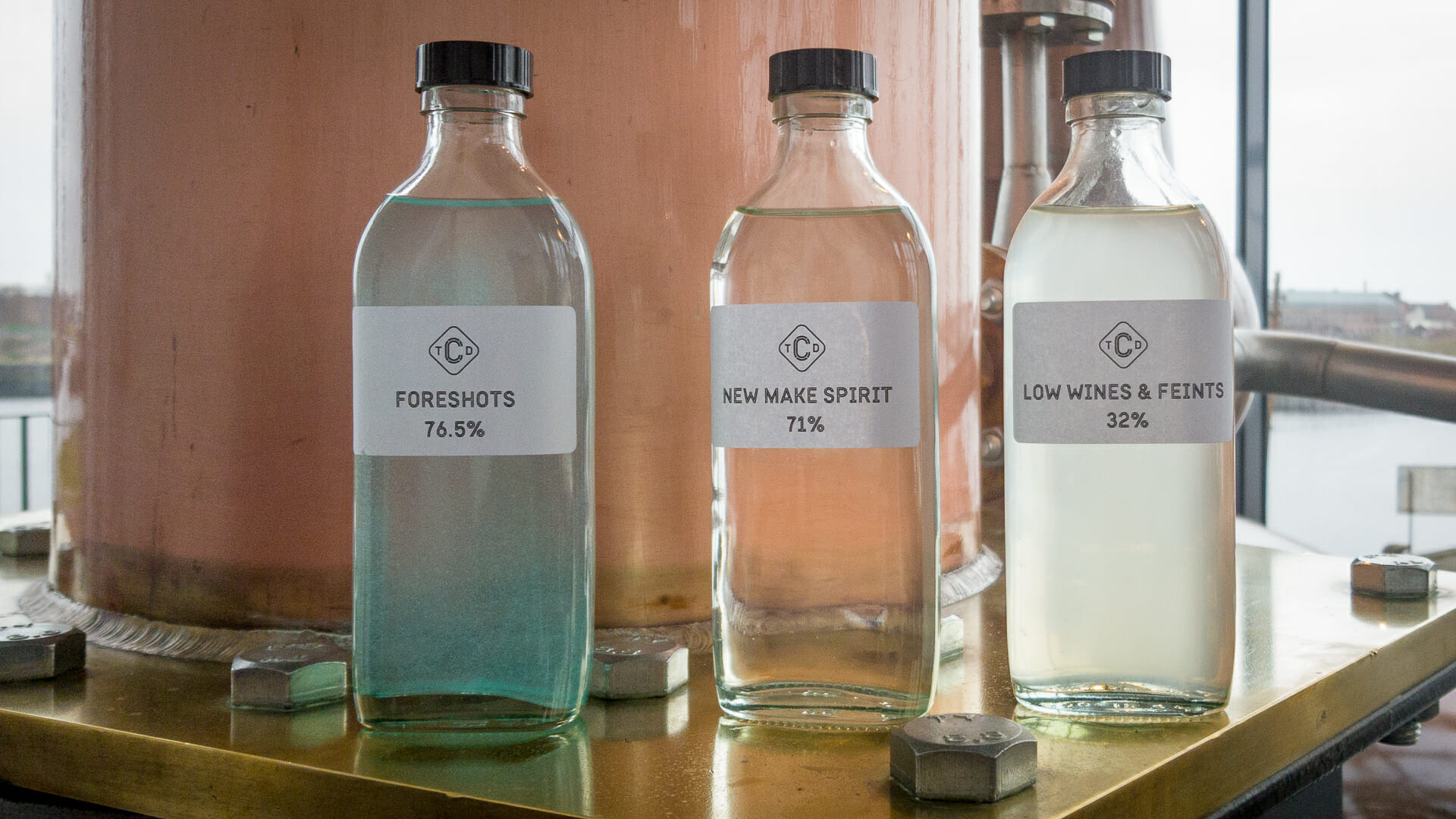
The middle cut becomes what’s called “young spirit” or “new spirit” – a sort of baby whisky, at just under 70 per cent alcohol.
The foreshot and feints are collected in the feints receiver and added back to the low wines. The middle cut goes into the spirit receiver, and before filling it’s usually diluted with a little water down to 63.5 per cent alcohol.
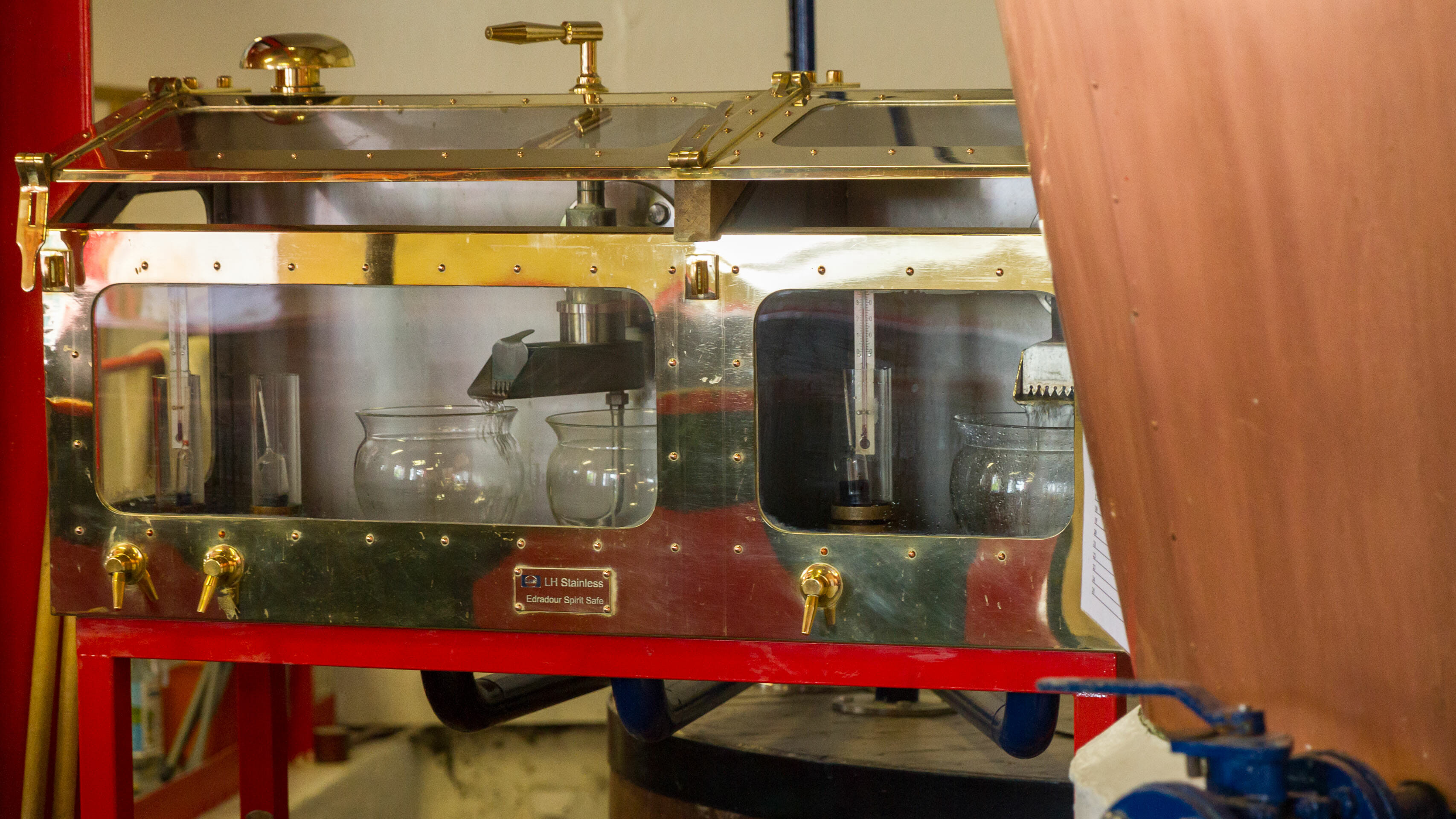
Does flavour enter the whisky at the spirit safe? Yes. This is where the master distiller decides how wide the middle cut will be – where it starts and where it stops. This affects the purity of the alcohol, and also how sharp or smooth it turns out.
Maturation: flavours from used casks
After this gruelling journey through heat and cold, the distillate finally gets to rest. For several years, in fact. A single malt matures for at least three years. It’s during this time that the whisky gets its long, final finishing touch.
To do this, the distilled spirit is filled into wooden casks. These casks aren’t new – they previously held sherry, bourbon, or even port. And from these spirits, the new whisky now inherits part of its flavour.
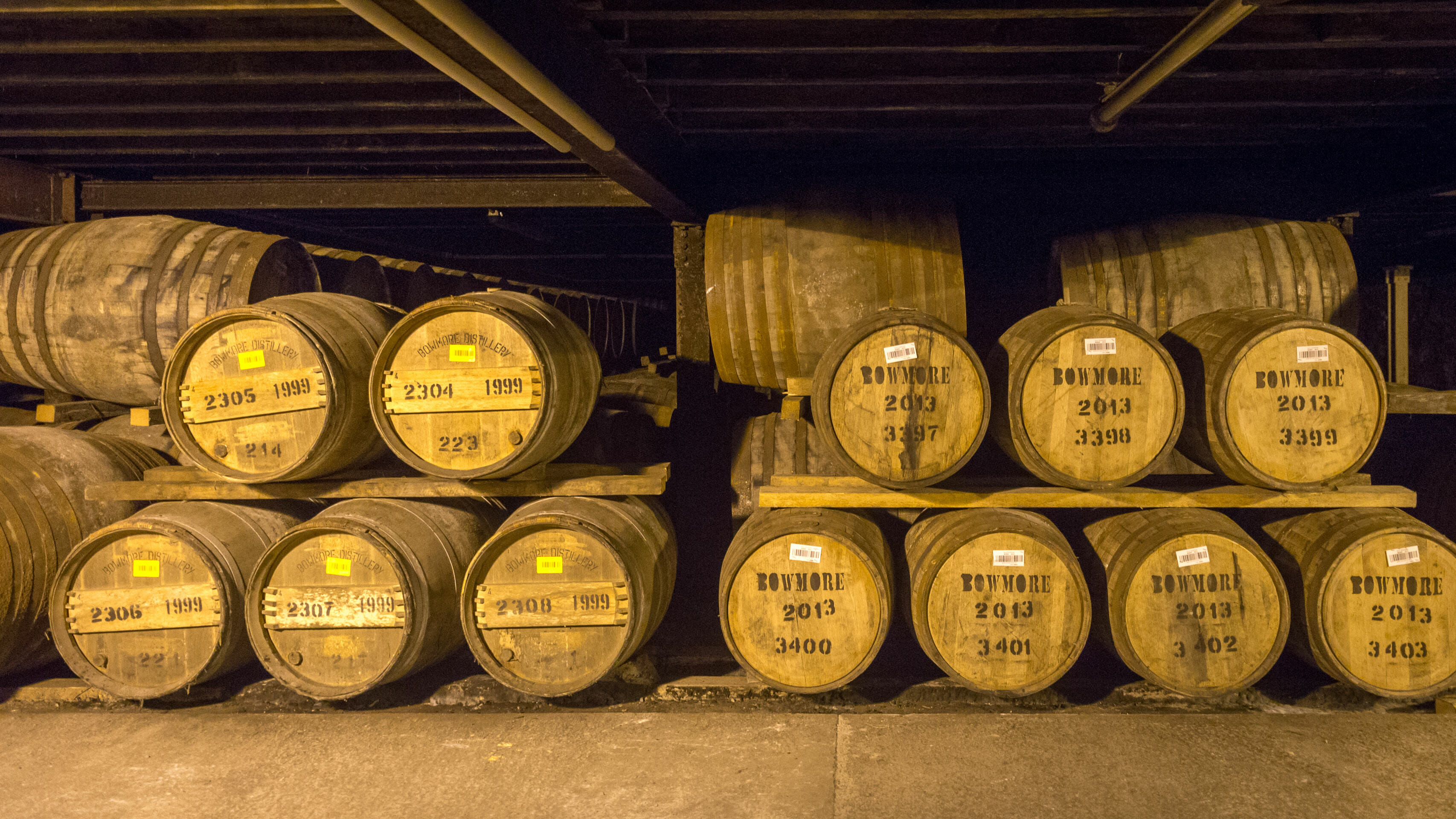
During maturation, some alcohol evaporates. Around two per cent per year vanishes into the sky as the “angels’ share”.
Does flavour enter the whisky in the cask? Absolutely. The choice of cask is decisive. Former sherry casks bring flavours like chocolate into the whisky, bourbon casks more of a vanilla note – just two simple examples of a far more complex world of flavour.
It’s not only which casks are used, but also how long the whisky matures in them, that changes the flavour. Though you shouldn’t assume that longer ageing is automatically better – just think of the loss of phenol mentioned earlier.
There are even combinations where a whisky first matures in a bourbon cask, before being finished for a few more years in a sherry cask.
Even the location of the warehouse where the casks are stored is said to influence the flavour. Salty sea air, for instance, is said to lend the whisky a particular character. That said, most whisky is no longer matured directly at the distillery, but rather in large warehouses in the Lowlands.
Bottling: filtering before it goes into the bottle
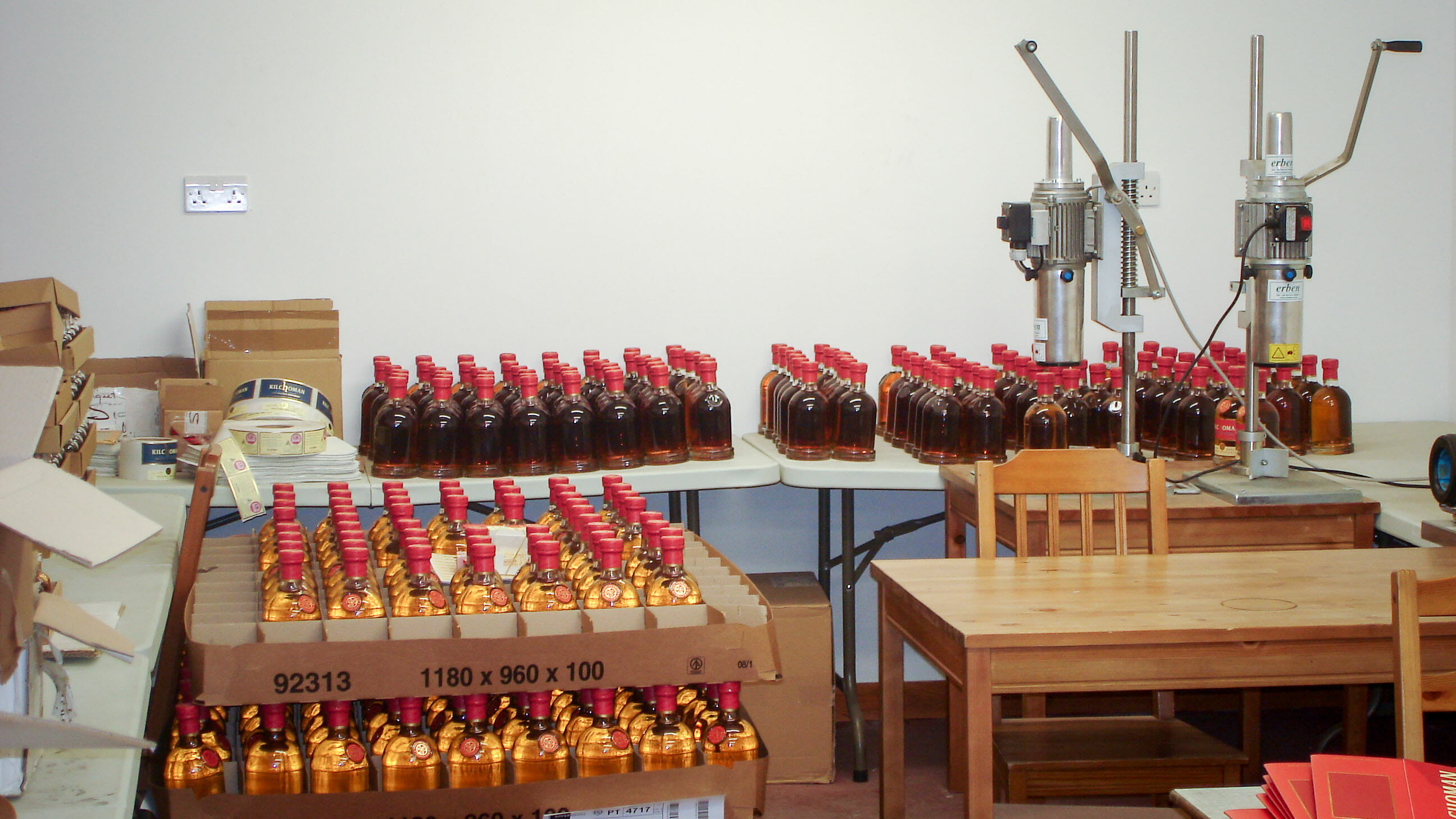
If you bottle whisky straight from the cask, it often still contains tiny traces of charred residue from the cask walls. There are also fats and our “congeners”, which under certain temperatures can form haze or clouds in the liquid. That’s why the whisky is filtered before it’s bottled and corked.
Smaller distilleries still do this themselves, such as Kilchoman on Islay. The larger distilleries, on the other hand, use centralised bottling plants.
Does flavour enter the whisky during bottling? Let’s put it this way: nothing new gets added at this stage, if anything something is taken away. In most cases the whisky is “chill filtered”. Some substances quickly cloud and precipitate out during this process, and can then be removed. The problem: these “congeners” are also exactly the important flavour compounds the master distiller worked so hard to preserve earlier on.
That’s why most whisky enthusiasts today look for “non-chill-filtered” on the label. Many whisky distilleries have in fact already stopped chill filtering altogether.
From bottle to glass: the end of a long journey
At some point the bottle finally reaches us, the drinkers. And we, too, can still influence the flavour. The right nosing glass, adding a touch of water (just a little!), or simply taking the time to let a bit of alcohol evaporate first – all of this can once again change the tasting experience for us.
With that in mind: Slàinte mhath!
