A modern cemetery dotted with the ruins of an ancient monastery: the history of Kinloss Abbey reaches back to the Middle Ages.
Almost every monastery has a remarkable foundation story, and Kinloss Abbey is no exception. According to legend, King David I of Scotland came here on a hunting trip in 1150.
At the time, vast forests covered the area. The king became so hopelessly lost that he appealed to the Virgin Mary for help. A white dove then appeared and guided him to a clearing.
Two shepherds were tending their flock there and gave the king shelter. While he slept, Mary appeared to him in a dream and commanded him to build a chapel in her honour.
David awoke and used his sword to trace the outline of the chapel into the ground. Once reunited with his party, he withdrew to nearby Duffus Castle, where he remained to oversee the construction.
That, at least, is the legend. It sounds very similar to the tale associated with Holyrood Palace in Edinburgh—perhaps too similar. It also leaves out another motive: the foundation helped the king extend his influence in Moray.
The site did not remain a mere chapel. David brought Cistercian monks from Melrose to Kinloss, and a wealthy abbey developed. In 1312, the monks received fishing rights on the River Findhorn.
Kinloss Abbey prospered for 400 years. As with many monasteries, however, the Scottish Reformation brought this to an end in 1560. Its buildings and lands passed into secular hands, and in the 17th century even the stones were sold to Oliver Cromwell’s forces, who used them to build a fort in Inverness.
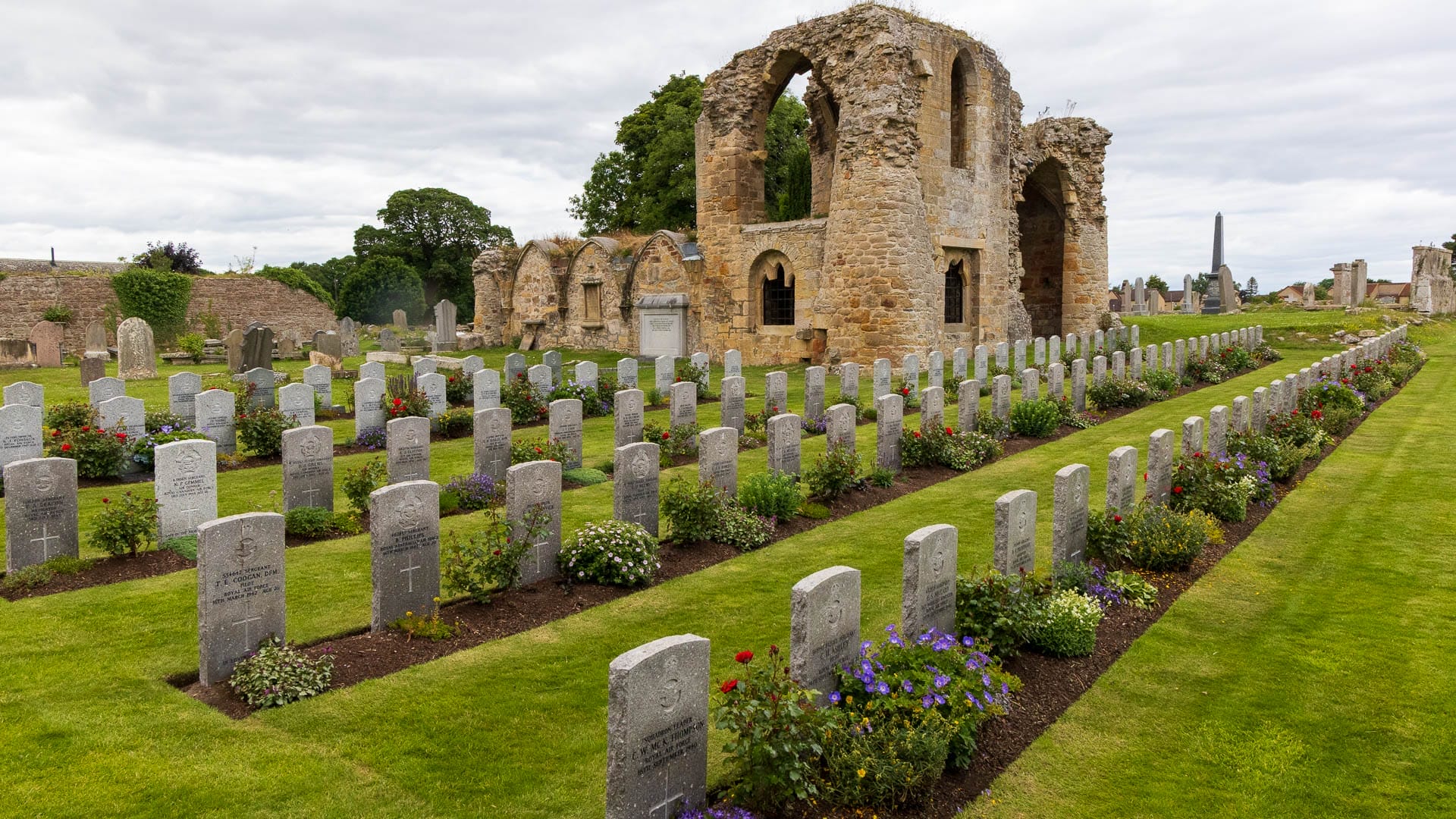
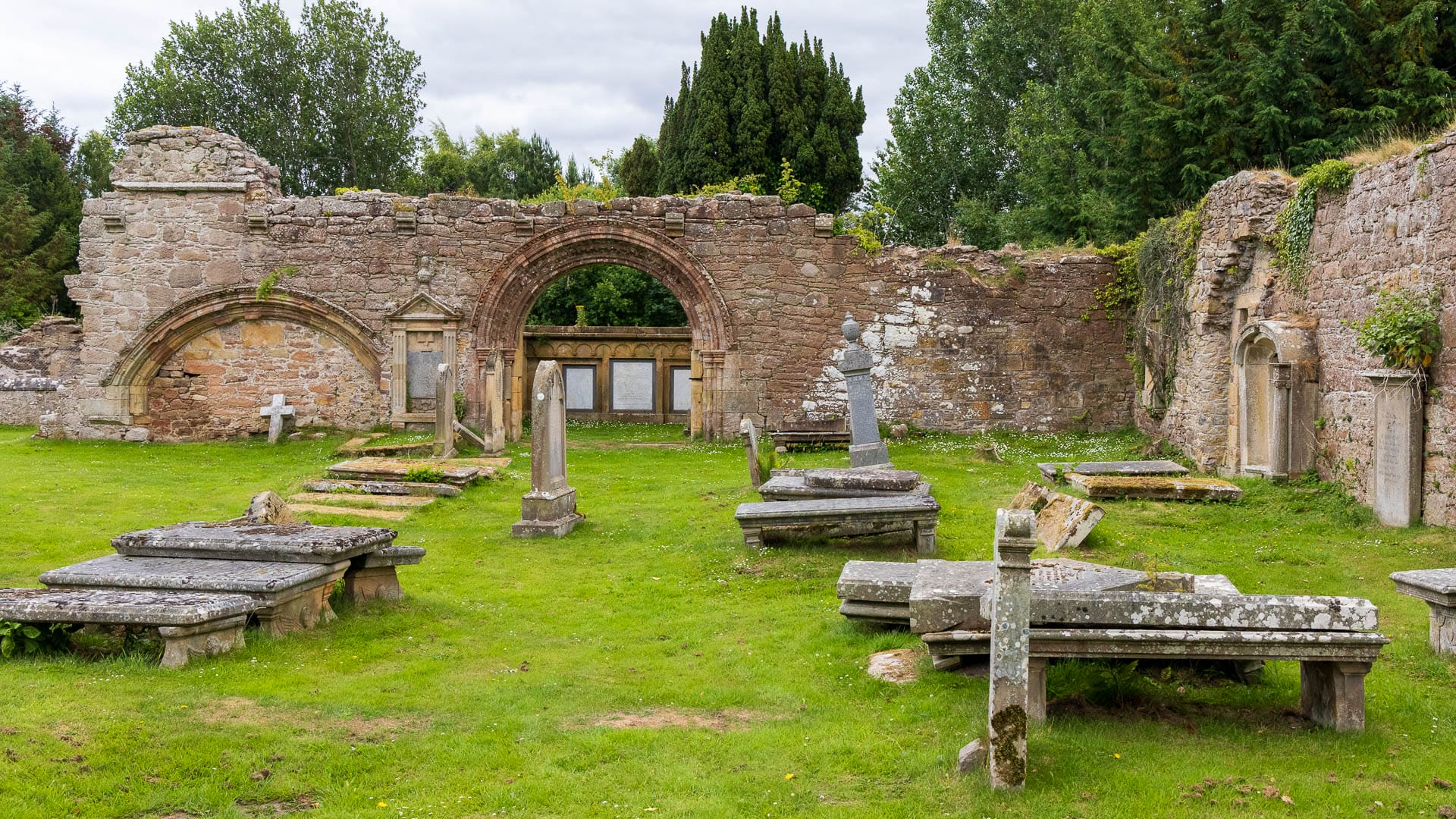
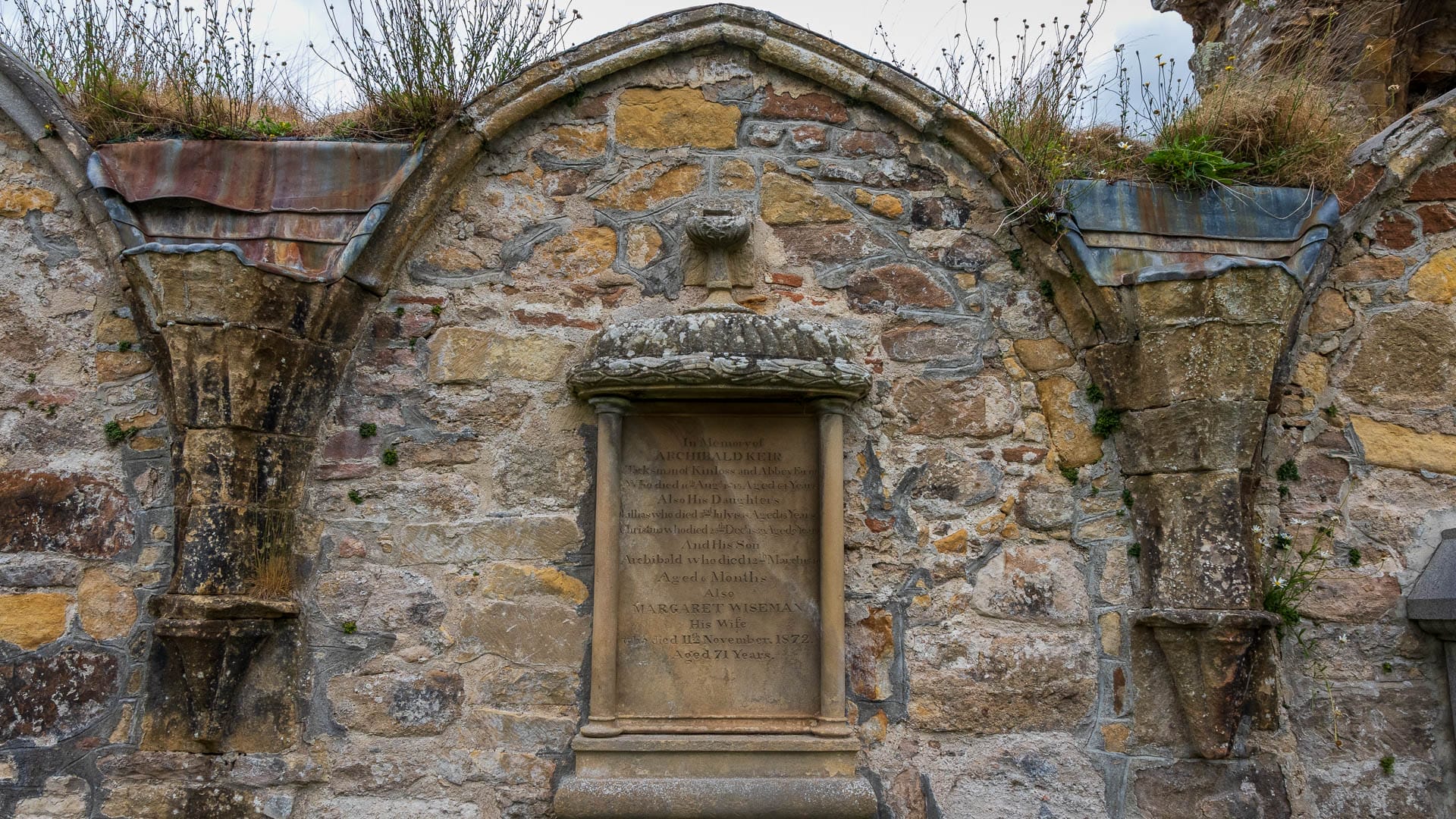
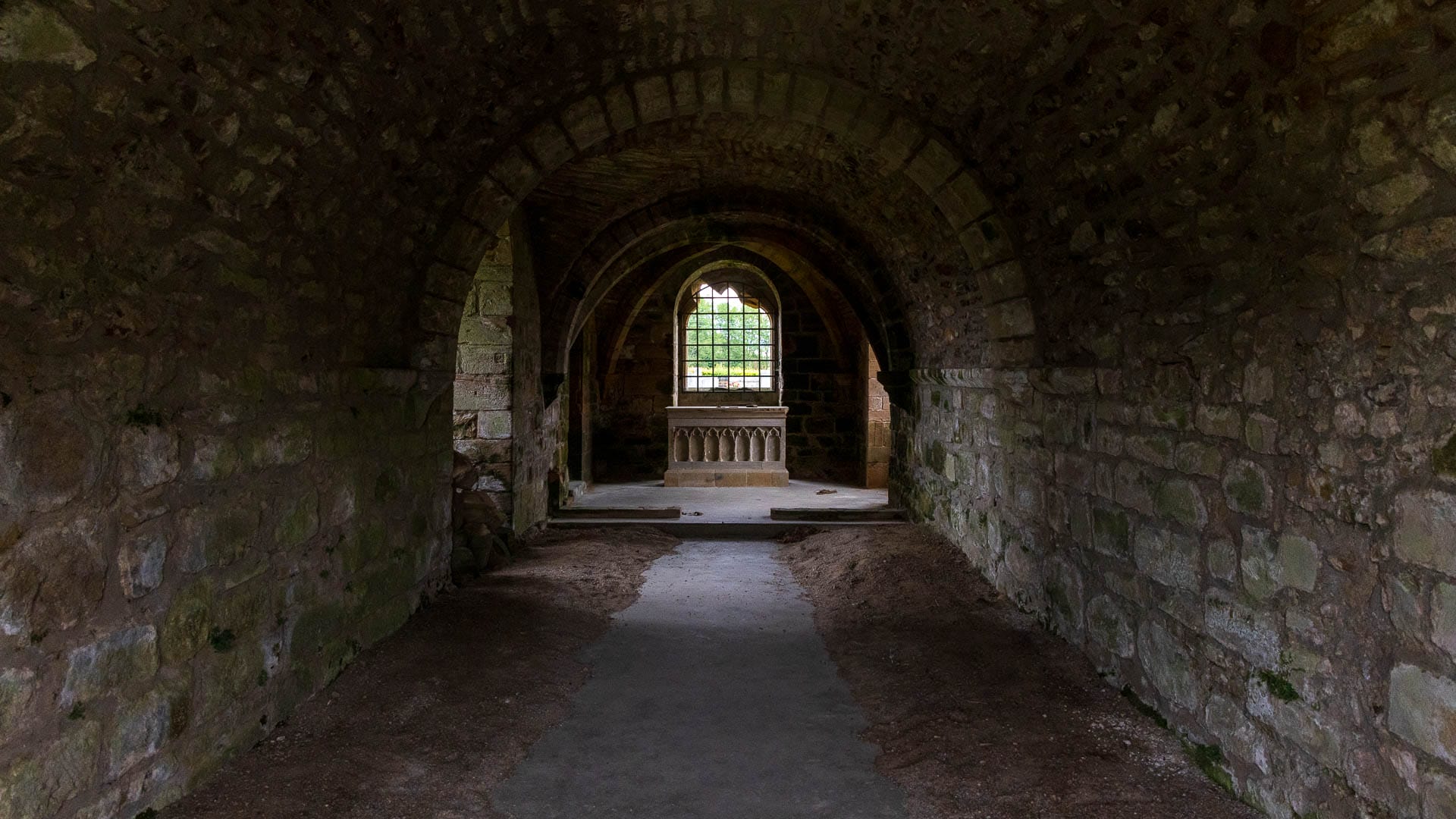
What remains today is a cemetery that also contains war graves, with the ruins of the once-proud monastery rising among them. The ruins are well worth seeing, and drawings and information panels help visitors picture the original abbey.
History: Robert Reid, Kinloss and Orkney
One name is closely linked with Kinloss: Robert Reid was a high-flying churchman of the 16th century. Educated at the University of St Andrews, he became sub-dean of nearby Elgin Cathedral in 1524. In 1528, the church appointed him Abbot of Kinloss Abbey.
Here he was able to put his ideas into practice for the first time. Education and scholarship were especially important to him, and Reid turned Kinloss into a centre of learning. He lived in the Abbot’s House, whose ruins now stand behind a fence on the site.
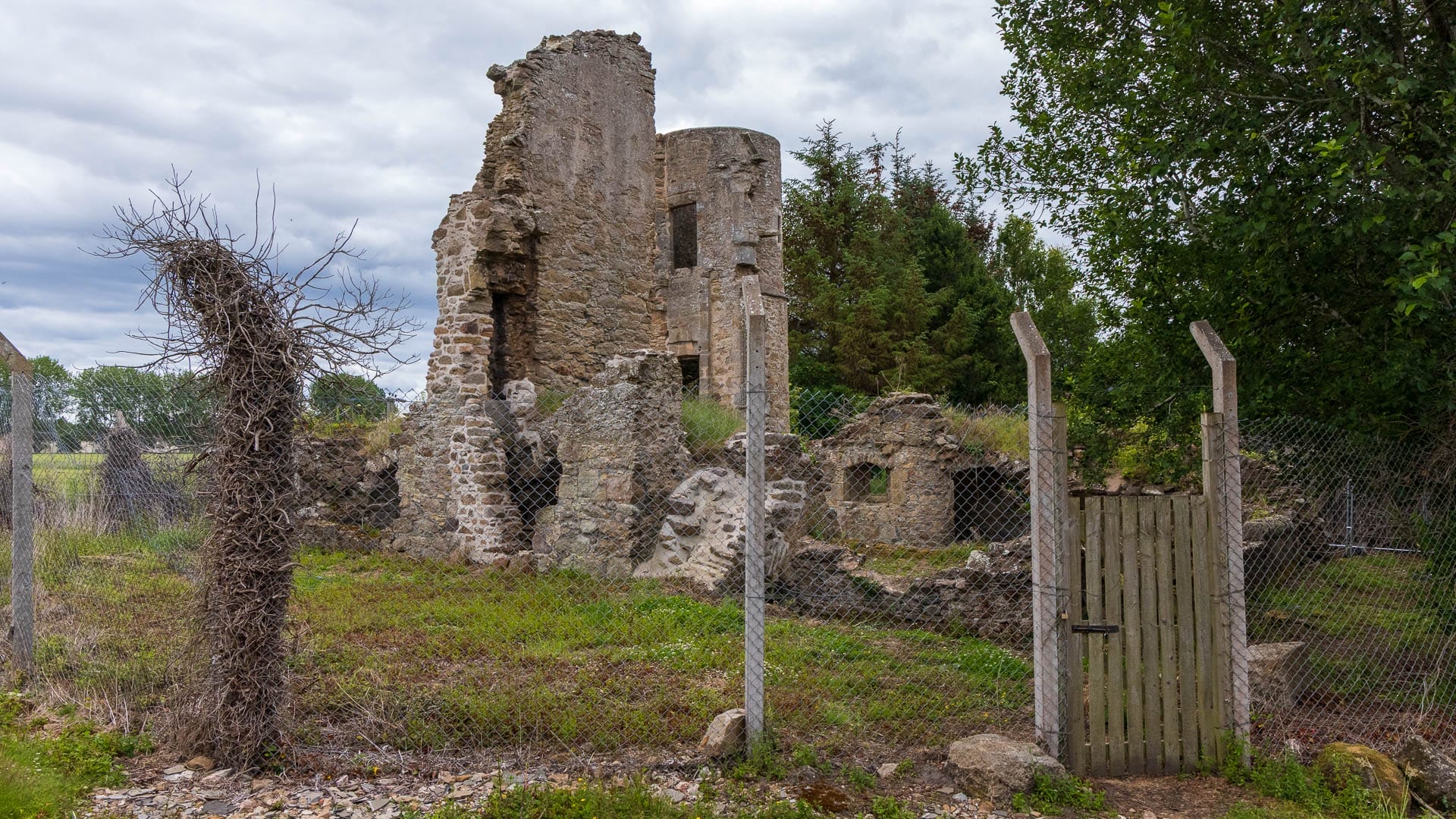
His career did not end there. In 1541, Reid became Bishop of Orkney. He expanded the Bishop’s Palace beside St Magnus Cathedral. Again he promoted education, opening the Burgh School in 1544 to teach writing, mathematics and philosophy. He nevertheless remained loyal to Kinloss.
Robert Reid was also active in foreign affairs and became involved in the politics surrounding King James V, Henry VIII and Mary of Guise. He died while travelling in France in 1558, after attending the wedding of Mary, Queen of Scots, to the French heir to the throne.
His support for education continued beyond his death. Reid left a substantial fortune to establish a college in Edinburgh. The Reformation initially frustrated the plan, but the University of Edinburgh opened in 1583 with help from Robert Reid’s bequest.
Throughout this history, Kinloss Abbey played an essential role.
Getting there
By satnav: Enter “IV36 3TL” to reach the village, then continue as described below.
Without satnav: From Inverness, take the A96 east. At the far end of Forres, near Sueno’s Stone, turn onto the B9011 towards Findhorn. In Kinloss, do not follow the main Findhorn Road; continue straight towards Burghead, then shortly afterwards turn right onto the small lane. A brown sign points to Kinloss Abbey. Parking is available by the cemetery gate.