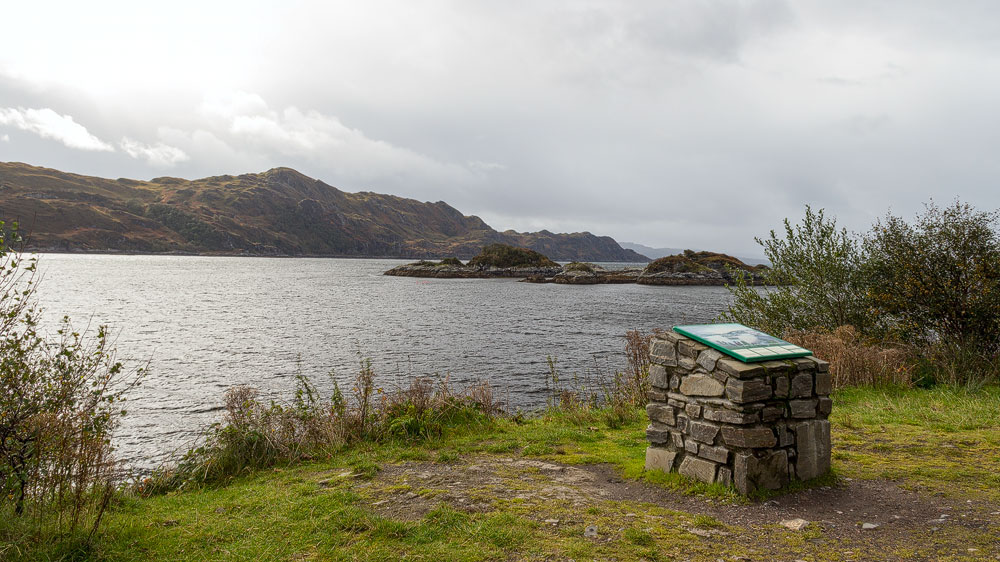
The sea loch has a rather austere beauty. But Loch nan Uamh has one advantage: it’s deep, and offers a sheltered harbour. Even so, it was here that the Jacobites’ last stand was fought.
After the thunder came the splintering. As the cannonballs tore through the hull, they released thousands upon thousands of tiny wooden splinters that buried themselves deep in the flesh of the French sailors. The Le Mars had just taken a devastating broadside.
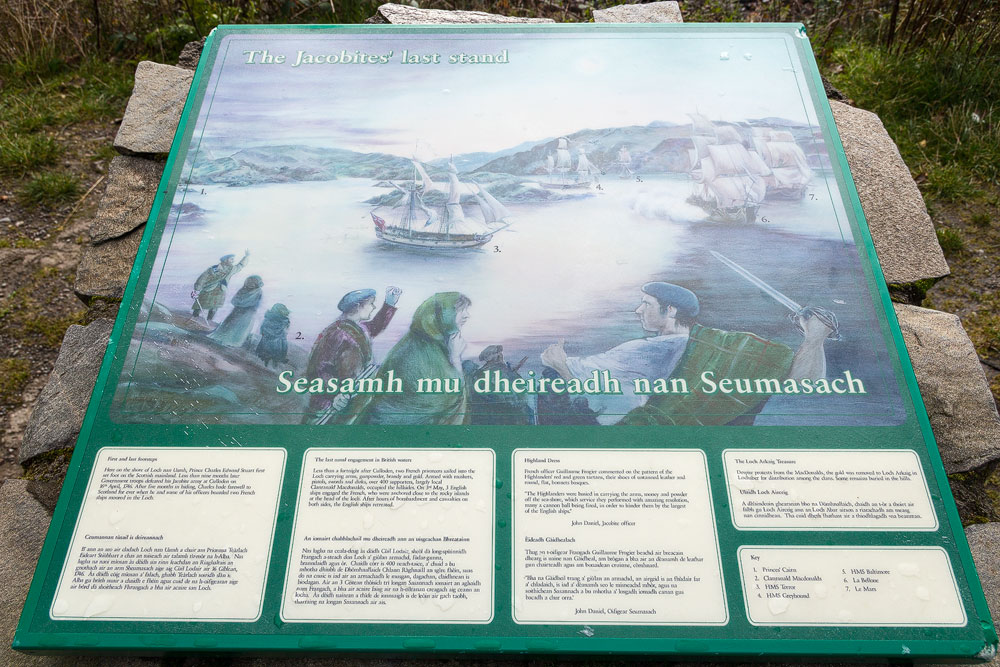
About two weeks after the defeat at Culloden, the two French ships Le Mars and La Bellone had sailed into the bay. Loch nan Uamh stretches into the territory of Clanranald, one of the most loyal and important Jacobite clans. The two frigates had come from the north, sweeping in a wide arc around the English fleet, and were now anchored in the sea loch.
The ships weren’t sailing under French colours, though – officially, France was staying out of this conflict. La Bellone and Le Mars had been sent by Anthony Walsh, a wealthy Irish patron of Charles Edward Stewart. On board were weapons, provisions, and a treasure in gold, meant to bolster the war chest of the Jacobites. If necessary, the ships were also meant to carry the defeated prince out of Scotland.
By now the prince had indeed been defeated – the trouble was, he wasn’t there. He had missed his chance of rescue by only a few days, and at the time was out on the Outer Hebrides, in the middle of his long escape. Still, other high-ranking Jacobites were able to board at Loch nan Uamh – Lord Elcho, for instance, who belonged to the prince’s council of advisers, or the Duke of Perth, badly wounded at the Battle of Culloden.
Within a few hours, the French were no longer alone: the Greyhound, the Baltimore and the Terror attacked with fierce determination. Le Mars had to absorb a devastating broadside that cost countless sailors their lives. La Bellone returned fire successfully and managed to hold the English at bay.
While the ships fought their bitter battle, Clanranald’s warriors gathered on the surrounding hills and tried to carry the gold treasure to safety. This didn’t go unnoticed, and the British ships now opened fire on the clansmen on land as well – who nonetheless carried on with their task in disciplined fashion.
In the end, the two French frigates managed to escape, having at least partly fulfilled their mission: they had helped many Jacobites make their escape and had lent a further hand in the form of gold.
That gold was then carried on to Loch Arkaig and placed in the hands of senior clan members for safekeeping. But over time, all trace of the gold was lost, and although many have tried to track it down, to this day it remains unclear what became of it.
The gun smoke of the sea battle has long since cleared; today, only a memorial plaque recalls what happened here. Its heading reads: “The Last Stand of the Jacobites”.
Good to know: the loch, the gold, the escape
Loch nan Uamh is pronounced roughly “loch nan oo-av” – in Scottish Gaelic, “mh” is a “v” sound, as is “bh”. The name means roughly “loch of the cave”.
Loch nan Uamh could be described as the most important Jacobite harbour of all. It’s where Bonnie Prince Charlie first set foot on the British mainland, and where he later left it too, once the French ship L’Heureux finally came to collect him.
One key figure pulling the strings behind the rising was Anthony Walsh, an Irishman living in exile in France. His family had made a great deal of money in the slave trade and was on friendly terms with the Stewarts. Walsh saw to it that Charles Edward reached Scotland, and later that he could escape from there too – it was he who commissioned the two ships at Loch nan Uamh.
The gold of Loch Arkaig would go on to cause a great deal of strife among the Jacobites. Charles repeatedly tried to get it back, even sending his secretary, Archibald Cameron of Lochiel, back to Scotland to find it. Lochiel was promptly captured, and in 1753 became the last Jacobite to be executed.
Tip: stop at the memorial plaque
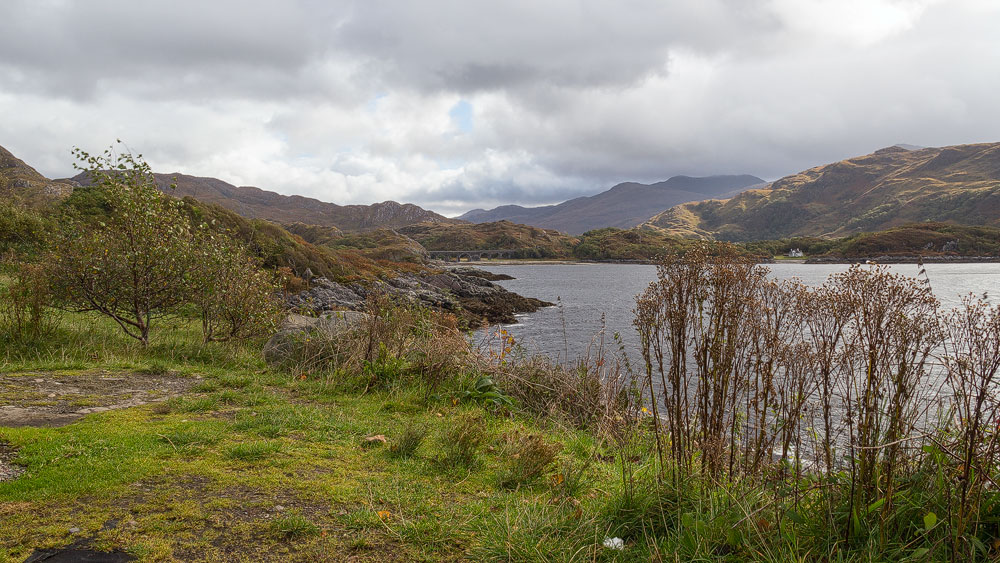
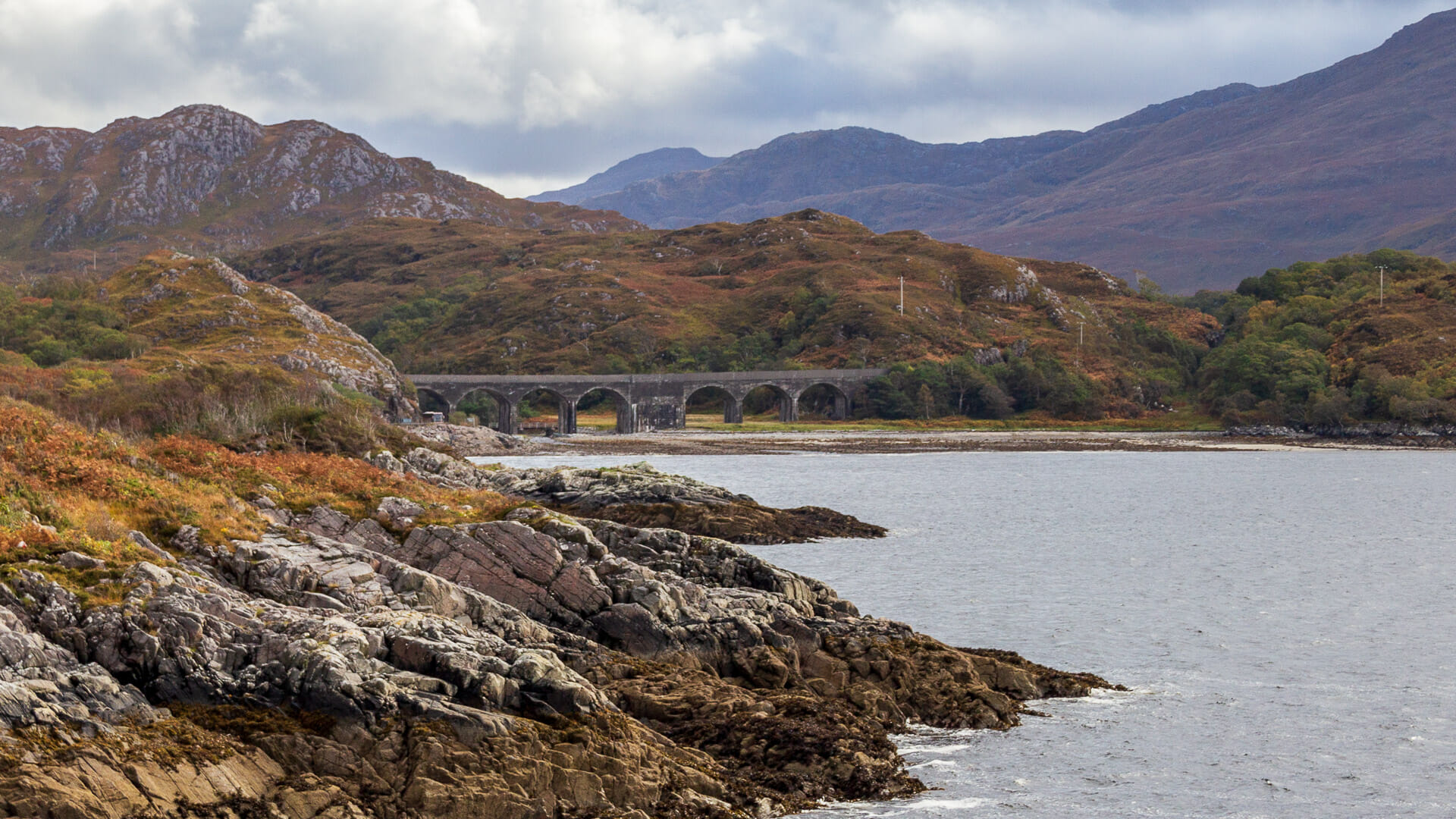
Not only is the explanatory plaque located here, but this spot also offers a genuinely good view of the loch. To the left, you can see the Borrodale Viaduct, which the Jacobite Steam Train also crosses. To the right, the view takes in small islands and a mountain range.
Personal note: historic, but not exactly beautiful
Compared to, say, Loch Shiel at Glenfinnan, the view here is admittedly not very spectacular. But for anyone interested in the Jacobite rising, a brief stop here is well worth it – after all, there are few places Prince Charles Edward Stewart visited more often.
Getting there:
With sat nav: “PH38 4NA” will take you directly to Loch nan Uamh.
Without sat nav: the loch lies right on the “Road to the Isles”, the road from Fort William to Mallaig, running parallel to the Jacobite Steam Train line. It sits between the settlements of Lochailort and Beasdale. There’s good parking right by the memorial plaque.