Highlands and clans – in Scottish history, the two are inseparable. But why do these particular family groups exist at all? How did they come about?
Family is everything! Where someone comes from, which deeds their ancestors can boast of, or which land they are settled on – family is everything, it defines a person and vouches for the individual.
This idea of family was a given in Dalriada, the first great kingdom of the Gaels. Around 600 AD, Dalriada spanned the channel between the southwestern part of what is now Scotland and the tip of Northern Ireland.
It was here, and at this time, that the seeds for the later clans of the Highlands were already being sown.
The precursors of the clans
Among the Gaels, there were various tiers of family. The “Derbhfine”, the “certain family” (dearbh fine – pronounced roughly “djerev finna”), for example, had to answer for its members. That meant that, in the event of a wrongdoing, it also had to bear the reparations. The Derbhfine was defined by kinship spanning four generations, going back to the great-grandfather. The leaders of this kin group were jointly chosen by a council.
The land belonged to everyone within the Derbhfine, and each member had the right to an equal share of it. Dalriada – even the name points to this practice. “Dail” means “share” or “portion”, and Riata is a proper name.
There was also a broader grouping of these families, the Cenél, meaning roughly group, race or tribe. This also defined a piece of land occupied by that group. The modern Scottish district of Cowal, for example, takes its name from “Cenél Comgaill”.
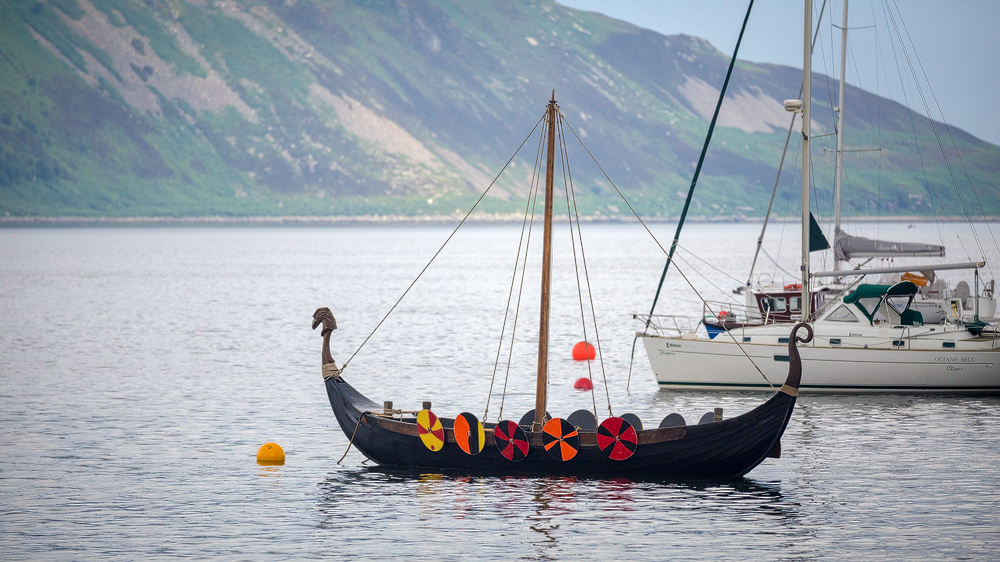
Derbhfine and Cenél were both precursors, but before the first true clans formed, a storm had to gather first: the Vikings and Norsemen arrived and fundamentally changed the landscape of Europe. Dalriada ceased to exist.
Its culture, however, did not.
The clans emerge – the first millennium AD
What’s remarkable: although Dalriada disappeared, Gaelic culture won out over the Norsemen and the neighbouring Picts. And while kingdoms arose across the rest of Europe in which the land belonged to the king, who granted it to his subjects in exchange for service or dues (feudalism), the Gaelic family tradition of shared ownership endured. Even the former Norsemen, by now long-settled families themselves, took this way of life to heart – the idea of the clan was, after all, hardly foreign to them.
While the western territories of old Dalriada, including islands such as Skye, Mull or the Outer Hebrides, were paralysed by power struggles between Norse ruling families, the kingdom of Alba established itself in the east, which would later become the Kingdom of Scotland – at first it too was Gaelic-speaking, though over time English gained ground there instead. This side note is important in connection with the differences that would soon arise between the Highlands and the Lowlands. Yet the Scottish crown was also rather weak and could only enforce control over its territories inadequately.
The population needed security and justice, and this is where the clans stepped in as administrative units and protective communities. Bound by shared ancestry, shared land, and, in the event of war, ready to fight together, the family groups grew stronger in the inaccessible glens of Scotland.
Kings of the Isles – the turn of the millennium
Ri Innse Gall – the King of the Isles – was the title taken by Somerled. He was the one who, for a brief time, forged a kingdom that would only truly flourish some centuries later. Somerled wrested control of the former Dalriada from the Norsemen and also took on the Scottish crown. For a short time, he ruled over the west coast of Scotland and the islands. When he died on the battlefield, his kingdom initially fell apart again, but he left descendants who would become the forefathers of famous clans. There was his son Dugall, whose descendants are Clan Dugall. A grandson of Somerled was Ruaidhri, whose descendants became the MacRuaris.
And then there was Domhnall. He founded the most powerful clan of the centuries to come: the MacDonalds. Together with other western clans, they would later make up the Lords of the Isles, the rulers of the islands, under whom Gaelic language and culture experienced a flowering.
New clans from France
In 1066, the Normans from France overran England and forced its population under their rule. The entire nobility was replaced by knights from Normandy. With them, the nobles brought the system of feudal lordship: all land now belonged to the king, who distributed it, and vassals owed him dues. There was something else new too: among the Normans, the ruler’s eldest son inherited everything.
Scotland remained largely untouched by this, until David I ascended the throne in Edinburgh in 1124. David had been raised at the English court, and when he finally took power in Scotland – which at that time mainly covered the eastern part of the modern country – he brought Norman knights and customs to his court.
This had an effect on the clans. They adopted parts of feudalism and merged them with their Gaelic heritage. From then on, the clan chief’s eldest son inherited his father’s authority, the clan’s land now belonged to the head of the family and was granted to followers in exchange for rent. Yet the idea of shared ancestry and the sense of family belonging remained. A clan chief treated his subordinates almost as friends.
The French nobles who followed David to his court settled in central Scotland. Their names were, for example, Myneris, St Clare, le Grant and de Bruis. After a few decades, they were known as Menzies, Sinclair, Grant and Bruce. And then there was Walter FitzAlan, who became King David’s steward. In due course, as the clan and House of Stewart, his descendants would themselves become Scottish, and later British, kings, before their last prince led the Highland families into the fatal Battle of Culloden.
However: unlike the Highlands, the families of the Lowlands did not live the clan system, they were more feudal landlords. Clans, then, are a Highland institution, even though many Lowland clans today embrace a similar romanticism to that of the Highlanders.
The turning point around 1500 AD
When the Scottish crown was weak, the clans held great power. In the west of Scotland, the Gaelic families even ran their own kingdom from Finlaggan on Islay. Although the Lords of the Isles were officially subject to the Scottish crown, in practice they ran a wholly independent regime and preserved their Gaelic way of life.
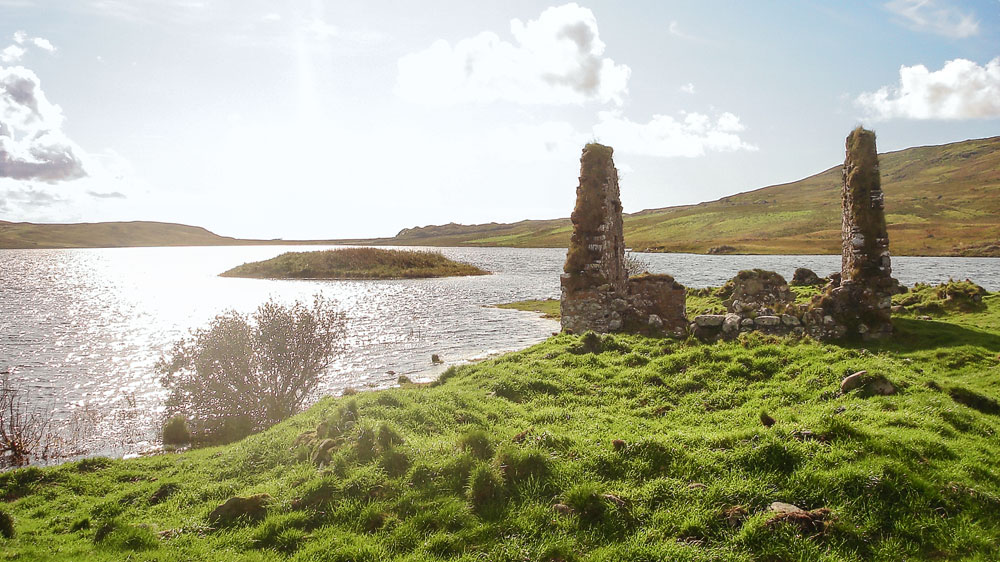
Until they pushed things too far: John II, fourth Lord of the Isles, had allied himself with the English against King James IV of Scotland. But by then the king was strong enough to prevail, and in 1493 he dissolved the Lordship of the Isles. Not without resistance! For around fifty more years, the MacDonalds, MacLeods, MacLeans and MacNeills tried together to forcibly restore the island kingdom. By 1545, they had 8,000 men and 180 galleys under arms. Even England stood by their side.
But the last heir to the title “Lord of the Isles”, Donald Dubh, suddenly died of illness. Without their common lord, the forces scattered once more into the corners of the Highlands.
The rise of the clans in the 16th century
When the Lordship of the Isles collapsed, a power vacuum emerged, since the Scottish king still wasn’t strong enough to enforce his authority in the Highlands. The clan chiefs took on these tasks. The core of a clan was related by blood, though this was much less likely to be true of its wider following – even if its members claimed otherwise.
Before long, the once-allied families began waging war on one another. A dark era began, known as “Linn nan Creach”, the “Age of Raids”, in which clans took each other’s land, livestock, or lives.
The feud between the once-allied MacLeods and MacDonalds bore particularly bloody fruit. The MacLeods even wiped out the entire population of the small island of Eigg by suffocating them with smoke in a cave. Not a very edifying time.
The slow decline of the clans in the 17th & 18th centuries
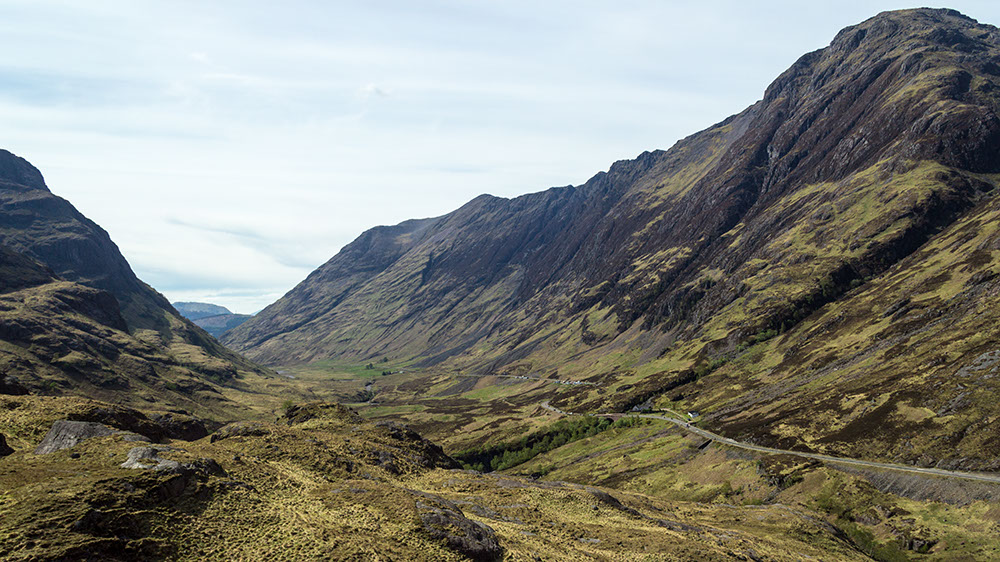
Nevertheless, the western clans were still united by their Gaelic culture, which they had to defend against outside pressure – pressure such as that built up by the Lowlands, or at times by the English under Oliver Cromwell. Then there were the arch-enemies of the western clans: the Campbells. If you were looking for the chief villains among the clans, they’d be the first candidates. Always hungry for power, usually unscrupulous, and always on the side of the government, they expanded their territory and influence at the expense of others. They were only too happy to take part whenever there was a chance to attack the MacDonalds – the massacre at Glen Coe, for instance, was commanded by a Campbell.
The culture that had reached its high point under the Lords of the Isles was by no means completely gone. It had diminished, but the clan chiefs, their noblemen and noblewomen, were far from uneducated. The Aos-dàna, meaning “the gifted” – bards, historians or physicians – trained and educated the higher-ranking members of the clans. The uneducated, barbaric Highlander is an invention of later victors and detractors.
Even so, the decline of the Gaelic clan system could barely be stopped any longer; the cultural pressure from other powers had grown too great.
The last uprising
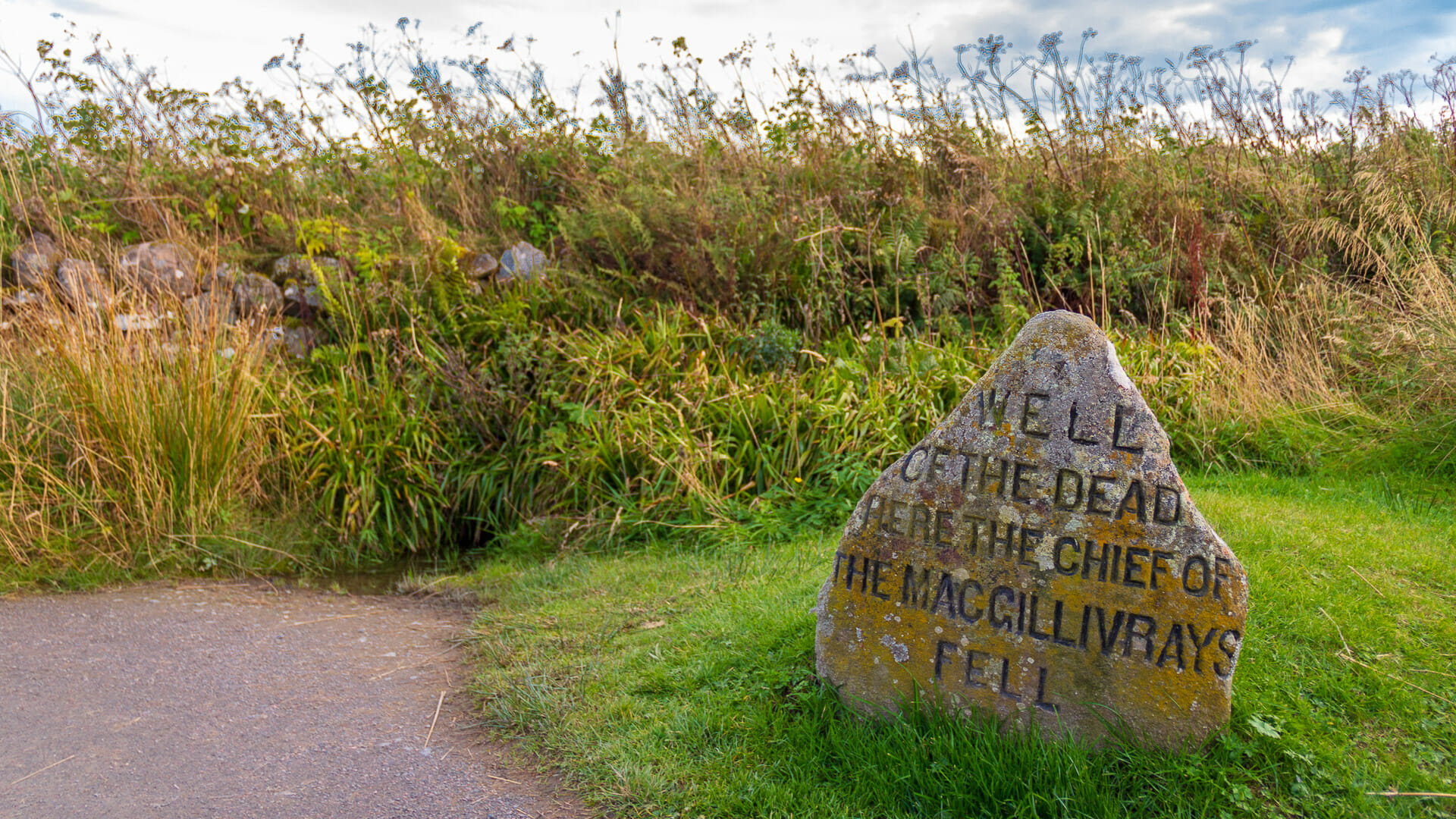
Then came one last bearer of hope: Charles Edward Stewart – “Bonnie Prince Charlie“. The prince, who was living in exile in France, wanted to reclaim the British crown that had been forcibly taken from his grandfather. Under his standard, the western clans united one last time in the Jacobite Rising. What is often misunderstood: they didn’t fight out of romantic loyalty to the prince’s house, but to preserve their culture and their power. They had concrete self-interests at stake. If the Stewarts were to rule again, their own power would grow too.
The end came at Culloden, and it was bloody.
The fading of the clan structure
Culloden was only one battle, and contrary to popular belief, the clan system was not immediately finished because of it. Many MacDonalds or MacLeods, for instance, continued to hold on to their lands afterwards too, and laws cannot instantly uproot a way of life rooted over centuries.
What finally plunged the clans into ruin was the financial situation of the chiefs and the economic upheaval of the time. Many high-ranking clan members had become deeply indebted. Simple rental income from their tenants was no longer enough to sustain them economically. Either they had to sell their lands, or make them more profitable – for example, through large-scale sheep farming.
But where sheep grazed, there was no longer room for people. Tenants were driven from the fertile land into the towns, to the coasts, or straight overseas. The old pact between a clan chief and his subordinate tenants no longer held.
For the clans, though, family had been everything. Once that no longer counted for anything, the clan itself was worth nothing any more.
The romantic renaissance of the 19th century
But wait: don’t we still encounter clans today? Even all over the world? The families owe their rebirth to a writer named Walter Scott. In his tales and poems, he conjured up the wild but tragic Highlander. When, in 1822, even the British King George IV finally appeared in Scotland dressed in a kilt, the romantic image of the clans was born – one that persists to this day, and which even Lowland families embraced, families that, in the centuries before, would never have used the word “clan” for themselves.
And what of the Gaelic culture that mattered so much to the western families, the legacy of Dalriada and the Lords of the Isles? There are many singers, writers and even politicians trying to preserve the language, songs and art of the Gaels. Whether they succeed, only the future will tell.
Sources:
- History of Scotland, 1st to 9th centuries, Mag. Sophie Unterweger, University of Vienna
- Brehon Laws, a legal handbook, Laurence Ginnell
- The origin of the Clans, Thor Ewing
- The Clan Ranald: history of a highland kindred, Stewart, J A.
- Scotland’s Highland Clans, History Scotland Essays
