Clann is the Gaelic word for children. And that’s exactly how the members of a clan saw themselves: as the descendants of a common ancestor. But that alone wasn’t what made a Scottish clan. It had a way of life all of its own.
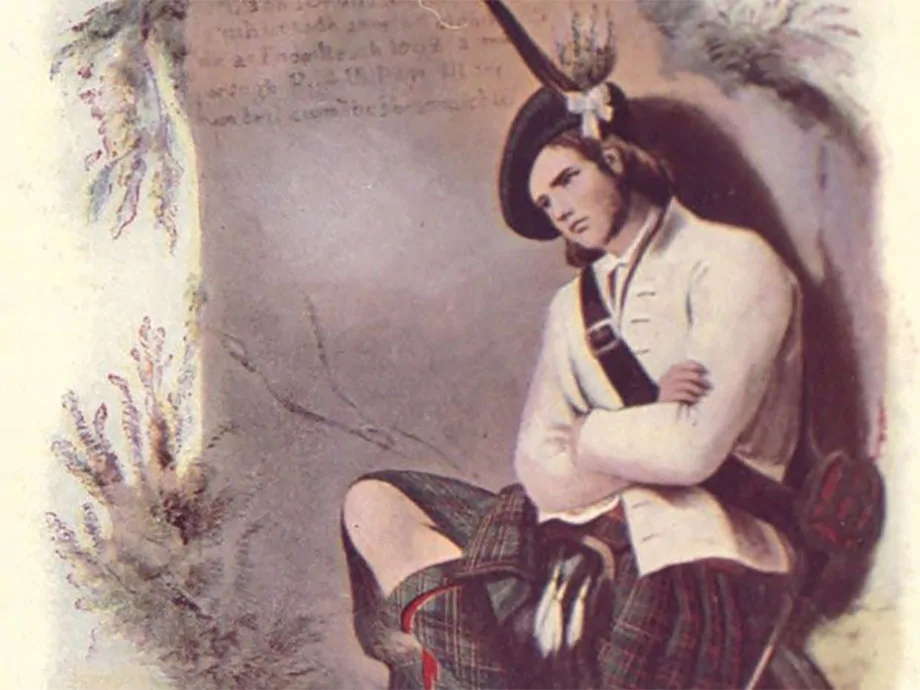
A clan was a complex structure in which its members took on different roles – and did so with a strong sense of community and mutual responsibility, something that was unusual elsewhere in Britain and Europe at the time.
This system was still partly based on the old Gaelic structures of Dalriada; on the other hand, the clan had also developed into a system of its own, blending in feudal elements that had crept in over the course of clan history. So how exactly were roles distributed within a clan, and what tasks fell to whom?
Dùthchas: the clan’s shared inheritance
Not all members of a clan were actually related to one another, even though the name “Clann”, meaning “children”, might suggest otherwise. What did convey a sense of community beyond that, however, was Dùthchas.
“Dùthchas” can perhaps be translated as “heritage”, though that feels a little imprecise. It describes the feeling that the mountains, glens, fields and rivers were the shared property of the clan. Opposed to this, however, was “Oighreachd” – which, curiously, can likewise be translated as “heritage”, but equally as “property” or “estate”. It refers to the right to land granted by the Scottish king, which in turn rested with the chief, who in this sense was something like a great landowner.
Ceann cinnidh: the clan chief
At the very top stood the Ceann cinnidh, pronounced roughly “kyaun kinny”, meaning “head of the kin”. In English, by contrast, he’s simply called “chief”.

His task was to ensure the protection of the whole clan, to conduct politics on its behalf, and to ensure that its culture flourished. He was also, in a sense, the clan’s figurehead. If he was a good military leader, good-looking, well-spoken, and had a beautiful wife on top of that, that lustre reflected on the whole kin group. The relationship between the chief and his followers was by no means the same as that found in a feudal system, in which the subject had to obey unconditionally.
As a military leader, the chief had to be able to rely on his “children” being willing to die for him in battle. It was also the clan’s view that the chief only administered and protected the land on behalf of the clan (dúthchas). If he failed to do this well, a new leader could even take his place. This rarely happened, but there are some famous examples of clan members exercising this privilege.
So the Ceann cinnidh had every reason to keep his followers content, and cultivated a friendly relationship with them. Outside English visitors, for instance, were horrified to notice that the chief would even shake hands with the “dirtiest farmer” – unthinkable in the Lowlands or in England at the time.
And even when it came to legal judgments handed down at the chief’s court, most of his “children” got off fairly lightly – after all, he knew them, and most acted out of necessity. The chief himself administered the whole territory, but didn’t farm it himself; instead, he received dues from his subordinates in order to live, since he mainly had to attend to administrative duties. He usually lived in a castle or a large residence.
Daoine uaisle: the tacksmen of the clan

The people of the clan were scattered across the broad expanse of clan land, so the Ceann cinnidh couldn’t ensure its administration alone. For this purpose, he surrounded himself with noblemen, known in Gaelic as “daoine uaisle” (pronounced roughly “dühnye uashle”) – often direct relatives of the chief, such as younger brothers. The task of the daoine uaisle was to regulate land distribution in times of peace, ensure justice, and collect dues.
An individual “duine uasal” also went by the name “fear-taic”, meaning “man of support”, which later entered English as “tacksman”. The tacksmen were granted land in tenancy by the chief, which they in turn sub-let to the ordinary population of the clan’s territory. In times of war, it fell to the daoine uaisle to raise troops from the land and lead them into battle as officers, obeying the chief’s overall command.
Aois-dàna: bards and scholars of the clans
One of the enduring myths that the opponents of the Highland clans unfortunately succeeded in spreading is that Highlanders were, one and all, “wild barbarians”. This character assassination began as far back as the Romans and continued right through to the British government around the time of Culloden.
What lay behind this was probably a mix of malice, ignorance and intolerance. People simply couldn’t imagine that culture and knowledge existed outside the centres of the Lowlands. This went so far that the famous Flora MacDonald, a tacksman’s daughter who was considered highly educated, was assumed to have been schooled in Edinburgh – even though, by her own account, she had never left Benbecula until the age of twenty.

Nor does it explain the skill of the stonemasons, whose work can still be admired today, for instance in the great crosses.
The Lowlanders and the English had simply overlooked something: the Highlands and islands had themselves once been a kingdom in which culture and knowledge flourished – namely under the Lords of the Isles, who were anything but “barbaric and uneducated”. A whole class of learned people existed. The “aois-dàna” (pronounced roughly “üsh dahna”), the “gifted people”, included healers, physicians, historians and genealogists, the latter most often in the form of bards. They also assisted the chief with administration.
Whole families specialised in these roles: the Beatons, for example, as physicians; the MacMhuirichs as bards and chroniclers. One MacMhuirich, Alasdair MacMhaighstir Alasdair, was even the language tutor of Bonnie Prince Charlie, since the young monarch couldn’t speak Gaelic when he landed in the Scottish Highlands. So education certainly existed within the clans – and at least among the upper ranks, it was also accessible.
Clachans: the lives of clan members in small villages
And then, finally, there were the ordinary people of the clan. They lived scattered across the land in small settlements or hamlets known as clachans. These usually consisted of no more than a handful of long, thatched stone houses, what we know today as a taigh-dubh, or blackhouse.
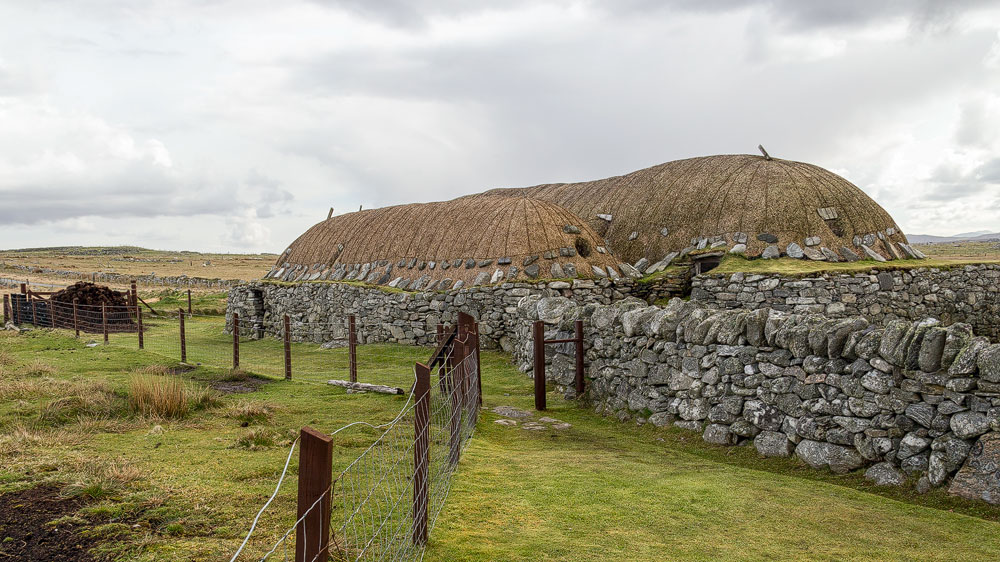
The blackhouses had no chimney; smoke from the hearth fire at the centre of the house escaped through the thatched roof. This too was considered a sign of great primitiveness – though the people making that observation were usually gentlemen of standing, who certainly hadn’t visited working-class housing in their own cities. For the Highlanders, the blackhouse was, in fact, a spacious, practical and cosy home. Between these settlements, the clan’s land was distributed by the tacksmen, as fairly as possible.
And fairness was also maintained among the inhabitants of the clachans themselves. Everyone, for example, was meant to receive roughly the same quality of farmland. The runrig system ensured this fair distribution. The land was divided into narrow strips, each of which was then assigned to a family. Each family received a few good rigs and a few poorer ones across different fields. After a set number of harvests, the rigs were then reassigned among the families.
The clan’s people couldn’t live off the land alone, however. That’s why they also kept livestock, usually cattle – though not today’s widespread long-horned Highland cattle, but smaller cows. Other livestock included sheep, which were also smaller back then, and chickens.
The animals lived inside the houses during winter. The advantage: they provided a certain amount of warmth for the house in the process. Most of the animals were housed at the front of the house, with the floor sloping gently towards the entrance so that urine could drain away. Naturally, the animals also grazed on pasture outside the clachan, separated from the farmland by a kind of bank or dyke. It was also common to have a summer pasture, to which the family would move during the warmer months, living there in so-called shielings – rudimentary huts made of stone.
Life for clan members was certainly hard; coaxing the necessary food from the land was only possible through laborious fertilising – for instance, using seaweed along the coasts and on the islands. On top of that, they repeatedly had to perform military service for the clan, which endangered not only the soldiers’ own lives, but also those of the women and children left behind unprotected. Yet in the end, the circle closed here: the family itself, together with the higher-ranking members and the Ceann cinnidh, ensured the security and continuity of the clan.