Few countries have as many stone circles as Scotland. An overview of the most beautiful ones, including their history, origins, and significance.
Information on stone circles:
» Significance
» Most Beautiful Stone Circles
Sometime during the Neolithic period, people in what is now Scotland began erecting massive stone circles. And today, visitors stand in awe before these monoliths—weighing several metric tons—that soar high into the sky.
Scotland’s stone circles are truly something special. And even though the most famous of its kind is likely located in England—namely Stonehenge—the idea behind these structures originally came from Scotland.
The stone circles spread particularly across the surrounding Scottish islands and are often still well-preserved today.
What is the significance of Scotland’s stone circles?
Unfortunately, there is no definitive answer to this question. While there is much evidence suggesting that the positions of the sun and moon could be tracked in specific ways and that the winter solstice was calculated using them, the surrounding structures are often too complex to be mere astronomical observation stations.
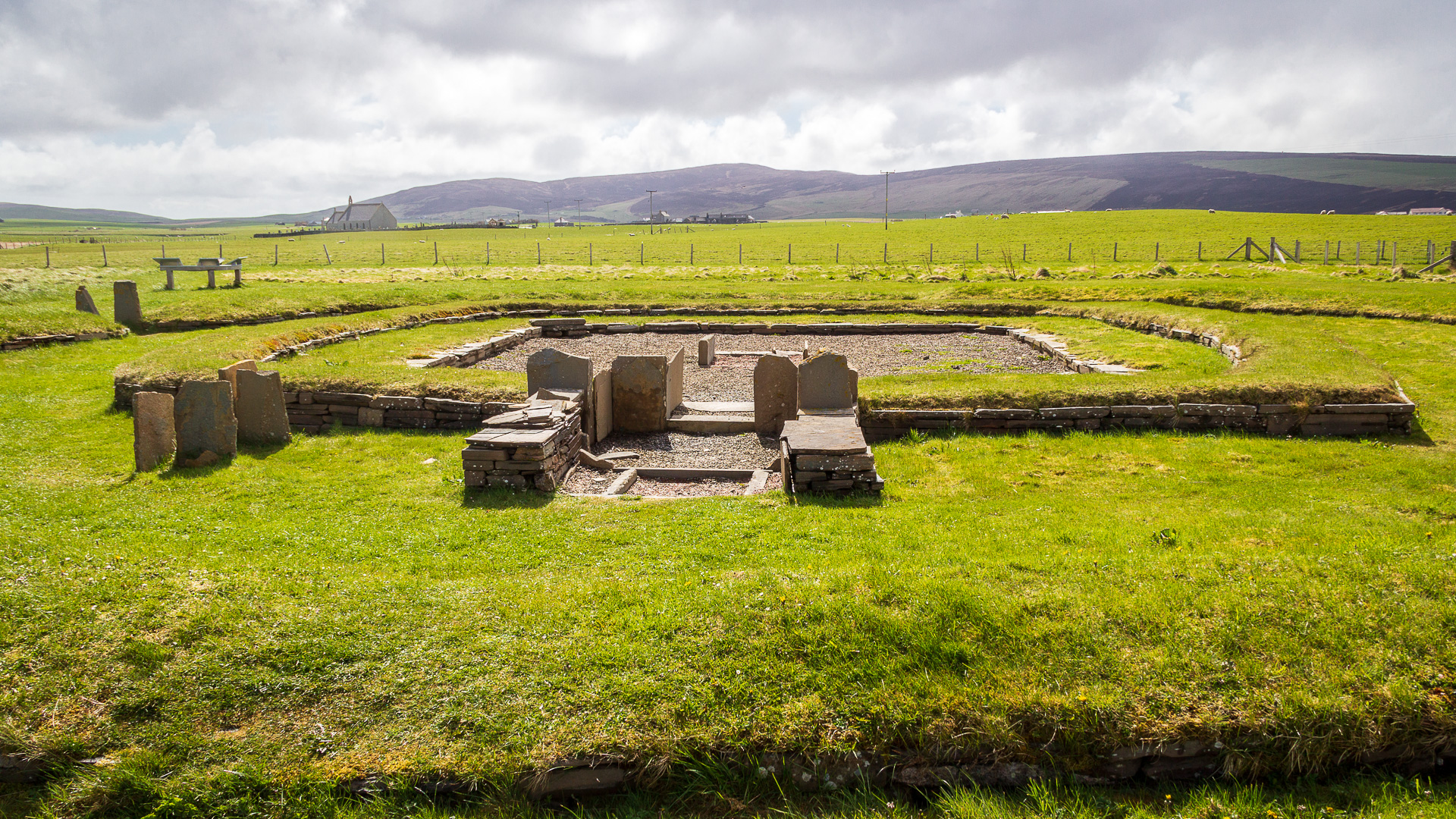
An important site for understanding stone circles in Scotland—and indeed throughout the United Kingdom—is located on the island of Mainland in Orkney, in northern Scotland. The so-called “Neolithic Heart of Orkney” is a World Heritage Site and, since the beginning of the second millennium, has been an archaeological site that continues to bring new wonders from the Neolithic era to light.
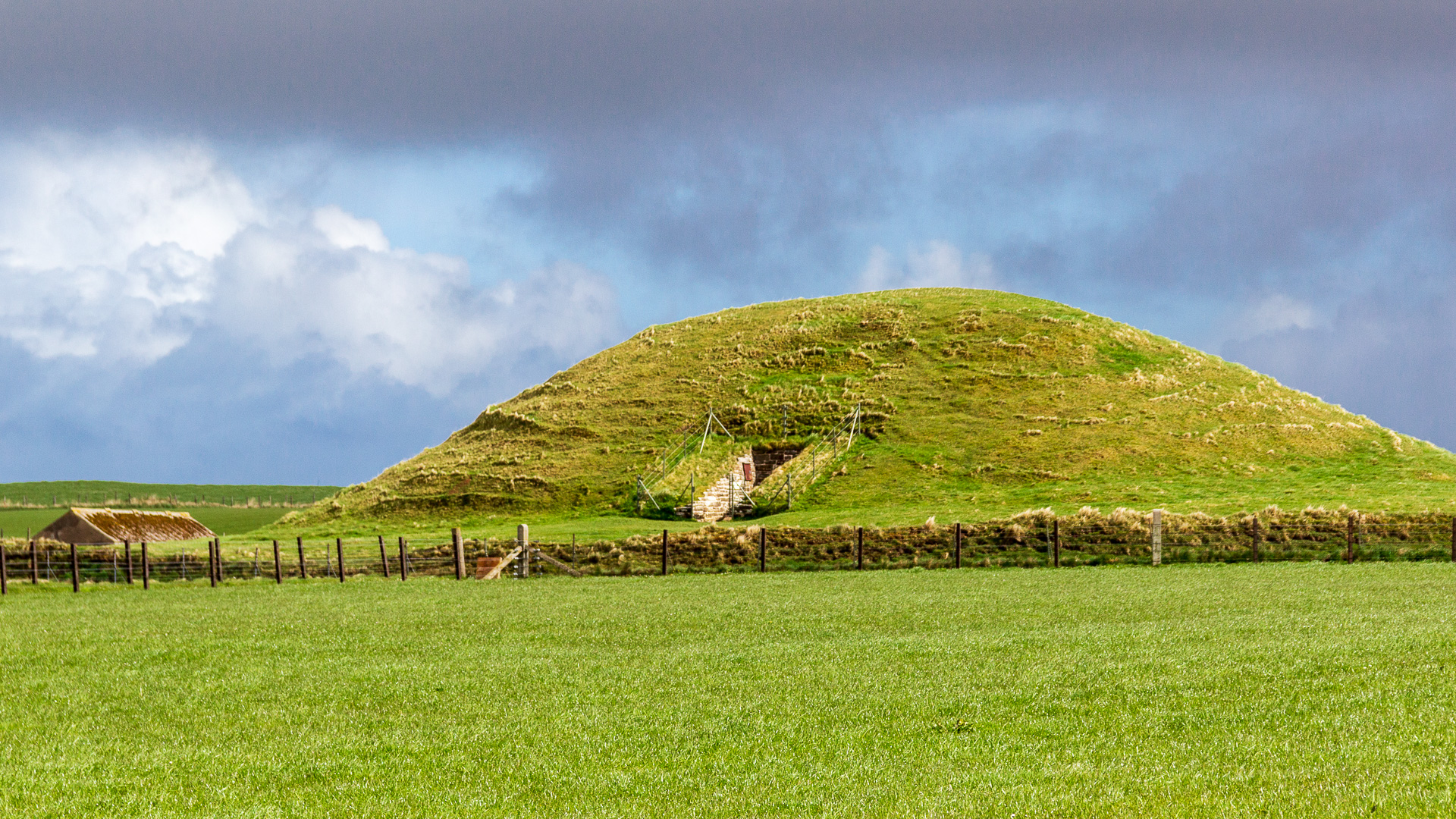
Some say that the cult of stone circles began here and spread as far as Stonehenge. Others, however, reject this interpretation and assign the Orkneys a special status. In other words: While the stone circles may have spread from here, many other wonders are entirely unique to this region—such as the Maes Howe tomb or the entire complex surrounding the Ness of Brodgar.
It is likely that some of the stone circle sites served a function in ancestor worship. At least, that is how excavation director Nick Card explains the two stone circles in the Orkneys:
“We have evidence of grand celebrations at the stones of Stenness—the land of the living—and the Brodgar Stone Circle was the land of the dead, where the spirits resided.”
Perhaps there were also different ideas behind the construction of the stone circles in Scotland. And it may also be that the journey was the destination. In other words: Building the stone circles was such a monumental task that Neolithic society used it to forge a new structure and identity for itself. After all, this was the era when agriculture became widespread, livestock farming emerged, and people settled into a sedentary lifestyle. And it was the era when the first metals—such as copper and, later, bronze—were worked, around 3000 B.C.
A major upheaval that gave rise to new hierarchies. The stone circles and other structures may have served as a catalyst in this process.
Where are the stone circles in Scotland?
There are an incredible number of stone circle ruins in the Highlands and in other parts of Scotland as well. The selection here is initially limited to well-known, noteworthy sites that are easily accessible. The map provides an overview, followed by individual photos and descriptions of the most noteworthy stone circles.
Ring of Brodgar, Orkney —the third-largest in Great Britain
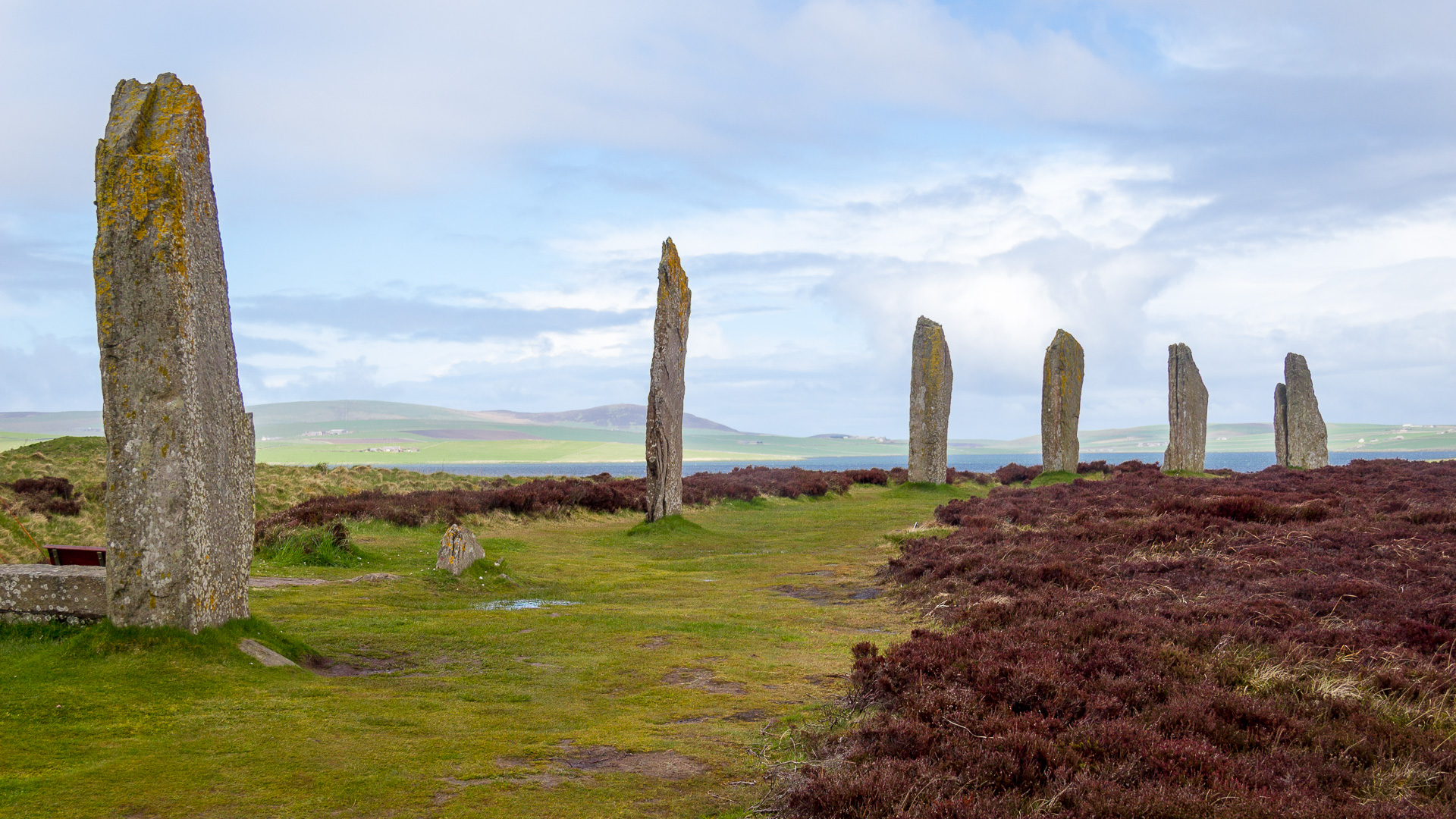
Certainly one of the most magnificent stone circles in all of Scotland, located in the Orkneys in northern Scotland. It once consisted of around 70 monoliths, up to 4.5 meters high, forming a circle 104 meters in diameter. Today, 27 of these stones remain standing. It is about 300 years younger than the neighboring Standing Stones of Stennes.
» Learn more about the Ring of Brodgar here.
Standing Stones of Stennes, Orkney —the ancient neighbor
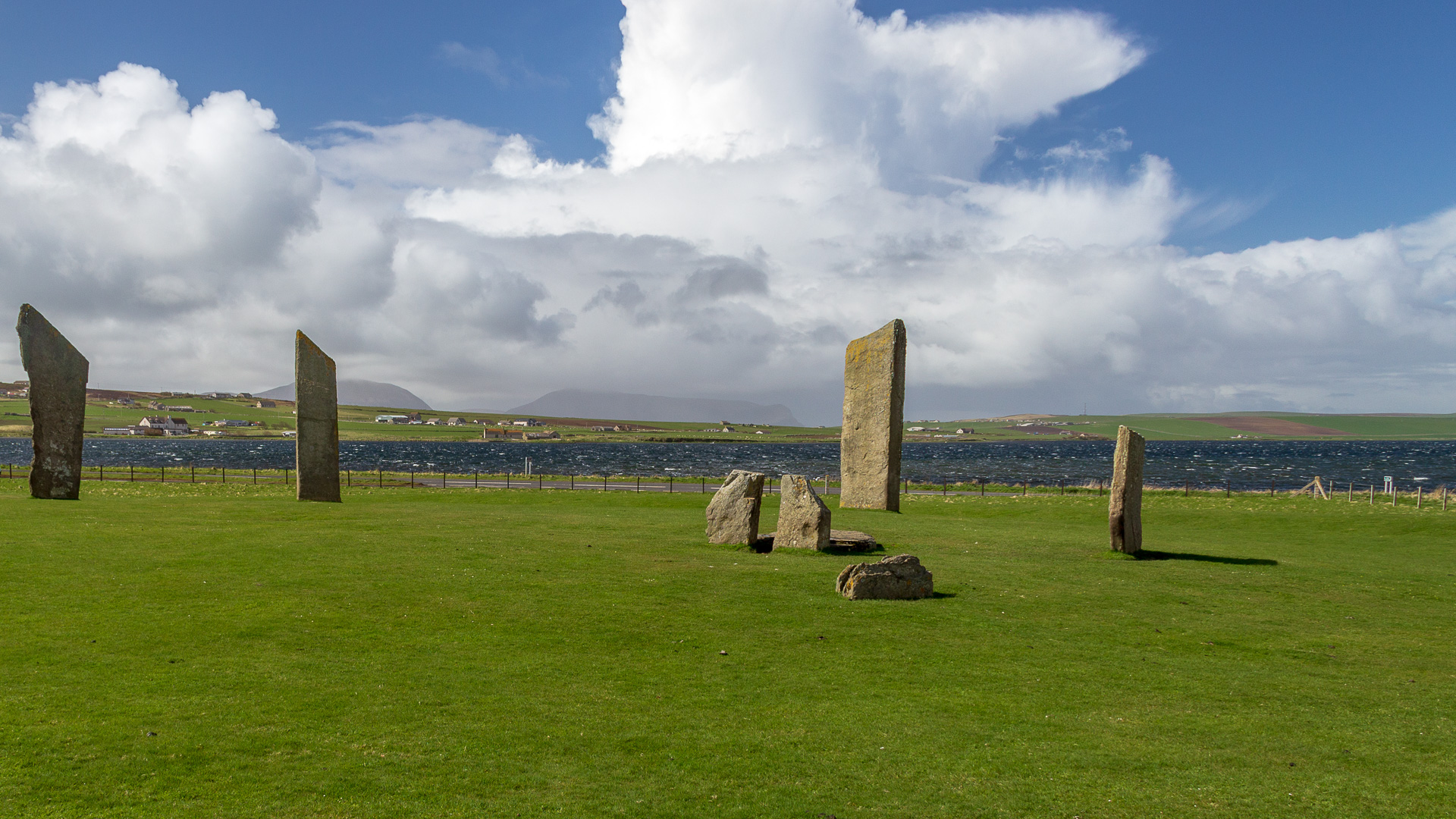
Stone giants ranging from three to six meters in height mark the site where a circle with a diameter of 44 meters once stood. The Standing Stones of Stenness were erected approximately 5,200 years ago on the Ness of Brodgar. They are located about 1,500 meters from their neighbor, the Ring of Brodgar.
» Learn more about the Standing Stones of Stenness here.
Calanais/Callanish, Lewis —the Mystical
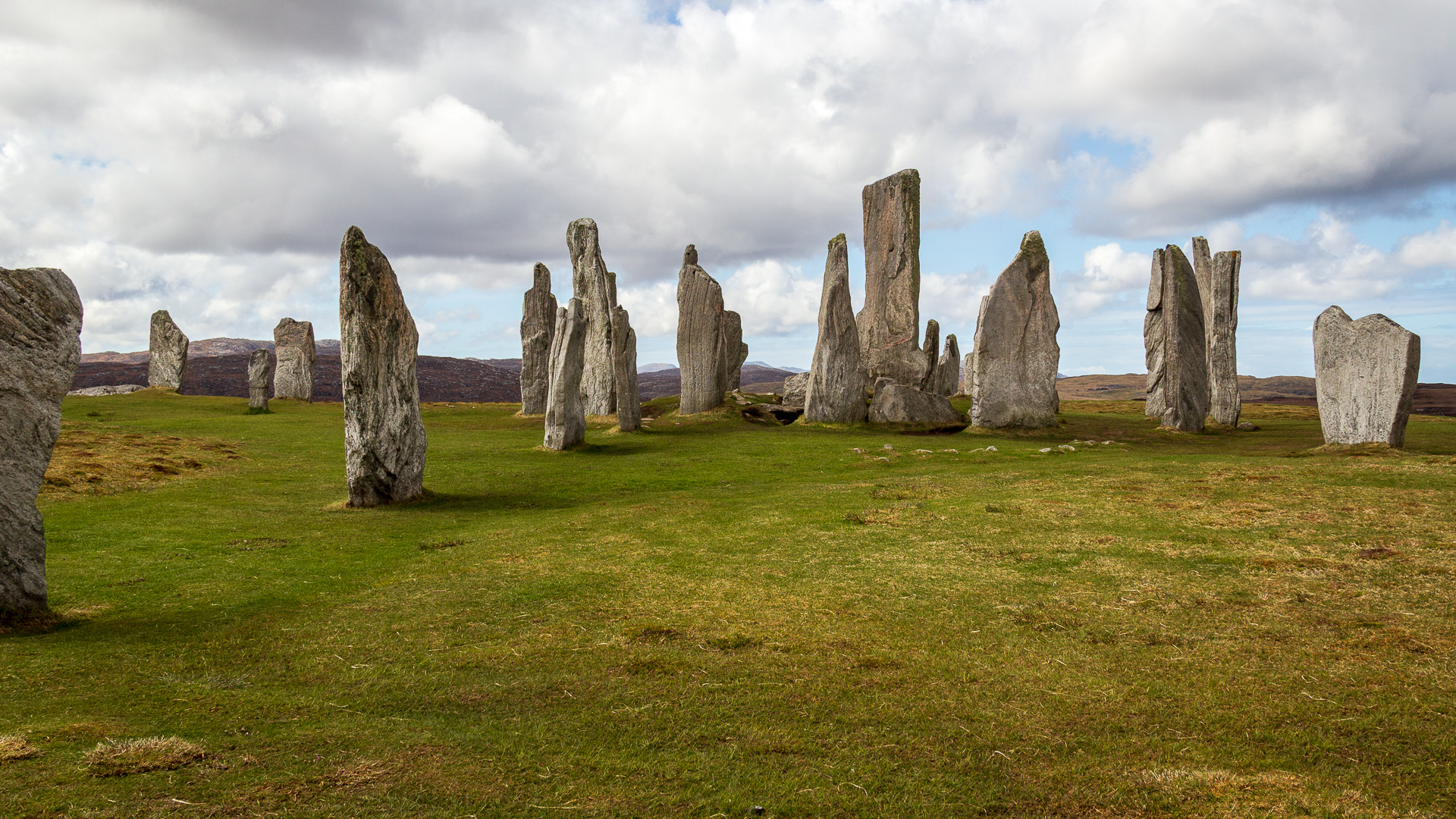
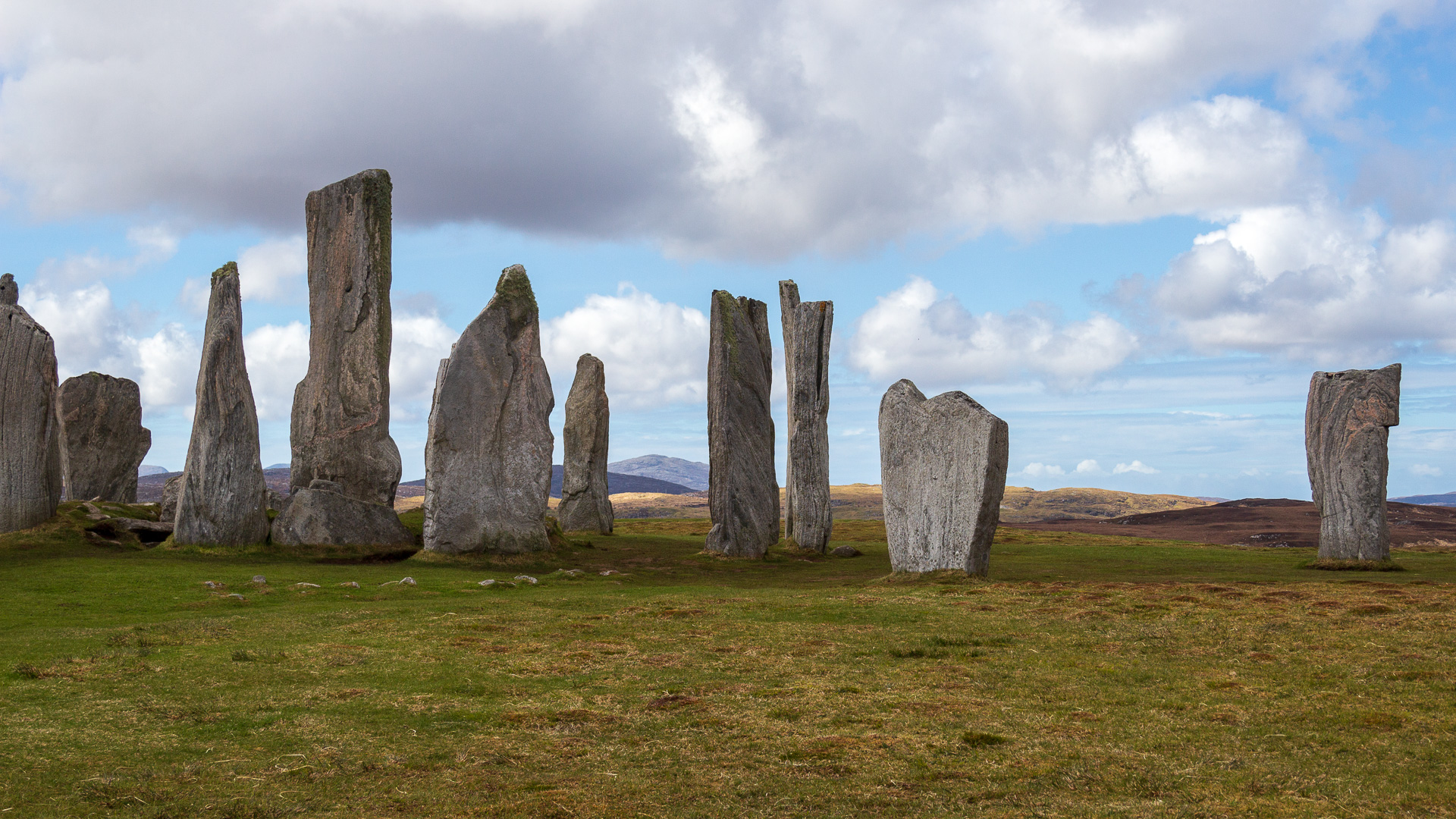
The stones of Calanais, or Callanish (English), look quite different from their counterparts in Orkney: less uniform, arranged in more complex structures, and somehow even more mystical. Anyone visiting the island of Lewis in the Outer Hebrides should definitely see the stone circles of Calanais.
» More information about Calanais here.
Mein Reiseführer Äußere Hebriden
Auf 264 Seiten beschreibe ich die Inseln Lewis, Harris, North und South Uist, Benbecula, Barra und Vatersay. Außerdem 7 Touren und 180 Fotos.
Mehr Info hier.
Clava Cairns, Highlands —the “Outlander” stones
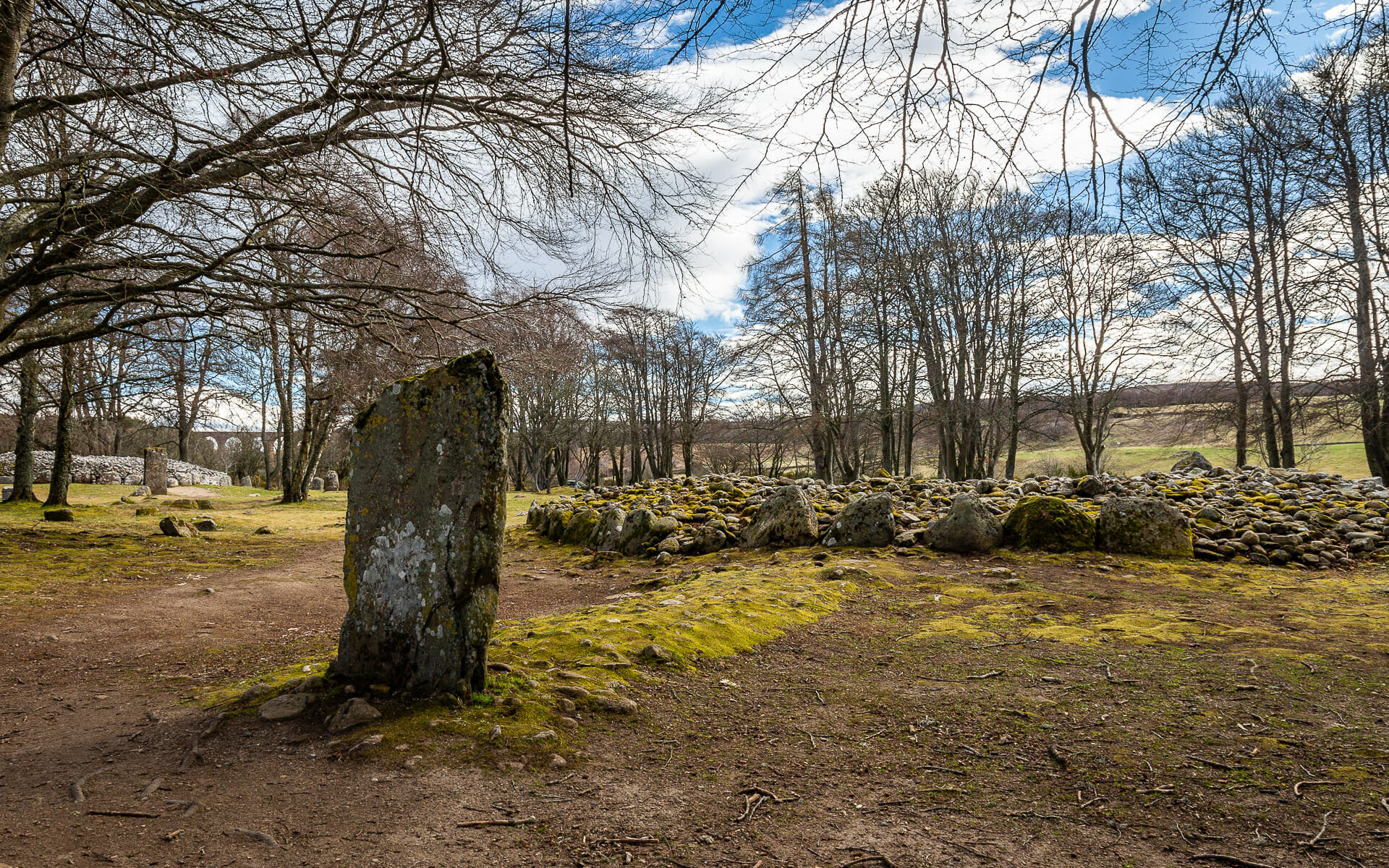
Near Inverness are cairns—cult and burial sites from the Neolithic and Bronze Ages. There are also several standing stones. Since the Clava Cairns near Inverness are located close to the battlefield of Culloden, many fans of the TV series *Outlander* make a pilgrimage to this site.
The famous Craigh na Dun stone circle, through which Claire traveled back in time, is, however, purely a film set. So fans can’t actually visit it. But since Craigh na Dun is supposed to be near Inverness, the Clava Cairns are certainly a good substitute.
» Learn more about the Clava Cairns here.
Craigh na Dun —the Filming Location
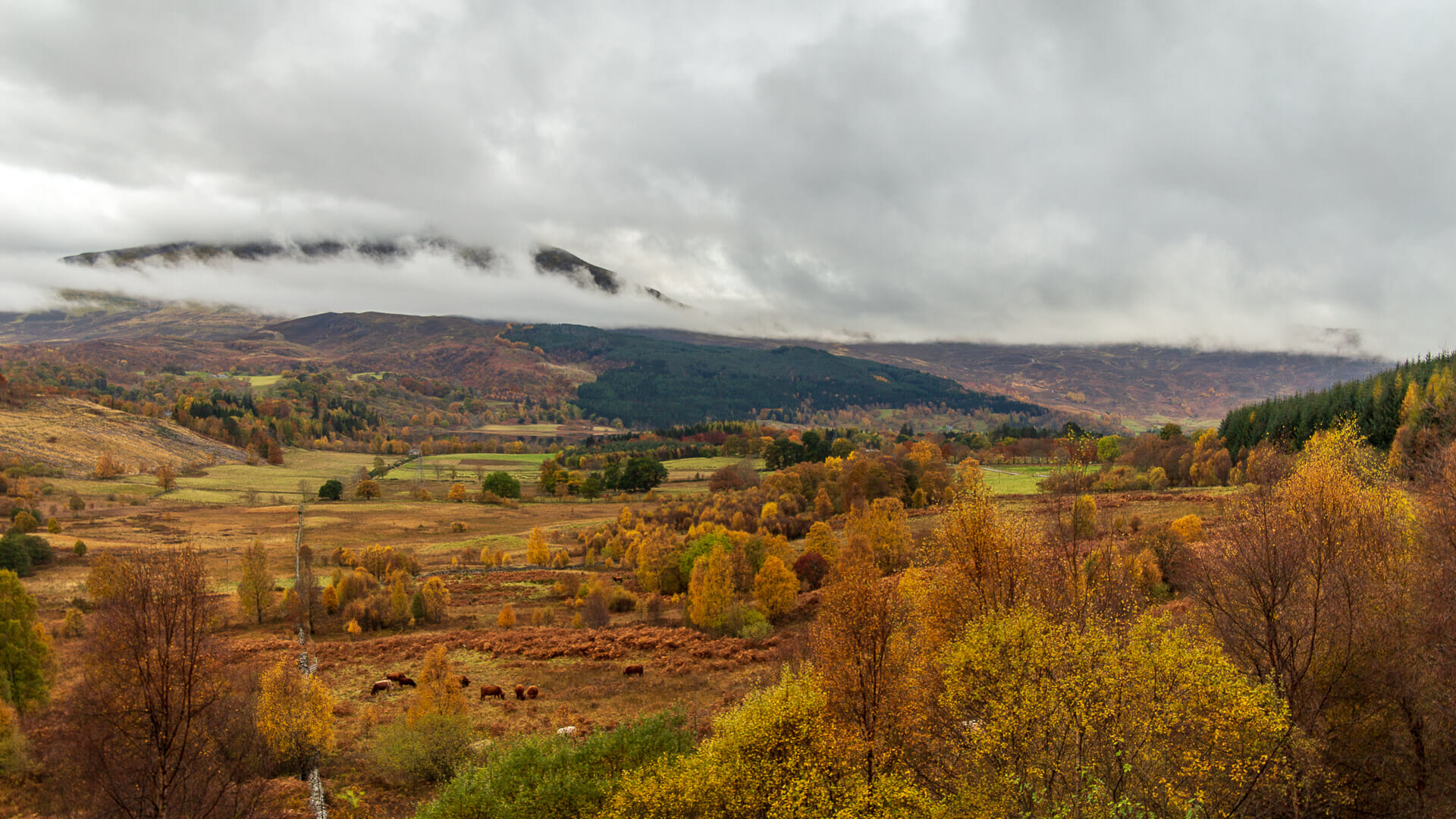
If you’re determined to see the filming location where the film crew arranged the stones of Craigh na Dun, you’ll need to head to the hills at the foothills of Schiehallion. Schiehallion is a magnificent mountain near Loch Rannoch and the village of Kinlochrannoch. To the east lies Loch Tummel with its famous Queens View lookout point; to the west is Rannoch Moor with Rannoch Station. On the overview map above, the Craigh na Dun filming location is marked in yellow.
Preisgekrönt: Der Reiseführer Isle of Skye
208 Seiten, 140 Fotos, 45 Sehenswürdigkeiten
Der Reiseführer für die Isle of Skye zeigt alle Sehenswürdigkeiten und verknüpft sie mit Geschichte und Sagen der Inseln. Außerdem: 4 Tagestouren mit Auto, Wanderungen, Tipps zur Anreise uvm.
Cullerlie —dating back to the Bronze Age
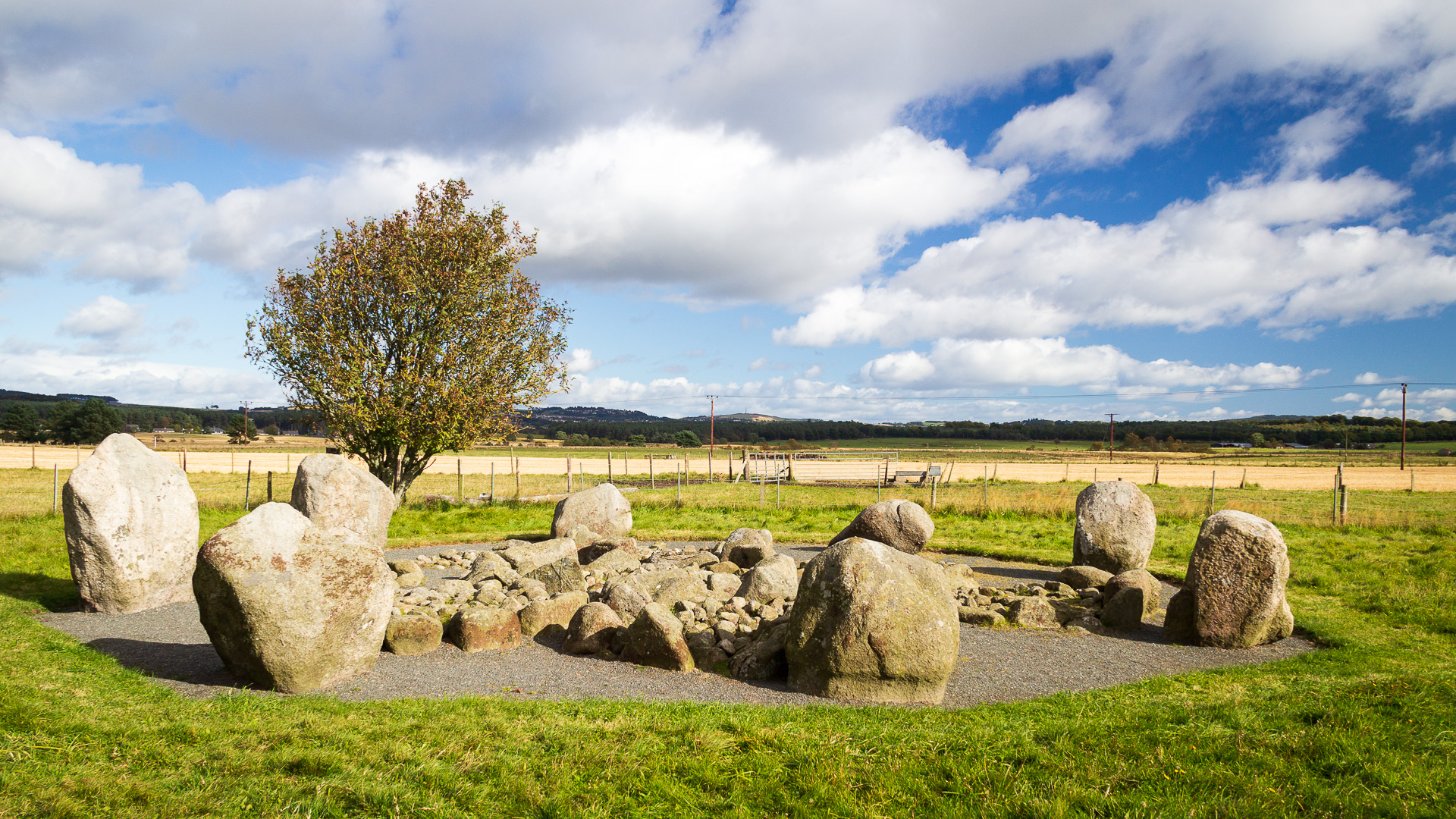
Near Aberdeen stand the eight stones that form the Cullerlie Stone Circle. They date back to around 1800 B.C.—that is, to the Bronze Age. Because of their location in a valley basin, they are considered unique.
» More information about Cullerlie here.
Ballymeanoch Standing Stones, Kilmartin —in a neat row
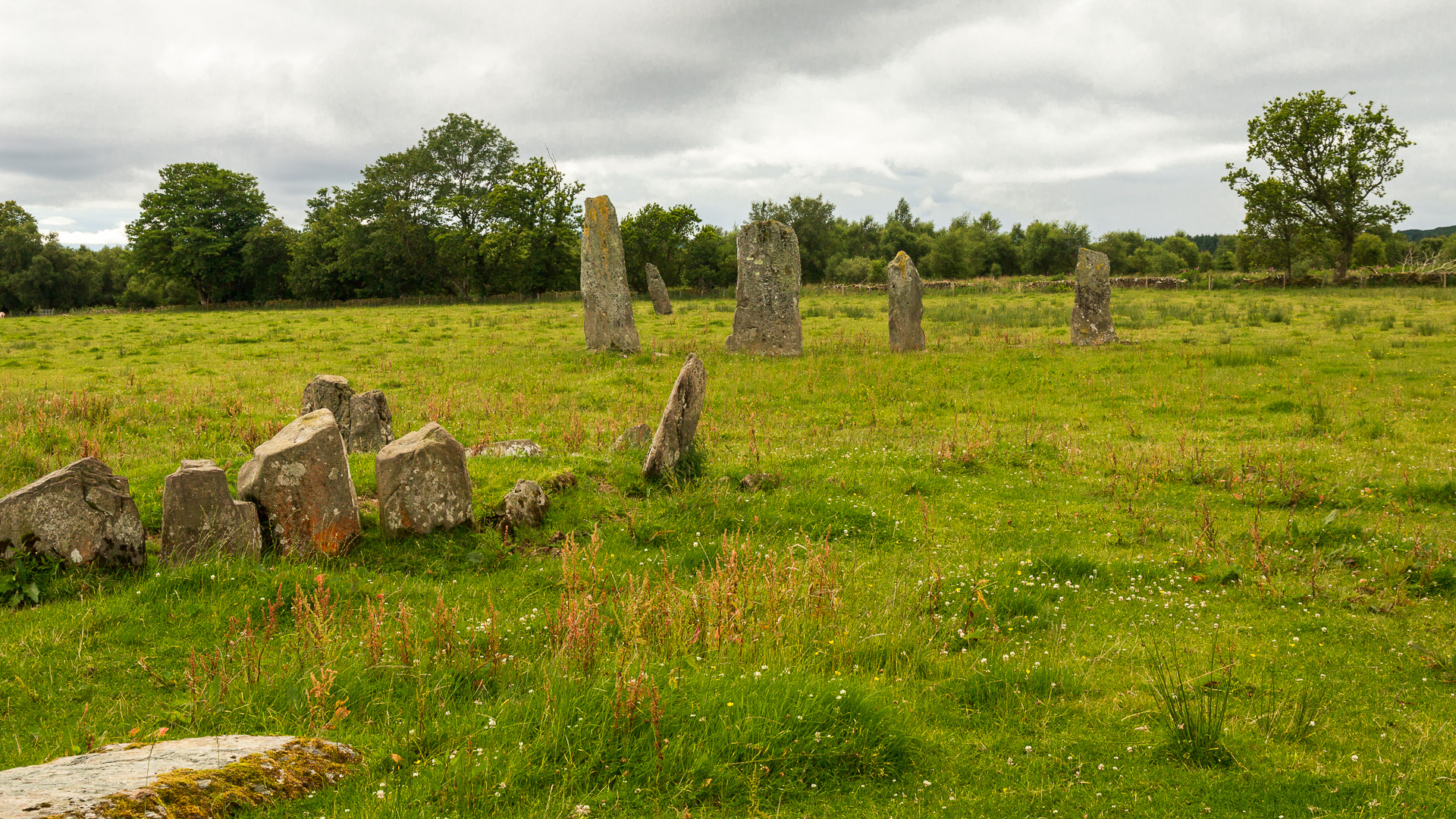
The valley near Kilmartin is a veritable Stone and Bronze Age treasure trove. Burial sites and stone circles abound here. The stones at Ballymeanoch stand in two rows facing each other. The largest one soars three meters toward the sky.
» Learn more about Kilmartin here.
Fingal’s Limpet Hammers, Colonsay —the Giant’s Stones
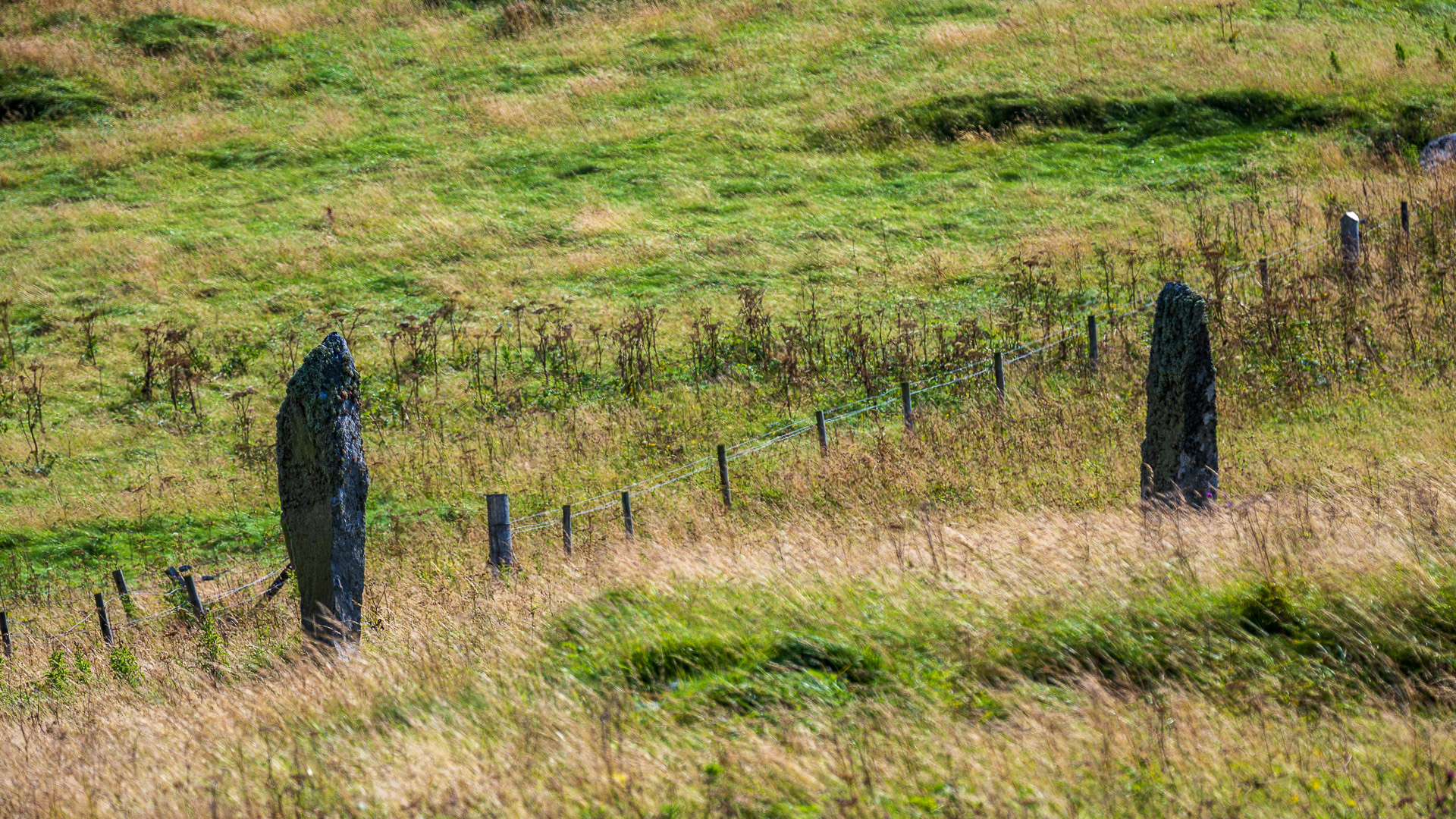
The two monoliths stand in a meadow on the island of Colonsay. They date back to the Bronze Age. The name refers to the tools of the giant Fingal.
Another stone circle is located behind the Colonsay Hotel.
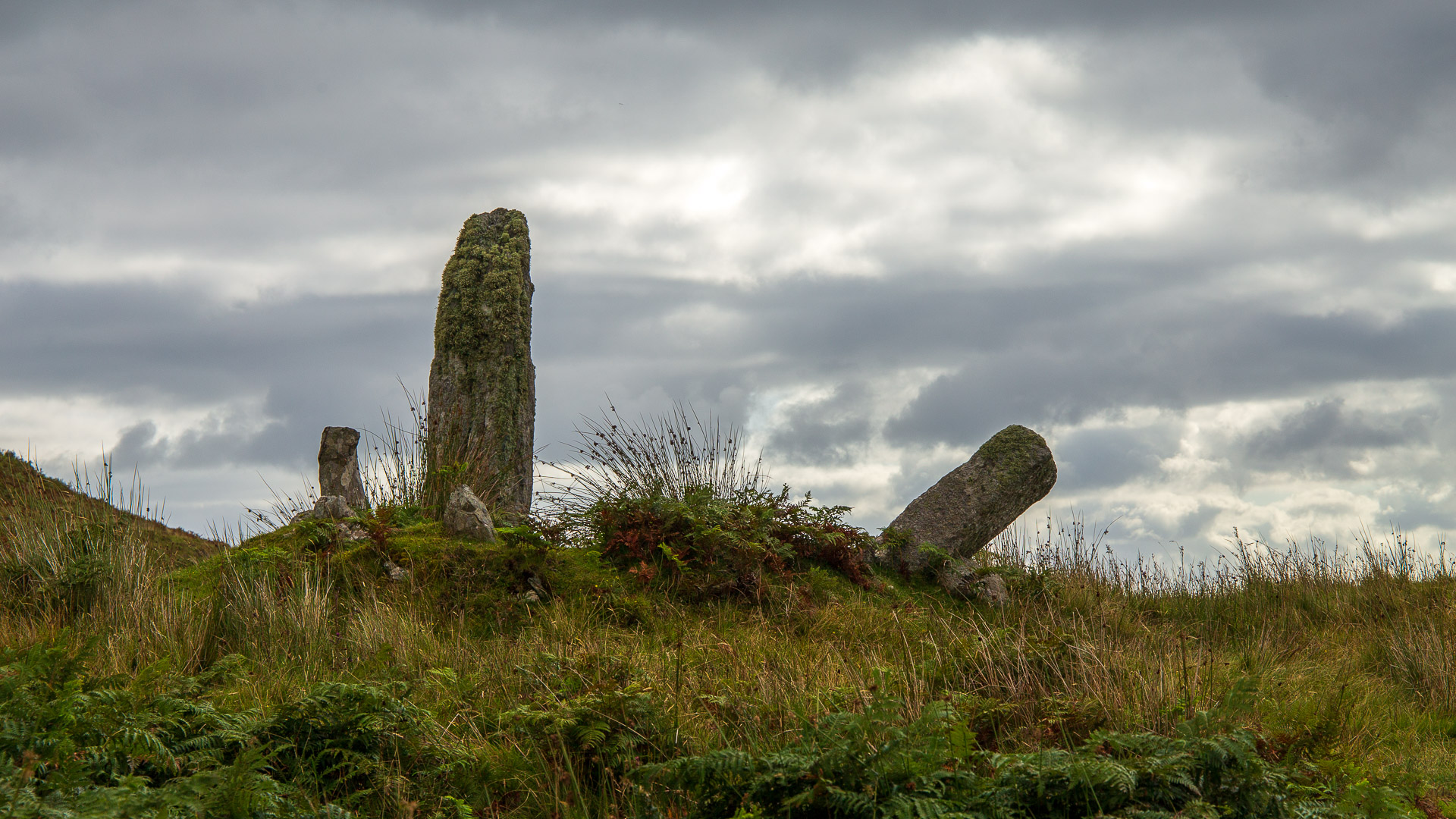
Standing Stones at Kingarth (Blackpark), Isle of Bute —the Circles
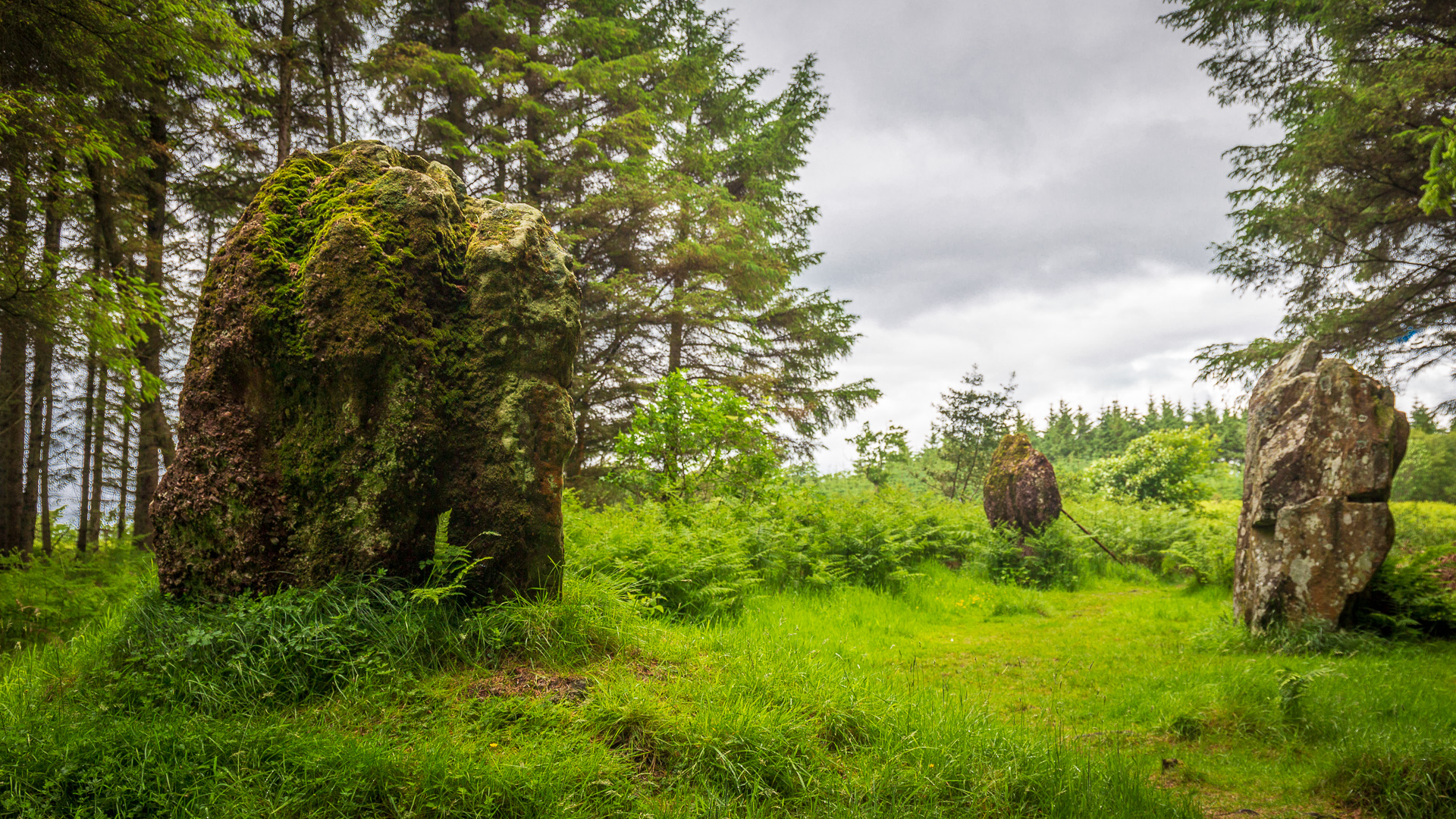
Hidden in a wooded area in the south of the Isle of Bute stand three large stones with very distinctive shapes. One is split lengthwise, another is almost round, and the third is supported by an iron rod. In the 18th century, there were seven stones here, and a circle was still recognizable.
St. Colmac (Ettrick Bay), Isle of Bute —the Small One
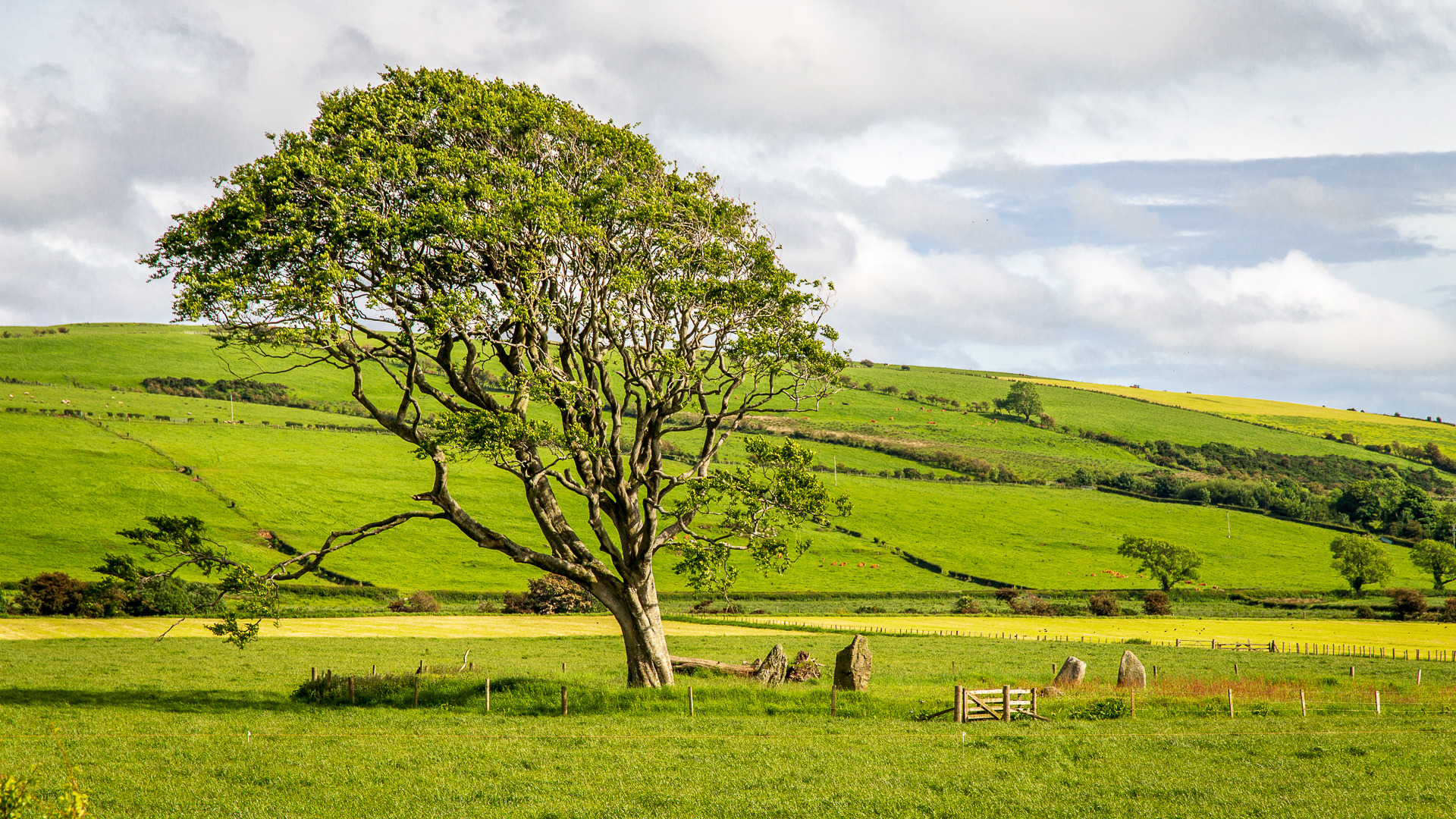
Four standing stones and several fallen stones form a circle 13 meters in diameter. The stone circle is located near Ettrick Bay on the Isle of Bute. Another circle is said to lie to the west, which would again point to the same concept as on Orkney: one for the living, one for the dead.
Machrie Moor, Isle of Arran —The Red Giants
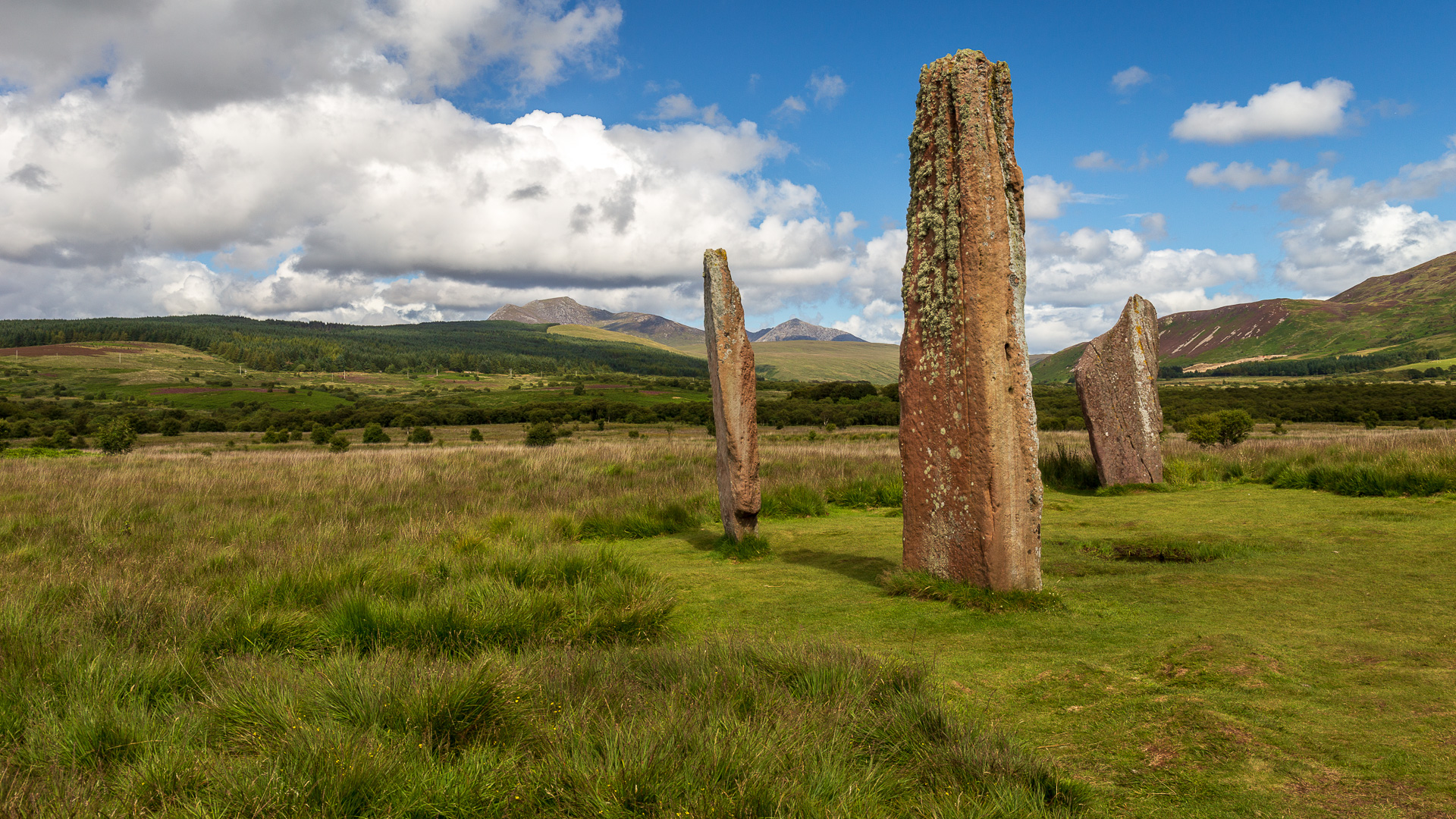
In the “Moor of Stones,” there are no fewer than eleven (!) stone circles set against the stunning backdrop of the Isle of Arran. Several huge red monoliths remain from stone circles 2 and 3. They are a magnificent sight against the island’s mountains and the vast grassy landscape.
» Learn more about Machrie Moor here.
Lochbuie, Isle of Mull —Nine Stones Before the Mountain

On the Isle of Mull, there is a stone circle in the beautiful area around Lochbuie. It consists of nine stones arranged in a circle twelve meters in diameter. Behind them rises a lovely hill, which provides a special backdrop. Along the path leading to the circle, there are also a few scattered stones.
» Learn more about Lochbuie and the stones here.
